First Aid Course Hygiene: Why It Matters More Than You Think
You're halfway through a community outing with a client when they trip on the footpath and take the skin clean off their knee. Blood, a bit of gravel, a lot. Every part of you wants to rush straight in and help. But before your hands go anywhere near that graze, the gloves come out of your bag and go on. That split second is what first aid course hygiene is really about.
It's not just about being neat and tidy. Good hygiene protects you from whatever's in someone else's blood. It protects the person you're helping, so you're not adding extra germs to an open wound. And it protects the people you go home to at the end of the shift, your partner, your kids, your mum. That's why employers in disability, aged care and childcare want more than a certificate on file. They want to know you'll keep things clean when it counts.
So here's what we'll cover. What hygiene is actually taught in HLTAID011, why it matters at work and at home, how a good course keeps the training room clean, and what to expect on the day.
What Hygiene Is Taught in a First Aid Course?
Quick answer
In a first aid course, hygiene is taught as infection control: the habits that stop germs passing between you and the person you're helping. In HLTAID011 you'll learn to:
Follow standard precautions and treat all blood and body fluids as potentially infectious
Clean your hands before and after giving first aid
Choose the right PPE for the situation, like gloves and eye protection
Remove your gloves without contaminating your hands
Use a barrier device, like a face shield, for rescue breaths
Dispose of used gloves, dressings and waste safely
Clean up blood and body fluid spills
Report any exposure to blood or body fluids
Infection control knowledge and the use of PPE are both part of the national assessment requirements for the unit.
What the national unit requires
Requirement | What it means for hygiene |
Knowledge evidence | You need to understand infection control principles, including standard precautions |
Performance evidence | You need to show you can use PPE and follow infection control while giving first aid |
Assessment conditions | You're assessed in a simulated first aid incident, so the hygiene steps happen hands-on, not just on paper |
So hygiene isn't an optional extra. It's written into the unit, and you'll be marked on it. Which honestly is a good thing, because when someone's bleeding in front of you, you won't be thinking about a checklist. You'll just do what you practised. The full unit is on training.gov.au under HLTAID011 if you want the official version.
Knowing what's on the syllabus is one thing. Knowing why it matters is what makes the habits stick.
Why First Aid Hygiene Matters More Than You Think
Most people think hygiene is the boring bit. Pop the gloves on, tick the box, move on to the CPR. But good first aid hygiene practices are quietly looking after three people at once.
It protects you
Giving first aid often means contact with someone else's blood, vomit, saliva or other body fluids. You can't tell by looking whether someone's carrying an infection. Neither can they, half the time. That's why standard precautions are your safe default. You treat every bit of blood and body fluid as potentially infectious, every time, no guessing and no judging.
It protects the casualty
Here's the bit people forget. When someone has an open wound, their skin's natural barrier is broken, and that's a doorway for infection. Your job isn't to sterilise everything like a surgeon would. You just don't want to be the one adding extra germs to the wound. Clean hands, gloves on, clean dressing. That's most of it.
It protects the people you go home to
Then there's home. Your partner, your kids, whoever's waiting after the shift. Good habits mean whatever you deal with at work stays at work. It's not about being scared of every scrape. It's about a simple routine you trust, so you can help someone and still walk through your own front door relaxed.
These habits are built into every HLTAID011 Provide First Aid course, so you're not left to figure them out on your own.
The good news is that protecting all three comes down to a handful of simple precautions.
Standard Precautions in First Aid, Explained Simply
"Standard precautions" sounds like something off a hospital poster. It's really just a short list of habits you use every time, for every person. That's the heart of infection control in first aid. You don't pick and choose based on how bad the injury looks.
Hand hygiene before and after
Clean hands come first and last. Before you help, if you can, and always after. Soap and water is great when there's a sink nearby. When there isn't, an alcohol-based hand rub does the job.
And this one catches people out. Gloves don't replace hand hygiene, and ANZCOR's guideline on first aid hygiene (GPS 10.3) is clear on that. Gloves tear, and your hands can pick up germs taking them off. St John Ambulance has a handy hand washing fact sheet if you want a technique refresher.
Quick take
Clean hands before and after first aid
Soap and water, or alcohol-based hand rub
Gloves are on top of handwashing, not instead of it
Gloves and other PPE
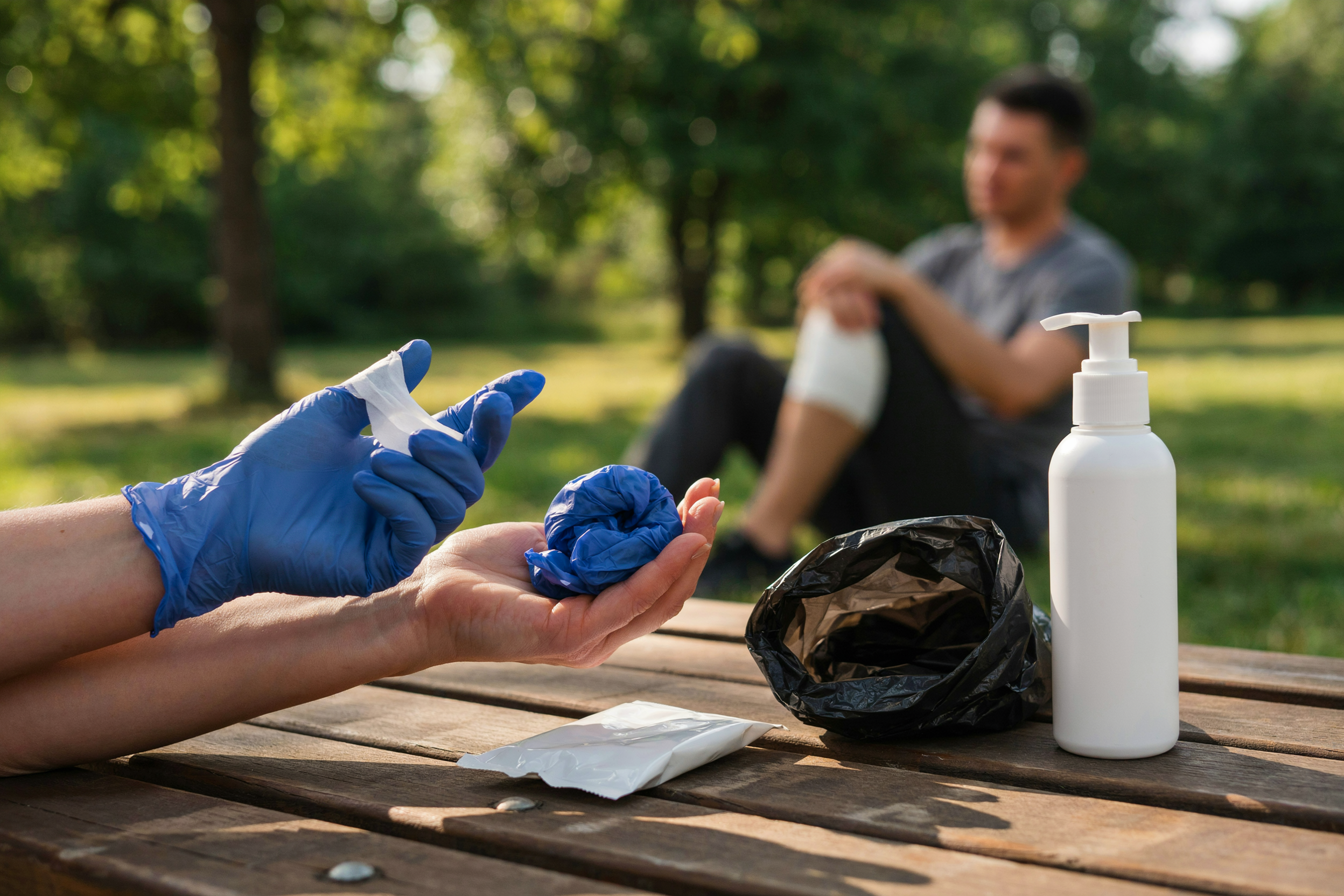
Disposable gloves are your baseline. If there's any chance of blood or fluid splashing, like a nasty nosebleed or someone vomiting, eye protection is worth adding too.
Taking gloves off properly matters just as much as putting them on. Peel them off inside out so the dirty side never touches your bare skin. You'll practise this in class, and your PPE use is assessed during the simulated incident, so it becomes second nature pretty quick.
Quick take
Gloves every time there's blood or body fluid
Eye protection if there's a splash risk
Remove gloves inside out, then clean your hands
Barrier devices for rescue breaths
For rescue breaths, a face shield or pocket mask puts a barrier between your mouth and the casualty's. They're small and easy to keep in a kit or your bag.
No barrier, or not comfortable giving breaths? Don't let that stop you. Compression-only CPR is far better than doing nothing. There's more on this in our guide to helping an unconscious person who is breathing.
Quick take
Use a face shield or pocket mask for rescue breaths
No barrier? Compression-only CPR still saves lives
Waste, sharps and spills
Used gloves, dressings and anything with blood on it go in the right bin, not tossed in the general rubbish. Sharps like needles always need a proper sharps container. And spills get cleaned up with gloves on, using the right products for the job. We've covered spill clean-up step by step in our LVR hygiene article, so we won't repeat it here.
Quick take
Bag and bin contaminated waste properly
Sharps go in a sharps container, never the general bin
Gloves on for every spill clean-up
What to use and when
Situation | What to use |
Small graze or cut | Gloves, then clean hands after |
Heavy nosebleed or vomiting | Gloves plus eye protection |
Rescue breaths | Face shield or pocket mask |
Blood or fluid spill | Gloves and the right cleaning products |
Needle or sharp found | Sharps container, never the general bin |
These precautions line up with the national Australian Guidelines for the Prevention and Control of Infection in Healthcare from the Australian Commission on Safety and Quality in Health Care.
These precautions matter everywhere, but in care work they're part of the job description.
First Aid Hygiene in NDIS and Care Work
As a support worker, hygiene isn't just for emergencies. It's part of your everyday, so when something goes wrong the habits are already there.
Why care employers look for it
NDIS providers are expected to manage infection risks for the people they support, and that flows straight down to you. They want new workers who already know how to protect their clients, themselves and the next person they visit. A current first aid certificate with solid infection control habits behind it shows you're ready to go.
First aid hygiene vs infection control training
This trips up a lot of new workers. HLTAID011 covers infection control as it applies to first aid. Gloves, hand hygiene, barrier devices, spills. It doesn't cover broader infection prevention and control for your whole role.
Many care employers ask for a separate infection prevention and control module, or the unit HLTINF006, on top of your first aid certificate. Two different things, both often on the same onboarding list.
What it looks like on a shift
Here's how the hygiene side plays out in real situations:
A graze on a community outing. Gloves on before you touch the wound, clean dressing, used gloves bagged, hands sanitised after.
A nosebleed during a home visit. Gloves on, and eye protection if it's a heavy bleed. Tissues and gloves bagged, then wipe down surfaces and clean your hands.
Vomiting during a seizure. Gloves and eye protection if you can grab them quickly, then a proper spill clean-up once your client is safe.
Not one of these is dramatic. But each one needs a quick hygiene decision, and that's exactly what you practise in class. Our first aid course for NDIS workers on the Gold Coast is built with these situations in mind.
If hygiene matters on shift, it should matter in the training room too.
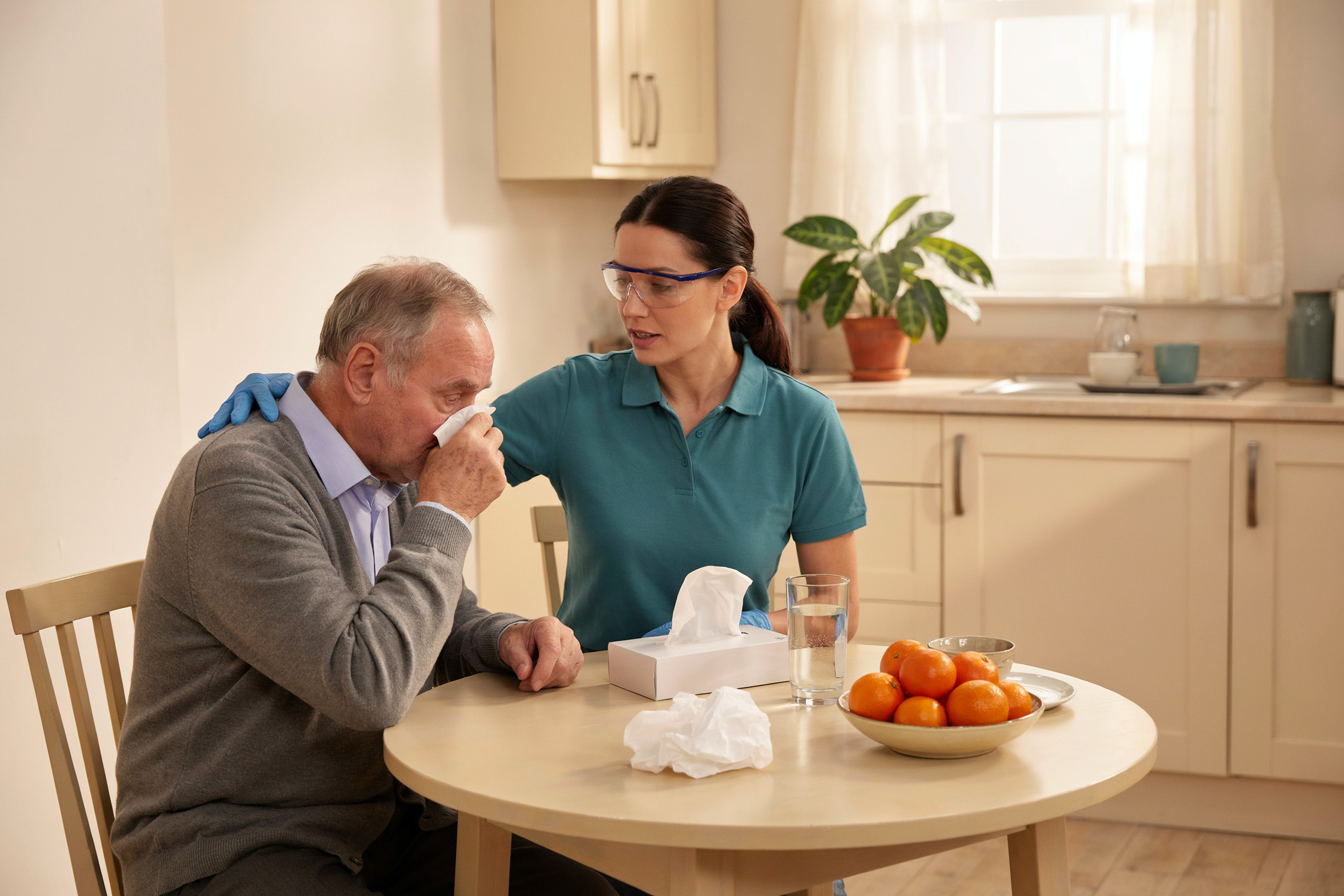
How a Good First Aid Course Keeps the Classroom Clean
If a course teaches hygiene, the room should practise what it preaches. You're sharing manikins and equipment with people you met that morning, so CPR manikin hygiene shouldn't be an afterthought.
The national hygiene standard for first aid training
ANZCOR, the body behind Australia's resuscitation guidelines, has a guideline on hygiene in first aid training (GPS 10.3). In plain terms, manikins and training equipment need to be cleaned properly between participants, everyone should keep up good hand hygiene, and anyone who's unwell should avoid hands-on practice so they're not passing things around the room.
Questions worth asking any provider
Whoever you book with, check a few things before you pay:
☐ How are manikins cleaned between students?
☐ Are face shields or barrier devices provided for rescue breath practice?
☐ What happens if I'm unwell on my course day?
A good provider will answer these straight away, no fuss. If they get vague, that tells you something too.
The same habits that keep a classroom clean work just as well at your kitchen bench.
First Aid Hygiene at Home
The funny thing is, most people learn these habits for work and end up using them more at home. Good first aid hygiene practices make just as much sense for your family.
Gloves belong in the home first aid kit too
Most home kits have band-aids, maybe some antiseptic, and that's it. Chuck in a few pairs of disposable gloves, some hand sanitiser and a few small bags for used dressings. Then you're not fumbling around when someone's bleeding.
Add to your home kit | Why it helps |
Disposable gloves | Keeps blood off your hands and germs out of the wound |
Hand sanitiser | For when there's no sink handy |
Small bags | Used dressings and gloves go straight in and in the bin |
Face shield | Ready if you ever need to give rescue breaths |
Kids' grazes, nosebleeds and tummy bugs
If you've got little ones, you know. Scraped knees at the park, a nosebleed at dinner, a tummy bug that tears through the house. Not emergencies, but the same habits help. Clean hands before and after, gloves for anything bloody, dressings bagged and binned, and a proper wipe-down after someone's been sick. It's less about being fussy and more about stopping one sick kid becoming a sick household.
Our guide on what to do if a toddler is choking is worth a read too.
Here's how it all comes together on your actual course day.
What to Expect on Your HLTAID011 Course Day on the Gold Coast
Online theory first, practical in person
Your HLTAID011 Gold Coast course starts at home. You do the theory online, on your phone, after the kids are in bed or on your lunch break. That's where the hygiene knowledge lives. The practical is where you put it into action.
The practical: gloves on, hands-on
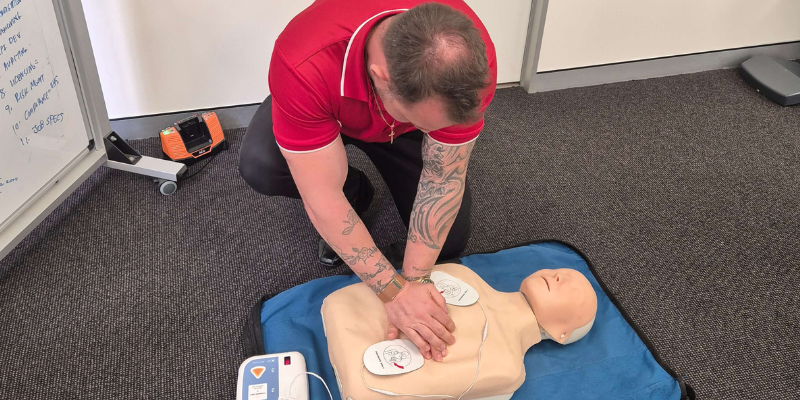
On the day, your trainer is right there with you the whole way. Gloves go on before every scenario, same as they would in real life, and you'll practise CPR on clean manikins with face shields.
CPR does involve kneeling on the floor. If you've got a bad knee, a sore back or any other physical limitation, just give our team a call before the day and we'll talk it through with you. Nobody's going to put you on the spot.
Certificate and booking
Once you've finished, your certificate is emailed to you, ready to forward straight to your employer. You can see dates and book online, and if you want the full rundown on the day itself, have a read of our guide on what to expect at your first aid course.
Rather talk to someone? Call us on 0434 778 243.
Next Steps
1. Check your job's requirements
Check your onboarding checklist or job ad first. Most roles ask for HLTAID011, but care employers often want a separate infection control module too.
2. Pick a Gold Coast session
Choose a date that fits around work and daycare. If your start date is close, book sooner rather than later.
3. Complete the online theory on your phone
Work through the theory at home whenever it suits you, picking up the hygiene basics along the way.
4. Attend your practical and get your certificate emailed
Turn up, glove up and practise with your trainer. Then your certificate lands in your inbox, ready for your employer.