First Aid Course Eligibility Brisbane | Who Can Enroll?
You've been thinking about booking a first aid course for a while now, and then right before you go to click "book now" this little voice pops up: am I even allowed to do this one? Maybe you're a bit older than you think you should be, or you haven't done a course since school, or you're just not sure if there's some fitness test you're going to fail before you even get started. That worry stops more people than you'd think, and honestly, it's almost never necessary.
Here's the short version: first aid course eligibility is a lot simpler than most people assume. There's no exam to get in, no medical clearance, no minimum experience level you need to prove first. In this guide we're going through exactly who can enroll, what documentation you'll actually need, and the real story on age, fitness and prior experience.
Who Is Eligible for a First Aid Course?
To keep it simple, most people are eligible without even thinking twice about it. You need to be:
Old enough to safely take part
Holding a Unique Student Identifier, known as a USI, which is free to set up if you don't already have one
Able to physically perform CPR compressions, and this one gets a lot of people worried unnecessarily, providers work with a real range of fitness and ability levels, not just gym fit twenty year old's
Bringing valid photo ID along on the day
There's no formal prerequisite, no prior qualification, and no medical clearance needed for HLTAID011. If you tick those four boxes, you're in.
Is There an Age Requirement for First Aid Courses?
Minimum age to enroll
There's a minimum age to enroll, though it can shift a little depending on the provider and the specific course. If you're an adult wondering whether you're "too young" or somehow missed some cutoff, chances are you haven't. Most of the anxiety around age comes from people assuming there's a stricter rule than there actually is.
Enrolling a teenager
If you're booking for someone under 18, whether that's your own kid, an apprentice, or a young staff member, there's usually a straightforward parental or guardian consent process involved. It's not complicated, it just needs to be sorted before the course date rather than on the day.
No upper age limit
And on the other end, there's no upper age limit at all. Whether you're 25 or 65, if you can safely take part, you're welcome to enroll. A lot of people renewing a certificate after years away worry they've somehow aged out of eligibility. You haven't.
Age is rarely the sticking point, the more common worry is physical readiness. Here's what's actually required.

Do You Need to Be Fit or Have Medical Training?
Physical requirements for CPR
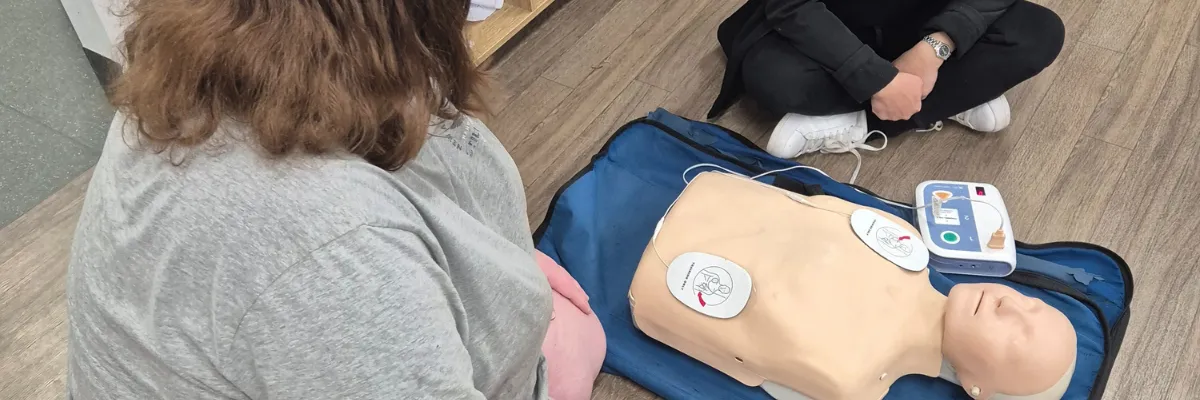
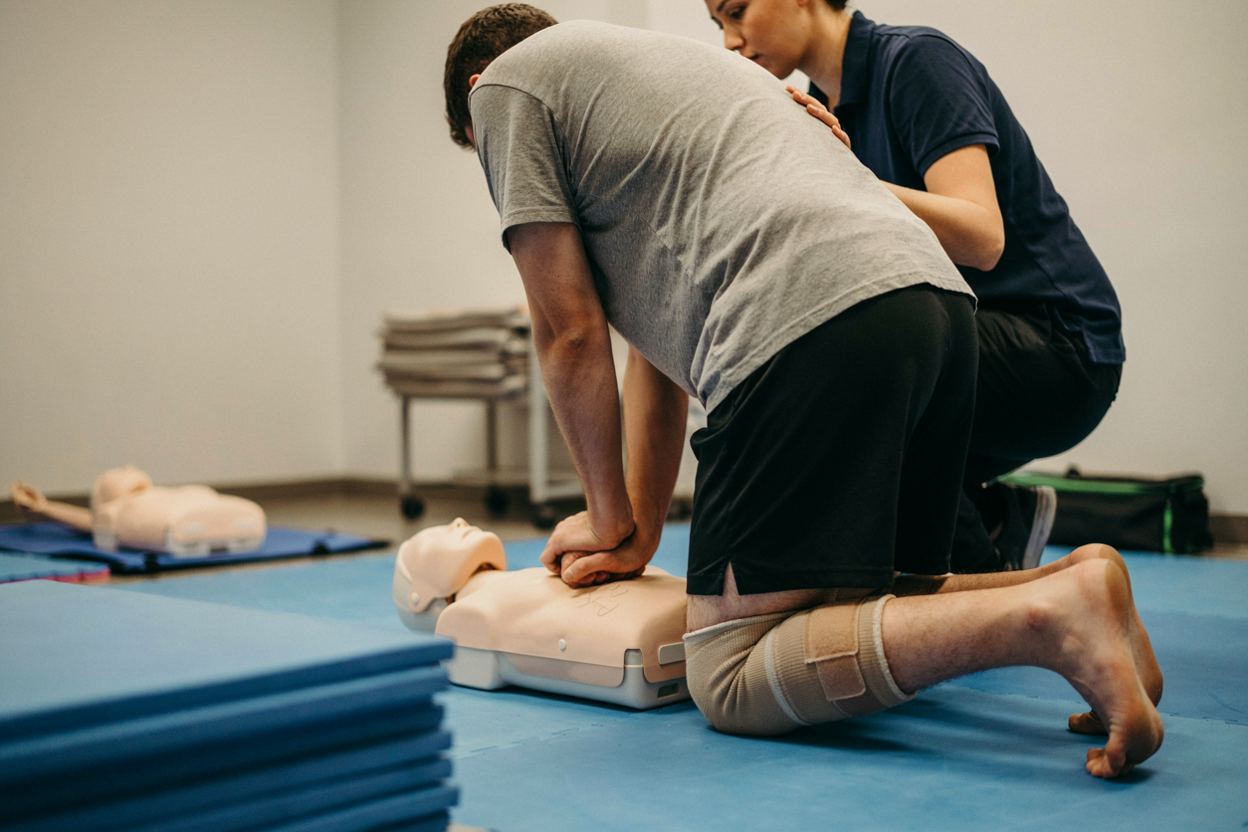
The practical component of a first aid course involves kneeling down and performing chest compressions, along with some reasonable physical exertion during the CPR assessment. That's really it. You don't need to be an athlete. Training follows ANZCOR guidelines, which are built around real-world scenarios, not gym benchmarks, so the expectation is that you can perform the technique safely, not that you can do it flawlessly or with elite fitness.
If you've been putting off a course because you're picturing some intense physical test, it isn't that. It's compressions on a manikin, at a pace and depth trainers talk you through, in a room full of other people who are just as nervous as you.
Injury, disability, or health condition
If you've got an injury, a disability, or an ongoing health condition and you're not sure if that rules you out, the answer is almost always no, it doesn't. The right move is to contact the provider before you book so they can talk through what adjustments might help on the day. Don't self exclude based on an assumption. Providers deal with this regularly and would much rather have a quick chat beforehand than have you miss out on training that could genuinely matter one day.
Once you know you're eligible age and fitness wise, there's just one piece of admin left.
What Documentation Do You Need to Enroll?
Unique Student Identifier (USI)
Every nationally recognized course in Australia requires a Unique Student Identifier, or USI. If the term is new to you, don't stress, it's just a reference number tied to your training records, and it's free to create. Most people knock it out easily if they don't already have one from a previous course or qualification.
Photo ID on the day
Bring valid photo ID with you on the day of the course. That's it, no other paperwork, no forms to fill out in advance, nothing else required.
Eligibility checklist:
✅ Age requirement met
✅ USI created
✅ Photo ID ready
✅ Reasonable fitness for CPR
If you're keen to go deeper on everything else worth sorting before the day, we've got a full HLTAID011 prerequisites guide that walks through the complete pre-course checklist.
No USI issues, no ID problems, so what about experience? Do you need to have done this before?
Do You Need Any Prior First Aid Experience?
No, you don't. HLTAID011 is an entry-level course, built from the ground up for people who've never done first aid training before, as much as it is for people renewing after years away.
Never done a course before, or your certificate expired years ago
If this is your first time ever, or your last certificate has a superseded stamp all over it in your memory, you're not behind, and you're not skipping a step by jumping straight in. HLTAID011 actually includes HLTAID009 and HLTAID010 as component units within it, so rather than needing to work your way up through separate courses first, you're covered in one sitting.
That's genuinely one of the more reassuring parts of how this course is structured. There's no ladder to climb, no "you should really do the basics first" conversation, no missed rung. You show up, you learn it properly, you walk out qualified.
If you've confirmed you're eligible but you're still not a hundred percent sure which course actually fits your situation, here's a fast way to check.
Which First Aid Course Is Right for You?
HLTAID011 vs childcare vs remote/advanced
Most people land on HLTAID011 without much trouble, but it's worth a quick gut check depending on your situation:
If you're... | The course you likely need |
A general worker, parent, or anyone wanting broad, all-purpose first aid knowledge | HLTAID011 |
Working in childcare or early education | HLTAID012 |
Working remote, in construction, mining, or somewhere emergency services are far away | HLTAID014 |
If none of those quite match, that's completely fine, it just means a quick call sorts it faster than reading through course descriptions trying to self-diagnose.
Already hold HLTAID011, just need CPR renewed
If you've already got a current HLTAID011 and the only thing that's lapsed is your CPR component, you don't need to redo the whole course. HLTAID009, the standalone CPR unit, is the one you're after. Doing the full HLTAID011 again when you only need CPR renewed is wasted time and wasted money, and it's a really common mix-up.
For a full code-by-code breakdown of what each course actually covers, our HLTAID011 requirements guide goes into more depth than we need to here.
There's one more eligibility question that's less about you and more about your employer.
Can Your Employer Require or Fund Your Course?
Employer-mandated training
If your employer has told you that you need a current first aid certificate, that requirement usually comes with an obligation on their end too. Many workplaces cover the cost of training when it's a condition of your role, particularly where it ties into workplace health and safety obligations rather than being a personal nice-to-have.
Paid time vs personal time
Whether the course happens on paid time or your own time is worth clarifying directly with your employer rather than assuming either way. Some businesses book and pay for staff during work hours as a matter of course, others expect it to happen outside rostered time with the cost reimbursed. There's no single rule here, it genuinely comes down to your specific workplace, so it's worth a quick conversation rather than guessing and either being out of pocket or giving up time you didn't need to.
If you want the fuller regulatory picture on employer obligations around first aid training, Safe Work Australia and WorkSafe Queensland both have guidance worth reading.
You've now got everything you need to know, here's how to lock it in.
How to Confirm Your Eligibility and Book
Let's bring it all together. Eligibility for a first aid course comes down to four things:
You're old enough
You've got a USI, free and quick to sort if you don't already have one
You can manage reasonable physical exertion for CPR, no elite fitness required
You'll bring photo ID on the day
If all four check out, and for most people they will, there's genuinely nothing standing between you and booking.
You're eligible, so here's the easy part. Head to the booking page and lock in your HLTAID011 course, with transparent pricing and no hidden certificate fees or surprise online module paywalls added on afterwards. Your Statement of Attainment gets issued the same day, so there's no chasing anyone down afterwards, no waiting around wondering if it's actually gone through.
Courses are run under RTO 31106, by trainers people trust with the exact same nerves you might be feeling right now, and who come out the other side feeling genuinely more capable.
So if you've been sitting on that "am I even eligible" worry for a while now, hopefully this has cleared most of it up. It's a strange kind of hesitation when you think about it, the thing stopping people from getting properly prepared for an emergency is usually just uncertainty about a form, or a fitness level, or an age cutoff that doesn't even exist the way they imagine it does. Once you actually look at what's required, the gap between "I should probably do this" and "I'm allowed to do this" turns out to be a lot smaller than it felt.
Age rarely rules anyone out, and if it does come up it's usually in the other direction, someone assuming they're too old rather than too young, which almost never holds up either. Fitness only needs to be reasonable rather than exceptional, and that distinction matters more than people give it credit for. Nobody's measuring your compressions against an athlete's, they're checking that you can do the technique safely, and providers work with people across a genuinely wide range of physical ability every single week.
The paperwork side is about as light as it gets too, a USI and a photo ID, nothing more layered than that. No prior course, no medical clearance, no letter from anyone vouching for you. It's one of those situations where the actual requirement is so much simpler than the version people build up in their head before they've checked.
The people who put this off the longest tend to be the ones who assumed there was more standing in their way than there actually was, and that hesitation costs more than it saves. A first aid certificate isn't something you need until, suddenly, it's the only thing standing between you and knowing what to do while someone else is in trouble. That's not a dramatic way of putting it, it's just the honest reason the guilt and second-guessing around booking one never quite makes sense once you slow down and look at it properly.
You're most likely already eligible, and the booking itself is easier than it feels from the outside looking in. Whatever's been holding you back, an unclear course code, a worry about age, a nervousness about the practical component, none of it tends to survive contact with the actual requirements once you've read them properly. The gap between wondering and doing is smaller than it feels, and closing it is usually the easiest part of the whole thing.