First Aid Course Bites and Stings: What You'll Learn on the Gold Coast
A bee stings your client's hand during a Saturday outing at a local park. Before long the skin is red and swelling, and you're the only support worker there. Knowing what to watch for, and when a sting stops being minor, is exactly why every first aid course covers bites and stings.
Here on the Gold Coast, that training gets used. Bees, wasps, green ants, ticks in the bush reserves and the occasional snake on a walking track are all part of everyday life here.
If you're booking HLTAID011 Provide First Aid for a new role in disability support, aged care or childcare, this guide shows you what the course teaches about bites and stings: the skills you'll practice with your hands, what your trainer looks for in the assessment, and how the same steps protect your family at home.
We'll cover the bites and stings you'll learn about, the pressure immobilization technique, recognizing anaphylaxis, how assessment works, and how to book a course near you.
Here's the short version before we go into each skill.
What Do You Learn About Bites and Stings in a First Aid Course?
An HLTAID011 Provide First Aid course teaches you to recognize and manage bites and stings from Australian venomous creatures, in line with ANZCOR guidelines. Most of these skills are practiced hands-on and assessed in person. You'll learn to:
Identify common bites and stings, including snakes, spiders, bees, wasps, ants, ticks and marine creatures
Apply a pressure immobilization bandage for snake and funnel-web spider bites
Use a cold pack to ease pain from redback spider bites and most insect stings
Remove a bee sting quickly
Recognize the signs of anaphylaxis
Use an adrenaline autoinjector such as an EpiPen or Anapen
Know when to call Triple Zero (000) and how to monitor the person until help arrives
Those skills matter more on the Gold Coast than you might expect.
Why Bites and Stings Matter for Gold Coast Workers and Families
Living on the Coast means living close to bush, creeks and beaches. It's also why bites and stings on the Gold Coast are a normal part of life, and why first aid for bites and stings in Queensland is something you'll actually use, not just learn once and forget.
The bites and stings you're most likely to see in South East Queensland
Most of these turn up right where you live and work:
Bees, wasps and ants in parks, gardens and backyards
Paralysis ticks in bushland and leafy suburban estates
Eastern brown and red-bellied black snakes near creeks, on bushland edges and around new developments
Redback spiders in sheds, under outdoor furniture and on play equipment
Bluebottles on Gold Coast beaches, mostly when the winds blow onshore
Why it matters on shift and at home
A lot of new support workers don't think about this until they're on the job. A client on an outing might not be able to tell you they're in pain, or describe what they're feeling. So you're the one who has to notice.
It's the same at home. A toddler can't explain what bit them. They just cry, and you've got to work out the rest.
Ambulance response times also vary across the Coast's growing suburbs, so what happens before help arrives is on you. That's exactly where the training pays off. If you're starting out in disability support, our first aid for NDIS workers page has more on what your role needs.
Snake and spider bites get the most attention on the day, so we'll start there.
Snake and Spider Bites: What the Course Teaches
Snake and spider bites sound scary, but the first aid for them is pretty simple once you've done it with your own hands a few times. That's the whole point of a snake bite first aid course, you stop guessing and start doing.
The pressure immobilization technique
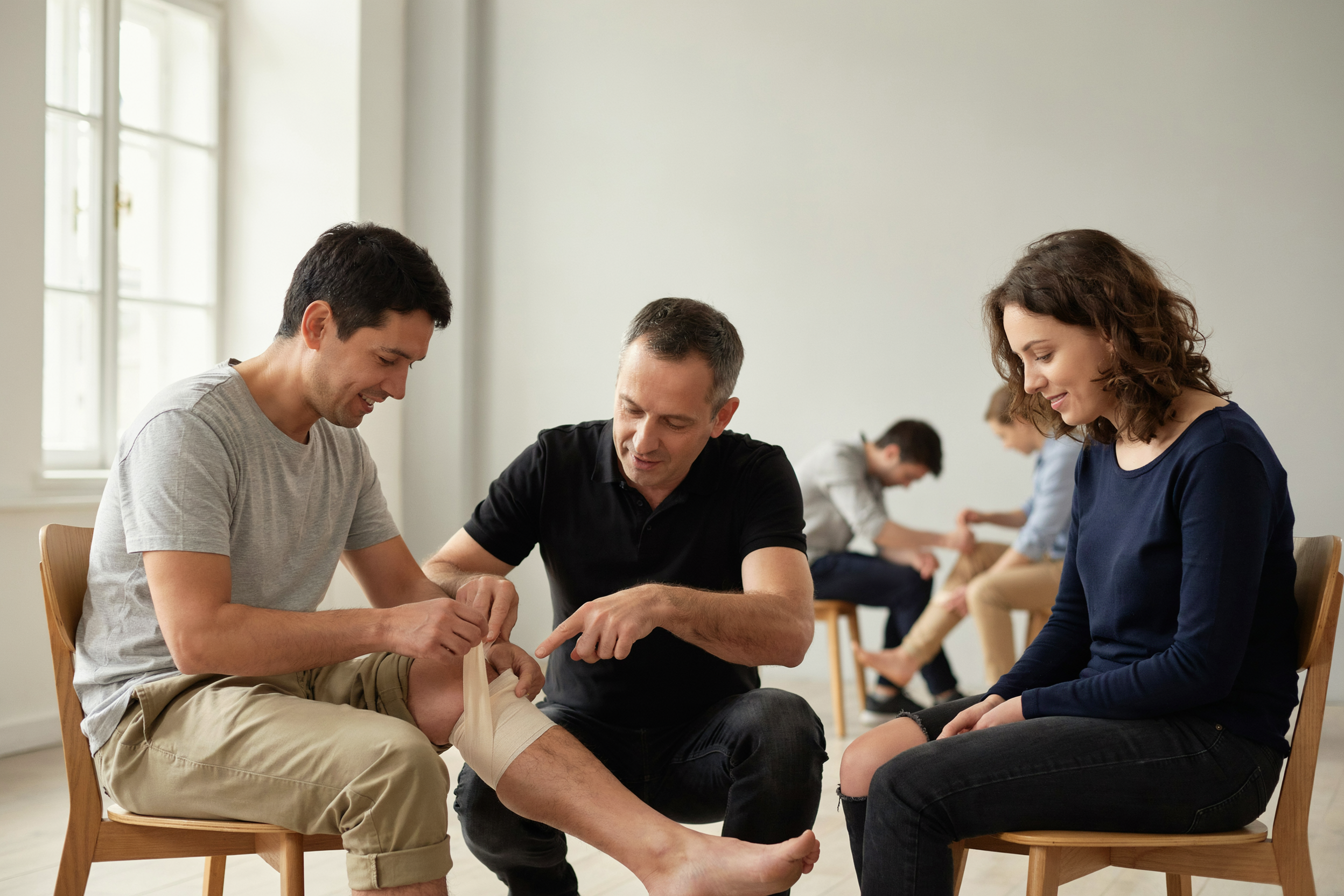
The pressure immobilization technique is the main skill here. You put a firm, broad bandage over the bite, then keep going up the whole limb. Then you splint it and keep the person still.
Why does it work? Venom moves through the body's lymphatic system, and the pressure plus keeping still slows it right down. That buys time for help to arrive.
On the day you'll practice bandaging a partner's limb with the right pressure, then splinting it. You use it for snake bites and funnel-web spider bites.
Why redback bites are treated differently
Redbacks are the odd one out. No pressure bandage. You use a cold pack to ease the pain instead, and get medical help if the pain is severe or it's spreading.
What the course teaches you not to do
Some of the old-school stuff from movies does more harm than good. Your trainer will tell you:
Don't wash the bite site
Don't cut it, suck it or use a tourniquet
Don't try to catch or kill the snake
Why every snake bite is treated as serious
Here's the bit that surprises people. A snake bite can be painless, and the marks can be really hard to see. So if someone might have been bitten, you treat it like they were.
Some people even collapse early then seem to recover, which can trick you into thinking they're fine. They're not, so keep the bandage on and keep waiting for help.
Most bites and stings you'll actually see are smaller, but they still need the right response.
Insect Stings, Ticks and Marine Stings
Snakes get all the attention, but the stuff you'll deal with most is smaller. A bee in the backyard. A tick after a walk. A bluebottle on a beach day.
Bee, wasp and ant stings
Bee sting first aid comes down to one thing: get the sting out as quickly as you can. Scrape it or pluck it, doesn't matter which. Speed matters more than the method.
Then pop a cold pack on to ease the pain, and keep an eye on the person for any signs of an allergic reaction. Same goes for wasp and ant stings.
Paralysis ticks
Paralysis ticks are common in South East Queensland, especially if you live near bushland. The course shows you how to recognize one and why they're worth taking seriously.
For tick removal in Queensland, the course follows the ASCIA advice: freeze, don't squeeze. No pulling, no squeezing.
Bluebottle stings at the beach
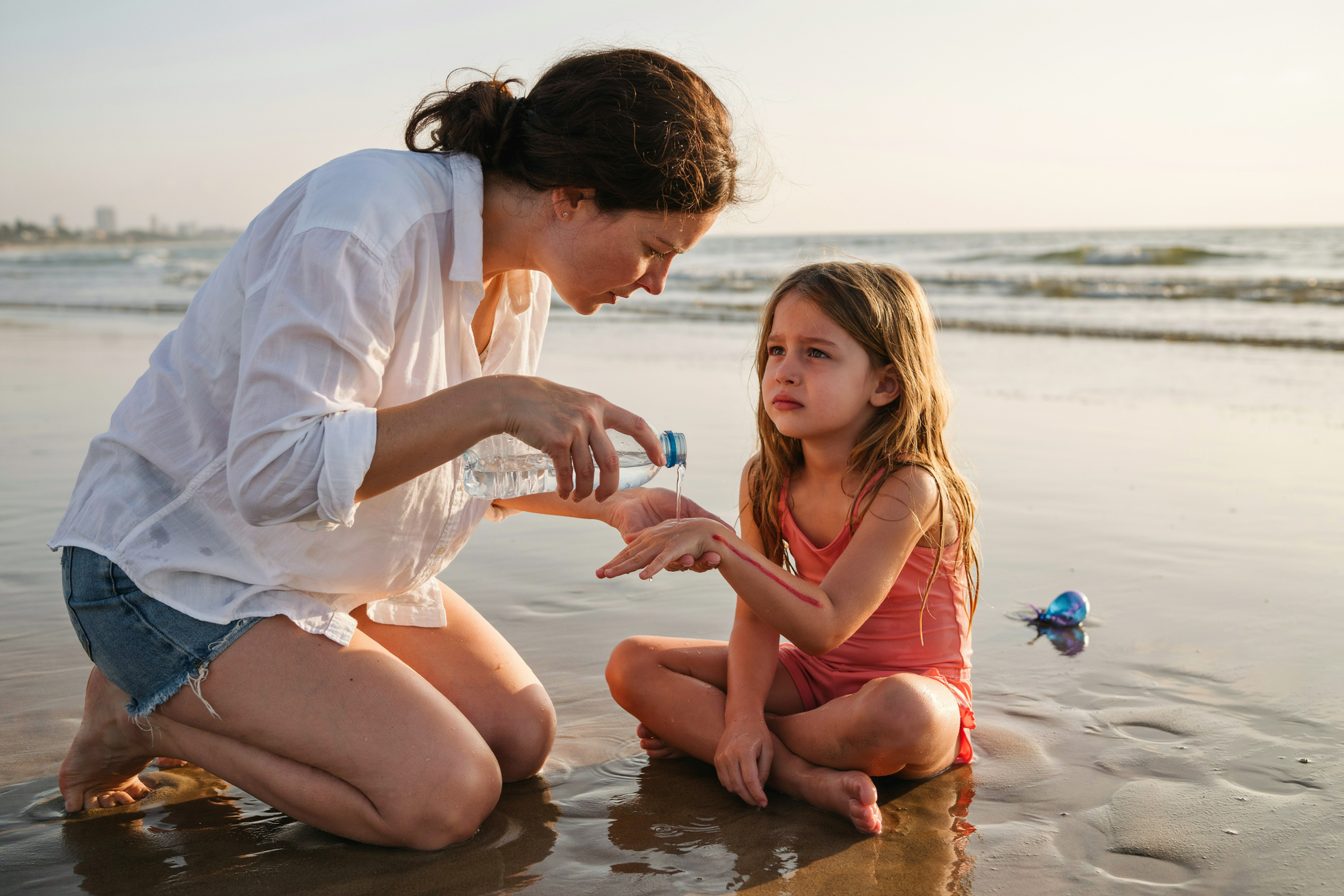
Bluebottle sting first aid is the one most Coast locals have seen at least once. Pick off any tentacles, rinse the area with seawater, then put the sting in hot water.
Snake vs redback vs bee: what you'll practice
Snake | Redback | Bee | |
What you do | Pressure immobilization bandage, splint, keep still | Cold pack | Remove sting fast, cold pack |
Pressure bandage? | Yes | No | No |
Watch for | Collapse, even if they seem to recover | Severe or spreading pain | Allergic reaction |
The real worry with any sting is an allergic reaction, which is why anaphylaxis gets its own part of the course.
Recognizing Anaphylaxis and Using an Adrenaline Autoinjector
Most stings are just sore and annoying. But every so often, one turns into something much bigger, and it can happen fast. This part of the course teaches you to spot that early, and if you're searching for an anaphylaxis first aid course on the Gold Coast, it's already built into HLTAID011.
Signs of anaphylaxis
Your trainer will go through the signs from the ASCIA Action Plan. Watch for:
Difficult or noisy breathing
Swelling of the tongue
Swelling or tightness in the throat
Dizziness that won't go away, or collapse
In young children, looking pale and floppy
Mild to moderate signs can get worse quickly, so keep watching.
Practicing with a trainer autoinjector
This is the bit people are nervous about, and it ends up being the bit they're most glad they did. EpiPen training on the course uses trainer devices for both EpiPen and Anapen. They have no needle and no medication, so you can practice as many times as you need without any stress.
You'll learn the full sequence:
Lay the person flat, or let them sit up if breathing is hard
Don't let them stand or walk
Give the adrenaline
Call Triple Zero (000)
Doing it with your hands a few times makes a huge difference. When it's real, your hands already know where to go.
When your role needs more than HLTAID011
Supporting clients with known allergies? See our anaphylaxis management training.
You'll practice all of this with your hands, not just read about it.
How Bites and Stings Are Taught and Assessed on Your Course
If you've never done a first aid course before, it's normal to wonder what the day actually looks like. Here's what to expect at a first aid course with us, from the theory at home to the practical on the day.
Hands-on practice on the day
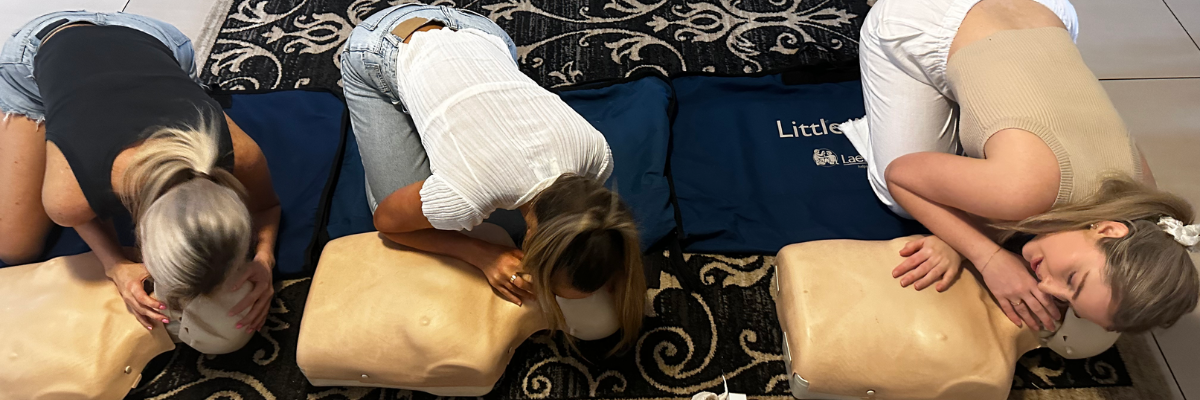
This is where it clicks. You'll pair up with someone and practice bandaging and splinting each other's limbs. You'll get hands-on with trainer autoinjectors. Then you'll work through scenarios, like a client getting stung on an outing or someone bitten by a snake in the backyard.
It feels a bit awkward at first. After that, most people get into it.
How the assessment works
Your trainer watches you do each skill and explains any adjustments as you go. It's not a test where someone sits silently with a clipboard. If your bandage is too loose, they'll show you and you'll try it again.
If kneeling or bandaging is difficult for you
If you have an injury or something that makes kneeling or bandaging hard, let us know before the day so we can plan around it. Questions about the practical? Give the team a call before your course.
If you're still unsure you're booking the right course, this part will settle it.
Do You Need a Separate Bites and Stings Course?
Short answer: no. For most jobs, bites and stings are already part of HLTAID011.
Course | Bites and stings? | Who it suits |
HLTAID009 Provide CPR | No. CPR only | CPR refresher |
HLTAID011 Provide First Aid | Yes. Snakes, spiders, insects, ticks, marine, anaphylaxis | Most workplace roles, including NDIS and aged care |
HLTAID012 Provide First Aid in an Education and Care Setting | Yes, plus child-specific content | Childcare and school roles |
22300VIC Anaphylaxis management | Anaphylaxis in depth | Roles supporting people with known allergies |
A few things that clear up most of the confusion:
HLTAID011 covers bites and stings. You don't need anything separate unless your employer names a specific course.
HLTAID011 includes the HLTAID009 CPR content, so you're not booking two courses.
Working in childcare? HLTAID012 on its own doesn't meet the childcare anaphylaxis and asthma requirement.
Book a First Aid Course on the Gold Coast
You've got a start date coming up, a checklist from your new employer, and one more box to tick before your first shift. The good news is that sorting your HLTAID011 doesn't have to mean a long drive or a whole day lost in a classroom. Wherever you are on the Gold Coast, there's a session that fits around your week.
Every course is nationally recognized under RTO 31106, so the certificate you walk away with is the one employers actually ask for. If the job ad says HLTAID011, this is it.
You do the theory online first, on your phone, in your own time, then come in for the hands-on practical. That means less time away from work, fewer extra daycare days and a lot less juggling.
Once you've finished, your certificate is ready to forward straight to your employer's onboarding team. That's one less thing hanging over your start date.
Don't just take our word for it. Have a read of our Google reviews from locals who were nervous and short on time too.
Ready to get it sorted? Find a session that works for you and lock it in. And if you're booking for a team of new starters rather than just yourself, send us a group enquiry and we'll put something together for your crew.