
Emergency Procedures Training: Full Guide 2026
A bloke goes down on a live site. Could be a shock off a switchboard that wasn't isolated properly, could be a fall, could be smoke coming out of a distribution box that nobody's seen do that before. Whatever it is, there's a window where what happens next either saves the situation or makes it a whole lot worse. And in that window, "we'll figure it out" isn't a plan. It's just hoping.
Here's the thing most site bosses don't want to say out loud: "we never actually trained for this" is worse than not knowing the answer. Because it means when it counts, your crew freezes instead of moving.
Emergency procedures training is what closes that gap. It covers electrical shock response, fire and evacuation, first response and CPR readiness before paramedics arrive, and what you're legally required to report afterwards. It's the difference between a crew that stands there working out what to do, and one that's already doing it.
Below, we'll get into exactly what emergency procedures training covers, who on your team actually needs it, how it fits your WH&S obligations, and how fast you can get your crew through it without losing a full day on-site.
What Is Emergency Procedures Training?
Emergency procedures training teaches workers how to respond correctly when something goes wrong on-site, whether that's an electrical shock, a fire, an injury, or a full evacuation. It's not about hoping someone remembers first aid basics from three years ago. It's about a fast, coordinated, safe response that doesn't rely on improvising in the moment. The training covers:
Recognizing and responding to electrical shock and electrocution
Fire response and safe evacuation procedures
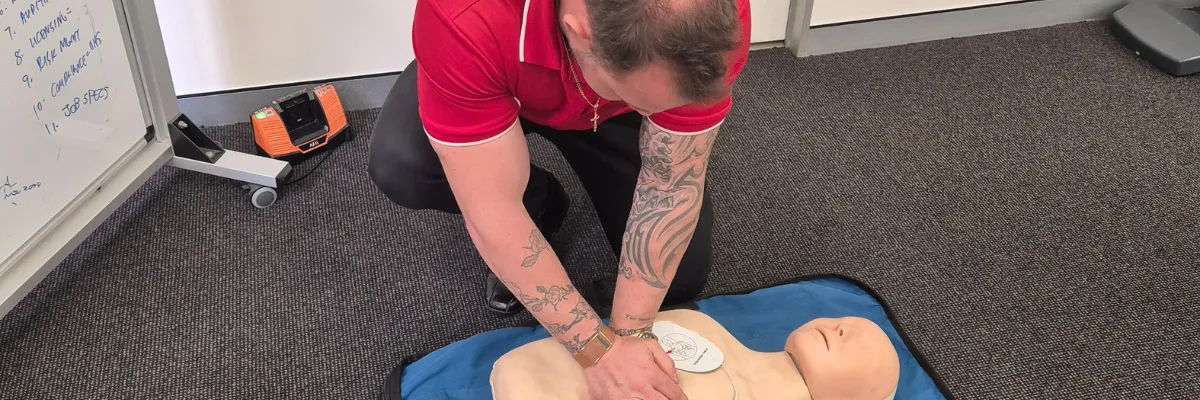
First response and CPR readiness before emergency services arrive
Incident reporting obligations under WH&S legislation
Site-specific emergency contacts and communication protocols
Pair this with UEECD0007 and you've got the legal knowledge base and the practical response covered, the theory and the doing, both sorted.
What Emergency Procedures Training Actually Covers
Right, so this is where a lot of providers get vague on you. "Safety awareness" this, "workplace readiness" that. A lot of site bosses don't want awareness, they want to know exactly what their crew walks out knowing how to do. So here's the actual breakdown, module by module.
Electrical Shock and Emergency Response
This is the big one for trade sites. Your crew learns how to recognize when someone's had a shock, how to safely de-energize a circuit before anyone goes near the person (because more than one bloke has been hurt trying to be a hero on a live circuit), and safe approach distance if isolation isn't immediately possible. They also get the DRSABCD basics, Danger, Response, Send for help, Airway, Breathing, CPR, Defibrillation, as the framework for what happens in those first few minutes.
Fire Response and Site Evacuation
Not a generic office fire drill where everyone ambles out to the car park with a coffee in hand. This is fire identification and response specific to electrical and trade environments, switchboard fires behave differently to a kitchen fire, and your crew needs to know that. It covers evacuation procedures too: assembly points, doing an actual headcount (you'd be surprised how often this gets missed), and liaising properly with emergency services when they arrive on-site.
First Response Before Help Arrives
Paramedics don't teleport. There's always a gap between something going wrong and help physically arriving, and what your crew does in that gap matters. This module covers first response and CPR readiness so someone on your team isn't standing around waiting, they're actually doing something useful to keep a person alive until the professionals take over.
Incident Reporting Obligations
The part everyone forgets until an auditor asks about it. Your crew, and you, as the person responsible, needs to know what's required under the WH&S Act when an incident happens. Who gets notified, what gets documented, what timeframes apply. Get this wrong and even a well-handled emergency can turn into a compliance headache afterwards.
Where this fits with what you might already have: if your team's done UEECD0007, they've already got the regulatory knowledge base, the "why" and the legal framework. Emergency procedures training is the "what do I actually do" layer on top of that. And if you've got licensed electricians working near live systems, Low Voltage Rescue (LVR) goes a layer deeper again, specifically for pulling someone off a live circuit. The three aren't the same course wearing different labels, they stack.

Who Needs Emergency Procedures Training on a Trade Site
Knowing what the training covers is only half the picture, the next question is who on your team actually needs it.
This is the bit a lot of site bosses get stuck on more than anything else. Sparkies, apprentices, labourers, maybe a subbie or two, and someone back at the office doing the books. Does everyone need the full course? Does nobody except the electricians? Here's how it actually breaks down by role.
Electrical Workers and Apprentices
If they're working near live or low-voltage systems, this one's non-negotiable. They're the ones most likely to be first on scene if something goes wrong, and often the ones at risk themselves. Full emergency procedures training, paired with UEECD0007, is the baseline here.
Site Supervisors and Leading Hands
These are your duty-of-care people. If something happens on-site, it's the supervisor who's expected to know what's meant to happen next, not figure it out on the spot. Full training applies here too, and honestly, if you're only training one person on your crew properly, it should probably be this one.
General Crew and Subcontractors
Labourers and subbies moving through a multi-trade site carry moderate exposure. They might not be the ones working on live systems, but they're on the same site when something goes wrong, and a core emergency response module means they're not just standing there useless while someone else handles it.
How Many of Your Team Actually Need This
This comes down to your site's risk profile. A low-risk residential job looks different to a high-activity commercial site. The general rule: the higher the risk exposure on-site, the more of your crew should be trained, not just the supervisor and the sparkies.
Here's how it maps out at a glance:
That last row surprises a lot of business owners. Your office or admin person doesn't touch live systems, but if they're the one who happens to be walking past when something goes wrong on-site, having zero training at all isn't a great position to be in. Doesn't need to be the full course, just enough that they're not a bystander in their own workplace emergency.
Not sure who on your team needs this? Give us a call and we'll help you work it out.
How Emergency Procedures Training Fits Your WH&S Obligations
Coverage and eligibility sorted, now the part that actually gets checked: does it hold up under audit?
This is the section you'll probably end up screenshotting and sending to your site supervisor, so let's keep it precise.
The Legislative Basis for Emergency Procedures Training
Under WHS Regulation, having documented emergency procedures isn't optional extra, it's part of your basic site risk management duty. If you're running a site with electrical or trade risk exposure, you're expected to have a plan for what happens when something goes wrong, not just a plan for making sure it doesn't.
How This Complements UEECD0007
UEECD0007 gives your crew the regulatory knowledge base, the "why" behind WH&S obligations on an electrical site. Emergency procedures training is where that knowledge turns into action. One without the other leaves a gap: knowing the rules but not what to physically do, or knowing what to do without understanding the obligations sitting behind it. Auditors and principal contractors tend to notice when only one half is covered.
What Auditors and Principal Contractors Look For
This is the practical bit. When someone comes to check your compliance, they're not just after a certificate sitting in a folder somewhere. They want to see it actually lived out on-site.
Compliance Checklist, What Gets Checked
Documented emergency procedures specific to your site
Named, trained first responder(s) rostered on-site
Current (not expired) training records for all relevant crew
Evidence of drills or rehearsal, not just certificates on file
Incident reporting process documented and understood by crew
That third and fourth point trip up more small trade businesses than anything else. A certificate that's technically still valid but nobody's rehearsed since doesn't hold up the way you'd hope it would. And "we've got the paperwork" isn't the same as "the crew actually knows what to do."
Want this checklist as a one-pager you can keep on file? Grab our free Gold Coast Trade Site Emergency Procedures Checklist and keep a copy on-site.

Getting Your Crew Trained Without Losing a Day On-Site
None of this matters if you can't fit it around live jobs, so here's how this actually happens.
Every hour a tradie spends sitting in a classroom is an hour not on the tools, and that adds up fast when you're running a crew against a deadline. So let's talk logistics, not just compliance theory.
On-Site Group Training vs. Venue-Based
You've got two options depending on what suits your crew better.
Venue-based group session, run at our Gold Coast training venue. Works well if your crew's already close by.
On-site group delivery, we come to you, scheduled around your live jobs rather than the other way round. Better fit for bigger crews or teams spread across multiple sites.
Bundling With Other Compliance Requirements
If your crew's already due for UEECD0007 or a CPR/First Aid renewal, it makes sense to bundle it into the same visit rather than pulling everyone off-site more than once. Covering multiple compliance boxes in one visit is a lot better than coming back around again later.
Certificates get turned around fast too, so you're not left chasing paperwork before you can hand proof over to a principal contractor or site manager.
Get your crew trained in emergency procedures. Book a group session at our Gold Coast venue, or ask about on-site delivery.
Book Emergency Procedures Training
A Trained Response vs. An Untrained One
Picture two crews, same job, same risk. Something goes wrong, someone's had a shock off a switchboard.
Crew without training: Everyone stops. Someone yells for help. A couple of blokes rush over, maybe touch the person before checking if the circuit's actually isolated. Someone else is fumbling for their phone to call triple zero, but nobody's sure of the site address to give them. Time passes before anything useful actually happens.
Crew with emergency procedures training: Someone calls the shock immediately and directs the nearest person to isolate the circuit before anyone approaches. Another crew member's already on the phone with emergency services, giving the site address and what's happened. Someone's starting to use DRSABCD. It's not calm, exactly, nobody feels calm at that moment, but it's coordinated. There's no wasted motion.
Same incident, same crew, completely different outcome in those first few minutes. That's the entire point of this training. It's not about turning your crew into paramedics, it's about making sure the freezing doesn't happen.
Get Your Crew Ready Before You Need To Be
Emergency procedures training isn't the course you book because you're chasing a certificate to tick a box. It's the one you book because you genuinely don't want to be standing on-site one day, watching your crew freeze, wishing you'd sorted this months ago. That gap of nobody knowing what to do is exactly what this training closes, and it's a gap most business owners don't think about until something forces the issue.
Plenty of site-responsible employers put this off until a tender deadline or an insurer forces the issue. Most do the same thing, because training always feels like something for next quarter, right up until it isn't. And that's fair enough, running a trade business means a hundred things competing for attention every single day, and a course nobody's needed yet slides down the list without much thought.
But here's the bit worth sitting with for a second. The training itself is only ever used in the moment nobody wants to happen. You hope your crew never has to put DRSABCD into practice, never has to isolate a live circuit while someone's down, never has to do a headcount at an assembly point because a fire's actually broken out. The value of the training isn't in using it, it's in having it there and hoping it stays unused.
The good news is this doesn't have to cost a full day of billable hours to sort out. A session run at a venue or on your own site gets a crew properly prepared without gutting the week. Bundle it with a WH&S renewal or a CPR update if the timing lines up, and multiple compliance requirements get knocked over in one visit instead of several spread across months.
None of this is complicated, and none of it needs to be a big production. It's a trained crew, and one less thing sitting at the back of a site boss's mind when he's lying awake wondering if everyone on his team would actually know what to do.