Emergency Decision Making Training That Actually Builds Confidence for Childcare Professionals
You're supervising 15 four-year-olds during outdoor play when little Emma starts coughing. At first, it seems like she's just gotten some sand in her throat from the sandpit. But then her breathing becomes labored, and you notice her lips starting to change color. Your heart pounds as that familiar question races through your mind - is this a normal asthma episode or something more serious that could turn life-threatening in minutes?
Research shows that 89% of anaphylactic reactions in children happen in educational settings, yet most educators tell us they feel genuinely unprepared to make those split-second decisions that could save a life.
Emergency decision making training isn't about memorizing another set of protocols or ticking compliance boxes. It's about building real confidence so you can act decisively when every second counts and a child's life depends on your judgment. For those of us working on the Gold Coast - managing everything from bee sting allergies during beach excursions to asthma flare-ups triggered by our subtropical climate - these skills aren't just useful, they're absolutely necessary.
Most training programs teach you what to do, but they don't teach you how to think clearly when your adrenaline's pumping and parents are looking to you to save their child. In this guide, we'll dig into why traditional emergency training often leaves educators feeling anxious rather than confident, break down how your brain actually works during high-pressure situations, and share the specific training methods that transform that "deer in headlights" feeling into competent, decisive action.

Why Traditional Emergency Training Fails Childcare Professionals
Most emergency training programs set you up to fail when it really matters. Not because they're bad programs, but because they're designed around the wrong assumptions about how people actually respond during real emergencies.
The Compliance vs. Competence Gap
You know that feeling when you've just completed your 22300VIC or 22556VIC certification, walked out with your shiny certificate, but still felt like you'd freeze up if faced with a real emergency? That's the compliance vs. competence gap.
Traditional training focuses on getting you to pass tests and meet ACECQA requirements. You memorize the steps: assess, call 000, administer medication, document everything. But when little Jackson is turning blue and his EpiPen isn't working the way it did in practice, your brain doesn't work the same way it does during a calm training session.
Most courses spend 80% of the time on theory and legal requirements, with maybe 20 minutes of hands-on practice. That's like learning to drive by reading the road rules without ever touching a steering wheel. Many training programs actually increase anxiety rather than reduce it, loading you up with scary statistics and legal warnings without giving you the practical confidence to handle real situations.
When Protocols Don't Match Real Scenarios
Real emergencies rarely look like textbook examples. The child having an asthma attack might not be sitting calmly asking for their puffer - they might be panicking, crying, or trying to hide their symptoms because they're scared.
Take our Gold Coast environment, for instance. Your training might cover indoor allergic reactions, but what about when you're at Burleigh Beach and a child gets stung by a bluebottle? Or when you're doing nature walks in the hinterland and someone has a severe reaction to a native plant? The protocols you memorized suddenly don't feel so helpful when you're dealing with sand, saltwater, and no immediate access to your usual emergency supplies.
Sarah from a Robina early learning center told me about her first real emergency during their Easter egg hunt. A child had an allergic reaction while other kids were crying and scared, parents were arriving for pickup, and she had to manage all of it while trying to remember if she should give the antihistamine or go straight to the EpiPen. The step-by-step protocol she'd memorized fell apart when faced with multiple moving parts and emotional chaos.
The Stress Response Factor in Decision Making
When you're faced with a genuine medical emergency, your body goes into fight-or-flight mode. Your heart rate spikes, your hands might shake, and your thinking becomes tunnel-focused. But traditional training doesn't account for this physiological response.
Most courses have you practice emergency procedures in calm, controlled environments with plenty of time to think through each step. But when adrenaline hits, your fine motor skills decrease, your memory becomes selective, and you might find yourself second-guessing every decision. When it's a real child in real danger, the emotional pressure can make even confident educators doubt themselves.
The Science Behind Effective Emergency Decision Making
Once you understand how your brain operates during emergencies, you can train yourself to work with your natural responses rather than against them.
How Your Brain Works Under Pressure
During high-stress situations, your prefrontal cortex - the part that handles complex reasoning - takes a backseat to your limbic system, which is all about rapid response and survival. Your brain actually shifts into a different mode designed to make fast decisions during emergencies.
Experienced nurses or paramedics seem to just "know" what to do during emergencies because they've trained their brains to recognize patterns quickly and respond automatically. Effective emergency decision making relies more on pattern recognition than step-by-step thinking. Your brain can process these patterns incredibly quickly, but only if it's been exposed to enough scenarios to build that recognition skill.
The OODA Loop for Medical Emergencies
Military pilots and emergency responders use the OODA loop - Observe, Orient, Decide, Act. This framework works perfectly for medical emergencies because it matches how your brain naturally processes information under pressure.
Observe - means taking in what's actually happening, not what you think should be happening. Orient - is about making sense of what you're observing - does this breathing pattern match patterns you recognize? Decide - involves choosing your response based on your assessment. Act - is implementing your decision quickly and confidently.
What makes this framework powerful is that it's designed to be fast. You're cycling through these steps in seconds or minutes, then repeating the loop as the situation evolves.

Core Components of Quality Emergency Decision Making Training
What should you look for in training that actually builds the confidence and competence you need? Here are the components that make the difference between training that just gets you certified and training that genuinely prepares you to save lives.
Scenario-Based Learning That Actually Works
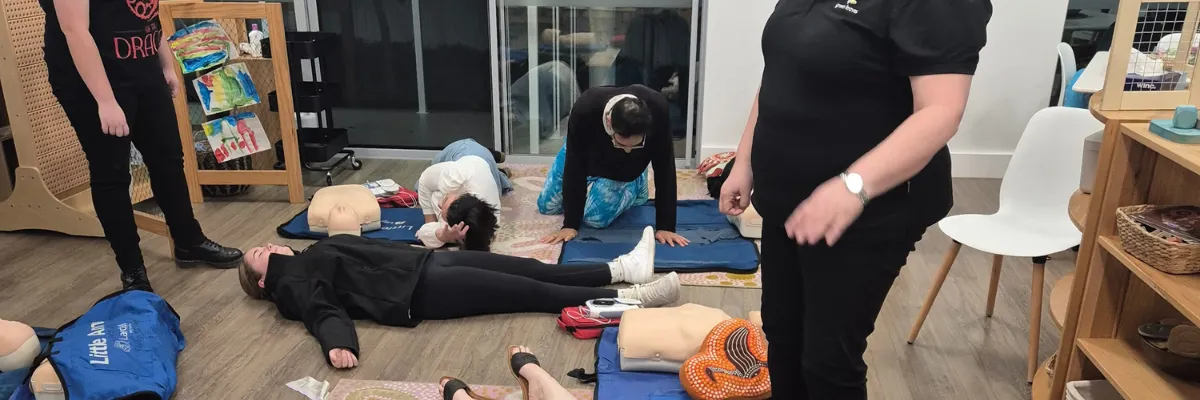
The most effective emergency decision making training puts you in realistic scenarios where you have to make real decisions under time pressure. Quality scenario training creates genuine uncertainty and time pressure. You might walk into a room where a child actor is displaying symptoms, but you don't know their medical history or what triggered the reaction. You have to observe, assess, and decide based only on what you can see.
The best programs use "progressive disclosure" - they give you information gradually as you ask the right questions, just like in a real emergency. What really makes the difference is immediate feedback from experienced instructors who can explain why certain decisions were better than others in that specific situation.
Recognition Training: Signs vs. Symptoms
One of the biggest gaps in traditional training is the difference between knowing what to look for and actually being able to recognize it when you see it. Effective recognition training uses visual, auditory, and behavioral pattern recognition. What does normal excited breathing sound like versus early asthma distress? How does a child's voice change when their throat is starting to swell?
For our Gold Coast context, this means recognizing how heat and humidity affect different conditions, understanding how beach and outdoor activities change symptom presentations, and knowing what reactions look like when they're complicated by sun exposure, salt water, or physical exertion.
Communication Skills During Crisis
In real emergencies, you're not just managing the medical situation - you're managing other children who might be frightened, staff members who might be newer, and potentially parents who arrive during the crisis. Your tone and body language set the emotional temperature for everyone else.
The best training teaches you specific communication techniques for different audiences during the same emergency. You need to give calm instructions to children, clear medical information to emergency services, and reassuring updates to concerned parents.
Gold Coast-Specific Emergency Considerations
Working on the Gold Coast brings unique challenges that generic emergency training often doesn't address. Our environment, climate, and community create specific scenarios that you need to be prepared for.
Subtropical Climate Impact on Asthma and Allergies
High humidity affects how children with asthma respond to triggers and how quickly symptoms can escalate. What looks like a mild wheeze in an air-conditioned room can become serious respiratory distress when you move outside into 85% humidity. The temperature swings we get - 15 degrees in the morning and 28 degrees by afternoon - are huge triggers for many children.
Our pollen and allergen patterns are different from other parts of Australia. We get different blooming seasons, different native plants, and different insects that can trigger reactions. The humidity also affects how medications work and how you need to store them. EpiPens can malfunction if they've been exposed to too much heat and moisture.
Beach and Outdoor Activity Risk Factors
Beach emergencies are particularly tricky because you're dealing with multiple environmental factors at once. A child having an allergic reaction to a bluebottle sting isn't just dealing with the sting itself - they might also be affected by salt water, sand, sun exposure, and physical exhaustion.
Marine stinger reactions require specific training if you're taking kids to our beaches. The difference between a minor bluebottle sting and a more serious encounter requires immediate recognition and different treatment approaches. Your standard emergency kit setup might need modifications for excursions, and you need to know how to adapt your response when you don't have access to all your usual resources.
Tourist Population and Unknown Medical Histories
We regularly have children in our care whose complete medical histories we might not know. Tourist families often don't realize that their child's asthma or allergies might be affected differently here than at home. A child from Melbourne might have well-controlled asthma at home but struggle with our humidity levels.
Language barriers add another layer of complexity. When you're trying to get critical medical information from parents who don't speak fluent English, or explaining an emergency to families who might not understand your instructions, communication becomes even more important.

Ready to Transform Your Emergency Response Confidence?
Effective emergency decision making training is about building genuine confidence so you can act decisively when a child's life depends on your judgment. The difference between educators who feel anxious about medical emergencies and those who feel genuinely prepared comes down to the type of training they've received.
Remember Sarah from Robina? Six months after completing specialized emergency decision making training, she handled another allergic reaction - this time during a beach excursion when a child was stung by a bluebottle while already showing signs of food allergy symptoms. Instead of panic, she moved through her assessment systematically, recognized the compound emergency, and managed both the medical situation and the other children until paramedics arrived.
What Your Next Steps Should Be
Look for training that includes realistic scenario practice, hands-on experience with actual equipment, Gold Coast-specific environmental considerations, and communication skills for managing multiple audiences during emergencies.
Don't wait until you're faced with a real emergency to discover gaps in your preparation call us at 0434778243 | 04FIRSTAID. The children in your care deserve educators who are genuinely prepared, not just certified. When that moment comes - and in childcare, it eventually will - you want to be the educator who acts with confidence, competence, and calm.