
Electrical PPE Training Course: What You Need to Know 2026
Imagine a SafeWork QLD inspector walks onto your electrical worksite and asks one simple question: "Can you show me the PPE training records for your workers?" And the site manager - who was pretty sure the induction covered all that - comes up completely blank. That's an improvement notice at minimum. At worst, it's a site shutdown while your deadline runs.
Electrical PPE requirements sit at the intersection of the WH&S Act 2011 (Qld), the Electrical Safety Act 2002 (Qld), and Safe Work Australia's Code of Practice for Managing Electrical Risks. Most employers know PPE matters far fewer can actually prove their workers have been formally trained on it.
This guide explains exactly what an electrical PPE training course covers, who in Queensland needs to complete one, and what a nationally recognized certificate looks like - so you can book the right training and have the documentation to back it up. Along the way: Is online PPE training enough to satisfy SafeWork QLD? What's the difference between a general WH&S induction and electrical-specific competency training?
What Is an Electrical PPE Training Course?
An electrical PPE training course is a nationally recognized, structured training program that teaches workers how to correctly select, fit, inspect, use, and maintain personal protective equipment for electrical work in compliance with the WH&S Act 2011 (Qld) and the Electrical Safety Act 2002 (Qld).
Here's what a quality electrical PPE training course covers:
Who is required to complete electrical PPE training in Queensland
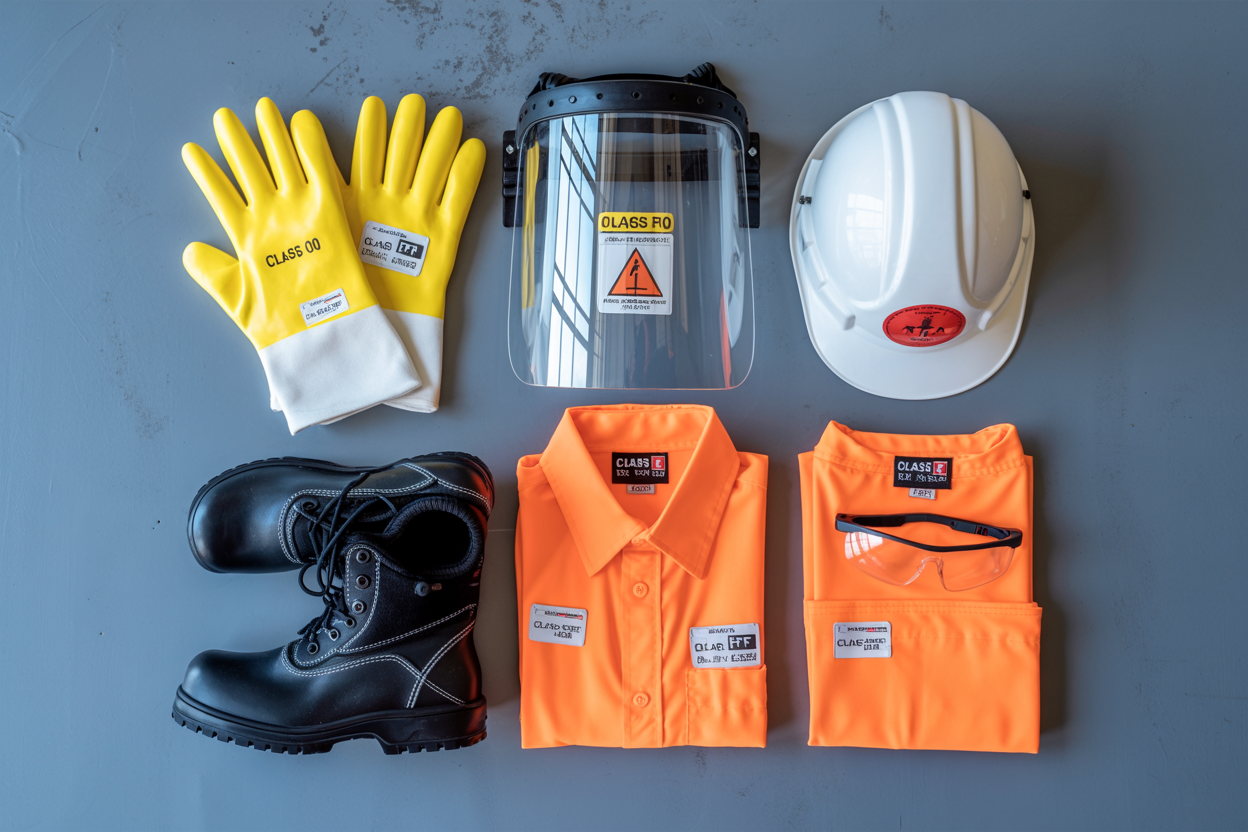
The categories of PPE covered - arc flash protection, insulated gloves, face shields, safety footwear, and more
How to inspect PPE before use and identify when it needs to come out of service
Employer obligations for providing, maintaining, and documenting PPE
The difference between general PPE awareness and formal competency certification
How electrical PPE training connects to broader WH&S and UEECD0007 obligations
Why Electrical PPE Training Is a Legal Requirement in Queensland
A lot of employers assume that because their workers wear PPE on site, they've ticked the box. They haven't. Wearing PPE and being formally trained on it are two very different things in the eyes of Queensland law - and that gap is where improvement notices and prosecutions happen.
The WH&S Act 2011 (Qld) - What It Actually Requires of You
Section 19 of the WH&S Act 2011 (Qld) places a primary duty of care on every Person Conducting a Business or Undertaking (PCBU) to make sure workers receive the information, training, instruction, and supervision they need to work safely. PPE training isn't a nice-to-have in the induction folder - it's a documented legal obligation. If a worker is injured using PPE they were never formally trained on, the PCBU is exposed to prosecution.
The Electrical Safety Act 2002 (Qld) - The Additional Layer
For anyone operating in the electrical trades or on sites with electrical infrastructure, there's an additional compliance layer beyond standard WH&S obligations. The Electrical Safety Act 2002 (Qld) and the Electrical Safety Regulation 2013 (Qld) impose specific requirements around PPE selection and use for live or near-live electrical work. A standard WH&S induction does not satisfy electrical-specific PPE obligations - those are two separate requirements, and you need evidence of both.
What SafeWork QLD Inspectors Actually Look For
SafeWork QLD conducts proactive site visits across Queensland's industrial corridors. When an inspector shows up, they're not just checking whether PPE is present on site - they want documented evidence that workers have been trained on how to use it. PPE in a toolbox is not proof that anyone knows what they're doing with it.
The consequence chain: improvement notice, monetary penalty, potential site shutdown. For a body corporate, a Category 2 failure under the WH&S Act can carry a significant financial penalty.
Legislation Referenced in This Article
Work Health and Safety Act 2011 (Qld) - Section 19, Primary Duty of Care
Work Health and Safety Regulation 2011 (Qld) - Part 3.2
Electrical Safety Act 2002 (Qld)
Electrical Safety Regulation 2013 (Qld)
Safe Work Australia - Code of Practice: Managing Electrical Risks in the Workplace
Australian Skills Quality Authority (ASQA) - Standards for Registered Training Organisations
Now that you know what Queensland law requires, the next question is whether this applies to your specific role and industry.
Who Needs to Complete an Electrical PPE Training Course in Queensland
The scope of who needs electrical PPE training is broader than most people expect - and "we're not an electrical business" isn't always the get-out-of-jail card it sounds like.
Licensed Electrical Workers and Apprentices
Any worker performing or assisting with electrical work needs to understand and correctly use PPE relevant to their environment - including supervised apprentices, not just licensed sparkies. The Electrical Safety Act 2002 (Qld) defines "electrical work" broadly: installation, maintenance, repair, and inspection all fall under it. If your workers are doing any of those things, formal PPE training isn't optional.
Construction Site Workers Exposed to Electrical Hazards
Workers who don't perform electrical work themselves but operate near live electrical infrastructure switchboards, overhead lines, temporary power setups also have PPE obligations. You don't have to be a licensed electrician to need electrical PPE training. If your crew is working anywhere near energized equipment, the obligation applies.
Operations Managers, Site Managers, and WH&S Officers
If you're the person responsible for WH&S compliance on site - whether that's your formal title or it just fell to you - you need to understand electrical PPE requirements well enough to fulfil your duty of care and audit your workplace effectively. The person managing compliance needs to know what good looks like, what the documentation should contain, and when something isn't up to standard.
Industries Where Electrical PPE Training Is Commonly Required
Electrical contracting businesses
Construction and civil works
Manufacturing and processing facilities
Warehousing and logistics - forklift charging bays, dock equipment
Facilities management and commercial property maintenance
Mining and resources operations in Queensland
Once you've confirmed your team needs this training, it helps to know exactly what they'll be learning and what they'll walk away able to do.
What Does an Electrical PPE Training Course Cover?
Not all electrical PPE training courses are built the same. Knowing what a quality course includes means you can ask the right questions before you hand over a cent.
PPE Categories Covered in the Course
A well-structured course works through each category of protective equipment your workers are likely to encounter on a Queensland worksite:
Arc flash and arc blast protection - rated PPE garments, face shields, and a clear understanding of when arc-rated PPE is mandatory versus optional
Insulated gloves and sleeves - voltage ratings, class selection, and the pre-use inspection procedure that most workers skip and shouldn't
Electrical safety footwear - dielectric ratings, what to inspect, and the triggers that mean a boot needs to come out of service
Eye and face protection - the difference between safety glasses and full face shields in electrical environments, and when each one applies
Head protection - non-conductive hard hats and the Class E rating that electrical workers specifically need
Hearing protection - relevant in high-voltage switching environments where the noise exposure risk is real but often overlooked
Skills You'll Walk Away With
After completing the course, workers should be able to:
Read and interpret PPE manufacturer ratings and safety data
Run through the pre-use inspection procedure for each PPE category before starting work
Identify damaged, degraded, or out-of-service PPE and pull it from use
Follow the correct donning and doffing sequence - because taking PPE off wrong is just as dangerous as not wearing it
Log, track, and replace PPE within a workplace register that will actually hold up to scrutiny
What the Course Does Not Cover
An electrical PPE training course does not replace a live electrical work license, an arc flash hazard assessment, or dedicated rescue training. If your workers need Low Voltage Rescue competency, that's covered under [UETDRRF004 Low Voltage Rescue training] - a separate nationally recognized unit worth looking at alongside this one.
Knowing what the course covers is one thing - knowing whether the provider you're looking at will actually deliver a valid certificate is another.
Online vs Face-to-Face Electrical PPE Training - Which One Counts?
Getting this wrong has a direct impact on whether your workers end up with a certificate that actually holds up - or one that gets rejected by a principal contractor, an insurer, or a SafeWork QLD inspector.
What Queensland Regulators Accept
Theory components can be delivered online - that part's fine. But competency assessment for PPE use requires face-to-face demonstration and observation to achieve national recognition. This comes directly from the ASQA Standards for Registered Training Organisations, which require observable, measurable performance evidence for competency-based units. You can't demonstrate correct donning of arc flash PPE or inspection of insulated gloves through a multiple-choice quiz.
The Risk of Choosing Online-Only Providers
An online-only certificate might look legitimate on the surface - it'll have a logo, a name, maybe even a unit code. But if there was no practical component and no face-to-face assessment, there's a real chance it won't be accepted by SafeWork QLD, your insurer, or the principal contractor on your next job. Spending money on training, filing the certificates, and then finding out none of it counted is a situation worth avoiding.
Before you book with any provider, verify their RTO number at training.gov.au. If they're not listed, walk away.
What Blended Delivery Looks Like
Blended delivery ticks all the boxes without eating a full day of your team's time:
Workers complete an online theory module before the session - reducing the time needed on site
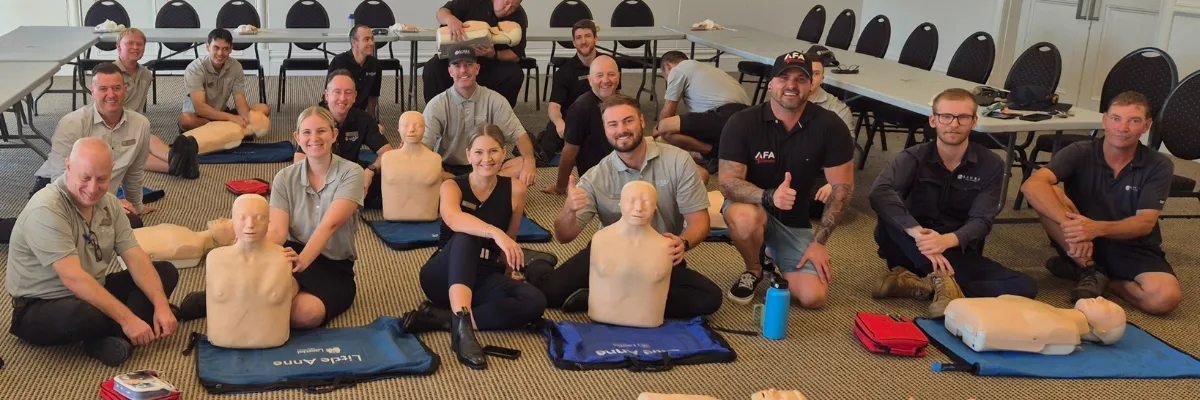
A face-to-face practical assessment is then conducted and can be delivered at your workplace
Certificates are issued same day upon successful completion
Group bookings are available for your team

How to Choose the Right Electrical PPE Training Provider
There are a lot of providers out there advertising safety training. Some are registered RTOs delivering quality, nationally recognized training. Others are not - and the difference only becomes obvious when a certificate gets rejected at exactly the wrong moment.
Always Verify the RTO Number
Any provider issuing nationally recognized certificates must be a registered RTO. Before you book, check the provider's RTO number at training.gov.au. It takes about 30 seconds and could save you a significant amount of pain down the track.
Four Questions to Ask Before You Book
If a provider can't answer all four clearly and quickly, that tells you something:
Is the course nationally recognized and delivered by a registered RTO?
Does the course include a practical competency assessment - not just a theory test or online quiz?
Can you deliver training on our site for a group?
When will certificates be issued after completion?
Same-day certificates, on-site group delivery, and a verifiable RTO number should be standard - not selling points.
Red Flags to Watch For
No RTO number listed anywhere on the website
A certificate issued immediately on completing an online quiz with no practical component
No unit code associated with the course - if a provider can't tell you the specific nationally recognized unit being delivered, that's a problem
Slow or no response to your initial enquiry - if they're hard to reach before you've paid, don't expect
What to Do Next
Electrical PPE compliance in Queensland isn't the kind of thing that gets easier the longer you leave it. The obligations under the WH&S Act 2011 (Qld) and the Electrical Safety Act 2002 (Qld) aren't new, and SafeWork QLD's appetite for proactive site inspections hasn't slowed down. If your business operates in electrical contracting, construction, manufacturing, warehousing, or facilities management and you can't produce documented PPE training records right now, that's a gap worth closing before someone asks you to close it under pressure.
The good news is that getting your team certified isn't the logistical nightmare a lot of operations managers expect. Blended delivery means the theory gets done before anyone sets foot in a training room, and a face-to-face practical assessment can come to your site. On-site delivery is almost always the most cost-effective and least disruptive option - your workers get certified, your operation keeps moving, and you walk away with same-day certificates ready to file or send straight to a client or principal contractor.
It's also worth thinking about this beyond the immediate compliance tick. The workers who go through a proper electrical PPE training course don't just have a certificate - they actually know how to inspect their gear before a job, identify PPE that needs to come out of service, and follow the right sequence when putting equipment on and taking it off. That knowledge has real-world value on a worksite. Fewer near-misses, fewer incidents, and fewer conversations you never want to have with someone's family.
From a business perspective, a group training session costs a fraction of a single SafeWork QLD improvement notice, and an improvement notice is a fraction of the cost of a prosecution or civil claim following a serious incident. The employers who treat PPE training as an investment rather than a compliance chore tend to be the ones who don't end up in those conversations with regulators at all.
If you've read this far and you're still not sure whether your team needs an electrical PPE training course, the answer is almost certainly yes. Check your training records, look at who on your site is working near or with electrical infrastructure, and ask yourself honestly whether you could produce documented competency evidence right now if a SafeWork QLD inspector walked through the gate this afternoon. If the answer gives you pause, that's your sign. Book the training, get the certificates, and get that nagging worry off your plate.