Electrical Hazard Rescue Course: What to Expect
If one of your apprentices touches a live switchboard and nobody on site can actually get him off it, that's not a head office problem. That's your problem. You're the one standing there. You're the one who has to explain it to his family, not some compliance manager three suburbs away in an office.
That's the whole reason an electrical hazard rescue course exists, and it's also why most crews put off booking one until it's suddenly urgent. Nobody really knows what happens on the day. Is it a classroom slideshow? Is it actual hands-on rescue work? Does it eat your whole roster for a full shift?
Run locally here on the Gold Coast, and honestly it's less painful than most sparkies expect. Below we'll walk through what you'll actually be doing during the session, how long it really takes, how group bookings work for your whole crew, why it matters for your ticket and your license, and what you walk away with at the end.
What Is an Electrical Hazard Rescue Course?
Quick answer before we get into the detail, since a lot of blokes just want this bit:
An electrical hazard rescue course is a hands-on, accredited training session that teaches you how to safely recognize, isolate, and rescue someone who's come into contact with a low voltage electrical hazard. It's typically required for electricians and trades working around live switchboards or infrastructure.
Break it down further and it covers:
What it trains you to do: recognize the hazard, isolate it safely, physically get someone clear, then provide initial care
Who needs it: electricians, apprentices, riggers, site supervisors working near live infrastructure
Format: practical, scenario-based work, not a room full of blokes watching slides
Typical duration
What you get at the end: a Statement of Attainment
That's the short version. Now let's get into what actually happens once you walk in the door.
What You'll Actually Do During an Electrical Hazard Rescue Course
This is the bit that actually matters, and it's the bit most providers gloss over. So let's not gloss over it.
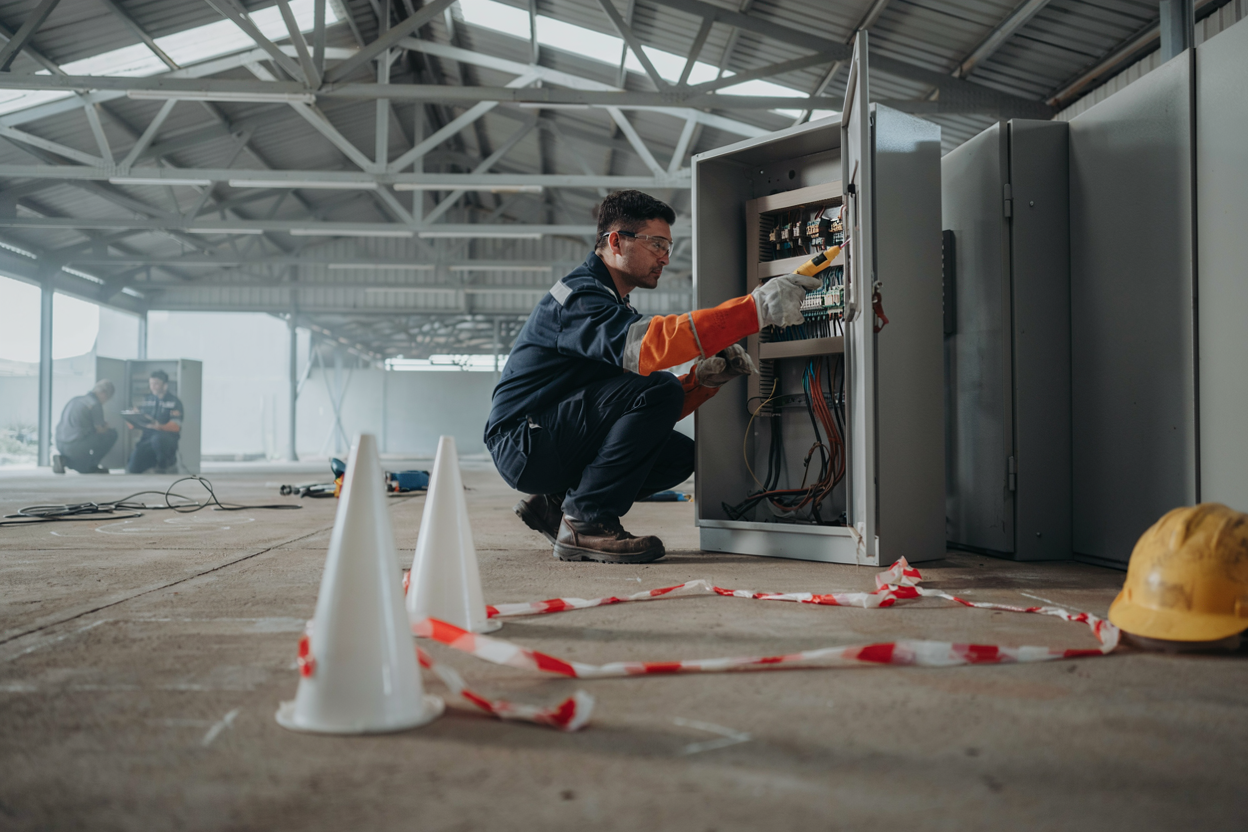
Live-Fault and Switchboard Rescue Simulation
You're not sitting through a slideshow of a switchboard with an instructor pointing at a diagram. You're standing in front of one. The simulation work is built around real switchboard and live-fault scenarios, because that's the situation you'd actually be walking into on site, not some sanitized version of it. If a course is classroom-only, it's not really preparing you for the day something goes wrong.
Isolation Procedures and Safe Approach Distances
Before anyone touches anyone, you've got to know how to make the area safe without becoming the second casualty. That's a real skill, not just a box you tick. This part of the day covers how to isolate the hazard properly and what distance is actually safe to approach from, because getting that wrong is how one incident becomes two.
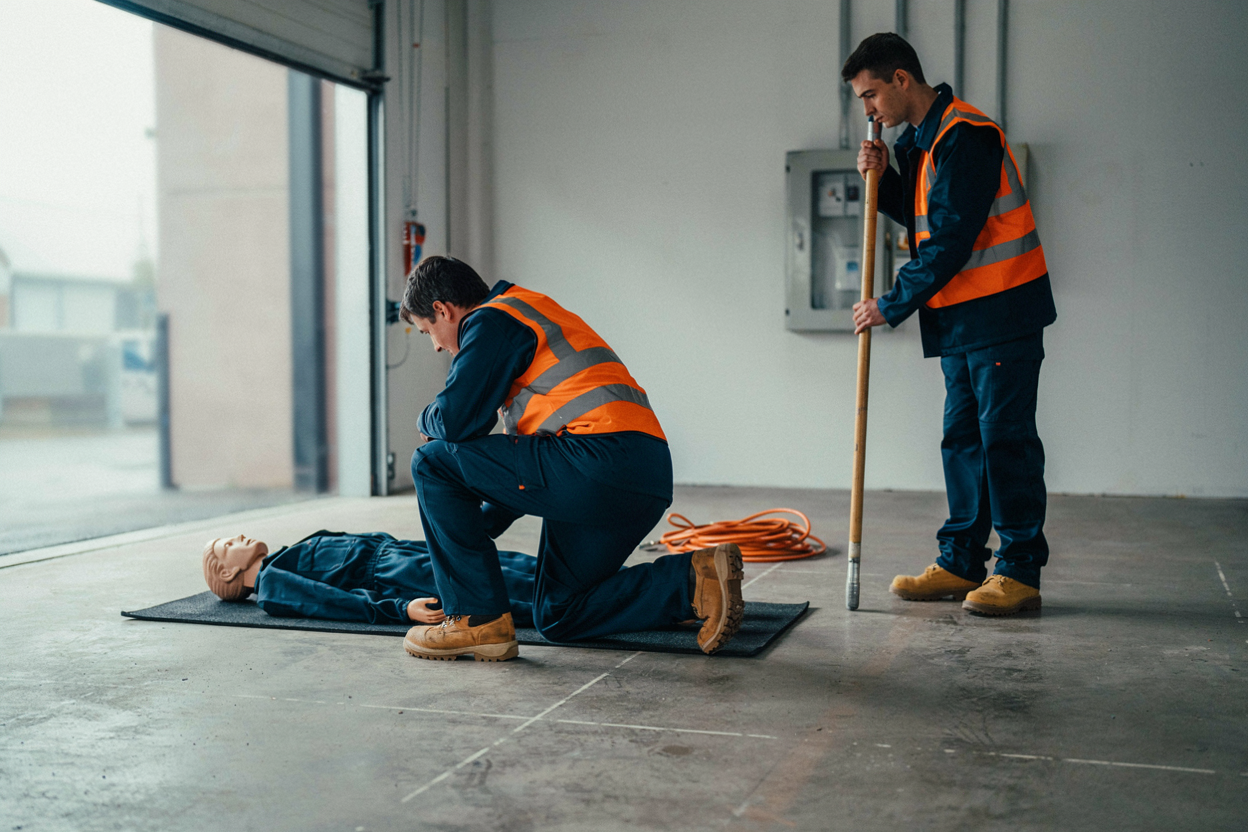
Casualty Removal and Initial Care
Once it's safe, you need to know how to actually get someone clear. Not drag them by the collar and hope for the best, there's technique to it. Then it moves into initial care once the person's out of harm's way, so you're not standing there waiting for an ambulance not knowing what to do with your hands.
PPE and Equipment on the Day
You'll be working with the actual gear you'd use on a real site, not props.
This isn't a compliance formality dressed up as training. It's built so that if it ever actually happens on your site, your hands already know what to do before your brain's caught up.
The whole point of running it this way is simple. When you or one of your crew is standing in front of a real switchboard on a real job, you don't want that to be the first time you've done any of this.
How Long It Takes (And How to Avoid Losing a Full Day on Site)
This is usually the first question out of a leading hand's mouth, and fair enough. Every hour a crew spends in training is an hour that's not billed to a job, and that adds up fast when you've got three, four, five blokes all needing to be there at once.
Standard Course Length
It's not designed to swallow your whole day, and it's not designed to be so short it's useless either, it's built around actually getting the skills in without holding your crew hostage.
Early Morning, Evening, and Weekend Sessions
Jobs don't pause for training, and handover deadlines don't care what's on the course calendar. That's why sessions are available early morning, evening, and on weekends, so you can get your crew through without pulling them off a live site mid-week when you can least afford it.
On-Site or Mobile Delivery
Depending on your crew size and location, on-site delivery may be an option too, meaning the training comes to you instead of everyone driving somewhere and losing travel time on both ends of the day.
Quick table:
If "I can't afford to pull my whole crew off site for a day" has been the thing stopping you from booking, that's exactly the objection this section's built to answer. It's not an all-day commitment, and it doesn't have to happen on a Tuesday at 9am when you've got three jobs running.
Group Bookings for Your Whole Crew, One Point of Contact
Chasing down individual bookings for three, four, six blokes, each with their own dates, their own reminders, their own paperwork, that's a job in itself. Nobody's got time for that on top of running actual sites.
How Group Bookings Work
A crew booking gets handled as one transaction, with one point of contact managing the whole thing. You're not filling out the same form six times or chasing six separate confirmation emails. One call, one booking, the whole crew's sorted.
Tracking Currency Across the Crew
Here's the bit that usually lives in someone's head or on a wall calendar at the depot: knowing who's current and who's about to lapse. Instead of that, group bookings give you a clear line of sight across the whole crew, so you're not caught out realizing halfway through a job that someone's ticket expired two months ago.
Group Pricing
Pricing is structured for crews, not individuals paying one at a time. Worth asking about directly when you book, since it changes the math's on getting everyone done together versus staggering it out.
If you've been putting off booking because organizing it for everyone felt like more admin than it was worth, that's the exact problem group bookings are built to remove. One conversation, the whole crew sorted.
This is also usually the point where it's worth just picking up the phone rather than reading further, if your crew's ticket situation is already a bit of a mess. Sorting it now is a lot less painful than sorting it after an audit flags it.
Why This Matters for Your License and Your Crew's Safety
This is the part that doesn't get talked about enough, and it's the part that actually keeps leading hands up at night.
Liability for Leading Hands and Supervisors
If something goes wrong on site and someone wasn't current, the questions don't go to head office first. They come to you. You're the one who signed off on the crew, you're the one who knew who was ticketed and who wasn't, and you're the one who has to answer for it..
That's on me, not head office. Me.
It's a harsh way to put it, but it's the truth of the role. Being the leading hand means the buck stops with you long before it gets anywhere near a manager's desk.
WHS Audit Exposure
Sites are getting busier and more electrically live, not less. With major projects ramping up across the Gold Coast, a WHS audit turning up a gap in your crew's certification isn't a hypothetical, it's a real risk that gets more likely the busier things get. And an audit doesn't care that you meant to book everyone in, it only cares whether the ticket was current on the day.
How This Fits Alongside Broader Site Safety
doesn't sit on its own, it's one piece of the broader site safety picture alongside your other WHS obligations. Treating it as a standalone box to tick rather than part of the bigger compliance picture is usually where crews get caught out.
For the official requirements, the Electrical Safety Office QLD and Safe Work Australia are the two places worth checking directly rather than relying on word of mouth from another site.
The honest version of this section is short: a current ticket costs you a few hours. An incident, or an audit gap, costs a lot more than that, and not just in dollars.
What You Get at the End (Certification & Renewal)
Statement of Attainment
Once the day's done, you walk away with a Statement of Attainment, and turnaround is quick. You shouldn't be waiting weeks for paperwork that proves your crew's complaint right now.
Validity Period
The certification's valid for 12 months, which sets your renewal clock ticking from the day you finish, not some arbitrary date buried in fine print.
Renewal Reminders
This is where most crews fall down, not because they don't care, but because tracking six different expiry dates in your head or on a wall calendar is never going to work forever. A renewal reminder system takes that off your plate entirely, so nobody's finding out a ticket's lapsed the same week a job needs proof of it.
The goal here isn't just handing you a piece of paper. It's making sure you're never the guy scrambling to prove currency the day an audit or a new job asks for it.
Is This the Right Course for Your Crew?
Who This Course Applies To
Short answer: if you or your crew work anywhere near live infrastructure, this is for you. That includes:
Electricians
Site supervisors and leading hands
Riggers working near live infrastructure
If any of those describe someone on your crew, they need to be current, not just the licensed sparkies.
Electrical Hazard Rescue vs First Aid: Do You Need Both?
Short answer, yes, and they're not interchangeable. An electrical hazard rescue course teaches you how to safely isolate a hazard and physically get someone clear of it. First aid picks up from there, once the person's actually safe to treat. One without the other leaves a gap. You can know exactly what to do once someone's clear and still have no idea how to safely get them there, or the reverse.
Comparison table:
Construction sites are increasingly expected to have both covered, not one or the other. If your crew's only ticketed for one, that's worth sorting sooner rather than later.
Get Your Crew Sorted
None of this is really about a piece of paper. It's about the ten seconds after something goes wrong, when someone on your crew either knows exactly what to do or doesn't. That gap is the whole reason this kind of training exists, and it's the gap that decides whether a bad moment on site stays a close call or turns into something nobody can walk back.
Most leading hands don't put this off because they don't care. They put it off because life on site is already full, and training feels like one more thing competing for a day they don't have to give. But the actual time cost is smaller than the story people tell themselves about it, and the risk of sitting on the other side of that story doesn't get smaller just because it's ignored.
The tracking problem is real too. Keeping half a dozen expiry dates straight in your head, or scrawled on a calendar at the depot, works fine right up until it doesn't. It only takes one missed renewal, discovered at the worst possible time, for that system to cost you a lot more than the five minutes it would have taken to sort properly.
There's also the part nobody likes saying out loud. When something happens on a live site, the first question isn't aimed at a policy document or a company handbook. It's aimed at the person standing closest to the decision, and for a leading hand that's rarely anyone but them. Being current isn't just about compliance on paper, it's about not being the person left explaining a gap that was avoidable.
The good news is this isn't complicated to fix. A crew gets booked in together, everyone walks through the same practical scenarios, and everyone walks out the other side actually knowing what to do rather than having sat through something that felt like a formality. It's not a big ask, and it doesn't need to disrupt a week of work to get done properly.
Sites are only getting busier, and the infrastructure around them isn't getting any less live. Sorting this now, while it's a choice and not a scramble, is the difference between a crew that's genuinely ready and one that's just hoping nothing goes wrong before the next renewal comes around.