
Electrical Emergency Response Training: What's Involved?
It's Monday morning. You're on a commercial fit-out. The WHS coordinator pulls you aside during site induction and asks for your LVR ticket. You pull up your phone, find the certificate - and your stomach drops. Expired three months ago. Just like that, you're not starting today. You're in the carpark making calls you really don't want to make.
That moment - the expiry ambush - is why most Brisbane electricians end up searching for electrical emergency response training at 7am on a Monday. If that's you right now, we'll get to the urgent stuff. But if you've got five minutes to understand what the course actually involves, it's worth the read.
UETDRRF004 isn't just a box to tick. Ventricular fibrillation is a real outcome of LV shock. The first three to five minutes of response are where a life is either saved or it isn't. That's what this training is built around.
We walk through exactly what electrical emergency response training involves - the scenarios covered, the skills assessed, and what your certificate means on site. We'll also cover who needs it in Queensland, how long it lasts, what to look for in a provider, and how it differs from your standard first aid ticket.
What Does LVR Training Involve?
LVR training - formally known as UETDRRF004 (Perform Rescue from a Live LV Panel) - is a nationally recognised unit of competency that teaches electricians and trades professionals how to safely respond to an electrical emergency involving a live low voltage panel. The course combines applied theory with hands-on practical scenarios, and you're assessed against nationally set competency standards before you walk out with your certificate.
Here's what the course covers, step by step:
Identifying electrical hazards at an LV panel
Isolating the power source safely before approaching a casualty
Performing a safe rescue from a live LV panel environment
Delivering CPR and managing an unconscious casualty
Operating an AED (defibrillator) in response to cardiac arrest
Activating emergency services and managing the scene until paramedics arrive
Why Electrical Emergency Response Training Is Mandatory in Queensland
If you're working on or near live LV panels in Queensland, holding a current UETDRRF004 isn't optional. It's a site condition - and principal contractors enforce it at induction, not as a suggestion.
Who Is Required to Hold UETDRRF004?
The short answer: if your work puts you in proximity to a live low voltage panel, you need it. That covers a wider range of roles than most people realize.
The real enforcement point for most Brisbane tradies isn't WorkSafe theory - it's the principal contractor's WHS coordinator at site induction. A current LVR ticket is a hard requirement to get through the gate. No ticket, no start.
What Queensland Legislation Covers This Requirement?
The Electrical Safety Act 2002 (Qld) and the Electrical Safety Regulation 2013 set the framework for electrical safety competency requirements in Queensland. Safe Work Australia's model WHS legislation provides the national context. If you want the specifics, the Queensland Electrical Safety Office is the place to go - but for most tradies, the practical reality is simpler: your principal contractor will ask for it, and if you don't have it, you're not working that day.
Now you know who needs it - here's exactly what happens on the day.
What Happens During Electrical Emergency Response Training: Step by Step
This is the section most electricians actually want. Not the legislation, not the paperwork - what does the day actually look like? Here's how it runs.
Part 1 - Pre-Course Requirements and What to Bring
There are no formal prerequisites for UETDRRF004 - you don't need to hold a first aid certificate before you show up. A current HLTAID011 is a good complement to have, and some tradies choose to renew both on the same day, but it's not a mandatory entry requirement.
What to bring:
Photo ID
Comfortable work clothes you can move in
Closed-toe footwear - you'll be on your feet doing practical work
Part 2 - Theory Component (What You'll Learn First)
The classroom component is applied it's not generic first aid theory dressed up with an electrical sticker on it. The content is built around real worksite scenarios that licensed electricians actually encounter.
You'll cover:
Electrical hazard recognition - what makes an LV panel environment dangerous and how to read a scene before you act
Physiology of electric shock - why ventricular fibrillation is the primary cardiac risk from LV contact, and why the first few minutes of response matter so much
Chain of survival applied to electrical incidents specifically - not the generic version
Legal duties of a first responder on a worksite - what you're required to do, and what the consequences of inaction look like
The trainers aren't generalists pulling slides off a shared drive. They contextualize every piece of theory to the kind of environments Brisbane electricians actually work in - commercial fit-outs, industrial sites, solar installs, facilities maintenance.
Part 3 - Practical Rescue Scenarios (The Core of the Course)
This is what the course is really about. The practical component is where competency is built - and for most experienced tradies, it's also where the real learning happens.
You'll practice:
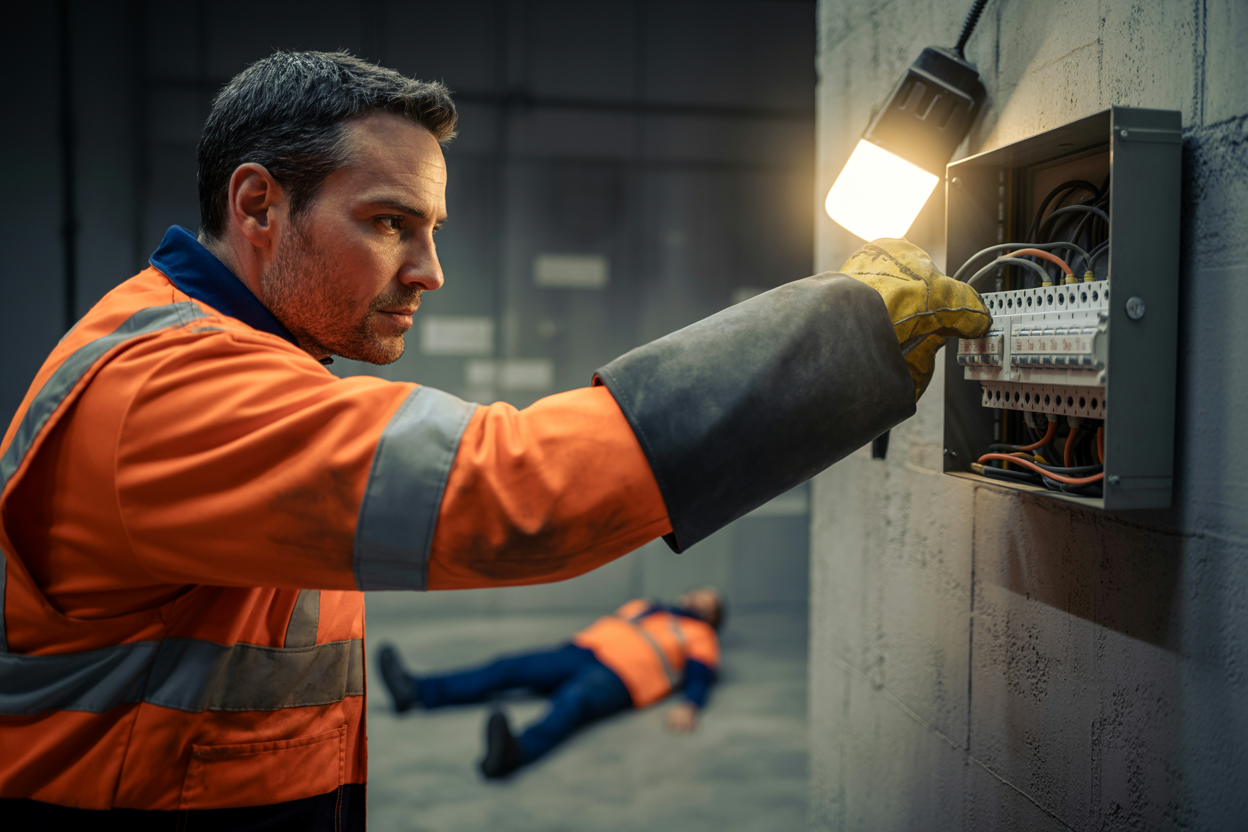
Approaching a downed colleague near a live LV panel - the isolation protocol you must complete before making contact with a casualty. This is the step that catches people off guard. The instinct is to go straight to your workmate. That instinct, without training, turns one casualty into two.
Performing a drag rescue - physically removing a casualty from a hazardous zone safely and efficiently
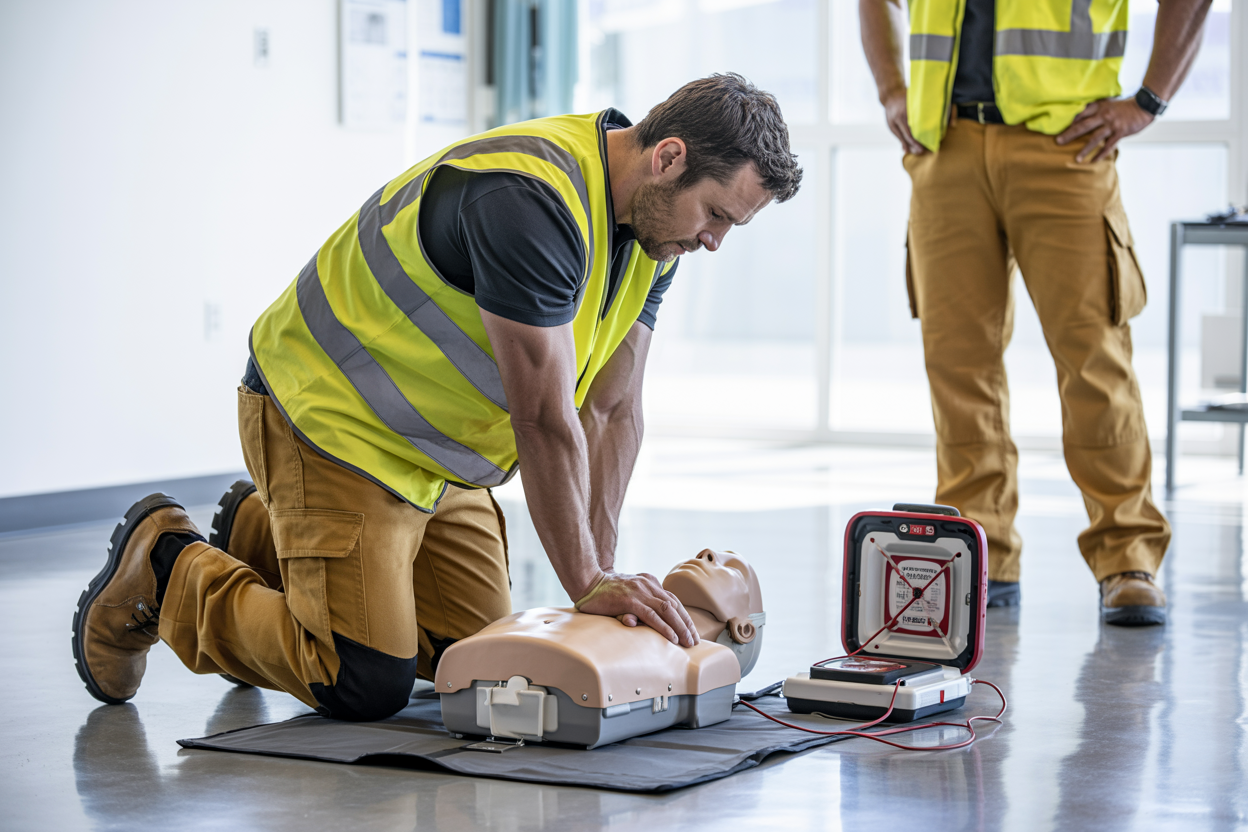
Moving from rescue to CPR - once the casualty is clear, you shift straight into resuscitation on a non-breathing casualty
AED operation - pad placement, rhythm analysis, shock delivery. You'll do this on a trainer unit, not just watch someone else do it.
Part 4 - Competency Assessment
UETDRRF004 is competency-based. There are no percentage scores, no written exam grades - the outcome is either Competent or Not Yet Competent.
Your assessor observes your practical performance directly against nationally set competency standards. What gets assessed:
Safe isolation of the LV panel before casualty contact
Rescue technique - approach, drag, scene management
CPR quality on a non-breathing casualty
AED operation - correct pad placement and shock delivery
Overall scene management and emergency service activation
If you're marked Not Yet Competent on the first attempt, reassessment is available. It's not a fail-and-go-home situation - the process exists to make sure you can actually do this under pressure, not just recite steps.
Certificate is issued upon successful completion.
The course itself is straightforward. The part most tradies overlook is what comes after - specifically, how long that certificate stays valid.
How Long Is the LVR Certificate Valid?
Certificate validity: 12 months from the date of issue. That's it. No extensions, no grace periods.
This is the part that catches people out. Twelve months sounds like a long time until you're six weeks out from expiry and realize you've got three jobs lined up with principal contractors who'll ask for it at induction. Most Brisbane principal contractors will not accept an expired LVR certificate - even by a day.
Renewal works the same way as the initial course - you sit UETDRRF004 again. There's no refresher-only option recognized by principal contractors. You go through the full competency assessment each time, which is the point - the practical skills need to stay sharp, not just the piece of paper.
A practical move: set a phone reminder six weeks before your expiry date. That gives you enough buffer to find a session without scrambling. Leave it to the week before - or after it's lapsed - and your options get narrow fast.
One more thing worth knowing: some providers let you pair your UETDRRF004 renewal with an HLTAID011 (first aid) renewal on the same day. If both tickets are due around the same time, that's one less day off the tools.
Knowing the certificate lasts 12 months is one thing. Making sure you're getting it from the right provider is another.
LVR Training - What to Look for in a Provider
Not every training provider is the same. UETDRRF004 is a specific unit, and the quality of delivery varies more than you'd expect. Here's what to check before you book.
Trainer Credentials Matter More Than Price
The right question to ask is: "Is this trainer actually a tradie, or just someone with a TAE qualification and a safety manual?"
It matters. The isolation protocol, the drag rescue, the way an LV panel environment actually behaves - these are things you either know from time on the tools or you don't. A generalist trainer can cover the content. An electrician-trained assessor can tell you why each step exists and what happens when it goes wrong.
What to check before you book:
Trainer background - actual electrical trade experience, not just training qualifications
RTO registration - verify on the ASQA national register. No RTO number, walk away.
Certificate format - a nationally recognised Statement of Attainment under the UET training package, not a provider-branded certificate that raises eyebrows at site induction
Practical Facilities and Equipment
LVR training requires actual LV panel equipment and AED trainer units. If a provider is running the course with a PowerPoint presentation and a mannequin on a folding table in a conference room, that's a problem - not because the theory won't land, but because the practical component needs real equipment to build real muscle memory.
Ask the provider directly: "What equipment do you use for the rescue scenario?" The answer tells you a lot.
For employer bookings - if you've got a team of four or more, a reputable provider will come to your depot or worksite. That saves your crew travel time, keeps them off the road during work hours, and means the training happens in an environment they actually recognize.
If you're already holding a first aid certificate and wondering whether LVR covers the same ground - it doesn't. Here's why you need both.
Electrical Emergency Response Training vs. Standard First Aid - What's the Difference?
This one comes up a lot. If you've already got your HLTAID011, do you still need UETDRRF004? Yes. They're not interchangeable - they cover different ground, and one doesn't substitute for the other on an electrical worksite.
Here's the fast version:
The key distinction is this: you cannot safely apply standard first aid near a live LV panel without LVR training. The isolation and rescue component is what makes UETDRRF004 electrical-specific. Walking up to a casualty who's still in contact with a live panel - without isolating the source first - puts you at the same risk they're already in. That's the step HLTAID011 doesn't cover. That's the step UETDRRF004 is built around.
Most licensed electricians working on Brisbane construction sites should hold both. They're complementary tickets - HLTAID011 covers the broad medical emergency response, UETDRRF004 covers the electrical-specific rescue that has to happen before any of that first aid can safely begin.
Book Your Session Today
Electrical emergency response training isn't complicated - but what it covers genuinely matters. Safe isolation, physical rescue, CPR, AED operation, scene management. Done in the right order, by someone who's practiced it under pressure. That's what UETDRRF004 builds, and that's why principal contractors across Brisbane treat it as a hard site requirement rather than a nice-to-have.
The 12-month validity is the part most tradies underestimate. It comes around faster than you think, and the expiry ambush - standing at induction with a lapsed certificate and a job on the line - is entirely avoidable. Set the reminder, book before it lapses, and you never have to have that conversation with a WHS coordinator again.
If you're weighing up providers: check the RTO number, check the trainer's background, and make sure the certificate you walk away with is a nationally recognized Statement of Attainment. Not all LVR training is delivered equal, and the difference shows up at induction.
We run UETDRRF004 sessions across Brisbane, with short-notice bookings available and onsite delivery for groups of four or more. Certificate issued same day. Book online in under three minutes, or call us directly if you need a session this week.