Electrical Accident Response: Are You Prepared?
You've probably seen it happen. Not the accident itself, but the moment right before it. A young apprentice reaching for a switchboard he thinks is dead. A mate on the crew is about to grab a cable that's still live. Someone yells out, everyone freezes for half a second, and then it's fine. This time.
That half second is the whole story. Because electrical accident response isn't something you figure out on the fly, it's something your body either knows or doesn't. And most crews on Gold Coast sites, if we're honest, have never actually rehearsed what happens in those first 60 seconds after someone gets hit.
General first aid gets a lot of attention. Everyone's had the CPR refresher, everyone knows how to check for a pulse. But an electrical incident plays by different rules. Touch the wrong thing at the wrong moment and you've got two casualties instead of one. That's where formal low voltage rescue training comes in, and it's built specifically for this gap.
Below we'll walk through what to actually do in that first minute, the mistakes that catch even experienced tradies out, and what it takes to get a whole crew genuinely ready rather than just one bloke with a ticket. Because under the Electrical Safety Act, if something goes wrong on your site, that question comes back to the leading hand first.
What To Do In An Electrical Accident
If you only remember one thing from this whole article, make it this bit. Here's the short version, then we'll break it down properly further down.
Do not touch the person if there's any chance they're still in contact with the electrical source. That's the rule that saves the second life. Beyond that:
Isolate the power source at the point of isolation or the circuit breaker, if it's safe to do so
If you can't isolate it, only move the person using something non-conductive, never anything metal, never anything wet
Call 000 and start CPR or first aid the moment they're clear
If it's a live overhead or underground high-voltage source, don't go near it at all, wait until isolation is confirmed by someone qualified
That last point trips people up because instinct says go help. But a high-voltage source doesn't care how brave you are, and Queensland's Electrical Safety Act exists partly because too many second responders have found that out the hard way.
Let's slow each of those steps down for a second, because the order actually matters more than people think.
Assess first. Before anyone moves a muscle, the job is to work out whether the person is still in contact with the source. That sounds obvious written down. On a real site, with someone down and adrenaline already running, it's the step everyone wants to skip. Don't skip it. A few seconds spent looking properly is not wasted time, it's the difference between one casualty and two.
Isolate second. If there's a point of isolation or a circuit breaker within reach and it's safe to get to, that's the move. Cutting the source doesn't just protect you, it protects everyone else who might come running when they hear the shout. A site with the power still live is a site where the accident can happen again in the next thirty seconds to whoever arrives next.
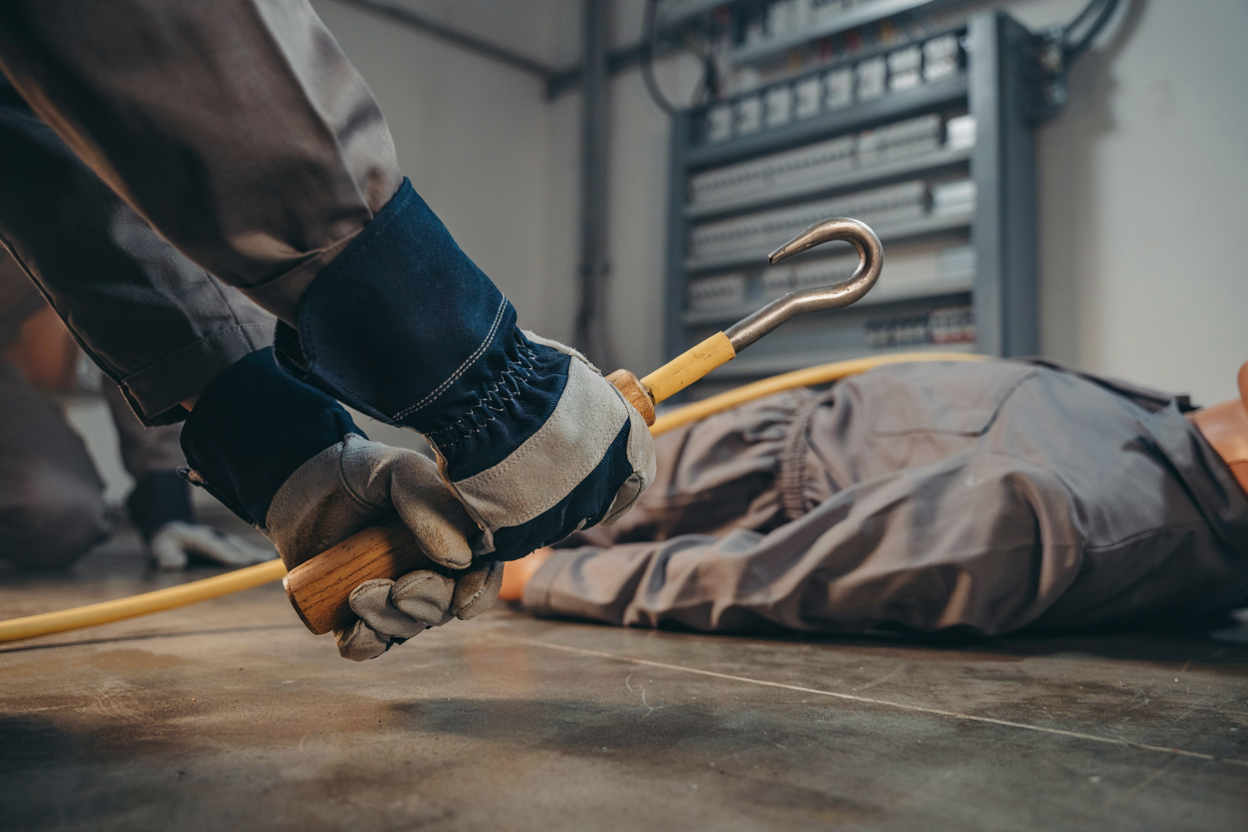
Only remove the person yourself if isolation genuinely isn't possible. And when you do, non-conductive materials only. Dry timber, dry rope, a fiberglass tool handle. Never metal, never anything wet, never your bare hands. This is the step where good intentions get people hurt, because the instinct to grab and pull is almost impossible to override without training that's put you through it before.
Call 000 and start first aid or CPR the second the person is clear. Not before. Not while you're still working out if it's safe. The moment they're clear of the source, that's when first aid protocol takes over exactly the way it would for any other incident.
And for live overhead or underground high-voltage sources specifically, the answer is different again. Don't approach at all. Not with a stick, not with anything. Wait for confirmed isolation from someone qualified to give it. High voltage doesn't behave the way low voltage does, and treating them the same is exactly the kind of assumption that catches experienced tradies out.

Why Electrical Accidents Escalate So Fast On Site
Here's the thing about an electrical incident that makes it different from almost anything else that can go wrong on a job. There's no slow build up. No warning groans before the ute rolls, no smell before the fire starts. One second everything's normal, the next second someone's down, and the current doesn't stop just because you're standing there in shock trying to work out what just happened.
The physics of it, in plain terms: every second you hesitate is a second the person stays in contact with the source, if they're still in contact. Muscles lock up around live current, they can't let go even if they want to. That's the bit that makes electricity different to almost every other workplace injury. Your instinct is to grab someone and pull them clear. That instinct will get you hurt too. Hesitation costs seconds, but so does the wrong kind of rushing in.
Then there's the sites themselves. Gold Coast work right now, especially with the light rail expansion and the high-rise builds stacking up, isn't exactly low risk to begin with:
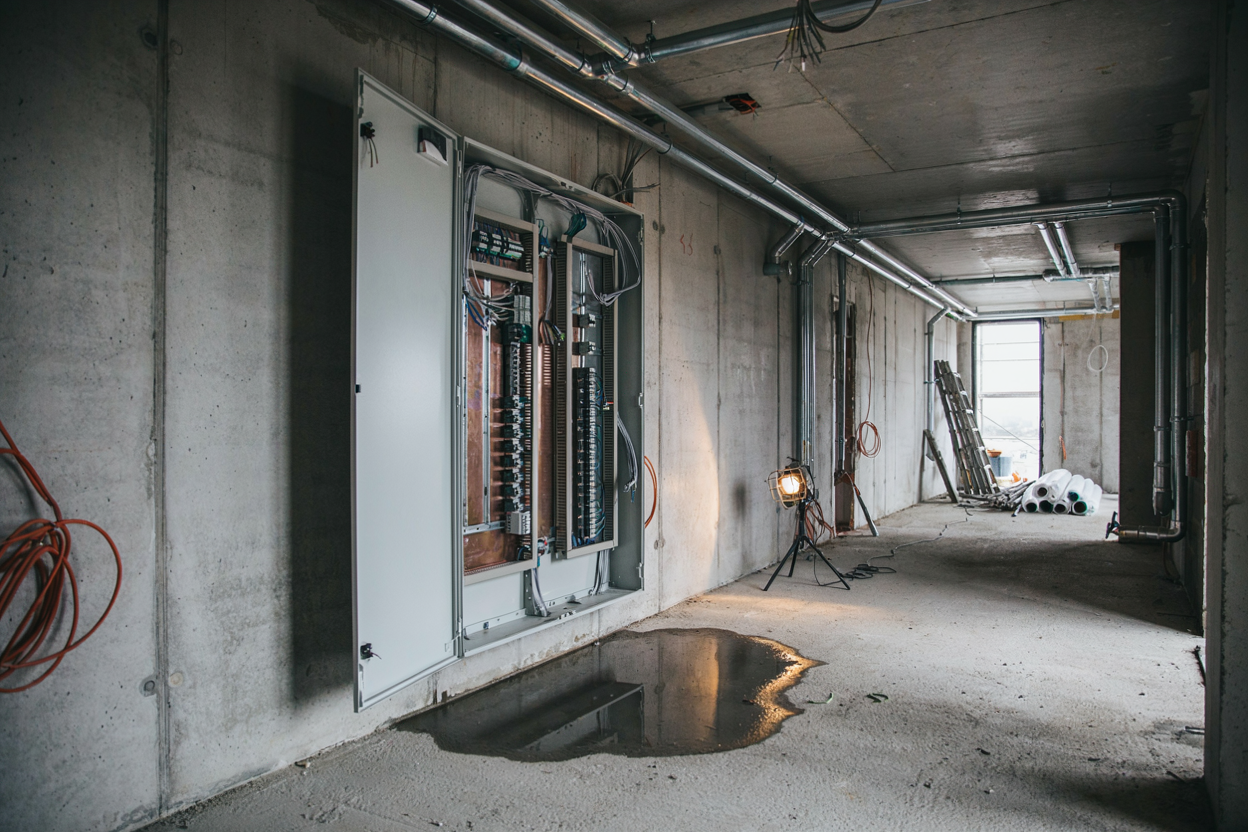
Live switchboards mid-fit-out, sometimes labelled, sometimes not
Wet conditions, whether that's weather or just a job that involves water lines running near power
High-rise sites where access is tight and getting a casualty clear isn't as simple as stepping back
None of those three conditions are rare. They're closer to normal, especially on the kind of jobs the light rail and high-rise pipeline keeps generating. A switchboard mid-fit-out that isn't fully labelled yet is just part of the sequence of a build, not a red flag anyone stops the job for. Wet conditions turn up constantly, whether that's actual rain or just water lines being run near power as part of the fit-out. And high-rise access being tight isn't a design flaw, it's just what high-rise sites are. Put those three together and you've got exactly the kind of environment where an electrical accident response plan isn't optional extra reading, it's the difference between a near miss and a real one.
If your crew's working anywhere near a live switchboard on a site like that, this isn't hypothetical. It's exactly the kind of scenario dedicated low voltage rescue training is built around, not a generic classroom situation.
Why "General First Aid" Isn't Enough For Electrical Incidents
This is where a lot of crews get caught out, and it's not because anyone's being careless. It's just that first aid training and electrical rescue training are built to solve two different problems.
HLTAID011, your standard first aid course, is brilliant for what it covers. Broken bones, choking, general CPR, wound management. But it was never designed around the specific problem of a person still connected to a live source. There's no isolation procedure in a standard first aid course, no non-conductive removal technique, because that's not what it's for.
Low voltage rescue training is a different animal entirely. It's built around the exact scenario your crew is actually exposed to, live faults, switchboards, isolation points, the works.
The gap isn't a knock on first aid courses. It's just that nobody trains for a live fault by accident. If your crew's only ever done HLTAID011, they've got half the picture. A genuinely useful crew has both first aid for the general stuff and low voltage rescue for the scenario that's actually most likely to happen on an electrical site.
Your Legal & WHS Obligations As A Leading Hand Or PCBU
Right, let's talk about the part that actually keeps guys like you up at night.
The Electrical Safety Act in Queensland isn't just a document that sits in a folder somewhere back at the depot. It sets out real, on-site requirements for how electrical risk gets managed, and it doesn't just point the finger at "the company" when something goes wrong. It points at the people who were actually running the job.
And here's the bit that matters most if you're the leading hand. Compliance isn't some abstract head office responsibility that floats above you. If one of your crew gets hurt and it comes out that nobody on site had a current ticket, that question isn't going to head office first. It's coming to you. You're the one who knew who was on the crew that day, you're the one who's supposed to know who's current and who's not.
That's genuinely one of the heaviest things about the leading hand role and honestly, most blokes in that position feel it even if they don't say it out loud. You didn't sign up to be the compliance officer, you signed up to run a good crew and get the job done. But the two things have become the same job whether anyone likes it or not.
Think about how that plays out in practice. An incident happens, and the first questions asked aren't about the wiring diagram or who specked the job. They're about who was on site, what training they held, and who was responsible for knowing that. The head office might own the paperwork. You own the answer to that question, because you're the one who was actually there running the crew day to day.
That's not meant to pile more weight onto an already heavy role. It's meant to make the point that this particular risk is genuinely manageable, in a way a lot of site risks aren't. You can't control the weather, you can't always control the schedule a client hands you, but you can control whether every person on your crew is properly certified before they set foot near a live switchboard. That's one variable that's entirely within your hands.
The good news is this isn't actually hard to fix. It just needs one deliberate decision, get the whole crew certified properly, rather than hoping it never comes up.
Building A Crew That Actually Knows What To Do
Here's a scenario worth sitting with for a second. Say one bloke on your crew did the low voltage rescue course two years ago. Good on him. But he's not on site the day it happens. He's on leave, or he's been pulled to another job, or he's just not standing close enough when it counts.
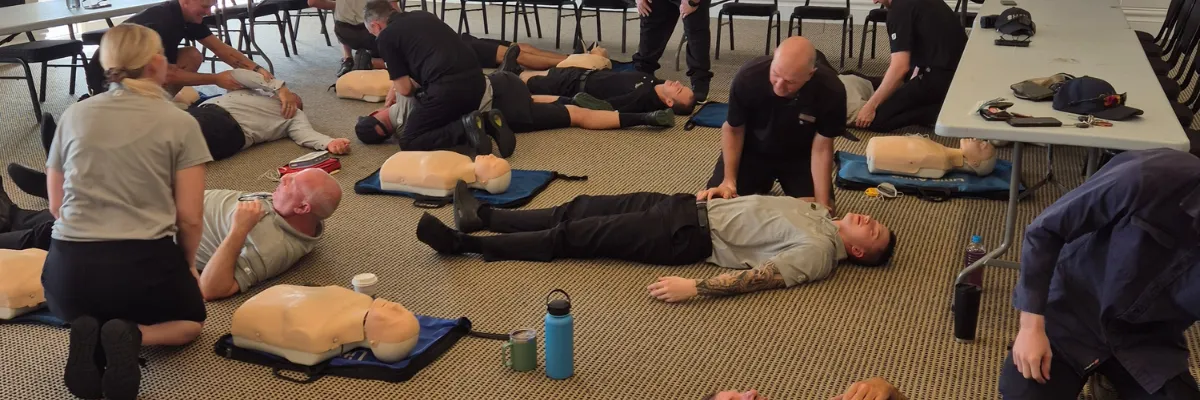
One trained person on a crew of five or six isn't a safety plan, it's a lottery ticket. The whole point of electrical accident response is that whoever's closest needs to know what to do in that first 60 seconds, not just whoever happens to hold the ticket.
So the real goal isn't "someone's covered." It's "everyone's covered." That means whole-crew certification, not one-off individual bookings whenever someone's ticket happens to be top of mind.
And then there's the other half of the problem, the bit that doesn't get talked about enough. Even if you do get everyone ticketed, how do you actually keep track of it? For most leading hands, this lives in one of two places: in your head, or on a wall calendar back at the depot that nobody updates. Neither of those is a system, they're just habits that work until the day they don't.
A crew that's genuinely ready looks like this:
Every member holds a current ticket, not just one designated person
Certification dates are tracked somewhere that isn't just memory
Renewal happens as a routine, not a scramble after an audit flags a gap
Notice none of that requires anything flash. It's not about buying software or hiring someone new to manage compliance. It's about deciding, once, that "in my head" and "on a wall calendar nobody updates" aren't good enough for something this serious, and then actually acting on that decision instead of letting it sit on the to-do list behind the next three jobs.
Getting there doesn't need to mean pulling your whole crew off site for a day each, or chasing individual bookings one by one. A single group booking, sorted in one hit, is the difference between this being an ongoing headache and being something you set up once and stop thinking about.
Closing
None of this is about being paranoid. It's about the gap between what could happen on a live site and what your crew's actually rehearsed for, and closing that gap before it ever gets tested for real.
Because here's the truth about that first 60 seconds. Nobody rises to the moment on instinct alone. What actually happens is people fall back on whatever they've practiced, or they freeze. There's no third option when a mate's down and the clock's already running. The crews that handle it well aren't the ones with the bravest guy on site, they're the ones where everyone already knew exactly what to do before it happened.
That's the whole point of proper electrical accident response training. It doesn't just tick a compliance box, though it does that too. It turns a moment of panic into something your body already knows how to do, isolate, assess, respond, without anyone needing to think twice.
You can't control when a live fault happens. Sites get busier, schedules get tighter, and risk doesn't wait for a convenient day. What you can control is whether your crew's ready for it, every single person, not just the one who happened to do the course a couple of years back.
A near miss is a warning most crews get at least once. The ones who take it seriously turn it into a training session. The ones who don't just get lucky again, until one day they don't.
Getting your whole crew properly certified isn't the hard part people assume it is. It's one decision, made once, that means you stop carrying this on your own shoulders every time a job gets busy or a ticket quietly lapses without anyone noticing.