Do I Need Both Asthma and Anaphylaxis Training? Find Out
A new enrollment form lands on your desk with an EpiPen action plan attached, and you're not 100% sure every educator on shift this week is certified to use it. Fair question to stop and ask: does one course cover both asthma and anaphylaxis, or do you need two separate qualifications?
The short answer to do I need both asthma and anaphylaxis training is yes. ACECQA treats them as two distinct competencies, 22300VIC (anaphylaxis) and 22556VIC (asthma), and both are required if your center cares for children with either condition. Which in practice means almost every center. Below, we'll break down what each course covers, why they're assessed separately even though most providers deliver them back to back in one session, and how to check if your staff roster is actually compliant before your next ACECQA visit.
Do I need both asthma and anaphylaxis training?
Yes. ACECQA requires separate certification for each condition, because they're assessed as two distinct units of competency:
22300VIC – Course in First Aid Management of Anaphylaxis
22556VIC – Course in the Management of Asthma Risks and Emergencies
Completing only one doesn't satisfy the requirement for the other, even though most training providers deliver both in the same session. If your center has children enrolled with either condition, asthma, anaphylaxis, or both, every educator caring for them needs current certification in the relevant unit. And centers with any allergy or asthma enrolments typically need staff certified in both.
Why Are Asthma and Anaphylaxis Training Treated as Separate Requirements?
Two Different Medical Emergencies, Two Different Response Skills
Here's the thing that trips a lot of centers up. Anaphylaxis and asthma feel like they belong in the same bucket because they're both "breathing emergencies." But physiologically, they're not the same event, and the response your educator needs to know about the cold is completely different for each.
Anaphylaxis is a severe allergic reaction, the body overreacts to something it's decided is a threat, swelling can close the airway, blood pressure can drop fast, and the response is an EpiPen given promptly, followed by an ambulance call. Asthma is the airways narrowing and tightening, usually triggered by exercise, cold air, or a virus, and the response is a puffer and spacer, used correctly, with a clear escalation point if it's not working.
Different triggers. Different equipment. Different steps. That's why ACECQA won't let one course stand in for the other. It's not a box-ticking quirk, it's because mixing up the response in a real emergency could cost time your team doesn't have.
What Each Unit Code Actually Assesses
Both are separately assessed under the Victorian unit of competency framework, but delivered and recognized nationally, so booking through any accredited provider still gets you the same nationally recognized outcome.
Why Most Providers Still Deliver Them Together
Even though they're assessed separately, most reputable providers (including us) run both units back to back in the one session. It just makes sense, your team is out of ratio for the same block of time either way, so bundling both means two certificates for one booking, not two separate days off the floor. More on how that session works further down.
One thing worth clearing up: HLTAID012 (Childcare First Aid) touches on both conditions as part of its broader content, but it does not satisfy the standalone 22300VIC or 22556VIC requirement. Centers sometimes assume their HLTAID012-certified staff are covered, and that's a compliance gap that can catch you out at an assessment visit.
Knowing whether it actually affects your specific center is next.

Does My Centre Need Both, Even If We Don't Currently Have an Anaphylaxis-Diagnosed Child?
The ACECQA Rule on Enrolled vs Future Enrolments
This is the question a lot of directors are quietly sitting on, especially when budgets are tight and one course feels more "urgent" than the other. If nobody currently enrolled has a nut allergy, do you really need 22300VIC right now, or can it wait? The answer to do I need both asthma and anaphylaxis training doesn't change just because there's no diagnosed child on the roll yet.
ACECQA's expectation isn't really about who's enrolled today, it's about whether the service is prepared. Assessors look at your center's readiness as a whole, not a headcount of diagnosed kids matched against your certificates. A new enrolment form with an EpiPen action plan can land with zero notice, sometimes the week before the child starts, with no grace period to catch up.
Why "We Don't Have One Right Now" Isn't a Safe Position
Here's the honest version: a center that only trains staff reactively, after a diagnosed child enrolls, is always one step behind. And it's not just new enrolments. Existing families' circumstances change too, a child can be newly diagnosed with asthma or an allergy well after they've started with you, and you won't get advance warning for that either.
The safer, regulator-aligned position is to treat both units as standard baseline training for anyone educator-facing, the same way you'd treat a working with children check. Not because every child needs it today, but because you can't predict which week that changes.
Minimum Staffing Coverage per Shift
This is the bit that catches people out even when they think they're covered. Having "some" staff certified isn't the same as coverage on every shift. Casual and relief educators, split shifts, early opening and late pickup windows, your certified staff member could easily not be the person actually on the floor when it matters.
A quick checklist worth running through with your team:
Currently enrolled children with asthma, anaphylaxis, or both? → training is non-negotiable, now
Could a new enrolment arrive with little or no notice? → yes, always → both units should be standard for all educator-facing staff
Is a certified-in-both staff member rostered on every shift, including early/late and casuals? → if you're not sure, that's your answer
We're not trying to be alarmist, the point isn't to scare you into overbooking. It's just that "we'll sort it when we need it" isn't a position ACECQA, or your own conscience, will find comfortable if something happens on the wrong shift.
Once you know both are needed, the next question is logistics, getting your whole team certified without pulling the center out of ratio for a full day.
How Are 22300VIC and 22556VIC Delivered Together?
Typical Course Format
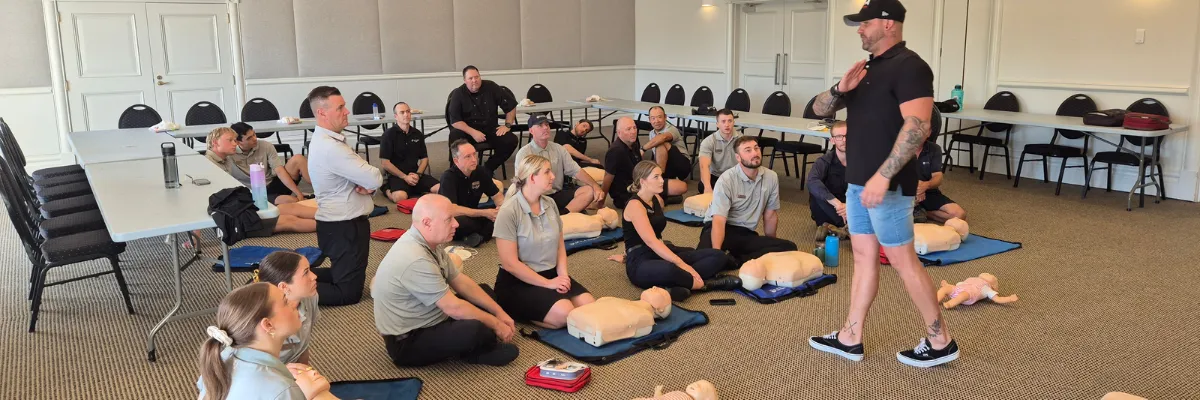
The good news is combined delivery is the norm, not a special request. One booking, one session, both units assessed, staff walk out certified in both codes rather than coming back for a second date.
Centers juggling nap times, staff breaks, and the chaos of a normal day shouldn't have to build a whole roster around training. Ask your provider about scheduling options that actually fit your center.
What a Combined Session Covers
A typical combined session runs through both conditions in sequence rather than jumping back and forth, so the learning stays clear rather than getting muddled:
Session flow: Arrival and sign-in → Anaphylaxis module (recognition + EpiPen practice) → Asthma module (recognition + puffer/spacer practice) → Combined practical assessment → Certificates issued
Both units get their own dedicated teaching and assessment time, they're not rushed together, which is why the certificates hold up as separately valid even though delivered in one sitting.
Group Bookings for Centre Teams
This is where things get a lot less painful for a director juggling ten educators' worth of admin. Rather than each staff member booking and paying individually, which realistically never happens on time, group bookings let you register and pay for your whole team in one transaction, with individual certificates issued per person.
Fast certificate turnaround matters more than it sounds. With an ACECQA visit booked or a new enrolment starting soon, waiting weeks for paperwork isn't good enough, you need that compliance file up to date now.

How Do I Check My Team's Compliance Before an ACECQA Visit?
Certificate Validity Period
Certificates have a set validity period, and knowing exactly when yours expires isn't something you want to reverse-engineer from memory or an old email when an assessor's standing in front of you. It needs to live somewhere you can pull up in seconds.
What to Have Ready for an Assessor
When ACECQA turns up, you generally don't get much warning, and scrambling through folders while someone waits isn't a good look even if your team is genuinely compliant. Worth having on hand, per staff member:
Full name matching their staff record
Unit codes completed (22300VIC and 22556VIC, not just "asthma and anaphylaxis training" written generically)
Date of completion and expiry date
A copy of the actual certificate, not just a note that says they did it
Some centers keep this in a shared spreadsheet, some in their center management software. It doesn't matter which, as long as it's current and someone can find it in under a minute.
Setting Up Renewal Reminders
Here's where a lot of the ongoing stress comes from, it's rarely the initial booking that trips centers up, it's the renewal cycle nobody was tracking. A certificate quietly lapses, nobody notices for months, and it surfaces at the worst possible time, usually during an assessment or right when a new enrolment needs that exact certification.
A renewal reminder system fixes this properly instead of patching it over and over. It removes an entire category of admin you shouldn't have to think about week to week, get flagged automatically when someone's coming up for renewal, rather than discovering the gap the hard way.
Conclusion
So, back to the original question, do I need both asthma and anaphylaxis training. Yes. ACECQA treats 22300VIC and 22556VIC as two separate units of competency, and one doesn't cover the other, no matter how similar they look from the outside.
The reason comes down to the emergencies themselves being different. An EpiPen response for anaphylaxis and a puffer-and-spacer response for asthma aren't interchangeable skills, and that's exactly why ACECQA assesses them as standalone units rather than folding one into the other, even when providers deliver both in the same session.
It's also not really about who's currently enrolled. A new enrolment with an EpiPen action plan, or a child newly diagnosed with asthma, can turn up with little to no warning, so treating both units as standard training for every educator-facing staff member is the safer position, not an overcautious one.
The logistics side doesn't need to be painful either. A combined session covers both units in one booking, and a group booking lets you register your whole team in one transaction instead of chasing individual staff to sort their own paperwork.
None of that matters much if the certificates aren't tracked properly afterwards. Knowing exactly when each staff member's certification expires, having the right documentation ready for an assessor, and setting up renewal reminders so nothing lapses quietly are what actually keep a center audit-ready year-round, not just on the day training happened.
So it really comes down to three things: confirm your roster's current certification status, book the combined session for whoever's got a gap, and set a renewal reminder so this doesn't become a recurring scramble every year. An enrolment form with an EpiPen plan attached and two lapsed certificates on the team is a genuinely common situation, and it's completely avoidable once both units are covered across your whole educator-facing staff, with a system that flags renewals before they lapse rather than after.