Difference Between CPR and First Aid: Which Do You Need?
The difference between CPR and first aid comes down to scope. That's really it. CPR is the skill you use when someone is unresponsive and not breathing normally. A first aid course (HLTAID011) includes CPR, then adds the wider stuff on top. Bleeding, burns, bites, allergic reactions, broken bones.
Simple enough on paper. But here's a scene plenty of parents will recognize, and it's not one particular person, it's a lot of you. The pool went in last summer. The baby's finally asleep, the toddler's down, and you've got two course pages open on your phone late at night. One says CPR. The other says first aid. You did a course years ago for your first job and all you remember is "30 and 2".
For Gold Coast parents with a backyard pool and little ones at home, knowing that difference makes the decision a whole lot easier. Once you see what each course actually covers, choosing takes about a minute.
And most parents searching this aren't trying to tick a workplace box. You just want to know that if something happened by the pool, your hands would know what to do. That's what a CPR course (HLTAID009) teaches, with hands-on practice on infant and child manikins. Not just the adult ones.
This guide gives you a plain-English comparison of HLTAID009 and HLTAID011. What each one covers for babies and kids, and a simple way to decide what suits your family right now. We'll also cover when to add first aid later, and how to bring your partner or the grandparents along too.
What Is the Difference Between CPR and First Aid?
Quick answer: CPR is one life-saving skill. First aid is the bigger set of skills that includes it. CPR (HLTAID009) teaches you how to help someone who is unresponsive and not breathing normally, using chest compressions, rescue breaths and a defibrillator (AED). First aid (HLTAID011) covers all of that, plus how to handle other emergencies.
CPR (HLTAID009): adult, child and infant CPR, rescue breaths, AED use. Refresh every 12 months.
First aid (HLTAID011): everything in CPR, plus choking, bleeding, burns, fractures, asthma, allergic reactions and more. Requalify every 3 years, with CPR refreshed yearly.
For parents: start with CPR for the core skill, then add first aid when you're ready.
Here's what each course actually looks like when you're in the room, starting with CPR.
What a CPR Course (HLTAID009) Actually Covers
A CPR course Gold Coast parents book is focused and very hands-on. It's built around one job: keeping someone going until the ambos arrive.
The core skills
Recognizing when someone is unresponsive and not breathing normally, and calling Triple Zero (000)
Chest compressions and rescue breaths
DRSABCD, which is just the order you work through: Danger, Response, Send for help, Airway, Breathing, CPR, Defibrillation
All taught to current ANZCOR guidelines
DRSABCD looks like alphabet soup on paper. Once you've worked through it a few times on the floor with a manikin though, it starts to feel like a checklist your body already knows.
Infant and child CPR, not just adults
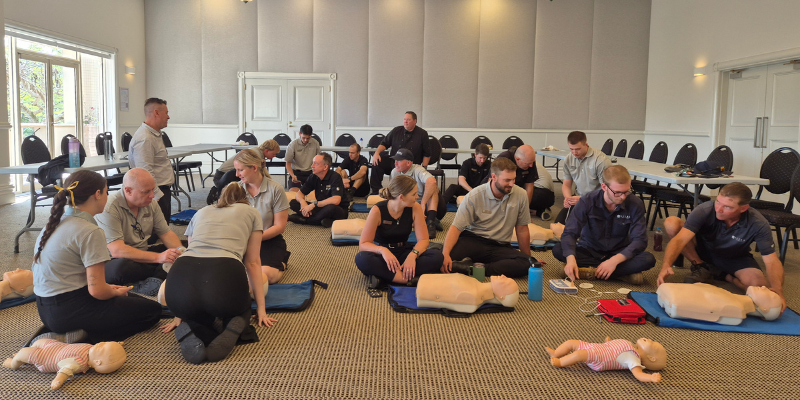
This is the bit parents care about most, and fair enough. Technique changes with age. Babies get two fingers for compressions, kids get one or two hands depending on their size, and the breaths are gentler too. HLTAID009 assessment actually requires adult and infant manikins, so you won't walk out having only practiced on a grown-up. If you want a bit more before class, our infant and child CPR guide goes further.
Parent practicing infant CPR on a baby manikin during a CPR course on the Gold Coast
Using a defibrillator (AED)
Plenty of people are scared of the AED. Honestly, they're designed for nervous people. It talks you through every step out loud and it can be used on children. You'll spot them at shopping centers, surf clubs and sporting fields all over the coast. The goal here is simple: comfort, not fear.
What a CPR course doesn't cover
Bleeding, burns, fractures, bites, allergic reactions, asthma and choking management all sit in HLTAID011, not HLTAID009.
So CPR handles the moment someone stops responding. First aid covers pretty much everything else that tends to happen at home.

What a First Aid Course (HLTAID011) Covers
A first aid course Gold Coast families book is the bigger picture. More skills, a lot more ground.
Everything in CPR, plus the wider emergency skills
This trips a lot of people up. HLTAID011 already includes the HLTAID009 CPR skills, so there's no need to book both. Do the first aid course and you walk out with CPR anyway.
The easiest way to see it is two circles, one sitting inside the other. CPR is the small one. First aid is the big one it sits in.
Diagram showing the difference between CPR and first aid, with CPR included inside a first aid course
The emergencies parents meet most at home
These are the everyday things that happen with little kids around, and they're the reason a lot of parents end up adding first aid down the track.
Choking: back blows and chest thrusts
Burns: hot drinks knocked off the bench, a barbecue on a Sunday arvo
Bites and stings: snakes, ticks, and bluebottles at the beach
Allergic reactions: including anaphylaxis awareness, plus asthma and seizures
Bleeding and sprains: the classic playground fall
Who usually needs HLTAID011
Designated first aiders at work
Parents who want broader confidence once CPR feels solid
Want the full set of skills? See the first aid course (CPR included).
Seeing the two side by side makes the choice a lot clearer.
CPR vs First Aid Course: Side-by-Side Comparison
If you've ever typed "CPR vs first aid course which do I need" into your phone late at night, this is the table for you.
Feature | CPR (HLTAID009) | First Aid (HLTAID011) |
What it covers | CPR for adults, children and infants; AED use | Everything in CPR, plus choking, bleeding, burns, bites, allergies, asthma and more |
Recommended refresh | Every 12 months | Every 3 years (CPR yearly) |
Certificate | Nationally recognized Statement of Attainment | Nationally recognized Statement of Attainment |
The Statement of Attainment is issued by RTO 31106.
Why you can trust the certificate
Training delivered under RTO 31106
Nationally recognized HLTAID009 and HLTAID011 Statements of Attainment
Taught to current ANZCOR guidelines
Adult, child and infant manikins, plus AED trainers
So which one should you book first? For most parents, it comes down to three things.
Which Course Should Gold Coast Parents Book First?
A quick three-question check
1. Pool, beach or creek time with young kids? Start with CPR.
2. Need a certificate when you go back from parental leave? Check what your employer asks for. Many only want CPR, some require HLTAID011.
3. Want to handle everyday injuries too? Add first aid, either now or after CPR.
Flowchart helping parents choose between a CPR course and a first aid course
When CPR is the right first step
For a lot of families, an infant CPR course Gold Coast parents can get to on a Saturday morning is the smart starting point. It's quicker and it goes straight to the highest-stakes skill. It also fits around nap times, or a Saturday when the grandparents can mind the kids. You're just getting the part that matters most when every second counts.
When to go straight to first aid
If your workplace requires HLTAID011, or you'd simply rather do one course that covers everything, go straight to first aid. And remember, it already includes CPR.
What about the childcare first aid course?
HLTAID012 is designed for people working in education and care, like early learning centers and family day care. Most parents rarely need it, but you can read more on our childcare first aid page.
Grandparents and partners
If Nan and Pop mind the kids by the pool every week, CPR is the priority for them too. Same goes for your partner, especially if they're away for work and you're swapping who's on duty. A CPR course for parents Gold Coast families book together means everyone who watches the kids knows what to do. More on that further down.
If there's a pool in your backyard, here's why CPR usually comes first.
Why CPR Comes First Around Gold Coast Pools and Beaches
Water is just part of life here. Swimming lessons, nippers, a lazy afternoon at the creek, the backyard pool on a 32 degree day. That's a big part of why so many parents land on CPR first.
What the numbers tell us
Drowning is the leading cause of accidental death for Australian children aged 0 to 4. The National Drowning Report 2025 recorded 357 drowning deaths nationally, 27% above the 10-year average.
The Queensland Family and Child Commission's child death reporting adds local context to that picture. None of this is meant to scare you. It's the reason prepared parents matter so much.
Queensland's pool CPR sign
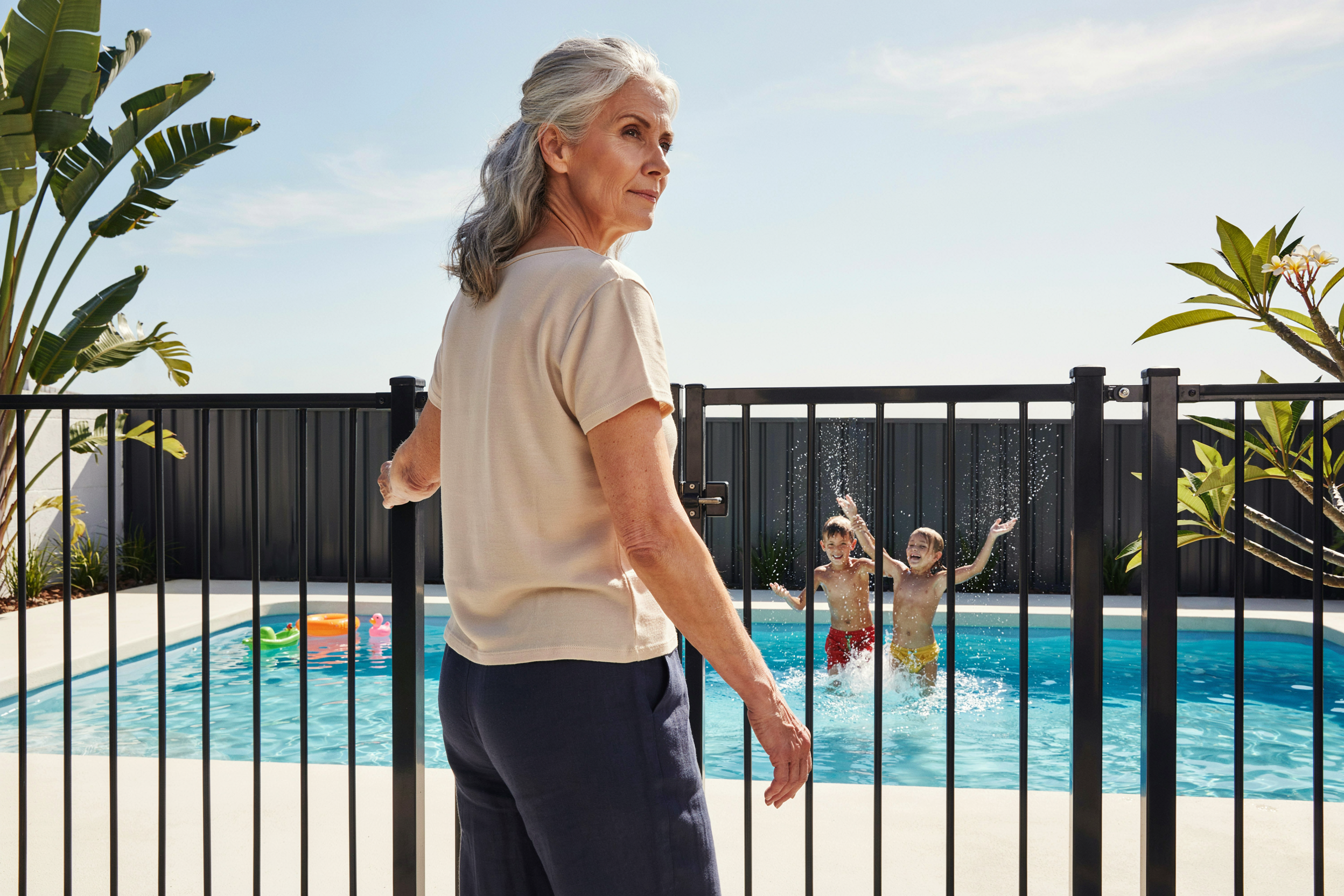
If you own a regulated pool in Queensland, you need a compliant CPR sign on display (QBCC). You walk past it every time you open the gate. But a sign is a reminder, not training. Reading steps off a fence panel in the moment is a very different thing to having already done it with your own hands.
Fenced backyard plunge pool at a Gold Coast family home Queensland pool owners must display a CPR sign. Training is what makes it useful.
CPR is one layer of pool safety
CPR works best alongside the other layers of backyard pool safety:
Active supervision, the way Royal Life Saving's Keep Watch program describes it: eyes on the kids, every time
A compliant fence and a gate that self-closes and latches
Swimming lessons, as early as your swim school allows
Our guide to backyard pool safety goes through each of these in more detail.
Learning CPR once is a great start. Keeping it fresh is what makes it stick.
How Often Should You Renew CPR and First Aid?
If you're wondering how often you should renew CPR, the answer is every year.
CPR: every 12 months, in line with Australian Resuscitation Council guidance and the Safe Work Australia First Aid in the Workplace Code of Practice
First aid: every 3 years, with a yearly CPR refresher in between
Timeline showing CPR renewed every 12 months and first aid every 3 years
Why every year? Because CPR skills fade fast without practice. If you did a course back in 2015 and now all that's left is "30 and 2", that's not you being forgetful. It's just how it works for nearly everyone. Hands forget quicker than heads do, and a yearly refresh puts the rhythm back where it belongs.
Free Infant and Child CPR Steps Card DRSABCD at a glance, with the infant and child differences, for the fridge or the pool fence. A reminder, not a substitute for hands-on training. First name | Email ☐ Get a reminder before next pool season to refresh your CPR.
It also helps when you're not the only one in the family who knows what to do.
Bring the Family: Partner, Grandparent and Mothers' Group Sessions
Here's something a lot of parents realize halfway through a course. Knowing CPR yourself is brilliant. Knowing everyone who watches your kids can do it too is even better.
Private sessions for mothers' groups
If your mums' group has been saying "we should all do CPR" for months, a mums group CPR course might be the easiest way to make it happen. We run a private CPR course for groups on the Gold Coast at a home or a community hall, with the focus on infant and child CPR. Babies are welcome where it's safe.
Small group of parents learning infant and adult CPR together in a living room
Organize a private CPR session for your mothers' group.
Your Hands Will Know What to Do
So the difference between CPR and first aid really is just scope. CPR is the one skill for the moment someone is unresponsive and not breathing normally. First aid is the bigger course that wraps around it, adding choking, burns, bites, bleeding, allergic reactions and the rest. You don't have to pick one and miss out on the other, because first aid already has CPR built in.
For most Gold Coast parents with a pool out the back and little ones running around, CPR is the natural place to start. It fits around nap times or a Saturday when the grandparents can help out, and it goes straight to the skill that matters most. You get hands-on time with infant and child manikins plus the AED, so none of it feels foreign if you ever need it.
If your work needs HLTAID011, or you'd just rather do it all in one go, that's fine too. Go straight to first aid and you'll walk out with CPR anyway. Coming back from parental leave? A quick check with your employer will tell you which one they want.
Whichever you choose, don't let it sit for years. CPR fades quicker than anyone expects, so a yearly refresh before pool season keeps it where it belongs. And if your partner, Nan and Pop or your mums' group watch the kids too, bring them along. It's a lot easier to relax when you're not the only one who knows what to do.
None of this is about being frightened of the water. It's about being able to sit by the pool on a hot afternoon, coffee in hand, and know that if something ever went wrong, your hands would know exactly what to do.