Why CPR Life Support Training Could Save a Life
Someone collapses right in front of you. Could be a mate on the footy field, could be a toddler at the daycare you work at, could be someone standing next to you at Woolies. In that moment, the next sixty seconds matter more than almost anything else that will happen that day. Do you freeze, or do you know exactly what to do with your hands?
That's the whole point of CPR life support training. It's not really about ticking a box for your employer, even though yes, it does that too. It's about having the actual skill, sitting there in your muscle memory, ready to go the second you need it. Most of us walk around assuming we'd know what to do in an emergency, right up until we're actually in one. Then the mind goes blank, the hands shake, and every second that passes without action is a second that matters.
If you're on the Gold Coast searching for CPR life support training, you're probably here for one of two reasons. Either you need a nationally recognised certificate for work, coaching, or some kind of licensing requirement, or you genuinely want to know you could step up if the moment ever came. Plenty of people land here with both reasons at once, and that's fine too. The good news is a properly run course gives you both of those things in one short session, and it won't eat your whole weekend to get it.
So let's get into what CPR life support training actually covers, how it stacks up against full first aid, who actually needs it, and how you can get booked in near you, sometimes even this week.
What Is CPR Life Support Training?
CPR life support training teaches you how to spot a cardiac or breathing emergency and act on it straight away, using chest compressions, rescue breaths, and an AED (that's the defibrillator) to keep blood and oxygen moving to the brain until the ambulance turns up. In Australia this training sits under the nationally recognized unit HLTAID009 – Provide Cardiopulmonary Resuscitation.
It sounds simple when it's written out like that, but in the moment it's anything but. Adrenaline kicks in, people around you start panicking, and unless you've actually practiced the motions with your own hands, it's easy to hesitate at exactly the wrong time. That's why this training focuses so heavily on doing, not just knowing. You're not memorizing a set of facts for a test, you're building the kind of reflex that kicks in before you've even had time to think about it.
A typical course covers:
Recognizing cardiac arrest and knowing when to call for help
Doing chest compressions and rescue breaths properly
Using an AED safely and with confidence
Responding to choking and unresponsive casualties
Your certificate is valid for 12 months, and it's required by a lot of employers, sporting clubs, and childcare or healthcare licensing bodies across the Gold Coast and beyond.
What Does CPR Life Support Training Actually Cover?
We touched on the basics above, but let's actually break it down properly, because this is the bit that matters most once you're in the room.
The Core Skills You'll Learn
Recognising the signs of cardiac arrest and unresponsiveness, so you're not standing there second-guessing yourself while precious time ticks away
Chest compressions and rescue breaths, with variations for adults, kids, and infants, because what works on a grown man doesn't work on a baby, and getting that wrong matters
AED (defibrillator) use, and this is real hands-on practice with the actual machine in your hands, not just watching a slide about it, because the first time you touch one should not be during an actual emergency
Choking response and how to put someone in the recovery position, two skills that come up far more often in day to day life than most people realise
The Unit of Competency Behind It: HLTAID009
Here's something worth knowing. When we talk about "CPR life support training" in Australia, what we actually mean is the nationally recognised unit HLTAID009. It's built around the ANZCOR (Australian Resuscitation Council) guidelines, so what you're taught matches the same standard that paramedics and hospital staff train to. It's not a watered-down version made simple for the public, it's the same core technique, just taught in a way that makes sense for someone who isn't in the medical field.
Once you finish, you get a Statement of Attainment. That's a nationally recognised document, not some certificate a random website prints off for you. That matters, because if you've ever booked a course somewhere sketchy and had your employer reject the paperwork, you know exactly why this bit is important. A rejected certificate means you're back to square one, and now you've lost time on top of whatever you already lost.
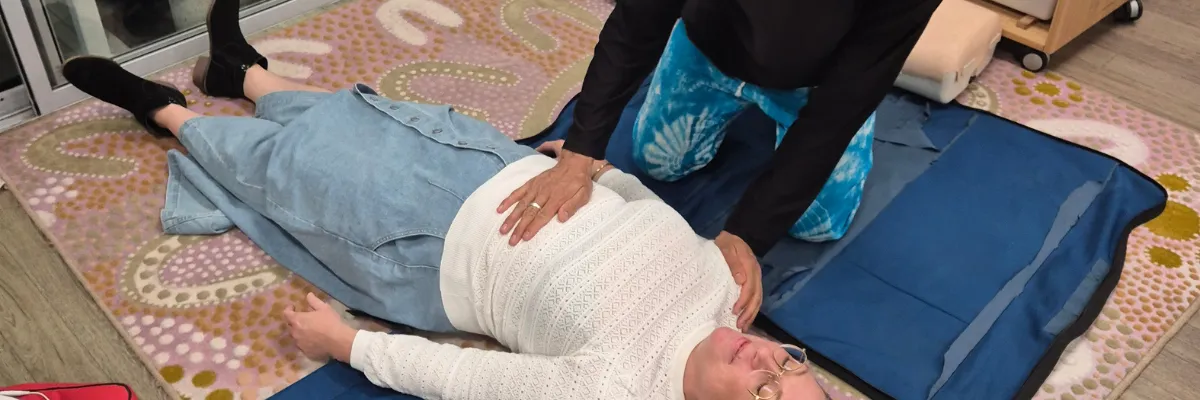
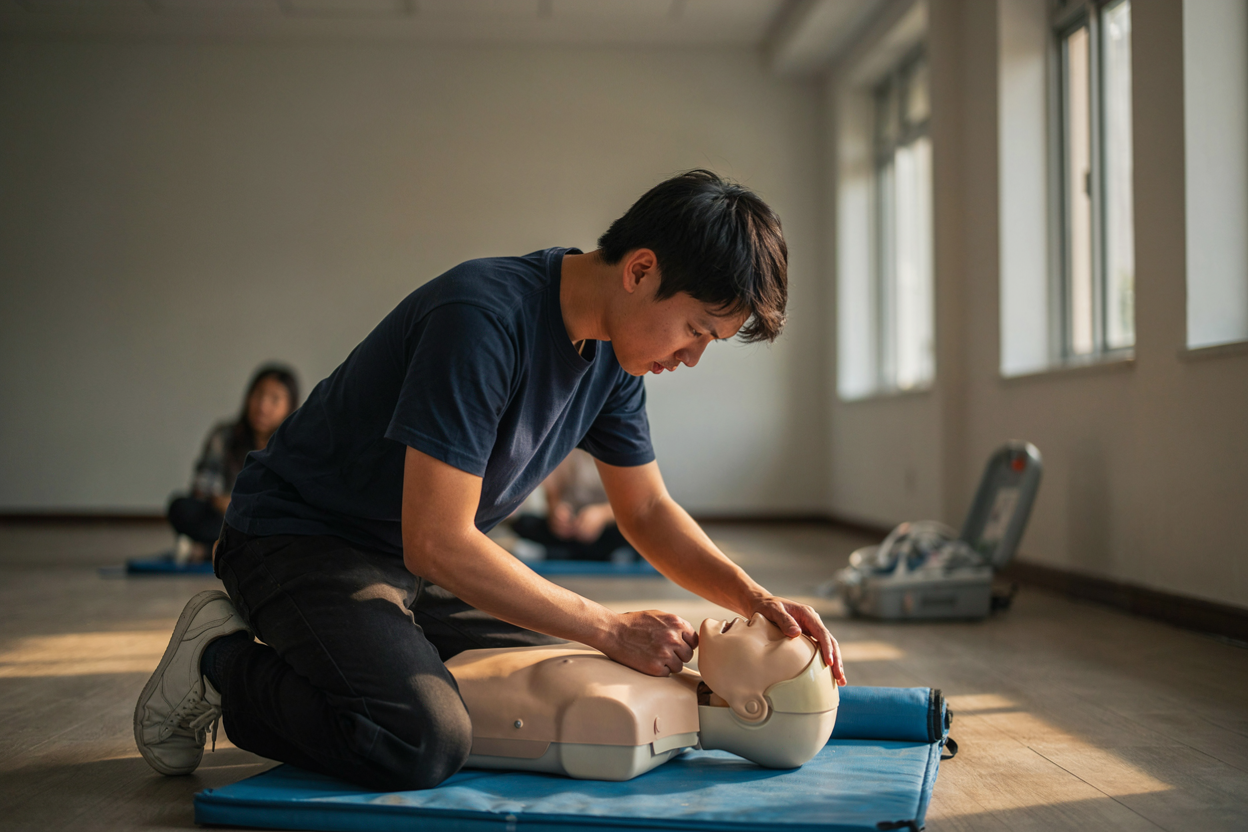
And it's a practical, hands-on assessment. You're not just clicking through an online module and calling it a day. You're getting your hands on a manikin, getting real feedback on your technique, and actually building the muscle memory that counts when it's a real person in front of you, not a dummy on a mat. There's a real difference between reading about how deep to push during compressions and actually feeling what that depth is like under your own hands. That difference is the entire point of doing this in person.
Now that you know what's involved, the next question is usually: do I need this, or the full course?
CPR Life Support Training vs. Full First Aid: What's the Difference?
This trips a lot of people up, and it's honestly the number one thing people get stuck on before they book. So let's clear it up.
When CPR-Only (HLTAID009) Is Enough
If you're a lifeguard, a fitness instructor, a coach, or a new parent just wanting peace of mind, CPR-only is probably all you need. It's quicker to get through and still a fully nationally recognised qualification. No shortcuts, just a narrower scope. If your role or your worry is specifically about the heart stopping or someone not breathing, this covers exactly that, and there's no need to sit through content about burns or fractures that doesn't apply to what you actually need.
When You Need Full First Aid (HLTAID011) Instead
If you're working in childcare, you're the designated first aid officer at a hospitality venue, or your trade site has a specific requirement, you'll likely need the full first aid course instead. That one covers CPR plus wound care, burns, fractures, and allergic reactions, so it's a broader skill set for a broader set of situations. It makes sense for anyone who's likely to be the first point of contact for a range of incidents, not just cardiac emergencies, since kids fall over, burns happen in kitchens, and allergic reactions don't wait for a convenient moment.
Here's how they stack up side by side:
Course | Covers | Typical For |
HLTAID009 (CPR only) | Chest compressions, rescue breaths, AED, choking response | Lifeguards, fitness instructors, coaches, new parents |
HLTAID011 (Full First Aid) | CPR plus wound care, burns, fractures, allergic reactions, illness response | Childcare, hospitality first aid officers, some trade site requirements |
Not sure which one you need? Give us a call on 0434 778 243 and we'll help you figure it out, no pressure, just a quick chat to point you the right way.
Once you know the difference between the two courses, the real question is whether this is the right certification for your situation.
How Soon Can You Get CPR Life Support Training Sorted?
Here's the bit that matters most if you're time-poor: this is built to be quick. Some short online theory beforehand, then you're in for a practical session and out the other side with your certification sorted. We run same-day and same-week sessions specifically because we know most people booking this aren't looking to burn a whole day on it, they're looking to get it done and get back to their life. Plenty of people book this in on a lunch break or straight after work, and that's exactly the point, it should fit around your life, not the other way around.
If you're booking for a team or a club, we also handle group bookings, which is a lot simpler than everyone trying to book individually and hoping the sessions line up. It also means the whole team walks away with the same level of confidence and the same up-to-date certification at the same time, which matters if you're the one responsible for making sure everyone's compliant.
One thing worth setting up now, while you're thinking about it: get yourself a reminder for a few weeks before your certificate expires. Renewals sneak up on people constantly, and there's nothing worse than realising your ticket lapsed the week your employer asks to see it. Certification runs for 12 months, so mark it somewhere you'll actually see it, whether that's a phone reminder or something stuck to the fridge.
If that sounds like you, here's who this actually applies to before we get to booking.
Who Needs CPR Life Support Training on the Gold Coast?
Workplace & Licensing Requirements
A fair chunk of people booking this course aren't doing it out of general interest, they need it for work or for a licensing body. That includes:
Childcare educators
Fitness and gym staff
Coaches, whether that's junior sport or swim clubs
Hospitality staff
Tradies who need a current ticket for a site
If any of these describe you, chances are you already know your deadline, whether that's an employer chasing you, a club accreditation renewal, or a licensing body that won't let you keep working without it. That kind of pressure is real, and it's exactly why we keep this process as fast and straightforward as possible.
Personal Preparedness
Then there's the other group, and honestly this is the group that sticks with us the most: parents, grandparents, and carers who just want to know that if something happened to the kid in their care, they wouldn't be standing there helpless. That fear sits quietly in the back of a lot of people's minds, and doing this course is one of the few things you can actually do something about. You can't control whether an emergency happens. You can control whether you're ready for it.
It's a strange thing to sit with, that quiet worry, but plenty of people carry it without ever doing anything about it. They tell themselves they'll get around to it eventually, and then life gets busy again and the thought fades until the next time something on the news reminds them of it. Booking the course is the thing that actually closes that loop.
If you fall into the personal preparedness camp, it's also worth knowing we run an Asthma and Anaphylaxis awareness add-on, which pairs naturally with this if you're around kids regularly.
If that sounds like you, here's exactly how to get booked in, this week if you need to.
How to Book Your CPR Life Support Training on the Gold Coast
Available Locations & Times
We run sessions across the Gold Coast, with evening and weekend slots specifically because we know most of you aren't free on a weekday mid-morning. If you're juggling shift work, coaching commitments, or just a normal nine-to-five, those after-hours and weekend spots are there so you're not forced to take time off work just to get certified.
What to Expect on the Day
It's pretty simple. You arrive, you go through a short, practical session with a trainer, and your certificate gets issued digitally, so no waiting around for something to arrive in the post. There's no need to come in with any prior knowledge or experience, the whole thing is built for people who've never done it before just as much as people who are renewing. Your trainer for this course is Jarryd Hunter, who comes from a paramedic background, so you're not learning from someone reading off a script, you're learning from someone who's actually had to use these skills for real, in situations where it genuinely mattered. That kind of first-hand experience shows up in the way things get explained, in the small details that only come from having actually done the job.
Next steps:
Confirm CPR-only is the right course for what you need
Check available Gold Coast sessions this week
Book online, your certificate gets issued digitally, no waiting
Book Your CPR Life Support Training Now, see next available sessions across the Gold Coast, book online in under 2 minutes: acceleratefirstaid.com.au/book-type or call 0434 778 243.
Final Thoughts
At the end of the day, this comes down to a pretty simple trade-off. A short session out of your week, versus standing there frozen if the moment ever actually comes. Most people never think about it until they're already in it, and by then it's too late to wish you'd booked the course.
Think back to that scenario at the start: someone collapsing in front of you, whether it's on a footy field, in a childcare room, or standing next to you in a supermarket queue. The people who walk away from those situations having done something right aren't superheroes. They're just people who did the training at some point and it stuck.
If you're doing this for work, a coaching accreditation, or a licensing requirement, you now know exactly which course you need and how it differs from full first aid, so there's no more second-guessing before you book. If you're doing it for your own peace of mind as a parent, grandparent, or carer, that's just as valid a reason, and honestly it's the one that tends to matter most once life gets busy again.
Twelve months goes fast. Set that reminder now, before life gets in the way, so you're never the person scrambling to rebook the week before a deadline or a shift roster check.
Same-day and same-week sessions exist specifically because most people looking into this don't have a spare full day to give up. Sessions across the Gold Coast, evenings and weekends included, means there's very little excuse left to keep putting it off.
So that's really it. Know what the course covers, know which one you need, and know that twelve months from now you'll need to do it again anyway. The only real decision left is whether you book it today or let it sit on the list a bit longer, and if you've read this far, you probably already know which one you'd rather it be.