CPR Course Requirements: What You Need Before Booking
It's late at night. The baby's finally feeding, the house has gone quiet, and you've got three tabs open on your phone trying to make sense of CPR course requirements before you talk yourself out of it again. Booking a CPR course should be the easy part. Yet most Gold Coast parents get stuck on the same handful of questions before they ever press pay.
Do you need experience? Is there an age limit? What if you can't kneel for long, or you've got a baby at home to work around?
Here's the good news. CPR course requirements are a lot simpler than most people expect. The nationally recognised HLTAID009 Provide Cardiopulmonary Resuscitation unit has no prerequisite units, no fitness test, and you don't need any prior first aid knowledge. None at all. There's just a few practical things to sort out first, like getting a Unique Student Identifier (USI), being able to do compressions on the floor, and having your online theory finished before the practical session.
That's honestly it.
This guide walks through every requirement in plain language, from age and physical ability right through to what to bring on the day. You'll also find out whether infant and child CPR is covered and whether the grandparents can book too. By the end you'll know exactly what you need, so the only thing left to do is pick a Saturday that suits.
What Are the Requirements for a CPR Course?
CPR course requirements in Australia are minimal. The HLTAID009 Provide Cardiopulmonary Resuscitation unit has no prerequisites and needs no prior experience. To enroll and complete it, you need:
A Unique Student Identifier (USI) so your certificate can be issued
To meet the minimum age set by your training provider
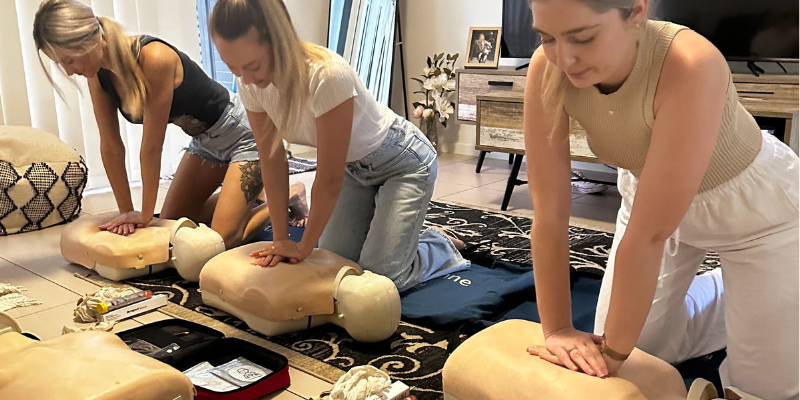
The physical ability to kneel and perform uninterrupted CPR on a manikin on the floor
Basic English reading and communication skills
Your online pre-course theory completed before the practical session
Comfortable clothing for floor work
Parents and community members need no employer sign-off to book.
That's the whole list. No exam to cram for, no fitness test, and nobody's checking whether you remember anything from that course you did years ago. Each of these gets its own section further down, so you can jump straight to the one you're unsure about.
Do You Need Experience to Do a CPR Course?
No. Not a lick of it. This is probably the biggest worry people have before booking and it's the easiest one to clear up.
No prerequisite units, no prior knowledge
HLTAID009 has no prerequisite units. You don't need a first aid background, a healthcare job or any training at all before you walk in. First-timers are the norm, not the exception. The course is built for people who've never touched a manikin in their life.
Did CPR years ago and forget it? That's normal
Plenty of people did a course for a job back in the day and now remember "30 and 2" and not much else. That's completely normal. CPR skills fade when you don't use them, which is exactly why regular refreshers are recommended. The course teaches everything from scratch anyway, so it doesn't matter if your memory of it is foggy or totally blank. Nobody's going to quiz you at the door.
HLTAID009 or HLTAID011, which to book?
CPR is the core life-saving skill and it's the faster place to start. HLTAID011 Provide First Aid actually contains HLTAID009, so the two don't compete with each other. Start with CPR now, add first aid later when you want the broader skills. Our HLTAID009 Unit of Competency guide breaks down everything inside the CPR unit, and the first aid course page covers HLTAID011.
CPR vs First Aid: which do I need first?
HLTAID009 CPR | HLTAID011 First Aid |
The core life-saving skill | Broader first aid skills |
Faster starting point | Good next step once CPR is done |
Stands on its own | Contains HLTAID009 inside it |
Experience isn't required, but age can be. Here's how that works.

Age Requirements for a CPR Course in Queensland
Age is one of those things people assume will be complicated. It's really not, but there's a couple of details worth knowing before you book for a teenager or a grandparent.
Minimum age
Every provider sets its own minimum age, and it's applied on the day of assessment, not the day you book. So if your teenager has a birthday coming up, they just need to reach the minimum age by the session date.
Minimums vary across Australian providers, which is why you'll see different numbers floating around online. Always check the minimum age CPR course rule with the provider you're actually booking with, rather than going off a Facebook comment.
Under 18s
Teenagers are welcome once they meet the minimum age. For learners under 18, parent or guardian consent may be needed, so check this when you book.
Is there an upper age limit?
No. There's no age cap on a CPR course at all. The real requirement is physical, not a number on your licence, and we'll get to that next.
This is good news for families who share babysitting. If Nan and Pop mind the kids by the pool, they can book the same course you do, and partners and grandparents can book together so everyone learns the same thing on the same day. Plenty of grandparents end up being the most switched-on people in the room, honestly.
Age sorted. The bit that matters more is what your body actually needs to do on the day.
Physical Requirements: What the CPR Assessment Asks of You
This is the requirement that actually matters most, and it's the one most people don't think about until they're already on the floor. CPR is hands-on. You'll be kneeling, pushing and moving, so it's worth knowing what's coming.
What you'll physically do
The HLTAID009 Assessment Requirements on training.gov.au set out what every learner has to show. In plain English, you'll:
Perform uninterrupted adult CPR on a manikin on the floor
Perform uninterrupted infant CPR on a manikin on a firm surface
Follow the prompts on an AED trainer to deliver at least one shock in a simulation
Place someone in the recovery position
Swap with other rescuers during CPR
Give a verbal handover, like you would to paramedics arriving
So yes, babies are covered. Infant CPR is a mandatory assessed skill, and child CPR techniques are part of the required knowledge too. You're not doing a watered-down adult version and hoping it translates.
All CPR is taught and assessed to current Australian Resuscitation Council guidelines. That's the summary version. Our HLTAID009 Unit of Competency guide goes through the full criteria if you want the detail.
Why the floor matters
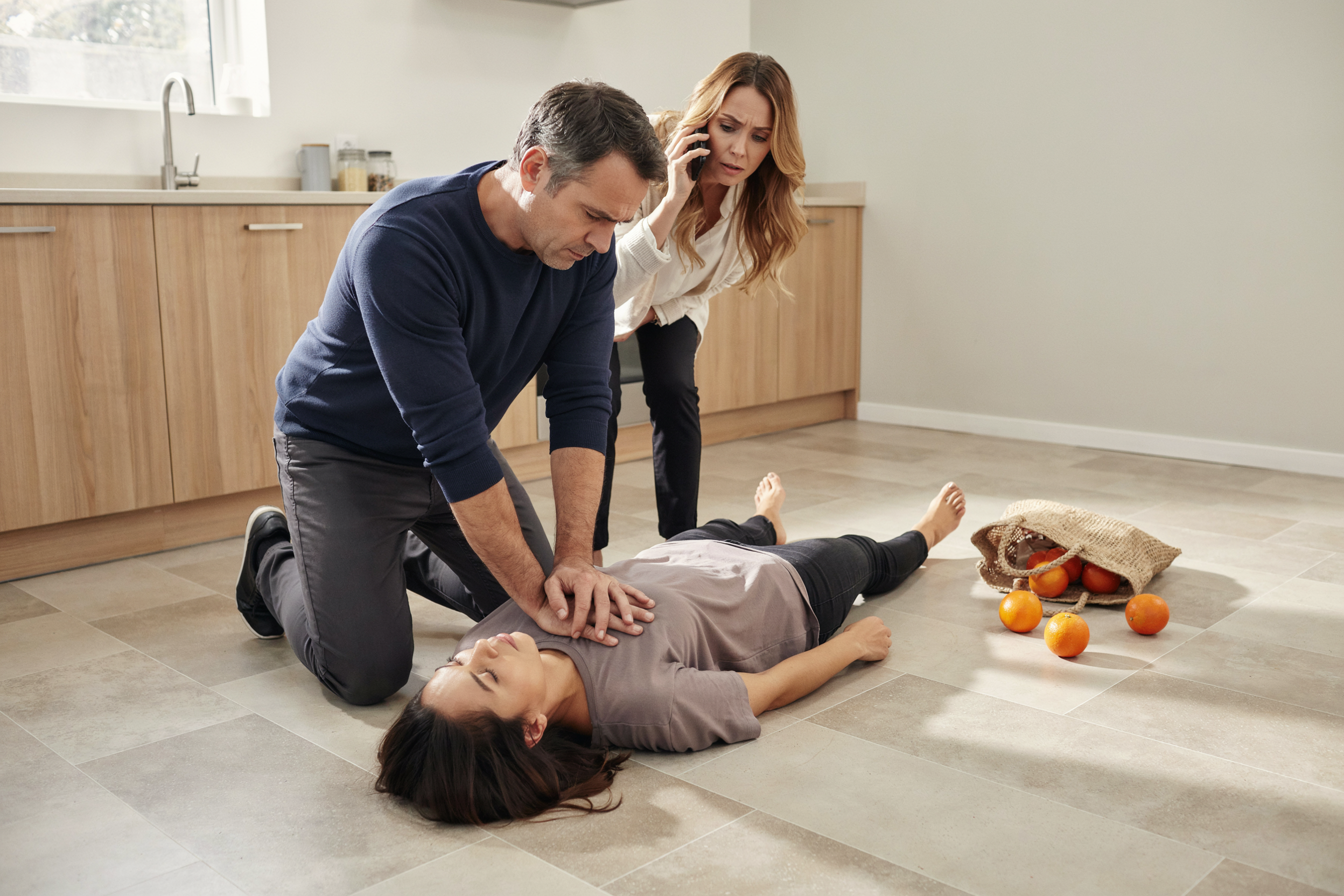
People sometimes ask why they can't just do it on a table. Real emergencies don't happen on tables. They happen on the kitchen floor, the pool deck, the sand at the beach. Practising on your knees builds the muscle memory your body falls back on when the adrenaline kicks in and your head goes a bit blank. It feels long the first time, but that's kind of the point, you find out what it feels like before it ever counts.
Injuries, pregnancy or recent birth
If you've got a bad knee, a sore back, you're pregnant or you've recently had a baby, tell the trainer before you book. Reasonable adjustments may be available. Floor-based adult CPR is part of the national assessment though, so it can't be waived if you want a full Statement of Attainment. If you're unsure whether your body's ready for it, check with your GP first.
Once you know the physical side, the paperwork is the easy part.
Enrollment Requirements: USI and Online Theory
This is the admin bit. Nobody loves admin, but this lot is quick.
Your USI
A Unique Student Identifier is a reference number that links to all your nationally recognised training. You need a USI for CPR course enrollment, full stop. No USI means no Statement of Attainment, so it's the one thing you don't want to leave until the morning of.
The good news is it's quick to set up at usi.gov.au. Here's how:
Head to usi.gov.au on your phone
Have an accepted form of ID ready
Fill in your details and grab your USI
Save it in your phone's Notes so it's there when you book
If you've done any nationally recognised training before, you might already have one. Worth checking before making a new one.
Language, literacy and numeracy
You'll need basic English to get through the theory and give the verbal report during assessment. That's about it. You don't need to be a strong reader or writer.
Online theory before the practical
The theory gets done online before your practical session. It's phone-friendly, so you can chip away at it during nap time or on the couch after the kids go down. Doing it beforehand means your time in the room is spent on the manikins, which is the part that really builds confidence anyway.
Paperwork done. Now for the easy stuff, what to actually throw in your bag.
What to Bring to Your CPR Course on the Gold Coast
Packing for a CPR course on the Gold Coast is pretty simple. You'll spend a good chunk of time kneeling and moving around, so think comfort over style.
What to bring to CPR course checklist
Your USI
Photo ID, if required
Comfortable clothes and pants you can kneel in
A water bottle
Your glasses, if you wear them
A hair tie
Your booking confirmation
Leave the skirt or the tight jeans at home. You'll thank yourself the moment the adult CPR practice starts.
Arriving on the day
Aim to arrive a little early. It gives you time to park, find the room, grab a seat and settle the nerves a bit before things kick off.
After the Course: Your Certificate and Staying Current
Once the practical's done, the hard part's over. Here's what happens next.
Your certificate
You'll receive a Statement of Attainment for HLTAID009 once you've completed the course. It's nationally recognised, so it's the same CPR certificate Queensland employers and anywhere else in Australia will see.
How often to renew CPR
Regular CPR refreshers are recommended under the Queensland First Aid in the Workplace Code of Practice and Australian Resuscitation Council guidance. That's not some arbitrary rule. CPR is a skill your hands forget faster than your head does, and a refresher keeps it sharp enough to use under pressure.
For parents, the easiest way to keep on top of it is tying your refresher to pool season. Do it before the pool gets busy and the school holidays roll around, and you'll never have to wonder whether you're current.
Want the full detail on currency and what different employers ask for? Have a read of our guide Is Your CPR Accreditation Valid? And if you ever do have to use your CPR for real, our CPR Debriefing guide covers what to expect afterwards and how to look after yourself.
Feel Confident Around the Pool This Summer
Think about a hot afternoon by the pool this summer. The kids are splashing around, someone's yelling "watch this" for the tenth time, and you're sitting there actually relaxed. Not because nothing could ever go wrong, but because you know that if it did, your hands would know exactly what to do.
Getting there is easier than most people think. The CPR course requirements are simple. You don't need experience, there's no fitness test, and nobody cares what you remember from a course you did years ago. You just need a USI, the ability to kneel and do compressions on the floor, and your online theory finished before the day. That's it, and the next Saturday session could be the one.
The steps are short too. Create your USI at usi.gov.au. Choose a session close to home. Finish the online theory during nap time or on the couch after the kids go down. Then just turn up, practise, and leave feeling confident.
Infant and child CPR is included, and you can bring your partner or the grandparents along so everyone who minds the kids learns the same thing on the same day. Booking the whole family in one go is the simplest way to get everyone sorted.
Training is delivered under RTO 31106 and taught to current Australian Resuscitation Council guidelines. If you've got a question before booking a CPR course on the Gold Coast side, just get in touch and ask.
You've already done the hardest bit, which was deciding to learn. Everything else is just a booking away. This summer, the pool can be the place you relax again, not the place you worry about.