CPR Course Prerequisites: What You Need Before You Start
What actually stops most people from booking a CPR course? It's not the cost. It's not the time. It's that quiet worry sitting in the back of your head — "Do I need to know something already? Am I going to look completely foolish in front of everyone?"
That's one of the most common questions we get before enrolment. And it makes complete sense. Most people haven't been in a classroom or training room in years. The idea of turning up somewhere, not knowing what to do, with a trainer watching — it's uncomfortable to even think about.
So if you've been putting off booking your HLTAID009 CPR course because you weren't sure about the CPR course prerequisites, this article answers every question in one place — no more frustrating scrolls through RTO websites.
Here's what we're covering: age requirements, physical ability, whether you need prior first aid knowledge (you don't), what to bring, and what to wear. We'll also run through requirements for specific groups — childcare workers, NDIS support workers, tradespeople, and parents.
Whether you're booking a CPR course in Brisbane for the first time or you've let your cert lapse — this is your complete pre-course guide.
If you can follow instructions and turn up, you're already prepared.
What Do You Need for a CPR Course?
CPR courses in Australia have minimal prerequisites — they're designed to be accessible to almost everyone. You don't need any prior first aid knowledge, no medical background, and no formal qualifications before you walk in the door. HLTAID009 is the nationally recognised standard for CPR training, and it's built for the general public, not healthcare professionals.
Here's the full list of what you need:
✅ Age: Must be 14 years or older (some providers require 18 — worth confirming when you book)
✅ Physical ability: Able to kneel and perform chest compressions for a short period
✅ Language: Sufficient English to follow instructions and complete a short written assessment
✅ Prior knowledge: None required — the course starts from scratch
✅ What to bring: Photo ID, comfortable clothing, and any relevant medical info for your trainer
✅ What to wear: Flat, closed-toe shoes and clothing you can move in
✅ Fitness level: No formal fitness standard — reasonable mobility is all that's needed
✅ Equipment: All manikins and training gear are provided by the RTO
If you can get down on the floor and follow along, you meet every requirement for HLTAID009.
✅ The short answer: No experience, no fitness test, no prior study required. If you're 14 or older and can get down on the floor, you meet every prerequisite for HLTAID009.
✅ Certificate issued same day — nationally recognised HLTAID009
Do You Need Any Experience to Do a CPR Course?
No. And that's not a throwaway answer — it's the actual design intent of the course.
HLTAID009 is accredited by the Australian Resuscitation Council and built specifically for the general public. The assumption baked into every session is that you've never done this before. That's not the exception — that's the norm.
Starting From Zero Is the Norm, Not the Exception
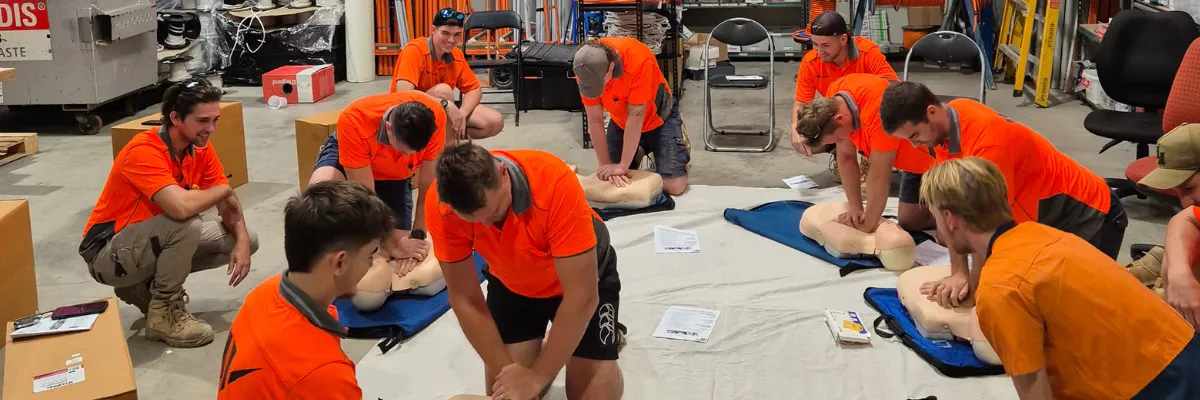
Walk into any CPR course session and look around the room. You'll see a gym instructor who's never done formal first aid. A new mum who just wants to feel ready. A tradie whose employer flagged it during onboarding. A childcare worker ticking a compliance box. A retiree who watched a neighbour collapse at a community event and decided that day they needed to know what to do.
Nobody in that room is an expert. Nobody is expected to be.
The course is structured so your trainer teaches you everything — the sequence, the compression technique, the rate, the depth, how to use an AED. You're not expected to arrive knowing any of it.
What First-Timers Actually Experience in the Room
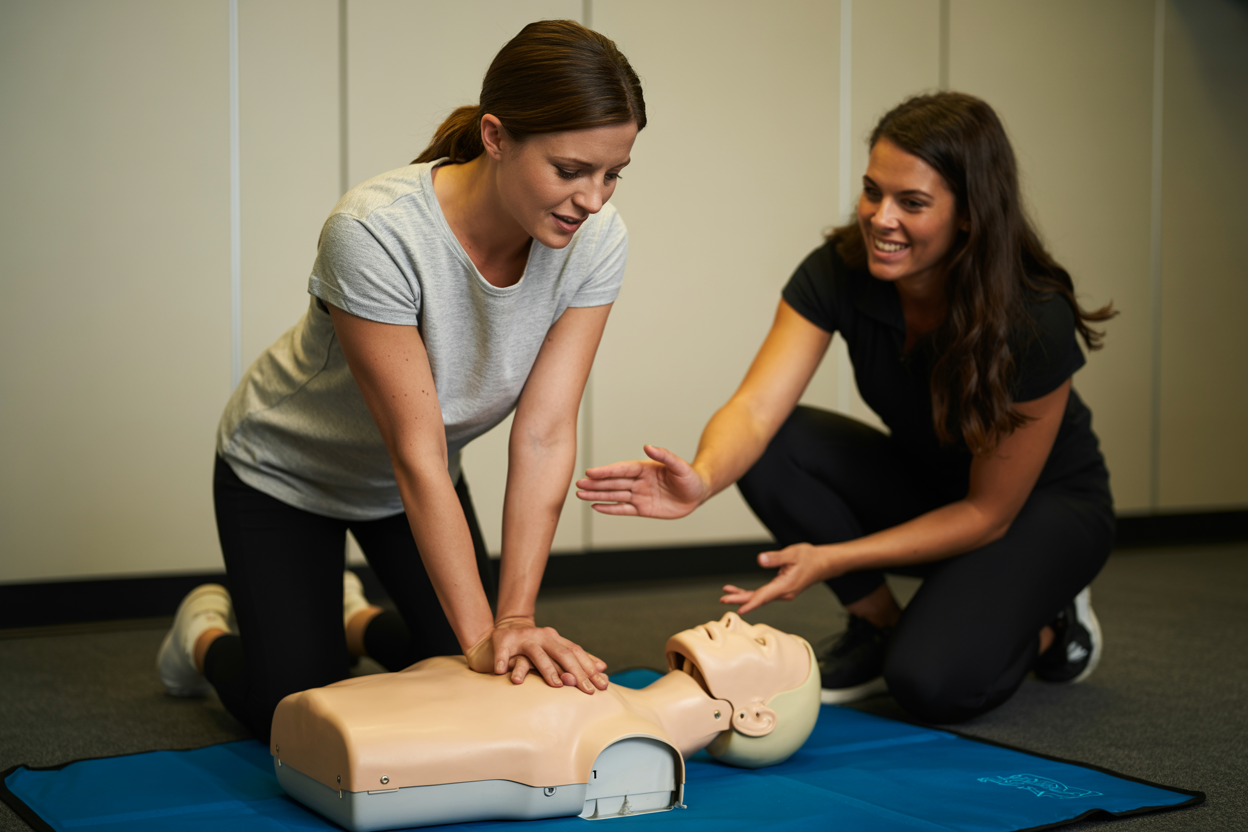
The practical side of HLTAID009 is hands-on from the start. You'll work on a manikin, practice compressions, and go through the full sequence multiple times under trainer guidance. You get actual reps in.
The written assessment is scenario-based and straightforward. There's no trick questions, no medical terminology exam, no pressure to recite anything from memory. Your trainer walks you through everything before you're assessed on it.
The single biggest thing first-timers say after the session? "I was so nervous going in and it was nothing like I expected."
Age and Physical Requirements for HLTAID009
Minimum Age to Enroll
Most providers set the minimum age at 14 years old. Some RTOs require participants to be 18 — so it's worth confirming directly when you book, particularly if you're enrolling a teenager.
There's no upper age limit. Plenty of older Australians complete HLTAID009 every year, and the course is designed to accommodate a wide range of physical starting points.
Physical Requirements | What You Actually Need to Be Able to Do
The practical component of HLTAID009 involves kneeling beside a manikin and performing chest compressions. The ARC guideline standard is 5–6cm compression depth at a rate of 100–120 compressions per minute, sustained across cycles.
That sounds more clinical than it actually feels in the room.
In practical terms, the physical effort is comparable to moderate exertion — something like a brisk walk or a light circuit. It's not strenuous for most adults. You don't need to be fit, strong, or particularly athletic. You need to be able to get down on the floor, position your hands correctly, and push with enough body weight to reach the right depth.
Your trainer will show you the correct posture and hand placement before you practice. Most people get the technique within the first few attempts.
What If You Have a Physical Limitation or Injury?
This is one of the most common questions we get — and the answer is almost always "come anyway, just let us know beforehand."
Good trainers accommodate. A knee injury, a bad back, pregnancy, or a recent surgery doesn't automatically disqualify you. It just means your trainer needs a heads-up so they can discuss modified positioning or adjusted practical requirements before the session starts.
The course is designed for the general Australian public — which includes people with real bodies that have real wear and tear on them. Don't let a physical concern stop you from reaching out.
What to Bring to Your CPR Course
Once you know you're ready to enrol, the next question is usually practical — what do you actually need to bring with you?
The list is short.
The Short Checklist
What to Wear
Dress like you're going to a yoga class or a gym session — not like you're heading to the office. You'll be on the floor, kneeling, leaning forward, and moving around. Jeans that don't stretch, a tight dress, or anything that restricts your range of motion is going to make the practical component more uncomfortable than it needs to be.
Flat, closed-toe shoes are a must. Thongs, heels, and open-toe sandals aren't suitable for a session where you're moving between kneeling and standing positions.
Comfortable, practical, and easy to move in. That's the brief.
What the RTO Provides
You don't need to bring any training equipment. Everything is supplied on the day:
CPR manikins — adult and infant
AED trainer units
Gloves and hygiene barriers
All course materials and assessment documents
Certificate issued same day or within 24 hours
The manikins are cleaned between uses and hygiene barriers are provided for every participant. If that's been a concern stopping you from booking — it shouldn't be.
Does a CPR Course Require a Fitness Test or Medical Clearance?
No fitness test. No medical clearance. No GP sign-off required before you enroll in HLTAID009.
This catches a lot of people off guard — particularly those who've done workplace safety inductions or physical trade-based training before, where medical clearances are sometimes part of the onboarding process. CPR training is different. The Australian Resuscitation Council designed HLTAID009 as an open-access course for the general public, and the enrolment process reflects that.
You turn up, you learn, you leave with your certificate.
If you have a serious cardiac condition, a respiratory condition, or a significant musculoskeletal issue, it's not that you're excluded — it's that letting your trainer know in advance means they can make reasonable adjustments for you. Same goes for pregnancy. Pregnant participants complete HLTAID009 regularly. A quick heads-up before the session means your trainer can adjust positioning so you're comfortable throughout.
The course is designed for ordinary Australians — not elite athletes, not medical professionals, not people who passed a fitness screen. If you're mobile enough to get through a regular day, you're mobile enough to complete this course.
The intent behind the ARC guidelines is accessibility. The more people in the community who hold a current CPR certification, the better the survival outcomes when cardiac events happen in public. If you've got a specific concern, a quick call before you book will sort it out.

Do You Need to Study Beforehand?
No textbooks. No pre-reading list. No cramming the night before.
Pre-Course Reading | Is It Required?
It's not required — but some providers, including us, offer a short online pre-learning component before the face-to-face session. If that's part of your enrolment, it'll be sent to you after you book.
Think of it less as study and more as orientation. It covers the basics — what happens during a cardiac arrest, an overview of the CPR sequence, and some introductory AED awareness. Nothing that's going to have you reaching for a highlighter. It's there to give you a bit of context before you walk in, so the practical component makes more sense from the first minute.
No textbooks. No prior medical knowledge assumed. No jargon you're expected to already understand.
Online Pre-Learning Components
If your provider uses a pre-learning portal, the theory gets handled before you arrive — which makes the face-to-face session more efficient. Instead of sitting through slides, you get straight into the practical. More time on the manikin, less time watching a PowerPoint.
The written assessment on the day is scenario-based and straightforward. Not a memory test or a medical exam — just a check that you understand what to do if someone collapses in front of you. After hands-on practice, you will.
Your trainer covers everything before you're assessed on it. Nobody gets blindsided.
CPR Prerequisites for Specific Groups
The general prerequisites for HLTAID009 are the same for everyone — but depending on why you're booking, there may be additional compliance requirements specific to your industry or role. Here's what applies to the most common groups we train.
Childcare and Education Workers
If you work in a childcare center or early education setting, HLTAID009 on its own won't meet your compliance obligations. ACECQA — the national body that regulates childcare quality in Australia — requires educators to hold HLTAID012 Provide First Aid in an Education and Care Setting. That's a separate, more comprehensive unit that covers pediatric first aid, asthma, and anaphylaxis management alongside CPR.
ACECQA audits are real, and the consequences of non-compliance during a centre inspection aren't something you want to find out about the hard way. If you're in childcare, book [HLTAID012 childcare first aid Brisbane] — not HLTAID009.
NDIS and Aged Care Support Workers
For most NDIS and aged care support worker roles, HLTAID009 is the minimum standard your employer will require. It covers the CPR component at the base of most support worker onboarding checklists.
That said, some employers — particularly those working with higher-needs clients — require HLTAID011 Provide First Aid, which is the full first aid certification. If you're not sure which one your employer needs, check your onboarding paperwork or ask your coordinator before you book.
Construction and Trade Workers
Under Queensland WHS legislation, construction and trade sites are required to have trained first aid personnel on site. HLTAID009 satisfies the CPR component of that requirement — but depending on your site, your employer may require HLTAID011 as the complete first aid qualification.
If your site induction or onboarding checklist specifically mentions CPR certification, HLTAID009 covers it. If it says "first aid certificate" without specifying, confirm with your supervisor before you book — it's a five-second conversation that could save you doing a second course.
Parents and Community Members
No compliance requirement. No employer sign-off. No deadline forcing your hand.
If you're a parent, a community volunteer, a sports coach, or just someone who wants to be ready if something happens — you can enroll at any time with no prerequisites and no paperwork to sort out beforehand. Pick a date, book online, turn up.
That simplicity is actually one of the things that makes this group so motivated in the room. Nobody sent them. They came because they decided to. And that decision — made quietly, often after a near-miss or a moment of honest self-reflection — is one of the most practical things any parent or community member can do.
Your Next Steps
If you've made it this far, you already know you're ready. The only thing left is booking a time that works for you.
No experience needed. No fitness test. No prior study required. You show up, your trainer takes you through everything from the start, and you leave with a nationally recognized HLTAID009 certificate — same day.