CPR Course Enrollment Mistakes to Avoid | Gold Coast Guide
You're on your phone, thumb hovering over the "confirm booking" button. Card details typed in. You're on a break before you're back behind the bar or back on the gym floor. And you just... hit the book. Course booked, box ticked, done.
Except it isn't done. Not properly. A lot of Gold Coast bookers go through that exact CPR course enrollment moment and only find out later they've picked the wrong course, or the provider isn't actually nationally recognised, or the session they grabbed doesn't suit them at all. By then the fee's gone and the deadline's tighter than it was before.
This one's for anyone booking a HLTAID009 renewal, doing it for the first time, or sorting a group for a club or venue. Below are the seven mistakes that trip up CPR course enrollment on the Gold Coast most often, and how to book it right the first time, so you're not doing this twice.
What Should You Check Before Booking a CPR Course?
Before you hit confirm on any CPR course enrollment, run through this quick list:
Right qualification: check you actually need HLTAID009 (CPR only) and not HLTAID011 (full first aid)
RTO status: confirm the provider issues a nationally recognised Statement of Attainment
Date and location: pick what actually suits your schedule, not just whatever's first on the page
Group vs individual path: if you're booking for a team, use the group option, not five separate bookings
Certificate validity: know how long it lasts, typically 12 months, so you're not caught out again
Keep that list in your back pocket. Every mistake below ties back to one of these five checks.
Mistake #1: Booking the Wrong Course (HLTAID009 vs HLTAID011)
This is the one that trips up more people than anything else on this list. You search "CPR course Gold Coast," a course pops up, and you book it without checking whether it's actually the one your job or club needs. Half the time it's fine. The other half, someone ends up sitting through a full first aid course when all they needed was the CPR-only ticket.
What each course actually covers
HLTAID009 is CPR only. Compressions, rescue breaths, using a defibrillator, the stuff you need if someone's heart stops. It's focused, and it's exactly what most lifeguards, gym staff, coaches, and renewers need.
HLTAID011 is the full first aid course. It includes CPR, but it also covers wound care, burns, fractures, allergic reactions, and a lot more. You're getting more, so it asks more of you as well.
HLTAID009 (CPR Only) | HLTAID011 (Full First Aid) | |
Covers | CPR, defibrillator use | CPR plus wounds, burns, fractures, allergies, and more |
Who typically needs it | Renewers, lifeguards, gym staff, coaches | Workplace first aid officers, childcare staff, some licensing bodies |
Validity | Typically 12 months | Typically 3 years |
How to check what your employer or club actually requires
Don't guess. A quick message to your manager, coach, or licensing body asking "do I need CPR only or full first aid" saves you a wasted booking.
Here's how this plays out in real life: a gym instructor on the Gold Coast books HLTAID011 because it's the first result that comes up, not realizing his employer only ever asked for HLTAID009. He loses time off work he didn't need to, pays more than he needed to, and sits through content he'll never use in his role. All from not asking one question before he booked.
If you're still not sure which one applies to you, our CPR vs Full First Aid explainer breaks down exactly who needs which course.

Mistake #2: Assuming Every Provider Is Nationally Recognized
Not every CPR course you find online actually ends in a certificate that counts. Some are run by outfits that aren't a registered training organisation at all, which means the Statement of Attainment you walk away with might not be worth the paper it's printed on. Your employer or licensing body checks, and if it doesn't stack up, you're back to square one.
How to verify RTO status quickly
Every genuine training provider has an RTO code. Accelerate First Aid's is RTO 31106. You can punch any provider's RTO code into the training.gov.au search tool and see straight away whether they're actually registered to deliver the course they're selling you.
Quick check: Before you book anywhere, search the provider's RTO number on training.gov.au. If nothing comes up, that's your answer.
Why a rejected certificate costs more than a cheap course saves
Here's the maths that doesn't get talked about enough. Say you save a bit of money booking with a provider that isn't properly accredited. Your employer rejects the certificate because it's not nationally recognised. Now you've lost that saving anyway, plus you've got to book again, plus you've burned another day, plus your deadline is now even tighter than when you started. The "cheap" option ends up the most expensive one on the table.
Not sure if a provider is legit? Verify any RTO here using the training.gov.au search tool before you commit.
Mistake #3: Leaving It Until the Certificate Has Already Expired
CPR certificates typically run out after 12 months (ANZCOR and ARC guidelines are what set that timeframe). A lot of people know this and still let it slide right past the deadline, then scramble for a booking with barely any runway left.
Why last-minute bookings mean fewer options
When you're booking with plenty of runway, you get to pick the date and time that actually works for you, and a location that suits you. Book after your certificate has already lapsed and you're stuck taking whatever's left, wherever it is, whenever it runs. Session already full where you'd normally go? Too bad, you're now travelling somewhere else on the Gold Coast, wherever's got a spare seat.
And if your employer's already chasing you because your certification lapsed on their books, every day you wait makes that conversation more awkward.
Setting a renewal reminder so this never happens again
The fix here is boring but it works: set a reminder ahead of your certificate's expiry, not on the day it lapses. That buffer means you're booking with options still on the table, not booking in a panic.
Mistake #4: Booking a Session Too Far From Where You Actually Are
"First available" and "closest available" are not the same thing, and mixing them up costs you more than the course itself.
Why "closest available" beats "first available" on a lunch break
Say the first session that pops up is nowhere near where you actually work. That's fine if you've got a spare afternoon. It's not fine if you're trying to squeeze this in on a lunch break or between shifts, because now a chunk of your window's gone just getting there and back.
The Gold Coast's spread out enough that travelling across it is a real difference when you're watching the clock. Before you book, check what's actually running close to where you spend your day, not just whatever loaded first on the page.
Our Gold Coast location pages show what's running closest to you, so you're not guessing.
Mistake #5: Not Using the Group Booking Path for Teams
If you're booking for more than one or two people, going through the individual booking flow one at a time is the mistake, not the CPR course itself.
The individual-booking trap clubs and small venues fall into
Here's how it usually goes wrong: a café manager needs several staff certified. Instead of booking them as a group, she books each one separately through the normal individual flow. She ends up paying more per head than she would've with group pricing, and worse, she can't actually get everyone into the same session. Now she's got staff scattered across different days, trying to roster around all of it.
A group booking does two things an individual booking can't: it gets everyone in the same room at the same time, and it comes with per-head pricing that's better than booking solo.

Mistake #6: Skipping the Pre-Course Details (What to Bring, Format, Timing)
You've booked the right course, with a proper RTO, at a location that suits you. Don't undo all that by rocking up unprepared on the day.
Online pre-work vs on-the-day practical, what's actually required
Some CPR courses have an online component you're meant to finish before you turn up, so the in-person session can focus on the hands-on practical. Skip that pre-work and you either can't start the practical on time, or you're trying to cram it in while everyone else has already moved on.
Check what's actually required before the day, not on the morning of.
Avoiding a wasted trip
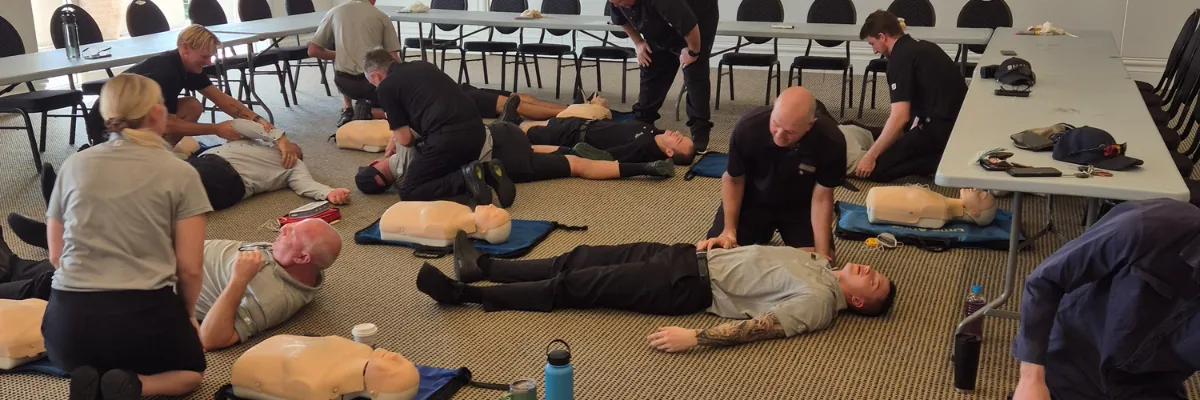
A surprising number of people get turned away or held up over something small: no photo ID, closed-toe shoes required and they've turned up in thongs, or they've shown up expecting a lecture and it's actually a hands-on practical session with mannequins on the floor. None of this is complicated, but if nobody tells you, you find out the hard way.
Before you go, check: what ID you need, what to wear, and whether there's pre-work to finish first.
A quick read of the confirmation email saves you turning up and being sent home to sort it out.
Mistake #7: Choosing Price Over Everything Else
Everyone's price-aware. Nobody wants to overpay for a CPR ticket. But picking the cheapest option on the page without asking why it's cheap is how people end up back at Mistake #2 and #3, paying twice.
What a too-good-to-be-true price usually means
A price that's well below everything else around it is usually cutting something. Maybe you barely get hands-on time with the trainer. Maybe there's no actual AED practical, just someone talking you through it. Maybe, and this is the big one, there's no RTO status behind it at all, which loops straight back to a certificate your employer won't accept.
Cheap isn't the problem. Cheap without knowing why it's cheap is the problem.
What fair pricing actually looks like
A fair price for a properly accredited course gets you a real RTO-backed certificate, a proper AED practical, and a trainer who actually has time for you rather than rushing through it. If a price looks dramatically lower than everything else for the same course, ask what's missing before you book, not after.
Getting Your CPR Course Enrollment Right the First Time
Seven mistakes, and every single one of them comes back to the same thing: rushing the booking costs more than slowing down ever will. Whether it's the wrong course, an unverified provider, a lapsed certificate, a session too far from where you actually work, a missed group booking path, a wasted trip because nobody read the confirmation email, or a price that looked good until it wasn't, the pattern's identical. Someone booked fast, and the fast version ended up being the slow, expensive version in disguise.
None of this is complicated once you know what to look for. Confirming HLTAID009 versus HLTAID011 takes one message to a manager or coach. Checking a provider's RTO status takes a moment on training.gov.au. Picking a location that actually suits you takes a moment of actually looking, instead of scrolling past it.
The renewal side is worth repeating too, because it's the mistake that quietly causes half the others. Book with runway left on your certificate and you get to choose your date, your location, your time. Book after it's already expired and you're taking whatever's left, wherever that happens to be.
Group bookings deserve their own mention as well. If you're sorting CPR for a team, a club, or a handful of staff, the individual booking flow is almost never the right path. It costs more per head and it rarely lands everyone in the same session, which just creates a rostering headache that doesn't need to exist.
Price matters, everyone knows that, but price without context is how people end up paying twice. A properly accredited course with a real RTO behind it and a genuine AED practical is worth what it costs. A number that looks too good is usually missing one of those things, and it's worth checking before you commit.
Run through the five checks one more time before you confirm anything: right course, verified RTO, a date and location that actually suits you, the correct booking path for one person or a team, and a renewal reminder set well before expiry. That's the whole list. A short pause now against a wasted afternoon and a tighter deadline later is not a hard trade to make.