
CPR Course for Aged Care Workers: 2026 Requirements Guide
You're due for CPR renewal. Your employer has flagged it, your certificate expired three months ago, and you're not entirely sure whether HLTAID009 is still the right unit or whether the rules have changed again.
You're not alone.
CPR requirements for aged care workers are among the most commonly misunderstood compliance obligations in the sector. The unit codes change. The renewal windows catch people off guard. And somewhere between the HR reminder and the Google search, a lot of workers end up booking the wrong course or nothing at all because the information online is scattered and confusing.
This guide cuts through it. Whether you're a personal care worker, a registered nurse working in a residential facility, or a team leader trying to stay on top of your floor's compliance roster, you'll find a clear answer to every question that's likely brought you here.
How Often Do Aged Care Workers Need CPR Training?
Aged care workers in Australia are required to renew their CPR certification every 12 months. This applies to all workers employed in residential aged care, home care, and community aged care settings where direct contact with clients or residents occurs.
The required unit is HLTAID009 Provide Cardiopulmonary Resuscitation, delivered by a Registered Training Organisation (RTO) registered with ASQA. Online-only completion does not satisfy the requirement training must include a face-to-face practical assessment component.
Key renewal requirements at a glance:
What CPR Training Do Aged Care Workers Actually Need in 2026?
The Required Unit HLTAID009 Explained
All aged care workers who provide direct care to residents or clients are required to hold a current HLTAID009 Provide Cardiopulmonary Resuscitation certificate, issued by an ASQA-registered RTO. This is the nationally recognized unit under the Health Training Package that covers CPR technique, AED use, and the legal and duty-of-care obligations that come with responding to a cardiac emergency.
HLTAID009 replaced the previous HLTAID001 unit in 2021. If your certificate still shows HLTAID001, it is no longer current that you need to complete HLTAID009 to meet compliance requirements.
Who Needs It and Who Is Exempt?
The requirement applies broadly across the aged care sector:
Residential aged care workers personal care assistants, enrolled nurses, lifestyle officers
Home care and community care workers with direct client contact
Allied health assistants working in aged care settings
Team leaders and facility managers with direct care responsibilities
Workers in purely administrative or non-contact roles may not be subject to the same renewal frequency. That said, most employers mandate CPR certification facility-wide as a condition of employment regardless of role so if you're unsure, assume it applies to you and check with your manager.
The 12-Month Renewal Rule Where Does It Come From?
The 12-month renewal requirement isn't just a workplace policy someone invented. It's driven by two sources.
ANZCOR the Australian and New Zealand Committee on Resuscitation recommends annual CPR skills refreshers to maintain competency. CPR technique degrades faster than most people expect, which is why annual practice is considered the minimum standard. The Aged Care Quality and Safety Commission standards reinforce this, requiring that approved providers ensure their workforce has the skills and knowledge to deliver safe, quality care. CPR currency is a direct compliance obligation under that framework.
Most aged care employers and virtually all facility accreditation auditors treat an expired CPR certificate as a compliance gap that must be remediated immediately. It's not a grey area, it's a line item on the audit checklist.
Knowing which unit you need is the first step but understanding the difference between your two main options will save you time and a potential compliance headache down the track.
HLTAID009 vs HLTAID011: Which Course Is Right for Your Role?
What's the Difference?
Which One Does Your Employer Actually Require?
For most direct care workers in aged care, HLTAID009 is the minimum requirement for annual CPR compliance. HLTAID011 is typically required when your role involves being a designated first aider, holding a team leader or supervisory position, working in a remote setting, or meeting a specific condition in your employment contract.
If you're unsure which unit your employer requires, check your position description or ask your direct manager before booking. Booking the wrong course even a higher-level one can still result in a compliance gap if the specific unit code isn't recorded correctly in your HR system. A worker books HLTAID011 thinking it covers everything, and their HR system flags a gap because it's looking for a current HLTAID009 entry specifically. Always confirm before you spend money on a course.
Can HLTAID011 Replace My Annual CPR Renewal?
Yes, with an important condition. HLTAID011 includes HLTAID009 as a component, so completing HLTAID011 satisfies your CPR requirement for that year. However, the CPR component must still be renewed every 12 months even if your HLTAID011 certificate carries a three-year validity. In practice, most aged care workers holding HLTAID011 complete a standalone HLTAID009 refresher in the intervening years. Your CPR skills, the hands-on, physical muscle memory of it, need refreshing every 12 months regardless. That's the clinical recommendation, and most aged care employers enforce it accordingly.
Once you know which unit applies to your role, it helps to understand the regulatory framework that makes this a non-negotiable.
What Does the Law Actually Say? Aged Care CPR Requirements in Queensland
The Federal Framework Aged Care Quality Standards
CPR training requirements for aged care workers are primarily governed at the federal level through the Aged Care Quality and Safety Commission. Under the Aged Care Quality Standards, approved providers are legally obligated to ensure their workforce has the skills, knowledge, and qualifications to deliver safe, quality care to residents.
Standard 7: Human Resources requires that the workforce maintains current competencies relevant to their role and that providers can demonstrate compliance during accreditation audits. A lapsed CPR certificate is treated as a direct gap against Standard 7. Facilities found non-compliant can face formal notices, increased audit frequency, and in serious cases, sanctions from the Commission. Accreditation auditors go through compliance rosters line by line and an expired certificate doesn't get a pass because someone was busy.
Queensland-Specific Obligations
Queensland aged care workers should also be aware of state-level obligations. The Work Health and Safety Act 2011 (Qld) places a duty on employers to provide a safe workplace, which includes ensuring adequate first aid coverage and trained personnel. Enterprise agreements and facility policies frequently set requirements that meet or exceed the federal minimum. Always check your specific employer's policy, because the federal standard is the floor, not the ceiling.
What Happens If Your Certificate Lapses?
A lapsed CPR certificate creates risk at three levels.
For the worker: you may be stood down from direct care duties until your certificate is renewed, and a lapsed certificate could affect your personal liability position in the event of a workplace incident.
For the employer: a pattern of lapsed certifications is a red flag in accreditation audits, and employers carry vicarious liability exposure if an unqualified worker responds to or fails to respond to a cardiac emergency.
For the resident: aged care residents are among the highest-risk populations for cardiac arrest in any setting, and rapid, competent response measurably improves survival outcomes. That's the piece that gets lost in compliance conversations; this isn't just paperwork.
What to Expect in a CPR Course: What the Training Actually Covers
What You'll Actually Learn
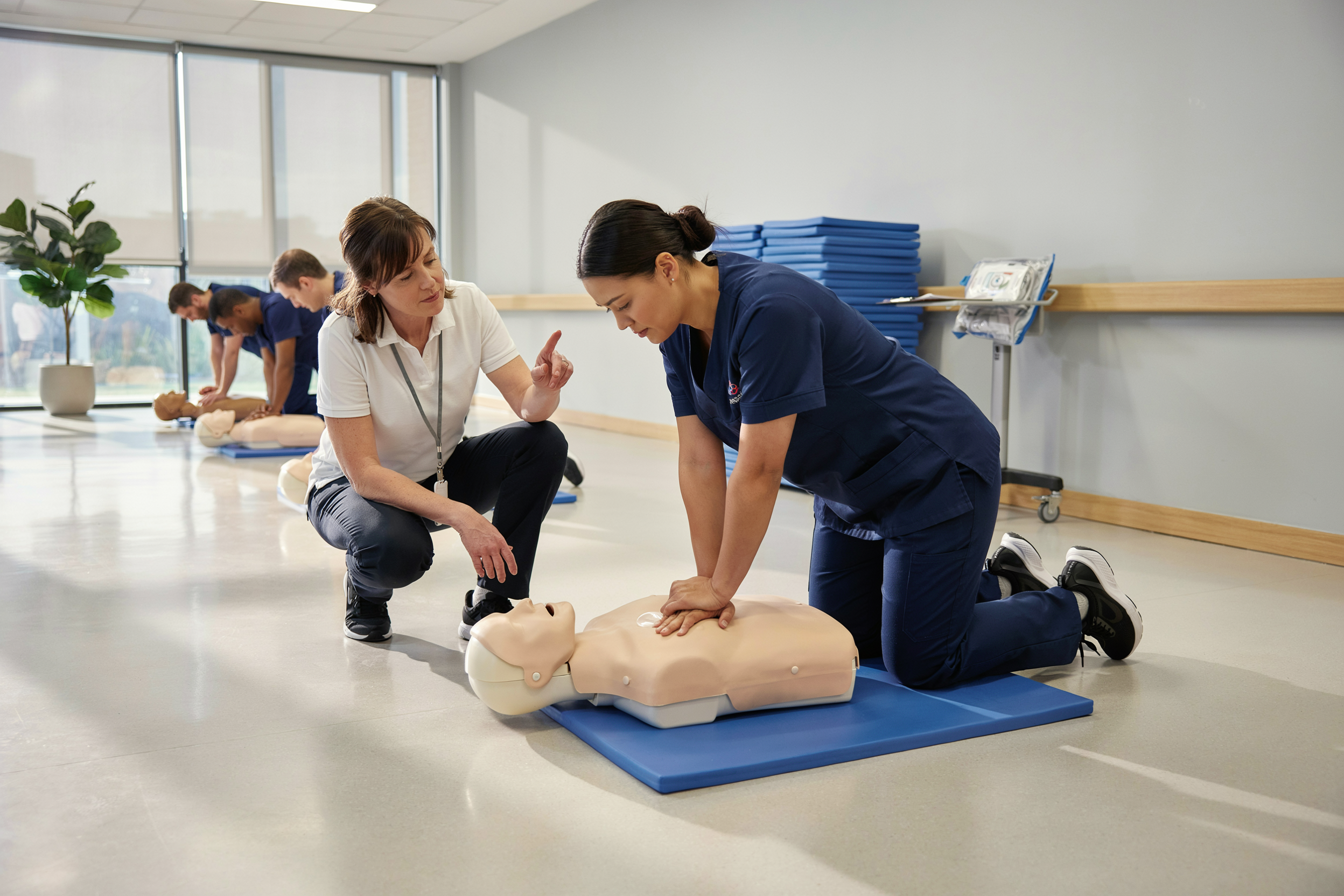
A quality HLTAID009 course is delivered face-to-face and structured around a theory component and a hands-on practical assessment. The theory covers the cardiac chain of survival, recognizing cardiac arrest, legal obligations, and when to call for help. The practical gets you on a mannequin in front of an assessor.
The content follows ANZCOR-aligned guidelines and covers:
Recognizing the signs of cardiac arrest and unconsciousness
The correct response sequence Danger, Response, Send for help, Airway, Breathing, CPR, Defibrillation (DRSABCD)
Adult, child, and infant CPR technique compression depth, rate, and ratio
How to use an Automated External Defibrillator (AED)
Recovery position and airway management
When to start CPR, when to stop, and how long to continue
Documentation and handover to emergency services
For aged care workers specifically, trainers with clinical or sector experience will contextualize scenarios to the residential care environment recognizing deterioration in elderly residents, managing CPR in confined spaces, and communicating with distressed family members during an incident.
The Practical Assessment What to Expect
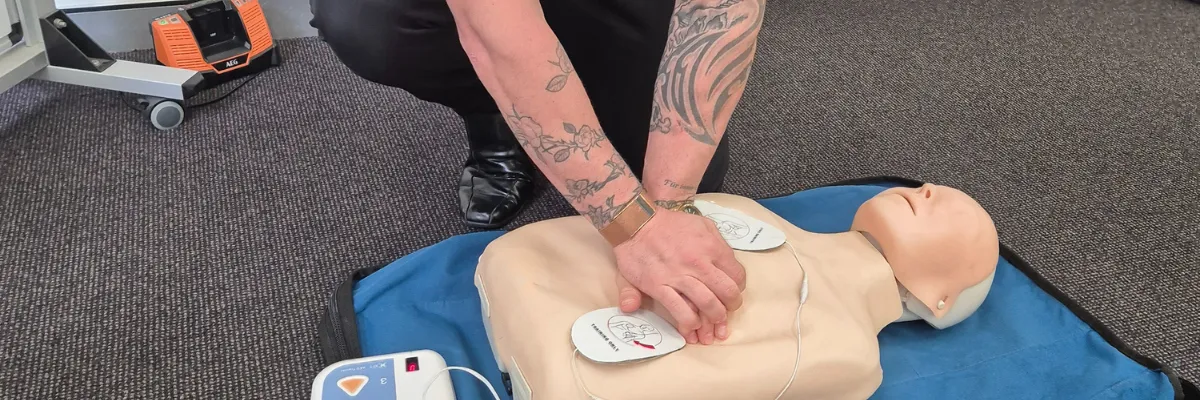
There is no written exam for HLTAID009. Assessment is entirely practical and observational. During the assessment you'll perform a full CPR sequence on a training mannequin, demonstrate correct compression depth and rate, show AED pad placement and operation, and respond to assessor prompts simulating a real scenario. A competent trainer will coach you through any technique adjustments in real time it's a skills confirmation, not a gotcha test.
Online-only or hybrid courses that do not include a face-to-face practical assessment do not meet the requirements for aged care compliance. If the course doesn't get you in a room with a mannequin, it doesn't count.
What You Receive on Completion
On completion you'll receive a Statement of Attainment for HLTAID009 nationally recognized under the Australian Qualifications Framework, accepted at all aged care facility HR systems and ACECQA compliance checks, and issued digitally at quality providers. Keep a personal copy independent of your employer's records. Your certification belongs to you, not your workplace.

How to Choose a Quality CPR Course (And Avoid the Tick-and-Flick Trap)
A certificate from a low-quality provider will satisfy the paperwork requirement. It will not prepare you to perform CPR under pressure on a resident who has just collapsed in front of you. When you're evaluating providers, price is the least useful filter.
Five Things to Check Before You Book
Is the RTO registered with ASQA? Check the provider's RTO number on training.gov.au before you book any legitimate provider will display it prominently.
Does the course include a face-to-face practical component? Confirm explicitly. "Blended learning" can mean anything you need a live practical assessment with a real assessor in the room.
What are the trainers' backgrounds? Look for clinical, paramedic, or aged care sector experience, not just classroom qualification.
What do the reviews actually say? Read the text, not just the star rating. Look for comments about trainer credibility and practical thoroughness. Vague reviews that say "great course, highly recommend" tell you nothing.
Red Flags to Walk Away From
No RTO number displayed on the website or booking confirmation
"100% online" CPR certification not compliant for aged care roles
No trainer credentials listed anywhere on the website
Generic stock photography with no evidence of an actual training facility
Reviews that are suspiciously uniform or lack specific training detail
How to Book a CPR Course in Brisbane That Meets Aged Care Requirements
What to Have Ready Before You Book
Full legal name must match your employment records and audit documentation exactly
Date of birth required for RTO enrolment and USI verification
Unique Student Identifier (USI) create yours free at usi.gov.au before your course date
Employer name and purchase order number if your employer is paying directly
Current certificate if renewing to confirm your previous unit code and expiry date
After You Complete Your Course
Download and save your digital certificate immediately
Check that your name, date of completion, and unit code (HLTAID009) are correct
Provide a copy to your employer's HR system and confirm it has been recorded
Set a personal calendar reminder for 11 months from today not 12, so you have time to book before the deadline
Keep a personal copy in a secure location independent of your employer's records
Your certification belongs to you, not your workplace. Treat it the same way you'd treat any other professional credential.
Before You Book A Final Word
CPR training in aged care isn't one of those compliance boxes that exists purely for the paperwork. The residents in your care are among the highest-risk people in any setting for sudden cardiac arrest. The window between collapse and brain damage is measured in minutes. What happens in those first few minutes before the ambulance arrives, before anyone else steps in depends entirely on whether the person standing closest knows what to do and has the physical confidence to do it. That's the actual stakes behind the annual renewal requirement.
The 12-month rule feels like a burden when your roster is full and your renewal date snuck up on you. But the reason it exists isn't bureaucratic. CPR is a physical skill, and physical skills degrade. Research backs this up consistently. Technique drops off faster than most people expect, and the kind of muscle memory you need to perform compressions correctly under pressure doesn't survive two years of sitting on a shelf. Annual practice isn't overkill. It's the minimum that clinical evidence supports.
Choosing the right course matters as much as choosing to book at all. A certificate from a tick-and-flick provider and a certificate from a quality RTO look identical on paper. The difference is what happens when someone actually needs you. Genuine mannequin time, a trainer who has worked in clinical or care environments these aren't premium extras, they're the baseline standard you should expect when you're training for a skill that has life-or-death applications in your workplace every single day.
If your certificate has lapsed, or your renewal date is coming up, the best time to sort it was last month. The second best time is now. Book a session, get your hands on a mannequin, and walk out of the room knowing that if something happens on your floor, you won't freeze. That's what this is all for.