Confined Spaces Awareness Training: Who Needs It in QLD?
Your boss asks if you've done confined spaces awareness training, and you're not sure what to tell him. Is that your white card? The UEECD0007 unit he wants done before the next intake? Or something else nobody's mentioned yet?
You're not alone. Plenty of TAs nod, say "yeah, I'll sort it," then end up googling it in the ute at lunch. Confined spaces get lumped in with general site safety all the time, but in Queensland they're their own category of work, with specific rules under the WHS Regulation.
The short version is this: not every TA or apprentice needs confined spaces training. If your job means going into pits, tanks, underground vaults or sealed plant rooms, the business you work for has to make sure you're trained before you go in. And if it doesn't? You still need to recognize a confined space when you see one, so you never wander into one by accident.
It's a bit like knowing where the live cables run even when you're not working on them. Get that clear now and you won't waste money on the wrong course.
This guide covers what counts as a confined space under Queensland law, who needs awareness training, how it differs from entry training, and where it sits next to UEECD0007 on the road to your electrical apprenticeship. Plain English, no jargon.
Who Needs Confined Spaces Awareness Training in Queensland?
In Queensland, confined spaces awareness training is for workers who need to recognize confined spaces and understand the risks but won't enter them. Under the Work Health and Safety Regulation 2011, a business must train every worker who enters a confined space, acts as a standby person, or issues entry permits. Awareness training typically suits:
Trades assistants and apprentices on sites with pits, tanks, vaults or sealed plant rooms
Supervisors and leading hands who plan or schedule work near confined spaces
Managers and business owners responsible for confined space procedures
New starters as part of their site induction
Workers in utilities, solar, data cabling and maintenance who work near confined spaces
Anyone who will enter a confined space, act as standby, or issue permits needs full entry training, not awareness alone.
Before you work out whether you need it, it helps to know what actually counts as a confined space.
What Counts as a Confined Space in Queensland?
Most people think a confined space just means somewhere small and cramped. That's not how the law sees it.
The legal test, in plain English
Under the WHS Regulation, a space is a confined space when it ticks all of these boxes:
It's enclosed or partly enclosed.
It's not designed or meant for people to occupy.
It's meant to be at normal atmospheric pressure while someone's in it.
It carries a risk from bad air, contaminants, a flammable atmosphere or engulfment.
It's the risk, not the size, that makes it a confined space. A big tank you could park a ute in can be a confined space. A tight little cupboard with good airflow probably isn't.
Confined spaces you'll actually see on job sites
These are the ones that come up most:
Underground electrical and communications pits
Cable vaults
Sewer and stormwater access chambers
Tanks and silos
Large ducts
Some sealed plant or pump rooms
Ceiling and roof voids aren't automatically confined spaces. Whether one counts comes down to the same test, so don't assume either way, and ask before you go in.
Spaces that look confined but are covered by other rules
Trenches and excavations can feel a lot like a confined space when you're standing in one. But they fall under separate excavation provisions, not the confined space rules.
Once you can spot one, the next question is how much training you need.

Confined Spaces Awareness Training vs Entry Training
People hear "confined space training" and think it's one course. It's actually two levels that do very different jobs.
What awareness training covers
Awareness training teaches you to spot a confined space and understand why it's dangerous. It usually covers:
How to recognize a confined space
The main hazards: low oxygen, toxic gas, flammable atmosphere, engulfment
Confined space signage
Why untrained rescue attempts kill
Who to report to
When a mate goes down in a pit, every instinct says jump in. Awareness training teaches you to stop, because the air that dropped him will drop you too.
Sometimes it's rolled into a site induction. Awareness training keeps you out of trouble, it doesn't qualify you to go in.
What entry training covers
Entry training is the full ticket for people who go into confined spaces, or support the people who do. It covers:
Atmospheric testing
Entry permits
Isolation and ventilation
Standby duties
Rescue arrangements
PPE and breathing equipment
Entry training is commonly delivered as a nationally recognized unit. Providers currently list RIIWHS202E, but check the current code on training.gov.au before you book anything.
Is awareness training nationally recognized?
Not always. Plenty of awareness courses are non-accredited short sessions, which means you won't walk away with a nationally recognized unit.
To know for sure, check for a statement of attainment, a unit code and an RTO number. If a course can't show you those, it's not accredited. Our guide to accredited vs non-accredited WHS training breaks it down further.
Awareness vs entry comparison, stacked cards on mobile.
Awareness training | Entry training | |
Who it's for | Workers who need to recognize confined spaces but won't enter | Workers who enter, act as standby or issue permits |
What it covers | Recognition, hazards, signage, rescue risks, reporting | Testing, permits, isolation, ventilation, standby, rescue, PPE |
Accredited | Often non-accredited | Commonly a nationally recognized unit |
As for who decides which training you get, Queensland law puts that on the business.
What Queensland Law Says About Confined Space Training
Knowing the basics means you'll recognize when a job is being run properly, and when it isn't.
The business's duty to train you
Under the WHS Regulation, the business you work for has to give you information, training and instruction if you enter a confined space, act as a standby person, or issue entry permits. In the legislation that business is called the PCBU, or "person conducting a business or undertaking".
Confined space training in Queensland is the business's job to organize, not yours to guess at.
Entry permits, standby people and signs
A properly run confined space job doesn't look like someone just lifting a lid and climbing in. You'd expect to see:
A written entry permit before anyone goes in
A standby person outside, watching and keeping in contact
Signs at the entry point warning it's a confined space
If those things are missing, something's wrong. You don't need to know every rule to notice that.
The Confined Spaces Code of Practice 2021
A code of practice is practical guidance on how to meet legal duties. In Queensland, codes carry real weight because they show what a business is expected to do to manage a risk properly.
For confined spaces, the code to know is the Confined Spaces Code of Practice 2021. Our WHS codes of practice training guide covers how codes work in more detail.
Your right to say no
Workers can stop or refuse work that poses a serious and imminent risk to their health and safety.
This isn't about picking a fight with your boss. It's a protection the law gives you, and a decent boss will back you for using it.
Site jargon, explained
PCBU: The business you work for.
Standby person: The worker who stays outside, watching and keeping in contact.
Entry permit: The written sign-off needed before anyone enters.
Code of practice: Approved guidance on how to meet WHS duties.
Here's where this gets real for anyone heading into the electrical trade.
Where Electrical Work and Confined Spaces Meet
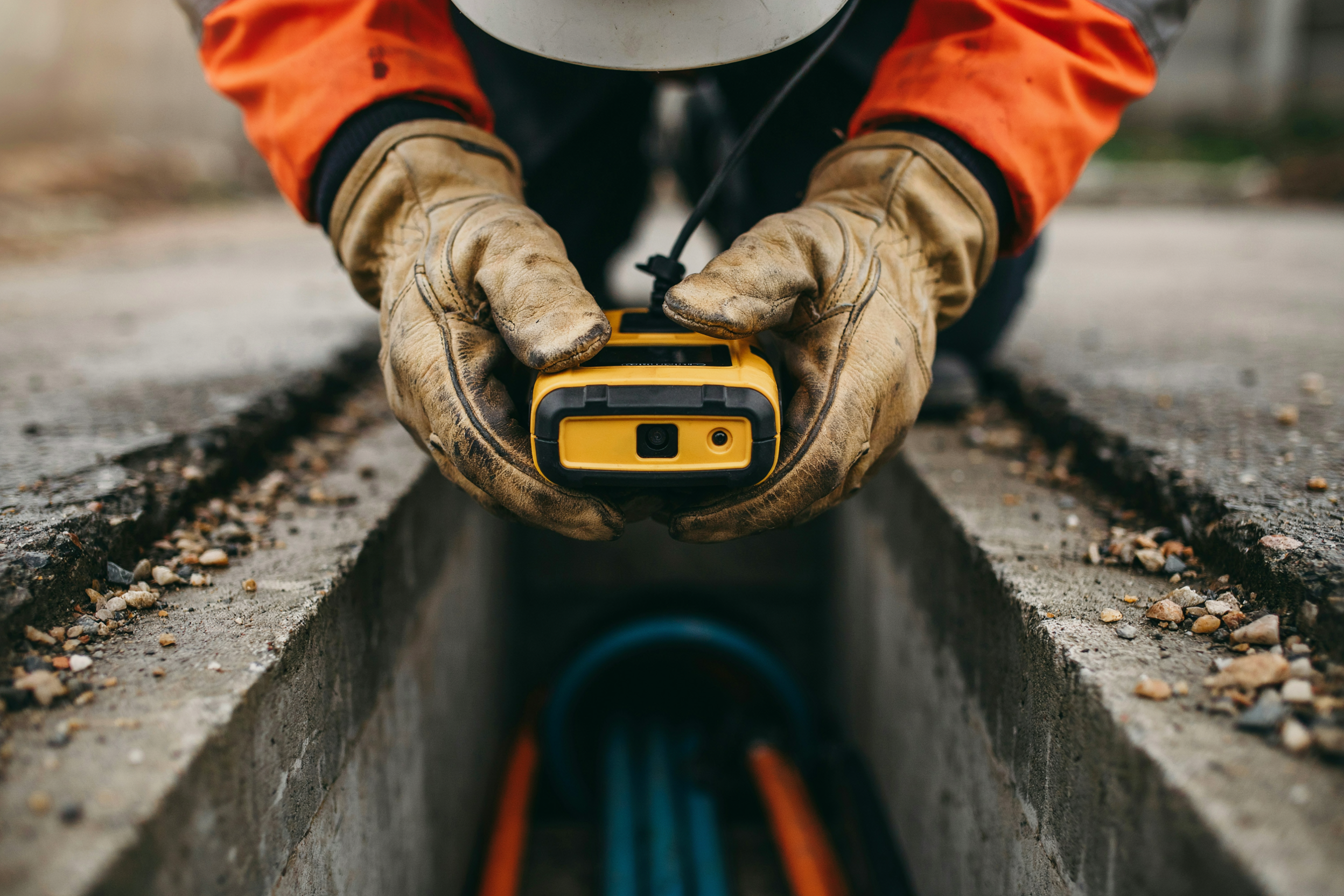
If you're a TA working toward an electrical apprenticeship, you won't be in confined spaces every week. But they come up more than most people expect.
The jobs where TAs and apprentices come across confined spaces
These are the ones to watch for:
Underground pits and vaults on civil, NBN and street lighting jobs
Some switch rooms and plant rooms
Commercial and industrial maintenance work
Solar and battery work is mostly not confined space work. Roofs and inverters come with their own risks, but not confined space ones. If most of your work is residential solar, you may never need entry training at all.
Electrical hazards plus confined space hazards
On a normal job, if something goes wrong with a live cable, you step back. In a pit, there's one tight way out, and maybe bad air too.
When the exit is tight, isolation matters even more, and the power has to be off before anyone goes near it. For what happens when a rescue is needed, read our guide on LVR vs confined space rescue.
Which brings up the course your boss probably already mentioned.
Does UEECD0007 Cover Confined Spaces?
Let's be clear on this one. UEECD0007 and confined space training are not the same thing.
What UEECD0007 gives you
UEECD0007 is the WHS course for electricians that employers and apprenticeship pathways look for. It covers:
Queensland WHS law and duty of care
Hazard identification and risk controls
Safe work method statements (SWMS)
How codes of practice apply on site
Incident reporting
It gives you the foundation every other bit of site safety training builds on. Once you understand how WHS law works, confined space rules make a lot more sense.
What it doesn't give you
UEECD0007 is not a confined space entry ticket. It doesn't replace awareness training or entry training. If your work means going into a confined space, you'll still need the right confined space training on top of it.
Which one to do first
UEECD0007 first. It's the one your boss is asking for, and it's the apprenticeship requirement. Confined space training comes later, and only if your work actually requires entry.
Here's how it all fits together in your first year.
Your First-Year Safety Training Checklist
It can feel like every site wants a different ticket, but it's not that messy. For most electrical apprentices in Queensland, the order goes like this:
UEECD0007, before your apprenticeship starts
CPR (HLTAID009) and LVR (UETDRRF004), in your first year and then every year after
First aid (HLTAID011), when you're appointed crew first aider
Confined space awareness or entry training, only if your employer's work requires it
Notice where confined space training sits: last, and only if the job calls for it. LVR and CPR are the ones you'll renew year after year, so they become part of your routine pretty quick.
Next time your boss asks if you've done confined spaces awareness training, you'll know it's not your white card or UEECD0007.
Remember the main test. It's the risk inside a space, not how cramped it is, that makes it a confined space.
Awareness teaches you to spot a confined space and stay out of trouble. Entry training is for the people who go in.
If your work needs it, the business has to provide it. And if a job is missing a permit, a standby person or signs, you can stop.
For most TAs, confined spaces show up on pit, vault and plant room jobs, not every day. Knowing one when you see it is what keeps you safe.
That's why UEECD0007 comes first. It's the WHS foundation everything else builds on, and the step between you and your apprenticeship.
Then CPR and LVR every year, first aid when you step up, and confined space training only when needed.
You've done the hard part by choosing the trade. This is just the next step.