Complete Guide to First Aid and CPR Certification (HLTAID009 & HLTAID011) on the Gold Coast
Did you know that every 3 minutes in Australia, someone experiences cardiac arrest outside of a hospital? Even more striking - when CPR is given in those first critical minutes, survival rates jump to 75%. That's the difference between life and death, right there in your hands.
For those of us running schools and educational institutions on the Gold Coast, these statistics hit close to home. Your teachers and staff aren't just managing classrooms - they're the first line of defense when a student needs emergency care. But keeping everyone's certifications current? That's another story.
I get it. Between juggling term schedules, managing different expiry dates, and coordinating large groups of staff, maintaining valid first aid certificates can feel like herding cats. Trust me, after training thousands of school staff members, I've seen firsthand how challenging this can be.
But here's the good news - you're in the right place. This guide breaks down everything about getting your First Aid Certificate on the Gold Coast, specifically designed for schools like yours. We'll cover:
Current certification requirements that matter for your school staff
Smart ways to book and coordinate group training
Training schedules that work with school terms
How to stay on top of Department of Education standards
Money-saving approaches for training large teams
Let's start with what you probably want to know first - how long these certificates last.
How Long Does a First Aid Certificate Last on the Gold Coast?
Here's the straightforward answer:
Understanding First Aid Certification Requirements for Schools
Let's cut through the red tape and get right to what your school needs. The Department of Education has specific rules about first aid certification and missing them isn't an option.
Department of Education Compliance Standards
Your school needs to meet these basic requirements:
At least one staff member with current First Aid certification for every 50 students
A minimum of two certified First Aid officers on-site during school hours
At least one staff member with current First Aid certification present during all off-site activities
Clear documentation of all current certifications and their expiry dates
But here's something many schools lack: these are minimum requirements. From our experience training Gold Coast schools, the most prepared campuses keep about 1 certified staff member for every 25 students. Why? Because life doesn't wait for the designated first aid officer to be available.
Required Certification Levels for Different Staff Roles
Not everyone needs the same level of certification. Here's a quick breakdown:

Student-to-Certified Staff Ratio Requirements
Here's an example: A Gold Coast primary school with 500 students would need:
Minimum 10 staff with current First Aid certificates (1:50 ratio)
At least 2 certified staff members on each floor or building section
Additional certified staff for:
Playground duty rotations
Sports events
Excursions
Before/after school care
A quick word about special events: School carnivals, sports days, and excursions need extra planning. The standard rule is one certified first aider for every 100 participants, but here's what we recommend based on years of experience:
School carnivals: 1 first aider per 50 students
Excursions: 1 first aider per 25 students
High-risk activities: 1 first aider per 10 students
Complete Guide to HLTAID011 First Aid Certification
Maybe you've heard HLTAID011 thrown around in staff meetings, but what does this certification actually cover? Let's break it down into plain English.
Course Content and Learning Outcomes
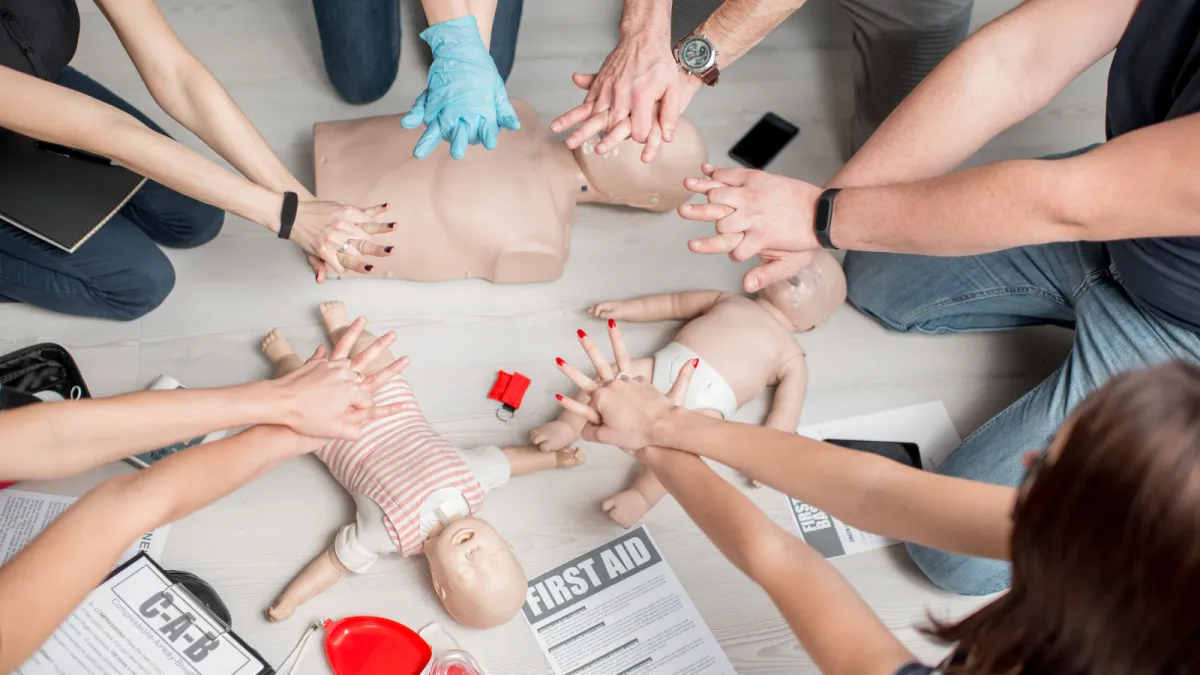
HLTAID011 takes you way beyond just putting on band-aids. Here's what you'll learn:
Emergency Response (DRSABCD)
Danger assessment (real-world scenarios you'll face in schools)
Response checking (including how to handle unconscious students)
Sending for help (who to call and when)
Airway management
Breathing checks and support
CPR techniques
Defibrillator use (AED)
Common School Emergency Management
Asthma attacks (including inhaler assistance)
Allergic reactions
Sports injuries
Head injuries
Seizures
Bleeding control
Practical Assessment Components
Here's what you'll do during your training:
Statement of Attainment and Recognition
Once you complete the course, you'll get:
Nationally recognized Statement of Attainment
Digital copy for your records
School compliance documentation
Wallet-sized quick reference card
HLTAID009 CPR Certification Essentials
Let's talk about CPR certification - the one you need to update every year. And there's a good reason for that annual renewal. CPR guidelines change, and let's be honest, if you're not practicing, these skills can get rusty fast.
Annual Renewal Requirements
Here's what the yearly update involves:
Time Investment:
2 hours of online theory
1.5-hour rapid face-to-face practical session
Current guidelines review
Assessment of competency
Skills Maintenance and Practice
Between your annual updates, here's how to keep your skills sharp:

Here's something interesting: Schools that do quick CPR refreshers during staff meetings have way better confidence levels when real emergencies happen.
Updated Guidelines and Techniques
The latest CPR updates you need to know:
Current Focus Areas:
Compression depth: 5cm for adults (about 1/3 chest depth for kids)
Rate: 100-120 compressions per minute
Ratio: 30 compressions to 2 breaths
Early defibrillation: The faster, the better
Old Practices to Forget:
Looking for a pulse (too time-consuming)
Five initial breaths (start compressions right away)
Stopping for long periods to check breathing
Common CPR Scenarios in Schools
Based on real Gold Coast school incidents:
Sports Field Emergencies
Heat exhaustion cases
Impact injuries
Cardiac events during exercise
Classroom Situations
Choking incidents
Asthma attacks turning serious
Allergic reactions
Playground Events
Fall injuries
Heat-related issues
Collision accidents
Every school's nightmare is not being ready when these happen. That's why many Gold Coast schools are putting AEDs in multiple locations and training more staff than the minimum requirement.
Group Training Solutions for Schools
Let's tackle the big one - getting your whole school staff trained without causing chaos in your daily operations. After working with dozens of Gold Coast schools, we've figured out what works.
On-Site Training Options
Skip the travel hassle with on-site training. Benefits include:
Familiar environment for staff
School-specific scenario practice
Easy access to your actual emergency equipment
No travel time lost
More comfortable learning environment
Training Space Options:
School Example: A Gold Coast primary school transformed their library into a training space during student-free days. This lets them maintain normal school operations while getting everyone certified.
Flexible Scheduling Around School Terms
We get it - school calendars are packed. Here's how other Gold Coast schools make it work:
Popular Training Times:
Student-free days (most popular)
Week before term starts
Split sessions across term
After school sessions
Customized Training Programs
One size doesn't fit all. Here's how training adapts to different school needs:
Primary School Focus:
Playground incident scenarios
Sports day preparation
Excursion emergency responses
Age-specific CPR techniques
High School Additions:
Lab emergency responses
Sports injury management
Mental health first aid options
Teen-specific scenarios
Special Education Units:
Specific medical condition training
Mobility assistance scenarios
Communication strategies
Individual care plans
Want to know something cool? Schools that practice with custom scenarios report feeling 90% more confident in real emergencies.
Managing Staff Certifications Effectively
Keeping track of who needs what certification and when isn't just about ticking boxes - it's about making sure your school's always ready for emergencies. Here's how to make it simple.
Tracking Systems and Tools
Smart schools use smart systems. Here's what works:
Digital Tracking Essentials:
Staff member name and role
Certificate numbers
Issue dates
Expiry dates
Special endorsements
Refresher completion dates
Example: A Gold Coast high school created a simple spreadsheet that automatically highlights certifications expiring within 3 months. No more surprises!
Renewal Planning Strategies
Map out your year to avoid certification gaps:
Annual Planning Calendar:
Term 1: Audit current certifications
Term 2: Plan group training dates
Term 3: Follow up on expiring certificates
Term 4: Schedule next year's updates
Documentation Management
Keep your records clean and compliant:
Staff Communication Tips
Keep everyone in the loop without drowning in emails:
Notification System:
3-month reminder
1-month reminder
2-week urgent notice
Confirmation required
Key Times to Update Staff:
Start of each term
During staff meetings
Professional development days
Emergency response reviews
Quick Response Solutions
Sometimes you need fast fixes:
Emergency Coverage Plans:
List of all certified staff by building/area
Back-up staff for each role
Relief staff certification checks
Emergency response team assignments
Gold Coast School Example: "We put together a simple map showing where certified first aiders are located throughout the school. Each term, we update it based on teacher movements and new certifications. Made a huge difference during a recent playground incident."
Best Practices from Local Schools
Here's what's working in other Gold Coast schools:
Visual Tracking Boards
Color-coded staff photos
Location markers
Quick reference for emergencies
Updated each term
Buddy System
Pair new and experienced first aiders
Share knowledge and confidence
Built-in backup system
Mentoring opportunities
Regular Skills Practice
5-minute scenarios in staff meetings
Equipment location reviews
Emergency response drills
Team building exercises
Putting It All Together
You've now got a complete roadmap for managing First Aid and CPR certifications at your school. Let's recap the key points that make the biggest impact:
Quick Action Steps:
Map your current certification coverage
Mark certification expiry dates on your school calendar
Create your emergency response location map
Set up a simple tracking system
Remember the Core Requirements:
Pro Tips from Experienced Schools
Gold Coast schools with the strongest first aid programs share these habits:
Practice emergency scenarios regularly
Keep first aid equipment easily accessible
Update staff location maps each term
Run quick refreshers in staff meetings
Think about this: In an emergency, every second counts. Having confident, well-trained staff makes all the difference. That's what this is really about - being ready when students need us most.
Key Takeaway: First aid certification isn't just about compliance. It's about creating a safer environment for everyone in your school community.
Ready to take the next step? Quick Safety Tip: Start by doing a quick audit of your current certifications. Knowing where you stand is the first step to having a rock-solid first aid program in your school.
Need more information about first aid training? Give us a call at 0434778243 - we're here to help keep your school safe.