
Codes and Practices in the Workplace: Full Guide 2026
What Are Codes of Practice in the Workplace?
Codes of practice are practical guides that explain how employers and workers can meet the standards required under workplace health and safety laws. In Queensland, they are issued under the Work Health and Safety Act 2011 (Qld) and approved by the Minister for Industrial Relations.
A code of practice:
Sets the minimum standard of conduct expected to meet WHS duties
Is admissible in court - if an incident occurs, a court may consider whether the code was followed
Covers specific hazards or industries - including construction, electrical work, manual tasks, and hazardous chemicals
Does not replace the WHS Act or Regulations - it works alongside them as practical guidance
Can be used by SafeWork QLD inspectors during site visits and audits to assess compliance
Following the relevant codes of practice for your industry is one of the most reliable ways to demonstrate due diligence under Queensland law.
A Brisbane site manager got the call on a Tuesday morning. A SafeWork QLD inspector was on-site. Three staff couldn't produce current WHS training records. What followed cost the business thousands in fines and a week of operational disruption.
It didn't have to happen that way.
That story is more common than most Queensland employers realize. Queensland's Work Health and Safety Act 2011 gives codes of practice the force of practical guidance that courts and inspectors use to determine whether a business has met its duty of care. Understanding which codes apply to your worksite and making sure your team is trained is one of the most important compliance steps you can take heading into 2026.
This guide covers what codes of practice are, which ones apply to your industry, what your legal training obligations are, and how to be audit-ready if SafeWork QLD comes knocking.
Understanding WHS Laws in Queensland: The Three-Layer Framework
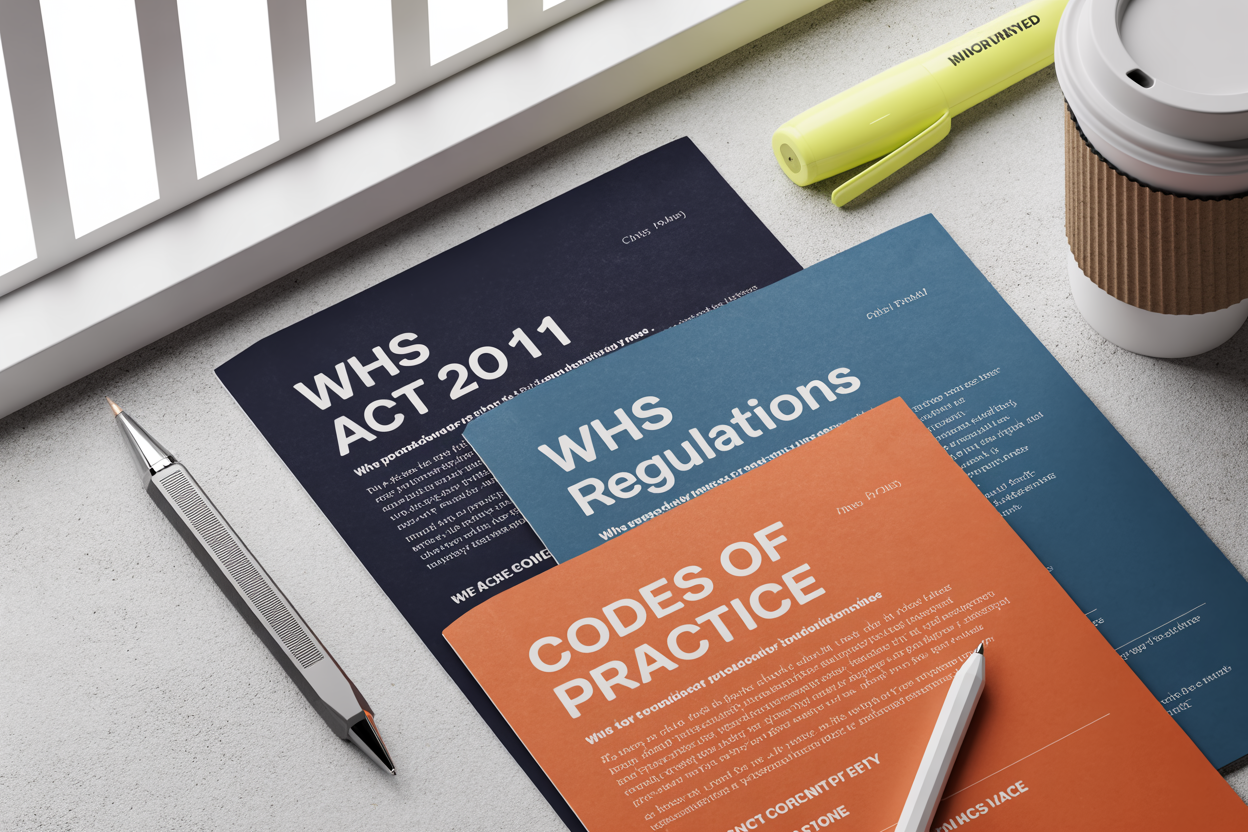
Most employers know they have WHS obligations. Fewer know exactly where those obligations come from. Queensland's WHS framework works in three layers. The Work Health and Safety Act 2011 (Qld) sits at the top. WHS Regulations sit in the middle. Codes of practice sit at the base. All three apply to your business simultaneously, and ignorance of any one layer isn't a legal defense.
The Work Health and Safety Act 2011 (Qld) - What It Actually Requires of You
The Act is the foundation. The key obligation it places on every PCBU is this: ensure the health, safety, and welfare of your workers so far as is reasonably practicable.
"Reasonably practicable" means weighing up several factors:
The likelihood that harm will occur
How serious that harm could be
What you know (or should know) about the hazard
What control measures are available
The cost of those controls, weighed against the level of risk
It's not a get-out clause. It's a test. And if a SafeWork QLD inspector or court applies that test to your business, they'll be looking at all five factors.
WHS Regulations - Where the Specific Duties Live
The Regulations sit under the Act and go into detail, covering specific requirements for plant and equipment, hazardous chemicals, construction work, and electrical safety. If your business works with any of those things, the Regulations are not optional. They're the layer where specific, enforceable requirements live.
Codes of Practice - The Practical How-To Layer
Safe Work Australia develops model codes nationally. Queensland adopts and adapts them through WorkSafe QLD, producing a set of approved codes across Queensland workplaces. Codes of practice are not suggestions. Under section 274 of the Work Health and Safety Act 2011 (Qld), a code is admissible in court proceedings. If something goes wrong, a court can consider whether the relevant code was followed, and non-compliance becomes evidence that you didn't meet your duty of care. SafeWork QLD inspectors use the same codes during site visits and audits.
The full directory of approved Queensland codes is at worksafe.qld.gov.au.
The three layers work together. The Act sets the standard. The Regulations specify the requirements. The codes show you how to meet them in practice. If your team hasn't been trained to understand all three, that's a gap, and it's exactly the kind of gap UEECD0007 is designed to close. Find out more at First Aid Alive UEECD0007 course page.
Which Codes of Practice Apply to Your Queensland Workplace?
It's not a matter of picking one code and calling it done. Multiple codes can apply to a single worksite at the same time. The starting point is understanding your industry and the hazards your workers face.
Construction and Civil Works
Construction is one of the most heavily regulated industries under Queensland WHS law. Key codes for this sector include:
Managing the Risk of Falls in Workplaces - applies any time work is done at height
Construction Work Code of Practice - covers safe design, site setup, and general hazard management
Hazardous Manual Tasks - applies to lifting, carrying, pushing, or repetitive physical effort
First Aid in the Workplace - applies to all workplaces; higher-risk sites need more comprehensive arrangements
Electrical Trades and Low Voltage Work
If your workers are licensed electricians, apprentices, or anyone working near electrical infrastructure, the Electrical Safety Code of Practice is non-negotiable. It covers isolation procedures, low voltage rescue requirements, and safe work practices for electrical work in Queensland. Low voltage rescue training, delivered as UETDRRF004, is a specific requirement under the Queensland Electrical Safety Act alongside the WHS obligations covered by UEECD0007.
Manufacturing, Warehousing, and Logistics
The codes most commonly in play for these industries are:
Hazardous Manual Tasks - musculoskeletal injuries are the most common workplace injury in these sectors
Managing Noise and Preventing Hearing Loss - applies in high-noise environments
Labelling of Workplace Hazardous Chemicals and Safety Data Sheets - applies wherever hazardous substances are stored or used
Managing the Work Environment and Facilities - covers general site safety and amenities
How to Identify Which Codes Apply
Work through two questions: what industry does your business operate in, and what hazards do your workers encounter? The answers point you to the relevant codes.
The First Aid in the Workplace code applies to every Queensland business regardless of size, requiring a trained first aider on site. That makes HLTAID011 Provide First Aid a documented obligation for most employers, not a nice-to-have.
Your Legal Training Obligations Under the WHS Act 2011 (Qld)
This is where the gap between "I think we're compliant" and "I can prove we're compliant" gets very real. The Work Health and Safety Act 2011 (Qld) requires every PCBU to provide workers with the information, training, instruction, and supervision necessary to work safely. Reasonably practicable training means:
Training appropriate to the actual hazards your workers face
Training delivered by a qualified provider, not just a toolbox talk
Training that produces a documented, verifiable record of completion
Training that is kept current
Verbal training and peer-to-peer instruction aren't enough on their own. If a SafeWork QLD inspector asks for evidence, you need certificates.
Who Is Responsible?
You are. The obligation to ensure workers are trained sits with your business. It doesn't transfer to the worker and doesn't disappear because a previous employer completed training years ago.
What Training Records Must You Keep?
Queensland WHS legislation requires records that are accurate, current, and producible on request: a training register listing each worker, the unit completed, the RTO, and the date; certificate copies for every worker in a safety-critical role; and records that are accessible quickly. Safe Work Australia guidance points to a minimum of five years retention for most training documentation.
What Is UEECD0007 and Why Does It Satisfy Your Obligations?
UEECD0007 - Apply Work Health and Safety Regulations, Codes and Practices in the Workplace - is a nationally recognized unit that gives your workers documented, verifiable understanding of:
Their rights and responsibilities under Queensland WHS law
How WHS Regulations and codes of practice apply to their work
How to identify hazards and apply the risk management process
How to contribute to WHS compliance day-to-day
It's required for electrical workers and apprentices as part of their licensing pathway and embedded in construction safety pathways. For anyone stepping into a WHS oversight role, it's the documented evidence that they understand what that role requires.
First Aid Alive is a registered training organisation (RTO [RTO_NUMBER]) delivering UEECD0007 and other nationally recognized qualifications across Brisbane and South East Queensland under the ASQA Standards for RTOs 2015.
What Happens if You Don't Follow Codes of Practice in Queensland?
The consequences of non-compliance are documented on the WorkSafe QLD prosecution notices register and range from uncomfortable to business-ending.
How Codes of Practice Are Used as Evidence Against You
Under section 274 of the Work Health and Safety Act 2011 (Qld), codes of practice are admissible in court. If an incident occurs or an inspector identifies a breach, the relevant code becomes the benchmark. If you didn't follow it and can't demonstrate an equally effective alternative, non-compliance becomes evidence that you failed your duty of care.
Real Consequences: Notices, Fines, Prosecution, Shutdown
A SafeWork QLD inspector doesn't have to wait for a serious incident to act:
Improvement notices - require corrective action within a set timeframe, followed by re-inspection
Prohibition notices - stop work on a specific activity or area of the site immediately
Infringement notices - on-the-spot fines for specific lower-level breaches
Prosecution - for serious or repeated breaches, criminal prosecution is on the table
Site shutdown - the entire site can be closed down pending investigation

How to Make Your Brisbane Workplace Audit-Ready in 2026
Getting audit-ready is a five-step process.
Step 1 - Identify Which Codes Apply to Your Worksite
Cross-reference your industry and hazard profile against the WorkSafe QLD codes directory at worksafe.qld.gov.au. Write down every code that applies and don't assume. Missing one is not a defense.
Step 2 - Conduct a Gap Analysis of Your Training Records
For every worker in a safety-critical role, ask: do they hold a current, nationally recognized certificate from a registered RTO? Is it still current? Can you produce it within 24 hours if requested? If the answer to any of those is no, you've found your gap.
Step 3 - Book Nationally Recognized WHS Training
UEECD0007 is the foundational unit, giving every person in a safety oversight role documented evidence that they understand their obligations. With [YEARS_IN_OPERATION] years delivering WHS and first aid training, First Aid Alive has trained [TOTAL_WORKERS_TRAINED] workers across Brisbane and South East Queensland. We come to your worksite on your schedule and certificates are issued the same day.
Don't forget: the First Aid in the Workplace code requires a trained first aider on site. If your team hasn't completed HLTAID011 Provide First Aid, that's a separate compliance gap worth closing at the same time.
Step 4 - Build and Maintain a WHS Training Register
A WHS training register is the single most important document you can produce in an audit. At minimum, include:
Each worker's full name
The unit of competency completed, with the unit code
The RTO that delivered the training and their RTO number
The date of completion
The certificate expiry date where applicable
Step 5 - Schedule Refreshers and Set Calendar Reminders
Build the refresh cycle into your annual operations calendar. For CPR, annual refresher training is the recommended interval under ANZCOR guidelines. For most WHS units, three-yearly refreshers are standard.
Check where your business stands:
I know which WHS codes of practice apply to my worksite
My staff hold current, nationally recognized WHS training certificates
I have a WHS training register that is up to date
I can produce training records within 24 hours if requested
I have scheduled the next training refresh date
If you ticked fewer than 3 of these, your business may be exposed.
Don't Wait for the Call
The site manager from the start of this guide didn't have a training problem. He had a documentation problem. The certificates last year. The peace of mind is permanent.
Codes and practices in the workplace give you a documented path to demonstrating that you did the right thing by your team. In 2026, with SafeWork QLD actively conducting proactive site visits, having that documentation ready isn't optional.
First Aid Alive delivers UEECD0007 at your worksite, on your schedule, with same-day certificates. We come to you. Your crew stays on-site.