Childcare Resuscitation Training: What Staff Must Know
What would you do if a child in your care stopped breathing right now?
Not in a training scenario. Not in theory. Right now, in your room, with the other children watching.
It's a confronting question. But it's the exact question that should be driving every conversation about childcare resuscitation training in Queensland. Pediatric emergencies don't give you a moment to think. They just happen. And in those seconds, your training either kicks in or it doesn't.
For educators working in long day care, family day care, kindy, or OSHC, the legal baseline is clear. Under the Education and Care Services National Regulations 2011, at least one qualified educator must be present every single hour children are in care. Not most hours. All hours. And that qualification - HLTAID012 - has to be current, issued by a registered training organization, and ACECQA compliant.
This article covers what childcare resuscitation training actually involves, which qualifications Queensland centers need, how often each certificate has to be renewed, and what separates a provider that genuinely prepares you from one that just hands you a certificate and sends you home.
What Resuscitation Training Do Childcare Workers Need in Queensland?
The qualifications childcare educators in Queensland must hold:
HLTAID012 - valid for 3 years - covers pediatric CPR, infant resuscitation, and childcare-specific first aid scenarios - ACECQA approved for Regulation 136 compliance
HLTAID009 - valid for 1 year - CPR only - recommended as an annual refresher between HLTAID012 renewal cycles
22300VIC - emergency asthma management - required annually under ACECQA
22556VIC - anaphylaxis management - required annually under ACECQA
At least one educator holding all approved qualifications must be present at all times when children are in care. All qualifications must be issued by an RTO listed on ASQA's national register.
What Is Childcare Resuscitation Training And Why It's Different
Now you know which qualifications are required, it's worth understanding why childcare resuscitation training is a different discipline from a standard adult CPR course. It's the difference between training that actually prepares you for a pediatric emergency and training that leaves you guessing when the moment arrives.
Why standard adult CPR training isn't enough for childcare settings
Adult CPR and pediatric CPR are not the same thing. The techniques differ in compression depth, rescue breath volume, airway tilt angle, and the ratio of compressions to breaths. For infants under 12 months, the differences go even further - two-finger compressions, gentler breaths, and a different approach to recognizing unconsciousness in a baby.
Generic CPR courses - including standalone HLTAID009 - are built around adult scenarios. They don't include infant or child manikin practice. They don't cover pediatric choking. They don't put you in a scenario where a toddler has gone limp in the home corner and you need to know exactly what to do.
For educators in childcare settings, that gap in training isn't a minor oversight. It's a serious risk.
What pediatric resuscitation actually involves
Childcare resuscitation training is built around the DRSABCD framework - Danger, Response, Send for help, Airway, Breathing, CPR, Defibrillation - applied specifically to childcare contexts and pediatric patients.
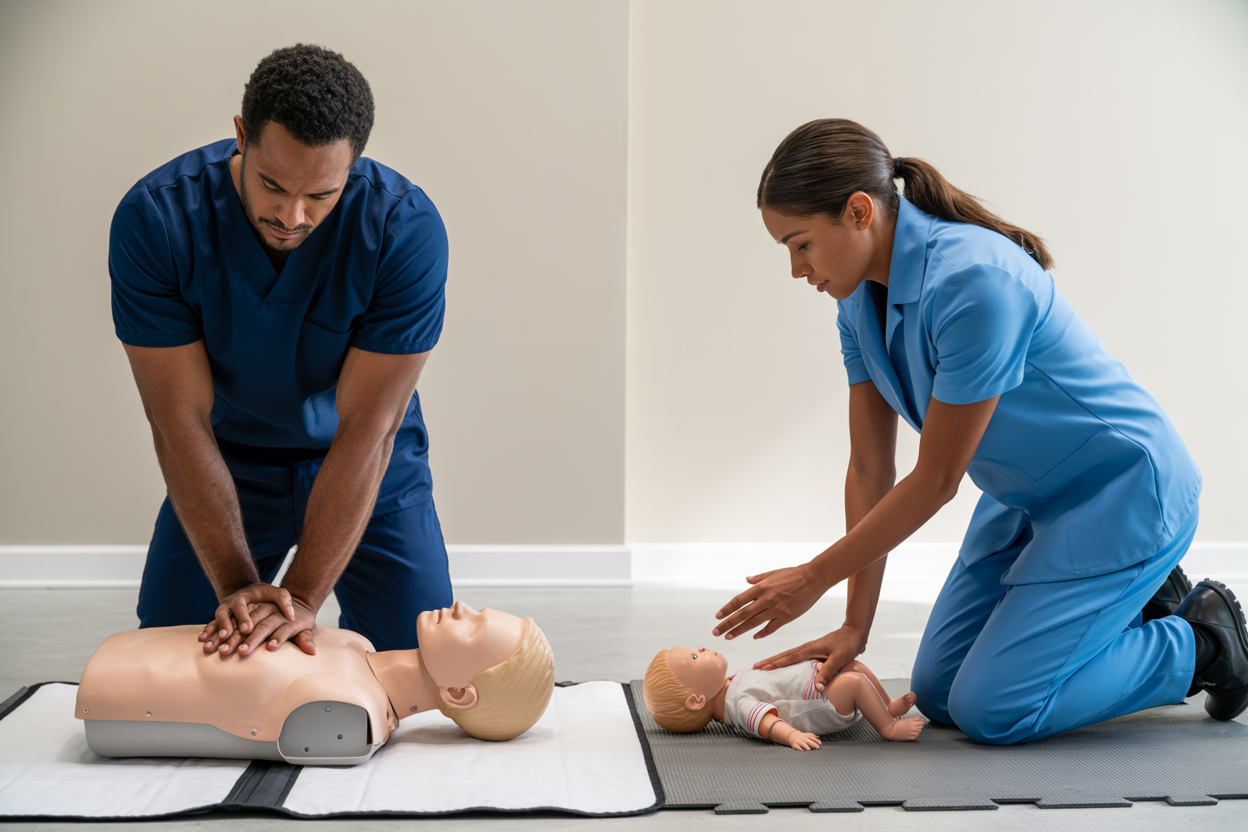
In practice, that means knowing when to call 000 first versus when to start CPR immediately. It means understanding rescue breathing for children (30:2 ratio) and how that differs for infants, where breaths need to be gentler to avoid over-inflating small lungs. It means knowing how to manage pediatric choking - back blows and chest thrusts for infants, abdominal thrusts for children over 12 months - because choking is one of the most common serious emergencies in early childhood settings.
The ANZCOR pediatric resuscitation guidelines set the evidence base that underpins all of this. Quality childcare resuscitation training is built directly from those guidelines.
How HLTAID012 incorporates resuscitation for childcare educators
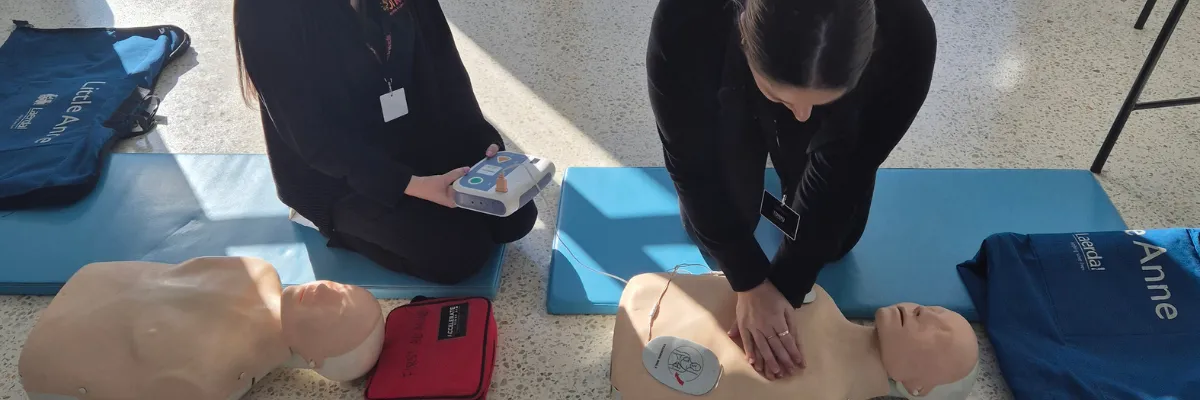
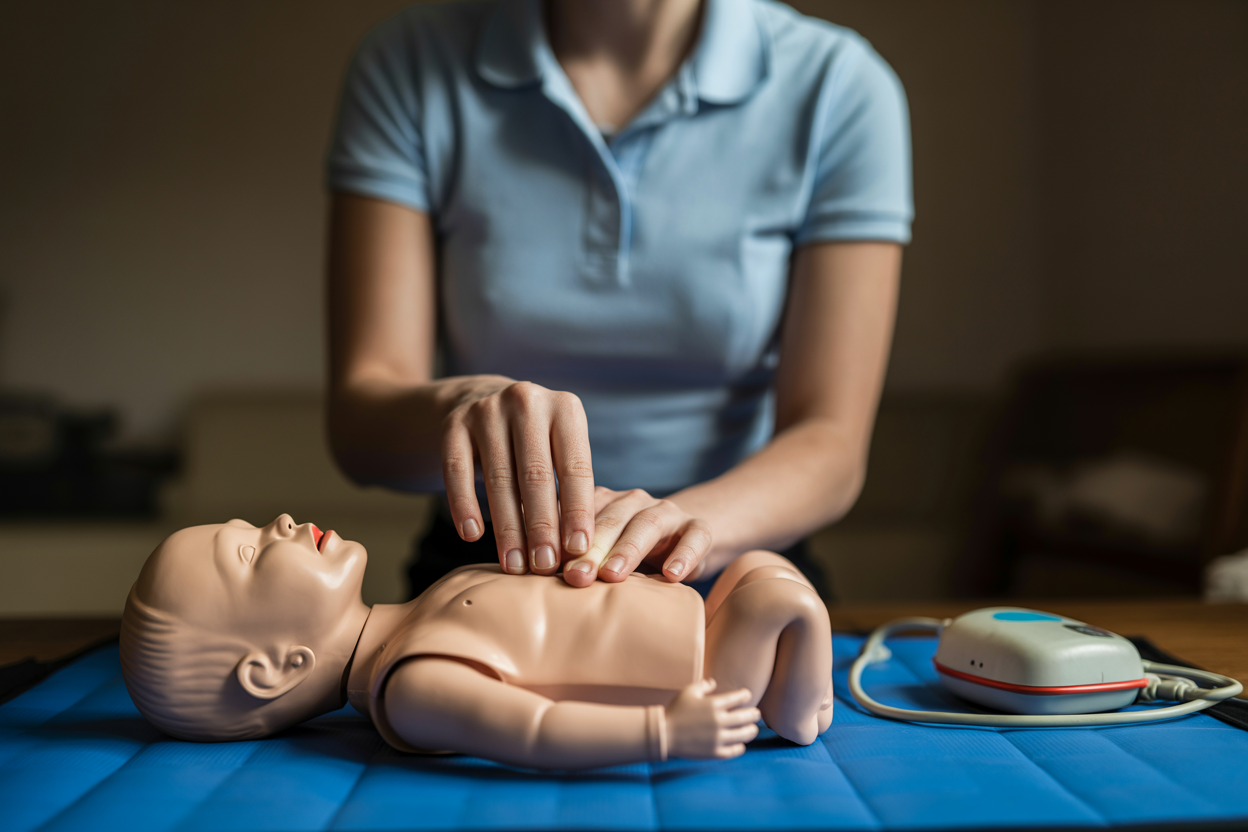
HLTAID012 is the only nationally recognized qualification that combines pediatric first aid and resuscitation in a childcare-specific context. It covers everything above in a hands-on environment, with infant manikins, child manikins, and AED operation practice.
Online-only delivery is not ACECQA compliant. The face-to-face practical component is mandatory, and the scenario-based assessment is designed to mirror real childcare emergencies - not industrial workplaces, not adult patients.
Head to our HLTAID012 course page to check upcoming dates.
Queensland Legal Requirements: What the Regulations Actually Say
A lot of educators know they need "some kind of first aid cert." Far fewer know exactly which regulation requires it, what it says, and what the consequences of a compliance gap actually look like.
Education and Care Services National Regulations 2011 - Regulations 136, 137 and 168
Regulation 136 requires that at least one educator with an approved first aid qualification is present at all times when children are in care - present, on the floor, available.
Regulation 137 requires that at least one educator with approved anaphylaxis management training and at least one with approved emergency asthma management training are also present at all times. These are separate qualifications to HLTAID012 and don't come automatically with it.
Regulation 168 requires approved providers to have documented policies and procedures covering medical conditions, medication administration, and emergency management. Your first aid currency is directly connected to whether those procedures can actually be carried out.
The full text of the regulations is available on the Federal Register of Legislation.
Compliance snapshot - plain English:
Reg 136: One qualified first aider on floor at all times
Reg 137: One anaphylaxis-trained and one asthma-trained educator on floor at all times
Reg 168: Documented emergency procedures - first aid currency is part of this
ACECQA approved qualifications what counts and what doesn't
ACECQA maintains a specific list of approved qualifications - not every course automatically makes the cut. HLTAID012 is on that list. HLTAID011 alone is not sufficient for childcare settings. Both 22300VIC and 22556VIC must also appear on the ACECQA approved qualifications list to satisfy Regulations 136 and 137.
Online-only HLTAID012 is not compliant regardless of how thorough the theory component is. Blended delivery with a mandatory face-to-face practical is the minimum standard ACECQA will accept. Verify the approved qualifications list on the ACECQA website.
Who needs to hold resuscitation training in your center
The requirements apply to educators in direct contact with children - not administration staff, not volunteers, not contractors in non-care roles.
"At all times" means every single operating hour. If your one qualified educator is on their lunch break, you're technically non-compliant for the duration of that break. Directors and nominated supervisors carry personal accountability for maintaining compliance - a gap identified during an assessment visit doesn't just affect the Centre.
A compliance register - a live record of every educator's qualifications and expiry dates - is the practical answer. You'll find compliance resources on our website to help you set this up.
HLTAID012 vs HLTAID009: Which Qualification Does Your Team Need?
The confusion between HLTAID009 and HLTAID012 is one of the most common compliance gaps in Queensland childcare. Both qualifications involve CPR, both are delivered by first aid providers, and the difference between them isn't always made clear at the point of booking.
What HLTAID009 covers (and where it falls short for childcare)
HLTAID009 is a standalone CPR qualification covering the DRSABCD framework, chest compressions, rescue breathing, and AED operation.
What it doesn't cover: pediatric scenarios, infant resuscitation technique, choking management, anaphylaxis, asthma, febrile seizures, or anything specific to a childcare environment. HLTAID009 alone does not satisfy Regulation 136 for childcare. Holding only a CPR cert - even a current one - leaves your center non-compliant.
What HLTAID012 covers that HLTAID009 doesn't
HLTAID012 includes everything in HLTAID009 and goes considerably further. Paediatric and infant resuscitation, pediatric choking management, anaphylaxis response, asthma emergencies, febrile seizures, and scenario-based assessment set in childcare contexts. It's valid for three years, and the face-to-face practical is mandatory - not optional, not waivable. HLTAID012 is ACECQA-approved and directly satisfies Regulation 136.
Can HLTAID009 be used as an annual resuscitation refresher?
Yes - and for many centers, it should be. Resuscitation skills fade faster than a three-year cert cycle suggests. The Australian Resuscitation Council recommends annual CPR refreshers for exactly this reason. Many childcare centers build an annual HLTAID009 session into their professional development calendar alongside their three-yearly HLTAID012, keeping skills sharp and ensuring no one heads into year two or three of their cert cycle without a recent refresher.
HLTAID009 supplements HLTAID012. It doesn't replace it. Check our HLTAID009 renewal sessions for upcoming dates.
How Often Does Resuscitation Training Need to Be Renewed?
Expiry dates creep up quietly. Three years feels like a long time when you're standing in a training room. It doesn't feel long at all when you're managing a team day-to-day and tracking four separate qualifications per person.
HLTAID012 - the 3-year cycle
HLTAID012 is valid for three years from the date of issue. There's no grace period. ACECQA doesn't recognize "almost current" - a certificate that expired last Tuesday is non-compliant today.
One of the most common mistakes directors make is assuming educators are self-tracking their own expiry dates. Some are. A lot aren't. Best practice is a compliance calendar with reminders built in at least three months before each expiry date, giving you enough lead time to book and receive a renewed certificate before the old one lapses.
HLTAID009 and annual qualifications
HLTAID009, 22300VIC, and 22556VIC are all valid for one year. That short validity period reflects the evidence on how quickly skills deteriorate without practice. The Australian Resuscitation Council recommends annual CPR refreshers for exactly this reason. Keeping all three current means your team's skills and compliance never fall more than 12 months behind.
Managing expiry dates across your team
Each educator needs four qualifications tracked individually. At minimum, at least one educator holding all four current qualifications must be present during every operating hour. A rolling compliance register with 90-day reminders is the baseline. If you identify a gap, quality providers offering group bookings and on-site sessions can turn around training quickly.
What to Look for in a Childcare Resuscitation Training Provider
Knowing which qualifications your team needs and when to renew is half the challenge - finding a provider that leaves educators genuinely prepared, not just certified, is the other half.
RTO registration and ASQA accreditation
Your provider must be a registered training organization listed on ASQA's national register. Certificates from unregistered providers are not nationally recognized and won't satisfy ACECQA requirements. Verify any provider's RTO number at training.gov.au before booking. If a provider can't state their RTO number clearly on their website, that's a red flag worth paying attention to.
Pediatric-specific practical components
A quality childcare resuscitation training session includes infant manikins, child manikins, AED trainers, EpiPen auto-injector trainers, and asthma spacers. Scenario-based assessment should reflect real childcare emergencies - not industrial workplace scenarios built around adult patients.
If a provider is advertising HLTAID012 as "fully online" or "mostly online," walk away. The practical can't be waived, and a certificate issued without it isn't ACECQA compliant.
Wrapping Up
Childcare resuscitation training isn't a box to tick once and forget about. It's an ongoing commitment - to the children in your care, to your team, and to the professional standard that Queensland's regulations exist to protect. HLTAID012 is the foundation, but staying genuinely compliant means tracking renewals across every educator on your floor, understanding which qualifications sit alongside it, and choosing a provider whose training builds real confidence rather than just issuing a certificate.
Whether you're an educator whose cert is coming up for renewal, or a director who's just found a gap in the compliance register, the next step is the same - book the right training, with a registered provider, before the gap becomes a problem.