Childcare First Aid Requalification Gold Coast 2026
There's a moment every Centre Director knows a little too well. You're going through your compliance folder on a Sunday night, coffee gone cold, and you spot it. A certificate that's about to lapse in three weeks. Except it's not just one. It's three, and two of them belong to your only qualified first aiders on the toddler room roster that week.
That sinking feeling isn't really about paperwork. It's about ratios. It's about what happens if a child chokes on their lunch and the only person certified to respond is on annual leave in Bali.
If you're running a center anywhere near Coomera or Pimpama, you already know this isn't hypothetical. These are some of the fastest growing suburbs in the country, which means more enrolments, more staff, more onboarding, and more certificates ticking down toward zero at slightly different times, because nothing about staff turnover in early childhood education ever lines up neatly on a calendar.
Childcare first aid requalification for HLTAID012 comes around every three years, and on paper that sounds simple enough. In practice, for a growing center with 12 to 20 educators cycling through full time, part time and casual shifts, it turns into an ongoing logistics puzzle. Who's due next. Who can be spared from the floor without dropping below your minimum first aider count. Whether training everyone on the same day is actually a good idea or a fast way to end up short staffed and turning families away at the door.
This guide walks through exactly when requalification is due, what actually happens on the day, and how to schedule it so you're never stuck choosing between compliance and keeping your rooms open.
There's no shortage of generic first aid providers who'll sell you a training day. What's harder to find is someone who understands what it means to run a center where you can't just pull four staff off the floor whenever it suits the trainer's calendar. Ratios aren't a suggestion, they're the law, and every booking has to be planned around that reality first.
How Often Do You Need to Requalify for Childcare First Aid in Queensland?
Here's the part that trips a lot of Directors up. Requalification isn't one date to remember, it's three, and they all run on different clocks.
HLTAID012, your core Provide First Aid in an Education and Care Setting qualification, needs renewing every 3 years. CPR (HLTAID009) runs on a much tighter loop, every 12 months. And your anaphylaxis and asthma management units (22300VIC/22556VIC) sit somewhere in between, usually renewing every 12–24 months depending on how your own center's risk management policy is written.
Here's how that breaks down:
One thing worth knowing before you book anything: requalifying isn't just sitting through the same course again and getting a new sticker. Guidelines actually move. The 2026 ARC/ANZCOR updates, for example, refined some of the CPR compression and airway management protocols. So a proper requalification course reflects what's current, not just a repeat of whatever your team learned three years ago.
And this is where it stops being a training question and turns into a staffing one. Under the Education and Care Services National Regulations 2011 (Regulations 136 and 137), your centre has to maintain a minimum number of currently certified first aiders on site, at all times, no exceptions. That single rule is the reason requalification timing feels less like ticking a box and more like a constant background calculation you're running in your head. It's also exactly why so many Directors never quite feel "done." The moment one certificate is sorted, another one is already counting down.
If you've got 15 or 20 educators, that means 15 or 20 separate clocks running at slightly different speeds, plus the CPR clock resetting every year on top of that. Add in a new hire starting mid-quarter, someone going on parental leave, another person picking up extra shifts across two rooms, and the whole thing stops looking like a simple three-year cycle and starts looking more like a spinning plate act. Miss one plate and it's not just an admin headache, it's a ratio breach waiting to happen the next time someone calls in sick.
What Actually Happens During HLTAID012 Requalification
So what does the actual day look like, once it's booked?
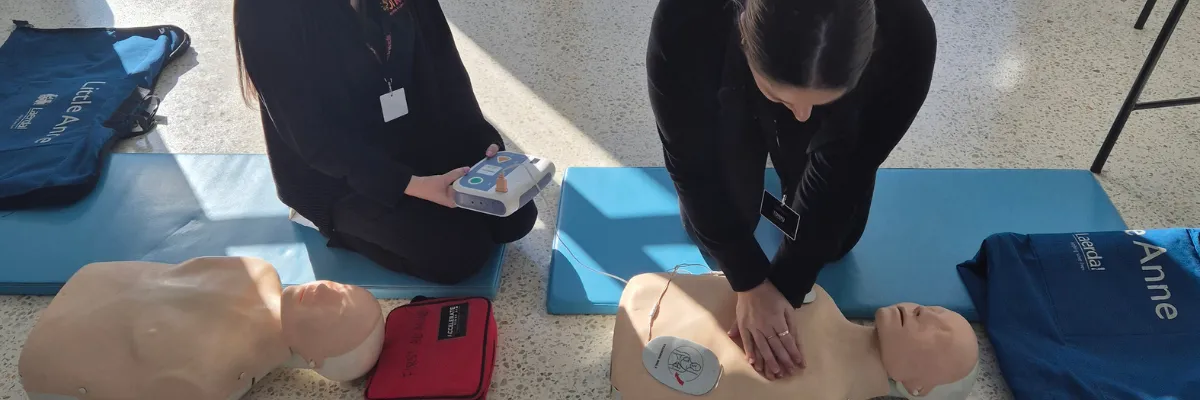
A requalification course covers both practical and theory components, and it's generally done in a single day. Assessment runs across CPR competency, EpiPen and anaphylaxis response, choking management, and asthma-attack response, and none of it is generic. Every scenario is built around a childcare setting specifically, not some broad workplace situation that could apply to an office or a warehouse just as easily.
That distinction matters more than it might sound like on paper. Practicing infant CPR on a manikin sized for an actual baby, or working through an EpiPen scenario with a toddler-aged patient in mind, is a different kind of muscle memory than a generic adult-focused course gives your team.
Think about it from the educator's side for a second. If the only choking response they've ever practiced was on an adult-sized dummy in a workplace safety course years ago, and then a real toddler starts choking on a grape during morning tea, the gap between what they trained for and what's actually happening in front of them is enormous. Requalification that's built specifically around childcare scenarios closes that gap. It means the muscle memory matches the room they're actually working in, not some generic office scenario that was never going to apply to a center full of one and two year old's.
Most reputable providers issue certificates same-day. Which means your staff aren't sitting in limbo waiting on paperwork before they can count toward ratio again. They finish the course and they're straight back on the floor, fully counted, fully covered.
That said, because the course typically runs a full day, the rostering side of things needs thinking through ahead of time. This is honestly where most of the ratio anxiety actually starts. It's not the training itself that causes the stress. It's the fact that pulling someone off the floor for a full day is a real logistical hit, and if you haven't planned around it, it catches up with you fast.

How to Requalify Your Team Without Breaching Ratios
This is the part where most Centre Directors get properly stuck.
Sending your whole team through requalification on the same day can look tidy on a calendar. One day, everyone was done, box ticked. But in practice it's one of the fastest ways to end up scrambling: short staffed, covering ratios with whoever's left, or in the worst case closing a room and having to turn families away for the day. Nobody wants that phone call to be made.
A better approach looks something like this:
Stagger small-group bookings instead of one all-staff training day, so only one or two educators are ever off the floor at the same time.
Train on-site where you can. It cuts out travel time entirely and lets staff walk straight back into their room the moment the session wraps up.
Plan around casual and part-time rosters, lining up requalification sessions with staff who are already scheduled off ratio duties that day, so you're not creating a gap that wasn't there before.
Build a rolling requalification calendar, spacing renewals out across the year rather than letting a cluster of them all land in the same month.
For a 90-place center running with 12 to 20 educators, this kind of staggered planning is genuinely the difference between requalification being a quiet, background task that just happens, or turning into a full-blown ratio emergency every few years.
There's a budget angle here too, worth being upfront about. A full-day all-staff training event usually means paying for relief staff, or absorbing a room running under-ratio for the day, on top of the training fee itself. Staggering sessions across small groups spreads that cost out, and it's often cheaper overall once you factor in what a closed room or a turned-away family costs a center running on tight private-business margins.
There's also a quieter benefit that doesn't show up on a spreadsheet. When only one or two educators are away at a time, the rest of the team barely notices the disruption. Nobody's covering three rooms at once, nobody's stressed about the day falling apart. That kind of steady, low-drama approach to training keeps morale intact in an industry already dealing with one of the highest turnover rates going around.
Tracking Expiry Dates So You're Never Caught Out
Here's the mistake that catches out even experienced Directors: it's rare that they forgot requalification exists. It's that they were relying on memory, or an old spreadsheet that nobody's actually opened or updated in months. And it only takes one missed expiry date, one unannounced ACECQA visit landing on the wrong day, to turn a small admin slip into a real compliance problem.
A good provider should be doing this tracking work for you, not leaving it entirely on your plate. Renewal reminders sent well ahead of the actual expiry date, not some last-minute scramble the week certificates lapse and you're suddenly down an educator you were counting on.
This matters just as much when you're onboarding someone new. If tracking is built into that process from day one, a new educator starts counting toward ratio the moment they're certified, instead of sitting in a kind of paperwork limbo where they're technically trained but not yet showing as compliant anywhere that matters.
Think about how many separate expiry dates a mid-sized center is juggling at once. Fifteen educators each holding HLTAID012, an annual CPR refresher, and an anaphylaxis or asthma unit on its own cycle adds up to dozens of dates spread across a single year. Nobody's memory holds that reliably, and a spreadsheet only works if someone actually opens it and acts on it every week. The moment that habit slips, a gap can open up without anyone noticing until an assessor is standing at reception asking to see certificates.

Choosing a Requalification Provider for Your Gold Coast Centre
Generic first aid training just doesn't map to your actual day-to-day life. What you need is a provider that trains specifically on childcare scenarios: infant choking, using an EpiPen in a room full of toddlers, asthma attacks happening mid outdoor play, rather than a one-size-fits-all corporate module that was clearly written with an office in mind.
Before you book anyone, it's worth asking a few direct questions:
Are you a registered RTO, and can you confirm your registration?
Can you deliver on-site, in staggered small groups?
Do you offer group discounts for larger teams?
Do you provide renewal reminders as part of the service?
For centers in Coomera, Pimpama, Ormeau and Upper Coomera, a locally based provider who actually understands the growth-corridor context (the high staff turnover, the tight margins, rooms that are always full) is generally going to serve you a lot better than a broad, Brisbane-wide generalist who trains everyone the same way regardless of setting.
Directors in this part of the Gold Coast talk to each other. It's a genuinely tight, word-of-mouth-driven network, and a provider who shows up reliably, trains around your ratios instead of ignoring them, and actually remembers your center's context from booking to booking tends to become the default recommendation whenever another Director asks who to use. That kind of trust isn't built through a slick website, it's built one staggered training session at a time, showing up on time and not disrupting the day any more than it has to.
Wrapping Up
Requalification isn't really about a certificate at all, if you strip it back far enough. It's about the two seconds after something goes wrong, and whether the person standing there knows exactly what to do without hesitating. That's the whole point of HLTAID012, and it's the reason none of this can be treated as a box-ticking exercise squeezed in whenever there's a quiet week on the calendar.
The three-year cycle, the annual CPR refresher, the twelve-to-twenty-four month anaphylaxis renewal: none of these dates exist in isolation. They stack on top of each other, they land at different times for different staff, and if nobody's actively tracking them, they have a way of colliding at the worst possible moment. Usually right when a room is already short staffed, or right before an assessor walks through the door unannounced.
What separates a center that handles this calmly from one that's constantly firefighting usually isn't luck. It's planning. Staggering sessions instead of clearing the whole floor in one hit. Training on-site instead of losing half a day to travel. Building renewal reminders into onboarding from day one instead of chasing paperwork after someone's already three weeks into the role. None of these are complicated ideas, but they only work if someone's actually doing them consistently, month after month, not just when a deadline is staring back.
There's also something worth saying about the educators themselves in all this. Every one of them chose early childhood education because they care about the kids in front of them, not because they wanted to become experts in regulatory compliance. When requalification is handled well, staggered properly, explained clearly, and never sprung on anyone at the last minute, it stops feeling like an administrative burden and starts feeling like what it actually is: a chance to walk back onto the floor a little more confident than before.
None of this needs to be a source of dread every three years. With the right rhythm in place, requalification becomes something that just happens quietly in the background, the way it should, rather than something that shows up as a Sunday night panic with a coffee gone cold and a certificate about to expire.