Childcare First Aid Course Structure Explained
You've booked your team into "childcare first aid" and you're mentally ticking the box. Job done, right? Then three weeks later you're on the phone to your training provider asking why anaphylaxis wasn't covered, because you just assumed it was bundled in. This happens more often than centers like to admit, and it's exactly the kind of gap that turns into a very uncomfortable conversation during an ACECQA visit.
The childcare first aid course structure isn't as simple as one generic session covering everything a Director needs. HLTAID012, the actual qualification behind "childcare first aid," has a specific structure: certain units, a defined scope, a mix of online theory and mandatory face-to-face practical work. And it's genuinely different from the standard workplace HLTAID011 that a lot of providers will happily sell you if you don't ask the right questions.
This article breaks down exactly what's inside HLTAID012, how the online and in-person components work together, and where it stacks up against HLTAID011 so you know precisely what your center is booking and why.
What's Involved in a Childcare First Aid Course?
HLTAID012, formally "Provide First Aid in an Education and Care Setting," is the qualification behind childcare first aid. It's built specifically for early childhood settings and it's not the same thing as standard workplace first aid.
Here's what it covers:
CPR for infants and children (the HLTAID009 component is built into it)
Recognizing and responding to choking
Seizures and febrile convulsions
Wound and burn care
Basic life support for pediatric emergencies
What it does NOT cover:
Anaphylaxis management (22300VIC)
Asthma management (22556VIC)
Those two are separate accredited units, and this is where most Directors get caught out, assuming they're bundled in when they're actually required on top.
The course structure itself is blended: self-paced online theory, followed by a mandatory face-to-face practical assessment. It's a structure that exists for a reason. Theory can be absorbed at your own pace, but the actual physical skill of managing an infant's airway or performing correct compressions on a toddler has to be demonstrated in front of someone qualified to assess it.
What's Actually in a Childcare First Aid Course (HLTAID012)?
The Core Unit: HLTAID012 vs Standard Workplace First Aid (HLTAID011)
Both qualifications sit on the same DRSABCD foundation, the standard emergency response framework taught across every first aid course in Australia. Where HLTAID012 diverges is that everything in it is pediatric-specific, from the CPR techniques through to the scenario training.
This matters more than it sounds like it should. HLTAID011 and HLTAID012 are not interchangeable for ACECQA purposes. A center can't send staff through the general workplace course and call it compliant, even if the content looks similar on paper. If your educators hold HLTAID011 instead of HLTAID012, that's a gap, not a technicality.
It's an easy mistake to make too. On the surface, both courses teach first aid. Both cover CPR. Both cover wound care. The difference only becomes obvious once you're actually inside the content, where HLTAID012 replaces adult-focused scenarios with infant and toddler ones throughout. A workplace first aid course might spend a few minutes on pediatric considerations as an aside. HLTAID012 builds the entire course around them.
What's Bundled In
At initial certification, HLTAID012 includes:
CPR for infants and children, with the HLTAID009 component built straight in rather than sold as a separate add-on
Choking response
Seizures and febrile convulsions
Wound and burn care
Basic life support fundamentals, applied specifically to pediatric scenarios rather than adult ones
So when a new educator completes HLTAID012 for the first time, they're not doing a bare-bones CPR course. They're walking out with the full first aid picture for an education and care setting, covering the situations that actually happen in a room full of under-fives. Febrile convulsions in particular catch a lot of new educators off guard the first time they see one in person, which is exactly why the course spends real time on recognizing and responding to them rather than treating them as a footnote.

Course Format: Online Theory + Face-to-Face Practical
The Blended Structure
HLTAID012 runs as a blended course, which just means part of it happens on your own time and part of it happens in a room with an instructor.
Online theory: Self-paced, done whenever it suits the educator, before the face-to-face session
Face-to-face practical: Mandatory, hands-on, assessed in person
This isn't optional or a "choose your own adventure" situation. ACECQA does not accept online-only delivery for this qualification. The practical component has to happen face-to-face, because you genuinely cannot assess whether someone can perform CPR correctly, or manage a choking infant, through a screen. The theory can be self-paced. The skills can't.
There's a good reason ACECQA holds this line so firmly. First aid is a physical skill before it's a knowledge base. Knowing the correct compression depth for an infant in theory and being able to deliver it under pressure, on a manikin, in front of an assessor, are two different things. The face-to-face component exists to close that gap between knowing and doing.
What to Expect on the Day
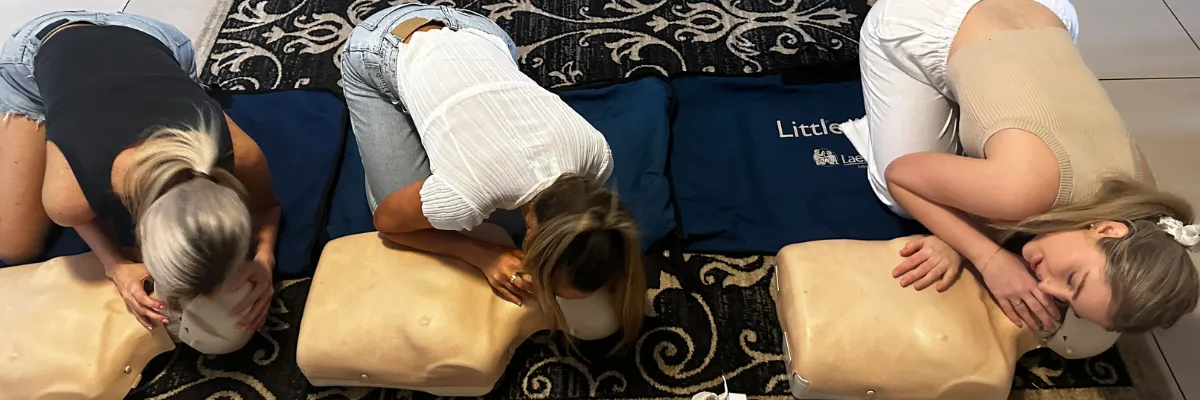
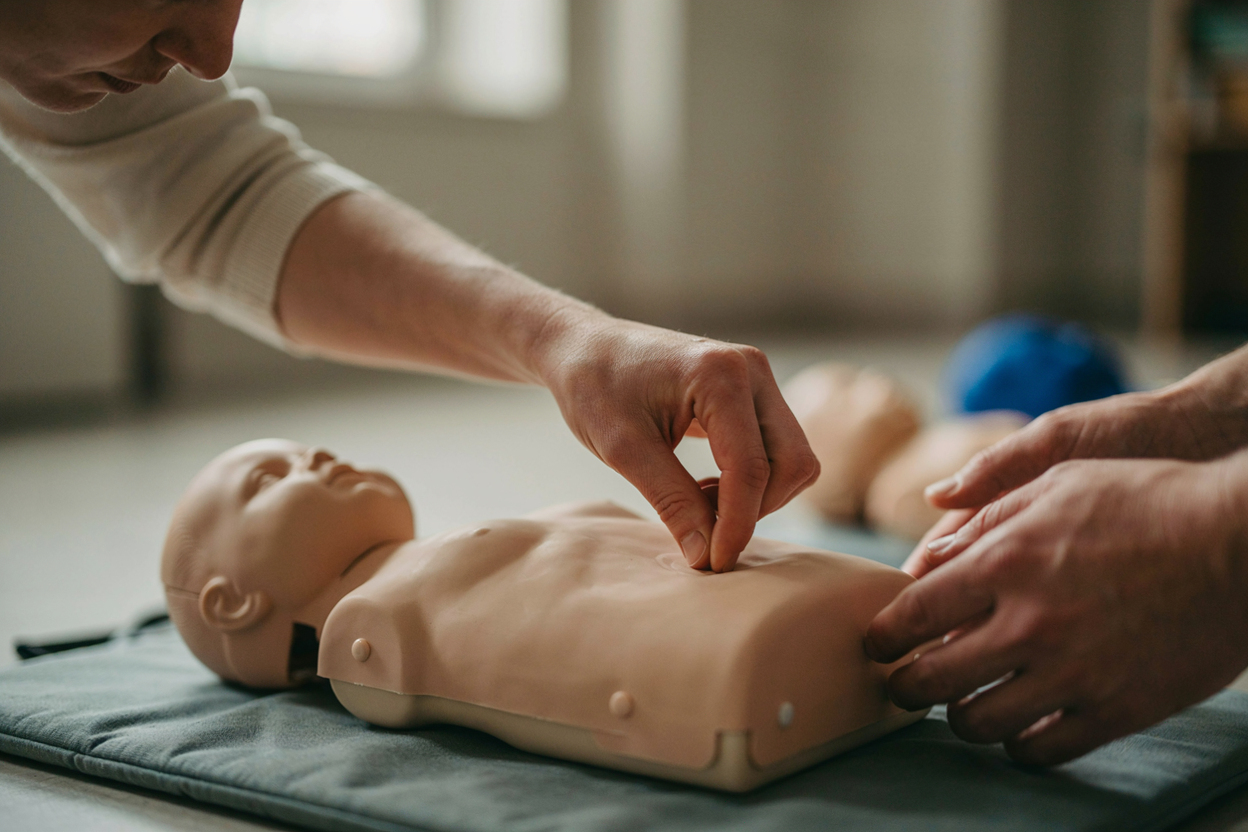
The practical session is where the actual assessment happens. Educators work through scenarios, practice compressions and airway management on training manikins, and demonstrate the recovery position and choking response under supervision. It's hands-on rather than a lecture, and most educators find it far less intimidating once they're in the room than they expected walking in.
There's also something to be said for doing this training alongside colleagues rather than alone. Practicing CPR on a manikin next to the same people you work with every day, people who'll actually be in the room with you if something ever goes wrong, builds a different kind of confidence than sitting through an online module by yourself. It's one thing to know the steps. It's another to know that the person standing next to you knows them too, and has practiced them in the same room, with the same instructor, using the same equipment your center actually has.
What's NOT Included: Anaphylaxis and Asthma Are Separate
22300VIC and 22556VIC Explained
This is the single biggest point of confusion for Directors booking childcare first aid, and it's worth spelling out plainly.
22300VIC covers anaphylaxis management, required under Regulation 137
22556VIC covers asthma management, required under Regulation 168
Neither of these is included in HLTAID012. They're separate accredited units, sitting outside the HLTAID012 structure entirely, each with their own renewal cycle. A center that's fully covered on HLTAID012 can still be non-compliant on Regs 137 and 168 if those two units haven't been booked separately.
Given how many centers run individual medical action plans for multiple children, each with different allergens, different medications, different EpiPen protocols, this isn't a box-ticking exercise either. Staff genuinely need to be drilled on the specific plans in place at their center, not a generic module that doesn't reflect what's actually in the first aid room. A generic anaphylaxis overview is useful as a foundation, but it's the center-specific action plans layered on top of that foundation that actually matter when a real reaction happens.
Why Centers Bundle Them Anyway
Even though HLTAID012, 22300VIC and 22556VIC are structurally separate units, many centers book them together in the same session. It just makes sense logistically. Same instructor, same session, same educators involved once instead of across three separate bookings throughout the year.
It also means nobody's relying on memory to track three different renewal dates for the same group of staff. One coordinated booking, everything covered, one less thing sitting on the compliance checklist waiting to be forgotten.
There's a practical instructor-side benefit too. A trainer who's already in the building for HLTAID012 can move straight into the anaphylaxis and asthma content without resetting the room, without a second round of paperwork, and without educators having to mentally switch gears between separate sessions weeks apart. It keeps the whole thing feeling like one coherent training day rather than three disconnected admin tasks that all happen to involve the same staff.
For the full regulatory detail on what ACECQA requires, their approved first aid qualifications page is the primary source.
Childcare First Aid vs the Annual CPR Refresher (HLTAID009)
The Full Renewal Cycle vs the Annual CPR Refresher
HLTAID012 has a longer validity period than the CPR component alone. But CPR skills degrade faster than that full cycle, which is why the CPR component specifically needs a more frequent refresher in between full renewals.
That refresher is HLTAID009, a shorter, lower-disruption session that tops up CPR competency without putting the whole team through a full HLTAID012 re-certification every time. It's not a replacement for HLTAID012. It's the maintenance that keeps CPR skills current between the full renewals.
For a lot of centers this becomes a rhythm they can plan around: full HLTAID012 on its longer renewal cycle, HLTAID009 CPR refresher as the shorter top-up in between. Once that rhythm is set up properly, it stops being something the roster has to accommodate on short notice and starts being something that's simply booked in ahead of time, the same way any other recurring commitment gets managed.
Booking a Structure That Doesn't Breach Ratios
Small-Group and On-Site Options
Here's the part that actually keeps Directors up at night. Under the National Quality Framework, centers have to maintain a minimum number of currently-certified first aiders on site at all times. Pull too many staff into training at once and the ratio requirement gets breached, which means closing a room or turning families away for the day.
This is exactly why a full-center shutdown for training isn't the answer. Staggered, small-group sessions let educators cycle through HLTAID012 without the center ever dropping below its required ratio coverage. On-site delivery removes the transport and backup-staffing headache too. Nobody has to leave the premises, and nobody has to be pulled from another room to cover a gap that training created in the first place.
For a center juggling a mixed team across different contract types and rotating shifts, this kind of ratio-aware booking structure isn't a nice-to-have. It's the difference between training running smoothly in the background and training becoming a crisis that shuts the center down for a day. The best providers plan the booking around your roster, not the other way around, which sounds obvious until you've dealt with one that didn't.
This is also where a lot of frustration with generic providers comes from. A trainer who's never worked inside a long day-care center doesn't always grasp why ratios matter, or why a Director might need three separate two-hour sessions instead of one full-day block. It's not fussiness, it's the operational reality of running a center that legally cannot drop below a certain number of certified staff at any point during the day, including lunch breaks, staff meetings and the inevitable last-minute sick call. A provider who understands that from the outset saves everyone a lot of back-and-forth.
Quick Reference: The Full Unit Structure
Unit | Covers | Renewal Cycle | Regulation |
HLTAID012 | Core pediatric first aid (incl. CPR) | Multi-year (CPR refreshed more often) | Reg 136 |
HLTAID009 | CPR refresher only | More frequent | Reg 136 (CPR component) |
22300VIC | Anaphylaxis management | Recurring | Reg 137 |
22556VIC | Asthma management | Recurring | Reg 168 |
Print this one out and stick it on the staffroom wall. It answers the "which course do I actually need" question faster than any Google search will.
Conclusion
Every year, another intake of educators, another round of expiry dates to track, another moment where a Director wonders if she's actually covered or just assumes she is. That uncertainty is the real cost of not understanding the structure behind childcare first aid, and it's a cost that gets paid quietly, in the back of the mind, long before any assessor actually walks through the door.
Once the structure is clear, most of that background noise settles down on its own. HLTAID012 covers the pediatric core. Anaphylaxis and asthma sit outside it, as their own separate units with their own renewal clocks. CPR needs a smaller, more frequent top-up in between the full renewals. None of that is complicated once it's laid out properly, it just rarely gets explained this plainly before someone's already booked the wrong thing.
That's really where most of the confusion comes from in the first place. Not a lack of care, not a lack of effort, just a first aid landscape that's split across several accredited units with different names, different renewal cycles and different regulations attached to each one. A Director juggling a full team across mixed shifts doesn't have hours spare to cross-reference training.gov.au against the National Regulations, she needs someone to hand her the map.
The ratio trap makes all of this heavier than it needs to be. Pulling too many staff off the floor at once for training isn't a scheduling inconvenience, it's a genuine risk to the day-to-day running of the center, and it's exactly why the format a course is delivered in matters just as much as what's inside it. Small-group, staggered, on-site sessions solve a problem that a single big all-staff training day simply can't.
None of this needs to feel like a scramble. A center that understands its own structure, who's certified in what, when it lapses, which units are still outstanding, isn't waiting for an unannounced visit to find out where the gaps are. It's already sorted, quietly, well before anyone comes looking.
That's the actual goal behind understanding the childcare first aid course structure properly. Not another certificate for a filing cabinet, but a center where every educator on the floor genuinely knows what to do in the moment it matters, and a Director who isn't lying awake wondering if today's the day something slips through.