Cardiopulmonary Resuscitation Classes in Gold Coast 2026
Most cardiopulmonary resuscitation classes Gold Coast families come across are built for workplaces, not for them. Tradies, nurses, site crews. But when you've got a backyard pool, a toddler who's just worked out the gate latch and a baby on your hip, you need CPR for your own kids. Close to home. On a weekend. Every Queensland pool fence carries a CPR sign, and that sign's a reminder, not training. So this one's for parents, grandparents and careers.
The numbers are worth knowing, calmly. Between July 2015 and June 2025, 182 Australian kids aged 0 to 4 drowned. Nearly half of those deaths (48%) were in swimming pools, and 91% of the pool deaths happened in residential backyards. That's national data from Royal Life Saving Australia. And if your last course was years back, you probably remember "30 and 2" and not much else. Totally normal. HLTAID009 Provide cardiopulmonary resuscitation is the nationally recognized CPR unit, taught to current ANZCOR guidelines.
A good class gets you hands-on with infant, child and adult CPR, and you walk out with a same-day certificate that also meets typical workplace requirements. Below we'll cover what you learn, CPR versus first aid, what happens on the day, and renewal. So you can sit at the pool edge, kids splashing, with that quiet confidence your hands would know what to do.
What Do You Learn in a CPR Class?
A CPR class teaches you how to recognize when someone has stopped breathing normally, give chest compressions and rescue breaths, and use a defibrillator until paramedics arrive. Most Gold Coast classes deliver HLTAID009 Provide cardiopulmonary resuscitation, a nationally recognized unit taught to current ANZCOR guidelines.
The DRSABCD action plan for any emergency
How to check for a response and normal breathing
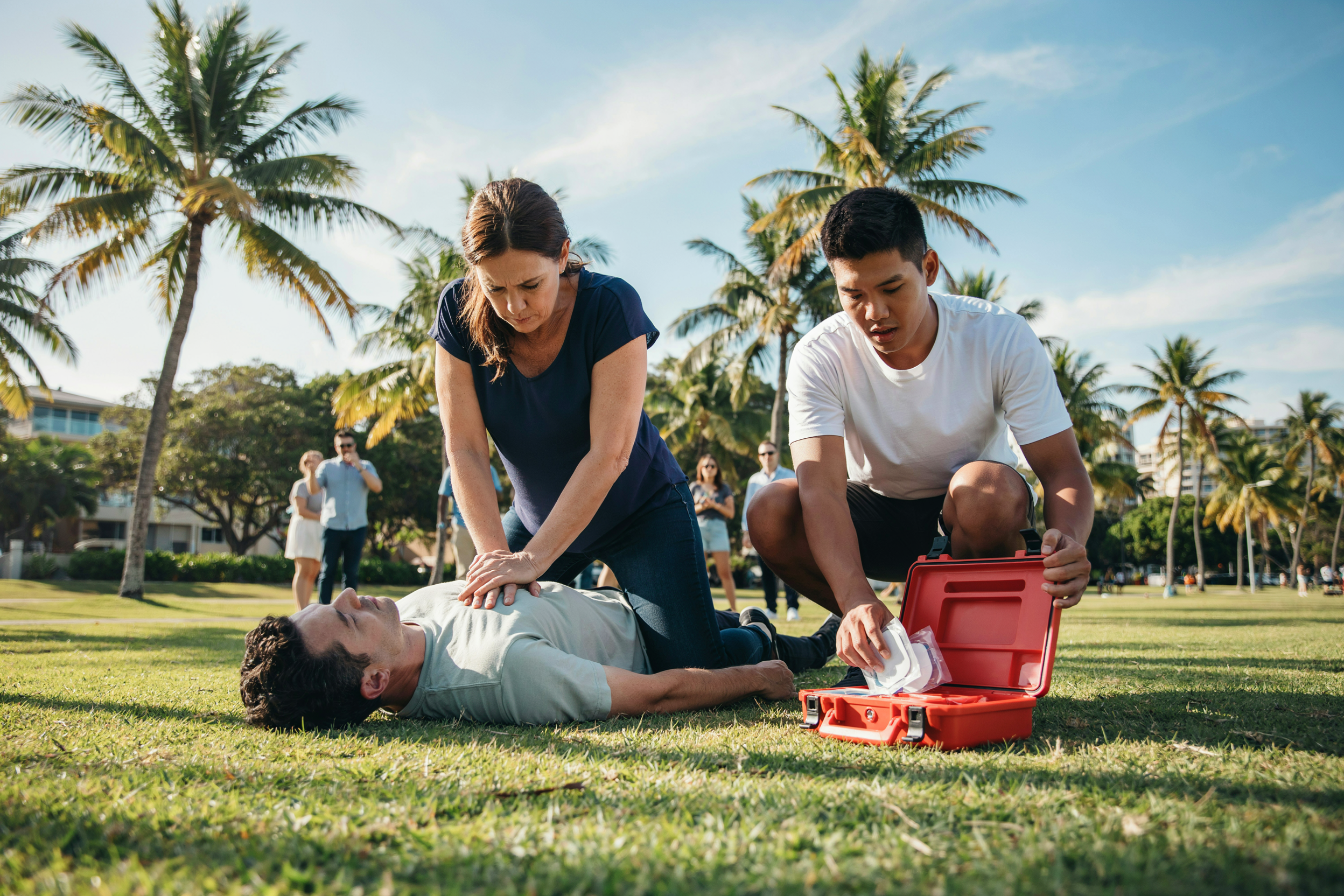
Adult CPR on a manikin, with uninterrupted compressions and breaths
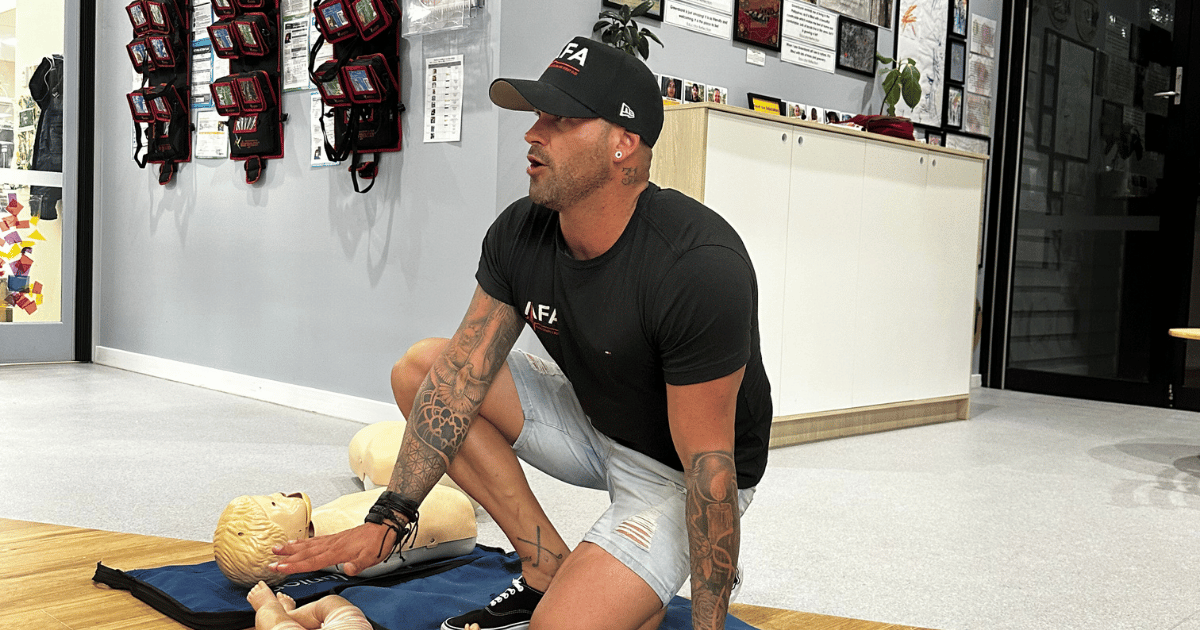
Infant CPR on an infant manikin, and how technique changes for babies and children
Using an AED and following its prompts to deliver a shock
Placing an unconscious, breathing person in the recovery position
Swapping rescuers with minimal pauses, plus infection control and consent
Handing over clearly to paramedics
Want the hands-on version? Book Your CPR Class for infant, child and adult CPR with a same-day certificate.
Why Gold Coast Families Are Booking CPR Classes in 2026
Here's the thing. Most parents aren't booking a CPR course for a certificate. They're booking it because life on the Gold Coast is lived around water, and at some point it clicks that they'd want to know what to do.
Backyard pools and the CPR sign on your gate
In Queensland, regulated pools have to display a compliant CPR sign. You can read the rules on the QBCC CPR signs page. So every time you open that gate, there it is. Steps, diagrams, the lot.
But a sign on a fence is a reminder, not training. Reading it on a calm afternoon is one thing. Following it with your heart going a hundred miles an hour is another.
And in the newer estates, a pool's pretty much standard with the house now. Which is why a CPR course for parents on the Gold Coast has gone from "nice to have" to something on the to-do list, right next to the pool fence inspection.
Beach, creek and swim school life
It's not just the backyard. Weekends at the beach, afternoons down at the creek. Surf club nippers on a Sunday morning. Swim school waitlists you joined before the baby could sit up.
Water's just normal here. And CPR sits right alongside swimming lessons as part of that same water confidence. Not scary. Just sensible.
When you're the only adult at home
Plenty of Gold Coast households run on FIFO rosters, hospital shift work or hospitality hours. That means one parent is often home alone with the kids for days at a time.
Then there's the grandparents. A lot of families have Nan and Pop minding the kids once a week, sometimes right by the pool. Getting them trained too just makes sense, and it's often how one booking turns into a family group.
Knowing why you want CPR is the easy bit. What changes is the technique, especially when the person who needs help is a baby.

Infant, Child and Adult CPR: How the Technique Changes
CPR isn't one size fits all. The basic idea stays the same, push on the chest and breathe for the person, but how you do it shifts a lot depending on who's in front of you. This is a quick overview, not a step-by-step guide. That's what the class is for.
CPR on babies under 12 months
Infant CPR is where most parents feel the nerves. Your hands are big and the baby's tiny, so the hand position changes completely and the pressure is a lot gentler. You also cover the baby's mouth and nose with your mouth for breaths. It feels strange the first time. That's exactly why you practice on an infant manikin, not on your imagination.
CPR on children
Kids sit in the middle. Depending on their size you might use one hand or two, and you still aim for a third of the depth of their chest. Think toddler-sized versus teenager-sized. Your trainer will walk you through how to judge it on the spot.
Adult CPR and using a defibrillator
Adult CPR is two hands, lower half of the breastbone, firm and fast. And the defibrillator, the AED you see at the shops or the surf club, is honestly far less scary than people think. Turn it on and it talks you through every step.
Technique at a glance
Age group | Hand position | Compression depth | Compression: breath ratio | Rate |
Infant (under 12 months) | Gentler infant technique, shown on an infant manikin | One third of chest depth | 30:2 | 100 to 120 per minute |
Child | One or two hands, lower half of breastbone | One third of chest depth | 30:2 | 100 to 120 per minute |
Adult | Two hands, lower half of breastbone | One third of chest depth | 30:2 | 100 to 120 per minute |
Choking or not breathing? Knowing the difference
A choking baby or child is usually still trying to cough, gag or breathe. Someone who's unresponsive and not breathing normally needs CPR. For choking, ANZCOR uses back blows and chest thrusts, and you'll learn both.
Once you know the technique changes with age, the next question is which course actually teaches it.
CPR Class or First Aid Course: Which Should Parents Book First?
Course codes mean nothing to most people. HLTAID this, HLTAID that. So here's the plain English version, because booking the wrong thing is one of the most common worries parents have.
HLTAID009 CPR, the quickest starting point
If you just want to know what to do when someone stops breathing, this is it. HLTAID009 is the CPR unit on its own. It's the core life-saving skill and it's where most parents should start. You can always add more later.
HLTAID011 first aid, when you want broader skills
HLTAID011 Provide First Aid covers burns, bites, bleeding, fractures and the rest. And here's the bit people don't realize: it already includes HLTAID009. So it's not a competing course. It's the step up, for when you've got your CPR confidence and want the bigger toolkit.
Do you need childcare first aid (HLTAID012)?
Probably not, unless you're heading into family day care or working in early education. For most parents keeping their own kids safe at home, HLTAID009 or HLTAID011 does the job.
Going back to work? Check what your employer needs
Coming back from parental leave? Dental, healthcare, education and fitness roles commonly require current CPR. HLTAID009 is nationally recognized, so it's widely accepted, but check the exact requirement with your employer before you book. A quick email to your practice manager saves a lot of second-guessing.
Course | Unit code | What it covers | Best for |
CPR | HLTAID009 | Adult and infant CPR, AED use, recovery position | Parents starting out, annual renewal, return to work |
First Aid | HLTAID011 | Everything in HLTAID009, plus injuries, bleeding, burns, bites | Broader skills after CPR |
Childcare First Aid | HLTAID012 | First aid for education and care settings | Family day care or early education work |
Compare CPR and first aid courses
So you've picked your course. Here's what actually happens when you turn up.
What Happens on the Day: Inside a Gold Coast CPR Class
A lot of people build the class up in their head. It's honestly pretty relaxed. Here's how it runs.
About this course Accelerate First Aid is a co-provider under RTO 31106. HLTAID009 Provide cardiopulmonary resuscitation is nationally recognized and taught to current ANZCOR guidelines. The unit wording still refers to the ARC (Australian Resuscitation Council) guidelines, which is the older name.
Online theory first, hands-on practice in class
This is a blended course. You do the theory online beforehand, then the class is all about practice. And the theory works on your phone, so you can knock it over in short bursts during nap time instead of finding a free afternoon that doesn't exist.
Because the reading's done before you arrive, class time goes on the stuff that matters: getting your hands on the manikins.
Nervous? You won't be the only parent there
Groups are mixed. Parents, grandparents, people renewing for work, people who haven't done CPR since school. Nobody's going to judge you for forgetting everything, because nearly everyone has.
Your certificate, the same day
You leave with your certificate the same day. No chasing it up later. Handy if work's asking for it.
Book Your CPR Class Infant, child and adult CPR · Same-day certificate
So that's what happens in the room. The next bit is keeping those skills fresh once you've walked out.
How Often Should You Renew Your CPR?
Every 12 months. That's the recognized workplace standard for a CPR refresher, set out in Safe Work Australia's First Aid in the Workplace Code of Practice.
And it's not just a box to tick. CPR is one of those skills that fades fast when you don't use it. Think about the parent who last did a course back in 2015. They remember "30 and 2", maybe where your hands go, and that's about it. A yearly CPR refresher on the Gold Coast keeps it sitting in your hands, not just somewhere in the back of your memory.
The easy way to make it stick? Tie it to the calendar.
Feel Ready by the Pool This Summer
Pool season's already here. The days are getting longer and the kids want to be in the water from the minute they get home. That CPR sign on the gate isn't going anywhere, but the skills behind it only come from actually doing it.
The good news is it doesn't take much. Of all the cardiopulmonary resuscitation classes Gold Coast parents look at, the right one is close enough to get to, easy to fit around naps, and covers babies properly. Hands-on infant, child and adult CPR, with your certificate in hand the same day.
Getting there is simpler than it feels at 10pm on your phone. Pick a session on a day someone can mind the kids, maybe when your partner's home or the grandparents are free. Then work through the online theory in short bursts on your phone, whenever the house goes quiet.
After that, you just turn up and practice. You'll get time on the infant and adult manikins, time with the defibrillator, and plenty of chances to have another go until your hands know the rhythm. Then you walk out with your certificate that same day.
And think about who else should come with you. Your partner, the grandparents who babysit by the pool, the mums from your group chat. One booking can turn into a whole support network that knows what to do. While you're at it, grab the free Infant and Child CPR Steps Card for the fridge.
Then it's just you and the kids on a hot afternoon. The pool's sparkling, there's laughing and splashing, and you're sitting at the edge not with a knot in your stomach but with a calm sort of certainty. You've done the training. Your hands are ready.
Book Your CPR Class Infant, child and adult CPR · Same-day certificate