Can You Fail a First Aid Course? You Might Be Surprised
You're sitting there with the booking page open, finger hovering over "confirm," and one thought keeps creeping back in: what if I actually fail this thing? Maybe it's been a decade since your last certificate. Maybe the only CPR you've ever done was on a plastic torso in a high school health class, half-watching the clock. That little flicker of doubt? Completely normal, and you're nowhere near the only person typing this exact question into Google before they book.
Here's the short version: failing a first aid course is rare, and it's almost never about being "bad" at CPR. Most providers, Accelerate First Aid included, build the whole course around getting you competent, not catching you out.
In this guide, we'll get into what "failing" really means in a nationally accredited course like HLTAID011 (Provide First Aid), the handful of real reasons people don't get there on the first go, what happens if you need a bit more support, and how to walk in feeling confident instead of anxious.
Can You Fail a First Aid Course?
Yes, but it doesn't happen often. In a nationally accredited course like HLTAID011 (Provide First Aid), you're not marked out of 100 or given a grade, you're assessed as either "competent" or "not yet competent." There's no pass/fail exam sitting underneath it all. Most people who don't get marked competent on the first go just need a little more practice, not a full re-sit of the whole course.
You're most likely to need extra support if you:
Miss too many classes or theory modules to show you actually understand the content
Can't yet get CPR compressions to the right depth and rate
Haven't finished the online theory component before turning up to your practical session
Can't yet demonstrate a required skill safely, like the recovery position
In almost every case, trainers will work with you on the spot or set up a short follow-up session. They're not in the business of failing you outright.
What Does "Pass" or "Fail" Actually Mean in a First Aid Course?
Competency-based training vs. exams
Here's the bit that trips a lot of people up before they even start: first aid courses in Australia don't work like school exams. There's no mark out of 100, no grade, no "you got a B+." Under the nationally recognized training model that ASQA oversees, you're assessed as either competent (C) or not yet competent (NYC). That's it. Two outcomes, and one of them isn't really a failure, it's a "we're not quite there yet, let's fix that."
Think of it less like a written exam and more like a driving test. Nobody hands you a percentage score after a driving test, they just need to see you can actually do the thing safely, every time, under real conditions. First aid works the same way. Trainers aren't checking if you can recite a definition, they're checking if you can do CPR properly when someone in front of you genuinely needs it.
So if you're worried about "failing," it helps to drop that word almost entirely. It's not the right frame for what's actually happening in the room.
What you're actually assessed on
Your HLTAID011 course bundles a few different things together, and you're assessed across all of them:
Theory component, done online or in-class, usually short-answer or multiple-choice style checks just to confirm you've understood the material
Practical component, this is the bigger piece, covering CPR technique, the recovery position, wound management, AED use, and a few scenario-based responses where you talk a trainer through what you'd actually do
Worth knowing: HLTAID011 already has CPR (HLTAID009) built into it, so when we talk about "the practical," we're talking about a fair chunk of CPR-specific skill in there too. It's not a separate add-on course, it's baked into the one you're already booked into.
So if it's not graded like an exam, why do some people still need a bit more time? Here's what actually trips learners up.

The Real Reasons People Don't Pass First Time
Incomplete theory or missed modules
This is the most common one, by a fair margin. Most HLTAID011 courses have an online pre-learning module you're meant to finish before you turn up for your practical day. Some people leave it until the night before, some people just... don't do it at all, and then wonder why the trainer's asking questions they can't answer.
The fix here is about as direct as it gets: finish the theory before you show up. It's online, you can do it on your lunch break or on the couch. Do that one thing and you've already removed the single biggest reason people don't get marked competent the first time.
CPR technique not yet meeting the required standard
This one's about compression depth, compression rate, and hand placement. There's a real, specific standard here, it's not a trainer being fussy or having a bad day. CPR only works if it's done a certain way, hard enough and fast enough to actually move blood around a body that isn't doing it on its own anymore.
So when a trainer says "press a bit harder" or "speed that up slightly," that's not a criticism, that's coaching. Every trainer walks in expecting to correct technique on the day. It's part of the job, not a sign you're doing badly.
Communication or English-language barriers
Worth naming, even briefly: for some learners, English isn't a first language, and that can occasionally make the theory component or scenario-based talk-throughs trickier than the physical skills themselves. Good providers build in support for this: more time, alternative ways to demonstrate understanding, extra explanation where needed. If this is a concern for you, mention it to your provider ahead of time so they can plan for it.
Anxiety, freezing, or "manikin nerves"
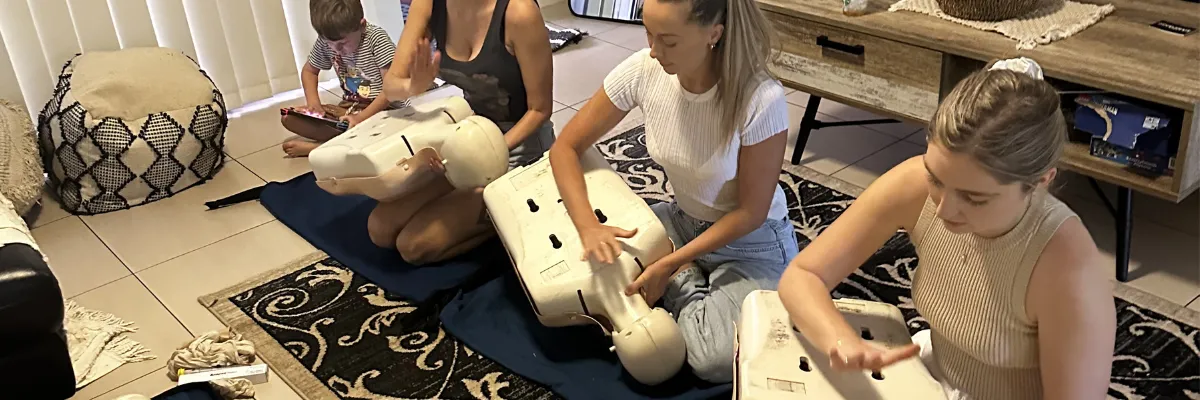
And here's the one that probably brought a lot of people to this article in the first place. That nervous, slightly sick feeling before doing CPR compressions in front of other people, worrying you'll get the technique wrong, worrying about the rhythm, worrying everyone's watching you. It's got a name in the industry pretty much everyone uses informally: manikin nerves. And it's extremely common.
Trainers are trained for this. They expect nervous learners, they expect people who freeze up the first time, and they know how to talk someone through it calmly rather than just standing there with a clipboard judging.
What Happens If You're Assessed as "Not Yet Competent"?
It's not a fail, it's a "not yet"
Worth saying plainly: nobody's handing you a big red F and sending you home embarrassed. "Not yet competent" is exactly what it sounds like, you're not quite there on one specific skill, yet. The language matters here, because it changes what actually happens next.
In practice, that usually looks like one of a few things: a bit of extra coaching from the trainer right there on the day, a short follow-up session booked in afterwards, or a quick re-assessment of just the one skill that wasn't quite meeting the standard. None of these are dramatic. None of them mean starting over.
Will you have to redo the whole course?
Almost always, no. If you're marked not yet competent on, say, compression depth, you don't redo the theory, you don't redo wound management, you don't redo the recovery position you already nailed. You just get more time and support on that one specific skill until you've got it.
This does vary a bit provider to provider, so it's worth asking upfront if it's a concern for you. At Accelerate First Aid, this is handled in-person, with the trainer working through it with you directly and giving you ample time to practice until you're genuinely comfortable, not just rushed through to tick a box.
Let's say one of these does apply to you on the day, what actually happens next? You keep practicing, you get one-on-one attention on the bit that's not quite there yet, and you walk out the same day with the same certificate as everyone else in the room. That's the whole story.
How to Walk In Feeling Confident (Not Worried About Failing)
Now that you know what's really being assessed, here's how to set yourself up to get it right the first time.
Complete your online theory beforehand
Said it once already, saying it again because it matters that much: do the pre-learning module before you arrive. It's the single easiest thing you can do to walk in prepared instead of guessing.
Wear comfortable clothing and arrive rested
You'll be kneeling, moving, doing compressions, sometimes getting up and down off the floor more than once. Wear something you can actually move in. And turn up rested rather than running on no sleep and a coffee, your body and your concentration will both thank you.
Ask questions, trainers expect it
If something doesn't make sense, ask. Trainers aren't sitting there hoping nobody interrupts, they expect questions, they want questions. A question means you're engaging with it properly, which is exactly what gets you to compete faster.
Practice CPR rhythm beforehand
Here's a small one that genuinely helps: practice the compression rhythm in your head before you go. A lot of people count it out to the beat of "Stayin' Alive," it's roughly the right tempo and it's hard to forget once it's in your head. Doesn't need to be complicated, just a bit of mental rehearsal before the day.
And if you're still not sure whether HLTAID011 is even the right course for you in the first place, that's worth sorting before you book, not after. Not sure if you need HLTAID009 or HLTAID011? is worth a quick read, and you can see everything HLTAID011 covers on the main first aid course page.
Quick checklist before your practical day:
Finished the online theory module
Wearing comfortable, easy-to-move-in clothing
Got a decent night's sleep beforehand
Mentally rehearsed the compression rhythm
Got your questions ready, there's no such thing as a silly one

Why Choose Accelerate First Aid for Your Course
Real support, not a tick-box exercise
If you're nervous about the practical, or you need a bit of extra time on one skill, Accelerates whole approach leans into giving you that attention. The goal isn't to push people through as fast as possible, it's to get everyone to be genuinely competent.
Same-day certificate
Once you're marked competent, you're not waiting around for paperwork, your certificate comes through the same day.
The Short Version
So, back to the question that brought you here: can you fail a first aid course? Technically yes, but it happens far less often than the nerves beforehand would have you believe.
What actually trips people up almost never comes down to being incapable. It's usually something simple and entirely fixable, theory left unfinished until the last minute, compressions that need a touch more depth, or nerves that get the better of someone in front of a manikin and a room full of strangers. None of that is the same as failing, and none of it sticks around once a trainer's had a minute to work through it with you.
The whole point of competency-based assessment is that it's built around getting people there, not catching them out. A trainer who spots a skill that's not quite right yet isn't looking for a reason to send someone home, they're looking for the extra two minutes of coaching that gets it sorted. That's the entire design of the system, and it's worth holding onto that thought walking in the door.
Most people who arrive nervous leave wondering what all the worry was about. The theory makes sense once it's done properly, the practical gets coached rather than judged, and every single nervous learner in that room has been seen before, by someone who knows exactly how to help them get there.
So if that nagging "what if I fail" question is still sitting there, let it go. It's extremely unlikely, and even in the rare cases where it isn't quite right the first time, getting there is the whole point of the day, not the exception to it.