Can I Do a CPR Course If I Have No Experience? Absolutely
What would you do if someone collapsed in front of you right now? If your honest answer is "I'd panic — I've never done CPR," you're not alone. And you're exactly who this course is designed for.
Yes — anyone can do a CPR course with no experience. HLTAID009, Australia's nationally recognised CPR certification, is built from the ground up for complete beginners. No medical background, no prior training, no fitness test. Nothing to brush up on before you walk in the door.
Here's something worth sitting with for a second: every single person who's ever become CPR-certified started exactly where you are right now. That includes the trainer standing at the front of the room. Nobody was born knowing how to do this. There's no assumed knowledge, and there's no test you can fail by showing up unprepared.
Brisbane CPR courses are relaxed and deliberately low-pressure. You won't be put on the spot or made to feel silly in front of a group. Your trainer will guide you through every step, at a pace that actually works for you, until it clicks.
This article covers everything you need to know before booking — what happens on the day, what you'll actually practise, who else tends to be in the room, and how to find a CPR course Brisbane weekend session that fits your schedule. By the end, you'll have zero reasons left to keep putting this off.
The Short Answer
Yes anyone can do a CPR course with no experience. HLTAID009, Australia's nationally recognized CPR certification, is specifically designed for first-time learners with no medical or first aid background.
Here's what you need to know before you book:
No prior first aid or medical knowledge required
No fitness or age prerequisites — suitable for most adults
Hands-on practical training is fully guided by a qualified trainer
Nationally recognised certificate issued same day
Available on weekends and weekday sessions across Brisbane
Covers compression technique, rescue breaths, AED use, and the DRS ABCD action plan
If you can follow simple step-by-step instructions and are willing to practise on a manikin, you have everything you need to complete the course.
What Is HLTAID009 and Why Does It Not Require Experience?
HLTAID009 is Australia's nationally recognized unit of competency for CPR. It's delivered by registered training organisation (RTOs) and governed by the Australian Resuscitation Council (ARC) guidelines — the same body that sets the clinical standards used by paramedics and hospital staff. What that means for you is simple: the certificate you walk out with is the real thing, accepted by employers, childcare regulators, NDIS providers, and sporting bodies right across the country.
A lot of people imagine CPR training as something close to a medical procedure — complicated, clinical, easy to get wrong. The reality is pretty different. HLTAID009 is deliberately designed as an entry-level course. The course itself is the training. There are no prerequisites because you're not expected to know anything going in — that's the whole point of showing up.
Around 30,000 cardiac arrests happen outside of hospital in Australia every year. Most of the people nearby when it happens have no medical training at all. HLTAID009 exists specifically to close that gap — to give everyday people a genuine skill they can actually use.
Who Needs HLTAID009?
Honestly, almost anyone benefits from holding this cert. The people who typically enrol include:
New and expectant parents
Childcare and early education workers
NDIS and aged care support workers
Fitness instructors and personal trainers
Workplace compliance requirements (office, construction, hospitality)
Community volunteers, sports coaches, and swim teachers
Now you know what HLTAID009 is — here's exactly what happens when you walk through the door.
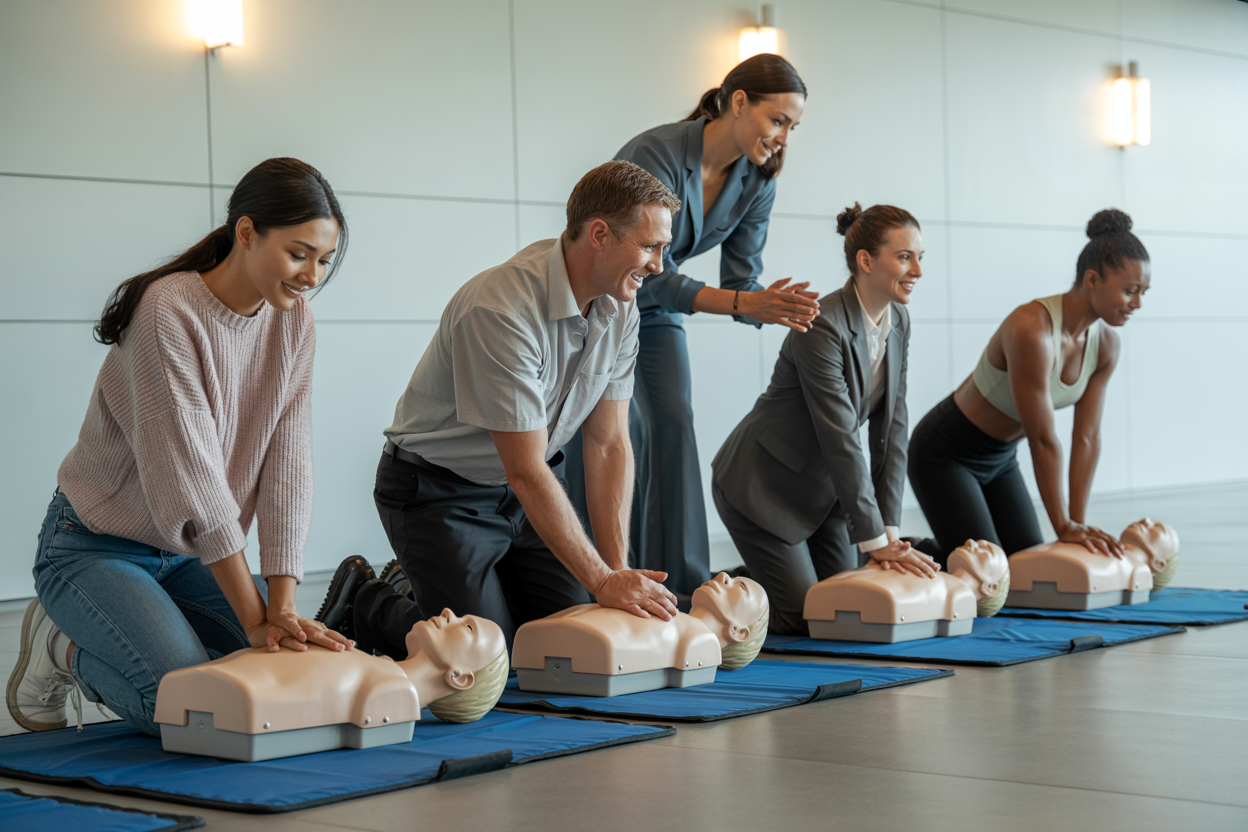
What Happens at a CPR Course for Beginners in Brisbane?
The single best thing you can do for first-course nerves is know what's coming. So here's exactly how a beginner CPR course runs at Advanced Resuscitation Training in Brisbane.
You walk in, you're greeted by a qualified trainer, and you're in a group where — and this is worth saying clearly — virtually nobody else has done this before either. The environment is relaxed. There's no pop quiz at the door and no expectation that you've studied anything. Your trainer has done this with hundreds of first-timers and knows exactly how to pace it so everyone keeps up.
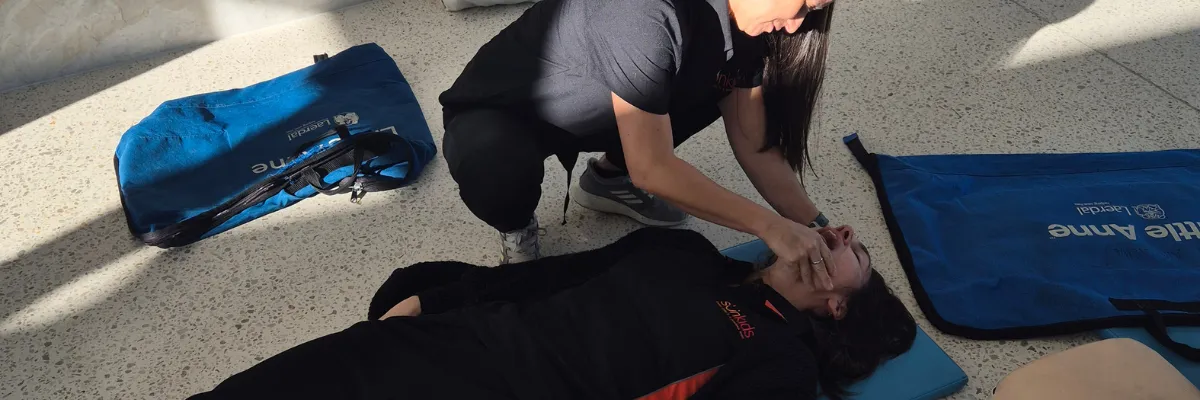
The session moves through four core skills, each one introduced, demonstrated, and then practised hands-on. You're not just watching someone else do it — you're doing it yourself, on a manikin, with your trainer right there to guide your technique in real time. That repetition is what builds the muscle memory that actually stays with you.
The DRSABCD Action Plan Explained
This is the structured response framework you'll use if you ever come across someone who's collapsed. It stands for:
🟦 D — Danger — Check the scene is safe for you and the casualty
🟦 R — Response — Check if the person is conscious and responsive
🟦 S — Send for help — Call 000 or direct someone else to call
🟦 A — Airway — Tilt the head, lift the chin, check the airway is clear
🟦 B — Breathing — Look, listen, and feel for normal breathing for up to 10 seconds
🟦 C — CPR — Start chest compressions and rescue breaths if not breathing normally
🟦 D — Defibrillation — Apply an AED as soon as one is available
You'll work through this sequence multiple times during the session until it becomes second nature.
Chest Compressions | What You'll Actually Practise
This is the core physical skill of the course, and your trainer will walk you through every detail:
Rate: 100–120 compressions per minute — roughly in time with the beat of Stayin' Alive
Depth: 5–6cm for adults — firm and controlled, not tentative
Hand position: Heel of your dominant hand on the centre of the chest, second hand on top, fingers interlaced and lifted clear
You'll practize this on a manikin, get real-time feedback on your depth and rate, and repeat it enough times that it stops feeling unfamiliar.
Will I Have to Do Mouth-to-Mouth?
This is one of the most common questions from first-timers, so it's worth being straight about it. Rescue breaths are taught as part of HLTAID009 — but compression-only CPR is recognized as an acceptable response in many situations, particularly in the first few minutes after collapse. Your trainer will cover both approaches and explain when each applies. Nobody is going to make you feel uncomfortable about any part of this.
Who Else Is in the Room? (You Are Not the Only Beginner)
If there's one thing that stops people booking their first CPR course, it's this: the quiet worry that everyone else will know what they're doing and they'll be the only one fumbling around on a manikin looking lost.
That fear is completely understandable. And it's almost never true.
A typical Brisbane CPR class is a genuinely mixed group. You'll have a new mum who's been meaning to do this since her baby was born. A tradie whose employer flagged it for site compliance. An office administrator ticking it off before a job interview. A gym instructor who needs it for insurance. A childcare worker with an ACECQA audit coming up. What almost all of them have in common — is that they've never done hands-on CPR training before either.
Everyone in that room is focused on their own manikin. Nobody is watching you, judging your technique, or keeping score. The whole point of a supported course environment is that you get enough individual attention to actually learn the skill — not enough scrutiny to feel self-conscious about it.
Common Reasons People Attend Their First CPR Course
People show up to their first session for all kinds of reasons:
New parent wanting to be prepared at home
Job application or workplace onboarding requirement
Childcare registration or ACECQA compliance
NDIS employment condition
Witnessed an emergency and realised they didn't know what to do
Just decided it was time — no specific trigger needed
Every single one of those is a valid reason to be in the room.
What Trainers Say About First-Timers
Here's something that might surprise you. Experienced CPR trainers will tell you that first-timers are often the most focused and capable students in the room — because they have no bad habits to unlearn. They follow instructions closely, they ask good questions, and they tend to leave with cleaner technique than people who've done a rushed renewal course a few times and think they already know it all.
Do You Need to Be Physically Fit to Do CPR Training?
This one comes up a lot, so let's be honest about it.
Real CPR — the kind you'd perform in an actual emergency — is physically demanding. Maintaining 100–120 compressions per minute at the right depth is tiring work, and the ARC guidelines actually acknowledge this. Rescuer fatigue is real, and switching with a second rescuer when one is available is something you'll cover as part of the course. That's not a weakness — that's the correct technique.
In a training environment though, it's a different story. The course is controlled and paced by your trainer. You're practising in rounds, with breaks, with feedback, and with plenty of time to catch your breath between repetitions. Most healthy adults find it very manageable.
There is no formal fitness test or age restriction attached to HLTAID009. The course is suitable for most adults in reasonable health.
What If I Have a Physical Limitation?
If you're carrying an injury, managing a chronic condition, or have any concern about the physical components of the course, the best thing you can do is contact Advanced Resuscitation Training before you book. Most courses can accommodate modified participation without any issue — but the earlier you flag it, the easier it is to make sure the day works well for you.
You're ready. Here's how to find a session in Brisbane that fits your schedule and get booked in.
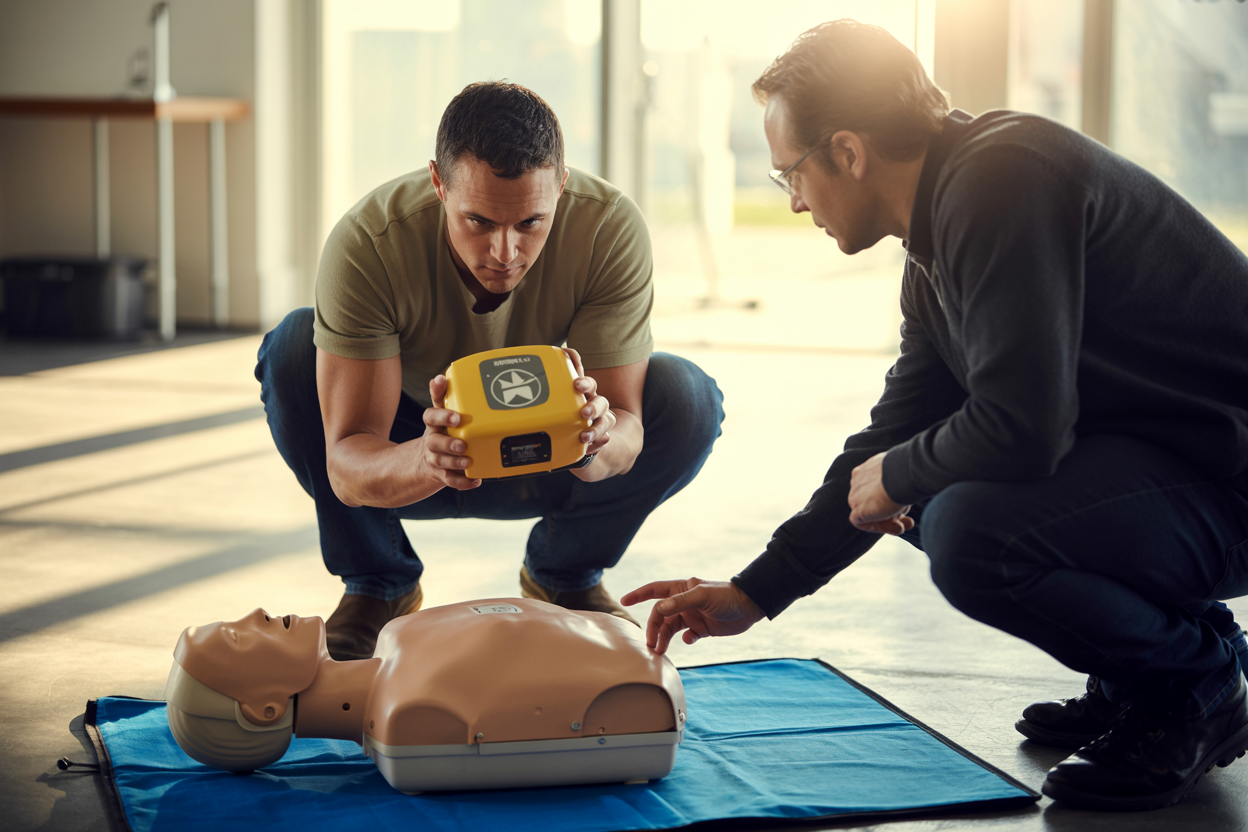
How to Book Your First CPR Course in Brisbane
The practical stuff — because knowing you want to do this and actually locking in a date are two different things.
Advanced Resuscitation Training runs HLTAID009 sessions across Brisbane on both weekends and weekdays. Saturday morning is the most popular slot by a long way — it fits around work schedules, it's done well before lunch, and it means your certificate is in your inbox before the weekend's even over.
Your HLTAID009 certificate is issued the same day you complete the course. If your cert has already lapsed and you've got a job application, compliance audit, or childcare registration deadline coming up, same-day certification means you can be fully compliant again by tomorrow.
Booking is done entirely online. The process is mobile-optimised and sends an instant confirmation to your inbox with everything you need to know before the day.
What to Bring on the Day
That's pretty much it — no textbooks, no equipment, nothing to study beforehand.
Comfortable clothing suitable for kneeling and movement
Photo ID
Water bottle
Arrive a few minutes before your session starts
Here's How It Works
Choose your date — weekend and weekday sessions available across Brisbane
Book online — instant confirmation sent straight to your inbox
Attend your session — walk out with your HLTAID009 certificate the same day
Ready to Book Your First CPR Course in Brisbane?
You have everything you need. No experience required, no prior study, no reason to wait any longer.
Whether you're a new parent who wants to be prepared at home, a childcare worker with a compliance deadline coming up, or someone who's simply decided it's time — Advanced Resuscitation Training has a session in Brisbane that fits your schedule and gets you certified the same day.
Cardiac arrest doesn't wait for a convenient moment. The good news is that a single Saturday morning session is all it takes to go from zero experience to genuinely ready.
✅ Nationally recognized HLTAID009 certificate
✅ Certificate issued same day
✅ Weekend and weekday sessions across Brisbane
✅ Online booking with instant confirmation