Best Face-to-Face Anaphylaxis Training Course for Childcare Professionals
Picture this: It's Tuesday afternoon at your childcare center when 4-year-old Emma suddenly can't breathe. Her lips are swelling, she's gasping for air, and her EpiPen is sitting in the medical kit across the room. You've done the online training, passed the quiz, got your certificate – but right now, your hands are shaking and you can't remember if you're supposed to inject into her thigh or her arm.
This nightmare scenario keeps many Gold Coast childcare professionals awake at 3am. And here's the thing – it shouldn't have to.
I've been training childcare educators for over fifteen years, and I've seen the difference between someone who's clicked through an online course and someone who's actually practiced with a real EpiPen in their hands. The confidence gap is massive, and when you're dealing with a child's life, that gap can be deadly.
Face-to-face anaphylaxis training isn't just about ticking ACECQA boxes – it's about building the muscle memory and genuine confidence you need when seconds count. While online courses might meet compliance requirements on paper, they can't replicate the pressure of actually saving a child's life.
Here on the Gold Coast, you're dealing with unique challenges that generic online modules just don't cover. Beach excursion bee stings, vacation care kids with unknown allergies, the stress of managing fifteen other children while one is having an emergency – these are real scenarios that need real practice.
In this guide, I'll show you exactly why hands-on training beats clicking through slides every single time, what you should be looking for in a quality program, and how to choose training that'll actually prepare you for the moments that matter most.
Why Face-to-Face Anaphylaxis Training Outperforms Online Courses
Let me tell you about Sarah, a childcare director from Robina who thought her online training had her covered. Last year, when little Jack went into anaphylactic shock after accidentally eating a peanut butter sandwich, she froze. Even though she'd passed her online assessment with flying colors, holding that real EpiPen in a genuine emergency felt completely different from clicking the right answer on a screen.
That's the problem with online training – it teaches your brain, but it doesn't teach your hands.
The Muscle Memory Factor: Why Physical Practice Matters
Your brain might remember the steps, but your body needs to know them too. When adrenaline kicks in during a real emergency, you don't have time to think through each step. You need your hands to move automatically, confidently, correctly.
Research shows that hands-on learning creates retention rates of up to 90%, compared to just 10% for reading-based learning. But here's what really matters – it's not just about remembering facts. It's about building the physical confidence to act when a child's life depends on it.
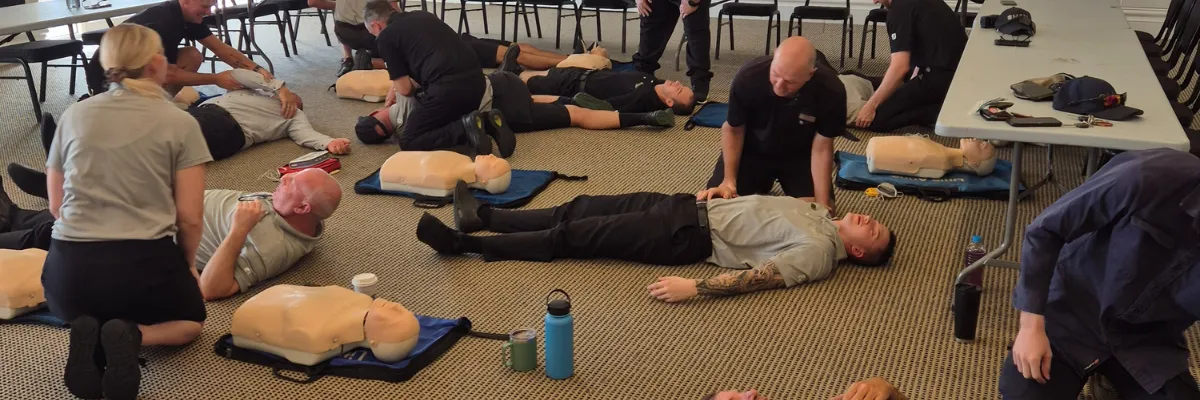
In face-to-face training, you'll practice with actual EpiPens (trainer devices that feel and function exactly like the real thing). You'll learn the proper grip, the right angle, the amount of pressure needed. You'll practice until your hands know exactly what to do, even when your mind is racing.
Real EpiPen Training vs. Digital Simulations
Online courses show you animations of EpiPen use. Face-to-face training puts the actual device in your hands. The difference? Everything.
Real EpiPens have weight, resistance, specific sounds they make when activated. They require a firm grip and confident pressure – things you simply can't learn from watching a video. Many educators who've only done online training are shocked by how different the real thing feels.
Plus, you'll learn troubleshooting skills that online courses never cover. What if the EpiPen doesn't work? What if it's been stored incorrectly? What if the child is thrashing around and you can't get a clean injection site? These are real scenarios that need real practice.
Immediate Expert Feedback During Critical Learning Moments
Here's something online courses can't give you – a qualified instructor watching your technique and correcting mistakes in real time. Maybe you're holding the EpiPen wrong, or your injection angle isn't quite right, or you're hesitating at the moment of injection.
In face-to-face training, these issues get caught and corrected immediately. Your instructor can see when you're losing confidence, when your technique needs adjustment, when you need extra practice on a particular skill. That immediate feedback loop is what transforms nervous uncertainty into genuine confidence.
I've watched educators practice the same scenario five or six times until they get it right. By the end of the session, they're moving with purpose and confidence – something no online quiz can create.

What Gold Coast Childcare Professionals Need from Anaphylaxis Training
Working in childcare on the Gold Coast isn't the same as working in Melbourne or Perth. Our subtropical climate, beach culture, and tourism industry create unique challenges that your training needs to address.
ACECQA Compliance Requirements: 22300VIC vs 22556VIC
Let's clear up the confusion first. ACECQA requires that at least one educator with current anaphylaxis management training is in attendance whenever a child diagnosed with anaphylaxis is being educated and cared for.
The 22300VIC course is your basic requirement – it covers recognition, response, and EpiPen use. But here's what many educators don't realize: if you're managing multiple children with severe allergies, or you're in a leadership role, the 22556VIC advanced course gives you deeper knowledge and confidence.
The advanced course covers complex scenarios like multiple allergies, medication failures, and managing other children during emergencies. For Gold Coast educators dealing with vacation care programs or beach excursions, this additional training can be invaluable.
Managing Beach Excursions and Outdoor Allergy Triggers
Our beautiful Gold Coast environment comes with its own risks. Beach excursions mean potential blue bottle stings, bush walks can trigger plant allergies, and our year-round outdoor lifestyle increases exposure to insects and environmental allergens.
Generic online training doesn't prepare you for these local realities. When you're thirty minutes from the nearest hospital on a Springbrook nature walk, you need confidence that goes beyond textbook knowledge.
Face-to-face training can incorporate these local scenarios. You'll practice managing emergencies in outdoor settings, learn about environmental triggers specific to our region, and understand how climate factors like heat and humidity can affect both allergic reactions and medication effectiveness.
Handling Multiple Children During Medical Emergencies
Here's the scenario that keeps childcare educators up at night: You're alone with fifteen children when one goes into anaphylactic shock. The other kids are scared, some are crying, and you need to manage the emergency while keeping everyone else safe and calm.
Online training doesn't teach you how to do this. But face-to-face training can simulate these high-pressure situations. You'll practice crowd management techniques, learn how to get help while maintaining supervision, and develop the confidence to lead in a crisis situation.
This kind of scenario-based learning is impossible to replicate online. You need to feel the pressure, practice making decisions under stress, and build the leadership skills that emergencies demand.
Essential Features of Quality Face-to-Face Anaphylaxis Training
Not all face-to-face training is created equal. Here's what separates excellent programs from those that are just going through the motions.
Qualified Instructors: What Credentials Matter Most
Your instructor should have real emergency services background – paramedic experience, emergency nursing, or intensive care training. These aren't just teachers reading from a manual; they're professionals who've actually managed anaphylactic emergencies in real life.
Look for instructors who can share real stories, who understand the pressure you'll face, and who've seen what works and what doesn't in genuine emergency situations. Their experience becomes your confidence.
The best instructors also understand the childcare environment. They know about staff-to-child ratios, they understand how childcare centers operate, and they can tailor scenarios to your specific workplace challenges.
Realistic Scenario-Based Learning Environments
Quality training doesn't just teach you to use an EpiPen – it teaches you to use an EpiPen while managing chaos. You'll practice scenarios like:
A child having their first allergic reaction with no previous history
Managing an emergency during outdoor play when you're the only educator present
Dealing with a parent who disagrees with your emergency response
Handling medication that's been stored incorrectly or has expired
These scenarios build more than technical skills – they build the judgment and confidence you need to lead during a crisis.
Ongoing Support and Refresher Opportunities
The best training providers don't disappear once you get your certificate. They offer ongoing support, refresher sessions, and updates when protocols change.
Some providers offer phone support for past participants who find themselves in emergency situations. Others provide free refresher sessions within 12 months. This ongoing relationship means you're never facing an emergency alone.

How to Choose the Best Face-to-Face Anaphylaxis Training Provider
With several options available on the Gold Coast, here's how to choose training that'll actually prepare you for real emergencies.
Red Flags to Avoid in Training Programs
Be wary of providers who:
Rush through practical components to save time
Use outdated equipment or techniques
Can't provide specific examples of their instructors' qualifications
Focus more on passing tests than building genuine competence
Don't offer any post-training support
Cost vs. Value: What You Should Expect to Pay
Quality face-to-face anaphylaxis training typically costs between $150-$250 per person. While this might seem expensive compared to online alternatives, consider what you're really paying for:
Expert instruction from qualified emergency professionals
Hands-on practice with real equipment
Scenario-based learning that builds genuine confidence
Ongoing support and peace of mind
Training that could literally save a child's life
When you consider the legal protection, insurance benefits, and genuine confidence you'll gain, quality face-to-face training is an investment that pays for itself many times over.
The cheapest option isn't always the best value – especially when a child's life might depend on your skills. Choose training that gives you genuine confidence, not just a certificate to hang on the wall.
Remember, the goal isn't just to meet ACECQA requirements. The goal is to be genuinely prepared to save a child's life when every second counts. Face-to-face training with qualified instructors using real equipment in realistic scenarios – that's how you build the confidence and competence that makes the difference between panic and life-saving action.
Your next step? Find a provider who understands the unique challenges of Gold Coast childcare and can give you the hands-on training that transforms anxiety into confidence. Because when a child's life is in your hands, you want to know – not just hope – that you're ready. Call us: 0434778243 | 04FIRSTAID