Asthma and Anaphylaxis Course RTO: What to Expect From 22300VIC and 22556VIC Training
It's September. Brisbane spring. One of your kids is wheezy. Another has a peanut allergy and his mum just handed you the EpiPen at the door. And you're the only adult in the room.
That moment isn't hypothetical for most childcare educators. It's a Tuesday morning.
The question isn't whether something like that could happen in your room. It's whether you'd know exactly what to do when it does not roughly what to do, not vaguely recall a training session from two years ago, but actually know.
That's what a proper asthma and anaphylaxis course RTO delivers. Not just a certificate to put in a folder, but the kind of hands-on, ACECQA-compliant training that gives childcare educators real confidence when it counts.
This article tells you exactly what to expect from a nationally accredited asthma and anaphylaxis course RTO what's covered, what the practical assessment looks like, what goes on your certificate, and why those specific course codes matter more than most educators realize.
What Is an RTO Asthma and Anaphylaxis Course?
An RTO asthma and anaphylaxis course is nationally accredited training delivered by a Registered Training Organisation (RTO) that certifies participants in two Victorian-governed units: 22300VIC (Provide First Aid Management of Anaphylaxis) and 22556VIC (Provide First Aid Management of Asthma). These courses are a mandatory requirement under the Education and Care Services National Regulations 2011 for childcare educators working in Australian long day care, family day care, and outside school hours care settings.
A compliant RTO course includes:
Accredited theory content aligned to ASCIA guidelines
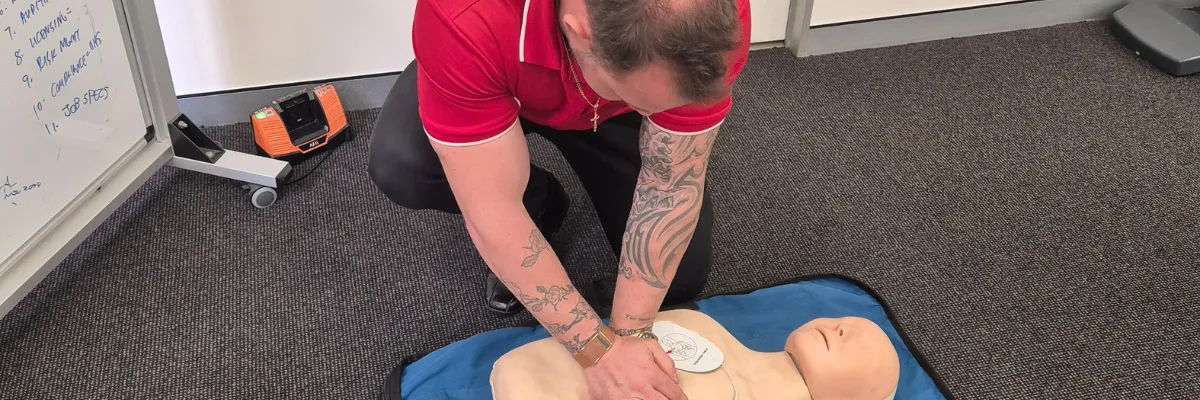
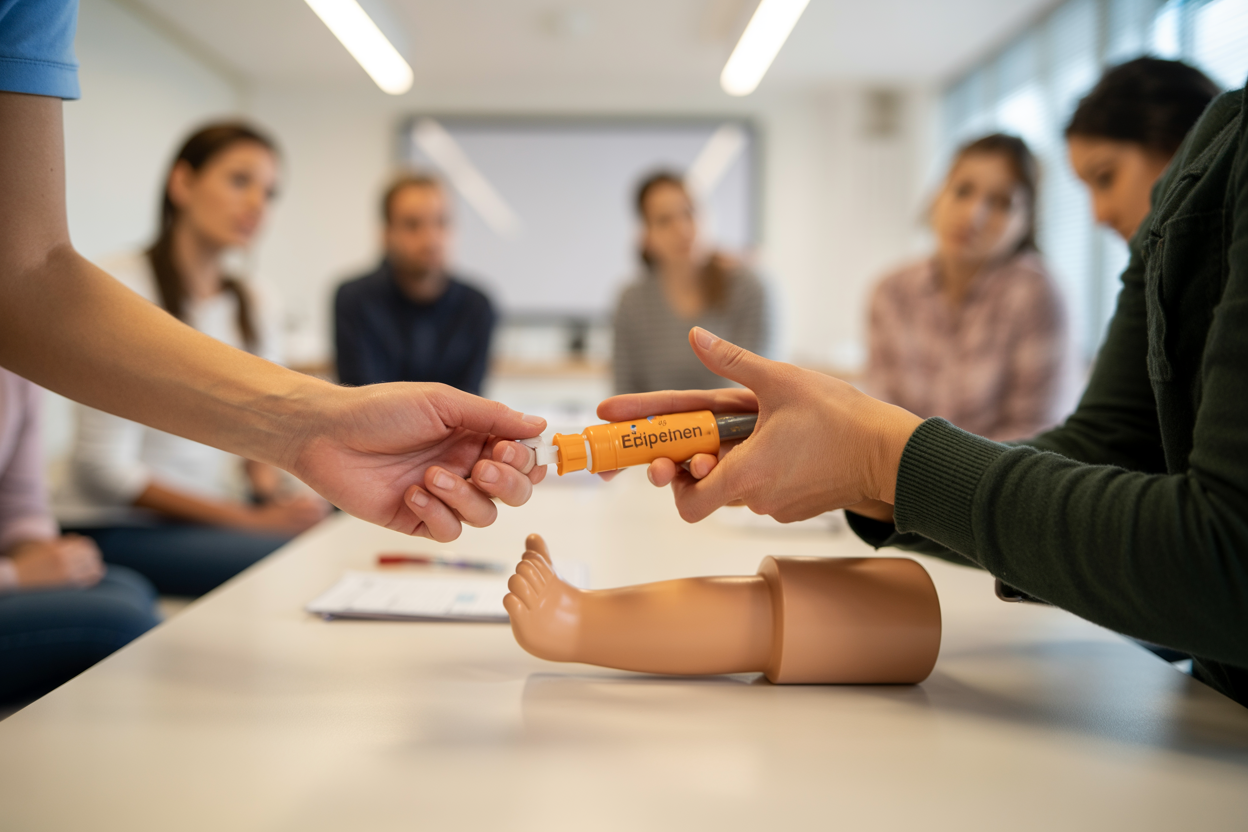
Hands-on practical assessment using EpiPen trainer devices and spacers
Same-day certificate issue coded with the correct unit identifiers
Nationally recognized certification valid for 3 years (ASCIA recommends annual renewal)
Delivery by a registered training organisation listed on the ASQA national register
What Do 22300VIC and 22556VIC Actually Cover?
These two units get lumped together a lot and for good reason, they're almost always delivered together. But they cover different emergencies, and it's worth knowing what each one actually teaches you.
22300VIC Anaphylaxis First Aid Management
This unit is built around one question: what do you do in the minutes between a child showing signs of anaphylaxis and the ambulance arriving?
You'll learn to recognize anaphylaxis triggers and symptoms because the faster you identify what's happening, the faster you act. From there, the course walks through the ASCIA Action Plan step by step: how to read it, how to follow it, and why deviating from it under pressure is where things go wrong.
The hands-on component covers EpiPen auto-injector technique correct thigh placement, how long to hold the device, and what to do immediately after injection. You'll also cover when to call 000, and what post-incident documentation your center needs to complete.
The ASCIA anaphylaxis guidelines sit behind everything taught in this unit. It's not a generic first aid course with an EpiPen slide thrown in.
22556VIC Asthma First Aid Management
If September makes you anxious and for Brisbane childcare educators, it should this is the unit that directly addresses that.
Asthma affects approximately 1 in 9 Australians, and children are among the highest-prevalence groups. This unit covers recognizing asthma triggers and understanding severity levels, because not every wheeze looks the same and not every response is identical.
You'll practice reliever puffer and spacer technique: how to assemble the spacer correctly, how to deliver the medication, and how long to hold. You'll also cover when a child's condition has moved beyond what a puffer can manage and what escalation looks like in a real childcare setting.
How the Two Units Work Together
Both units are required together, not interchangeably. One doesn't substitute for the other. And neither of them replaces HLTAID012. They sit alongside your childcare first aid certification, not instead of it. Think of HLTAID012 as the broad foundation and 22300VIC/22556VIC as the specialist units that go deeper into two specific, high-stakes emergencies.
Knowing what's in the course is one thing but what does it actually feel like to sit the assessment? Here's exactly what to expect on the day.
What Is the Practical Assessment Like?
This is the part most educators are quietly anxious about going in. And it's also the part that makes the biggest difference coming out.
A certificate is just paper. What stays with you after a good practical assessment is something closer to muscle memory, the kind that kicks in when a child is on the floor and your hands need to move before your brain has finished processing what's happening.
What You'll Practice Hands-On
The practical component covers both units in sequence. For anaphylaxis, you'll work with an EpiPen trainer device not a real auto-injector, but a purpose-built replica that replicates the grip, the motion, and the resistance. You'll practice correct thigh placement, hold time, and the steps that follow injection. You'll run through a simulated emergency scenario so the sequence isn't something you're reading off a wall poster, it's something your hands already know.
For asthma, you'll assemble a spacer and puffer correctly and practice delivery. Educators who've only ever seen a spacer sitting in a bag are often surprised by how specific the technique is. Getting it right in training is the whole point.
What the Assessor Is Looking For
The assessor isn't looking for perfection. They're looking for competency, correct sequencing, confident handling, and the ability to explain what you're doing and why.
Being able to articulate your steps out loud isn't just an assessment requirement. It's also how you'd walk a panicking parent or an untrained colleague through an emergency if you needed to. The course builds your capacity to lead in a room, not just respond in one.
Michelle Rodgers from Coopers Plains State School put it well. The trainer adjusts to where each participant actually is which makes a real difference when confidence levels in a group vary as much as they do in most childcare teams.
Accelerate First Aid delivers sessions at your workplace or at venues across training locations across Brisbane and the Gold Coast. For time-poor educators juggling early starts and rotating shifts, not having to travel to a training center isn't a small thing; it's often the difference between booking and putting it off again.
Before you book, there's one question worth getting right especially if your director has already put you through HLTAID012.
Does HLTAID012 Cover Asthma and Anaphylaxis or Do You Need a Separate Course?
This is the most common compliance mistake in Australian childcare and it's not the educator's fault. It's a system design problem that catches reputable centers off guard every year.
HLTAID012 may include asthma and anaphylaxis awareness content, but it does not deliver the 22300VIC or 22556VIC unit codes that Regulations 136 and 137 specifically require. If those codes are not printed on the certificate, the training will not satisfy an ACECQA audit.
What HLTAID012 Includes
The HLTAID012 childcare first aid course is a solid, nationally recognized qualification. It delivers first aid management in an education and care setting and yes, it includes asthma and anaphylaxis awareness content. You'll cover recognition, basic response, and EpiPen administration at an awareness level.
But the certificate that comes out the other end carries the HLTAID012 unit code. Not 22300VIC. Not 22556VIC.
What HLTAID012 Does Not Include
This is where the gap opens up:
The 22300VIC and 22556VIC unit codes the specific identifiers ACECQA auditors are trained to look for
The depth of practical assessment required under those Victorian units
Standalone certification that satisfies Regulations 136 and 137 of the Education and Care Services National Regulations 2011
What ACECQA Auditors Actually Check
When an auditor reviews your center's training records, they are not reading through the content of every course your team has completed. They are checking for specific unit codes printed on certificates.
If 22300VIC and 22556VIC aren't there, the training doesn't count. Doesn't matter what the course covered. Doesn't matter what the trainer delivered. The code is what satisfies ACECQA's training requirements for education and care services.
Many directors have discovered this mid-audit. The conversation that follows explaining to a regulator why your team's certificates don't carry the required codes is one worth never having.
Now that the compliance picture is clear, the next question is which RTO you actually trust to deliver it correctly.

What Should You Look for in an RTO Delivering This Course?
Not every provider offering asthma and anaphylaxis training is delivering the same thing. The course code on the certificate, the way the practical is run, and whether the trainer has ever actually worked in an emergency these things vary more than most people realise when they're comparing providers on a phone screen at 9pm.
Here's what to check before you book.
Accreditation What to Check Before You Book
The first thing to verify is whether the RTO appears on the ASQA national register of training organisations. This is publicly searchable and takes about two minutes. If a provider isn't listed, their certificates aren't nationally recognized full stop.
Accelerate First Aid operates as a co-provider under First Aid Alive RTO 31106. Every certificate issued carries that RTO number, and all certifications are nationally recognized. You can verify this directly on the register before you book.
Practical Delivery Why It Matters
Online-only asthma and anaphylaxis courses have become more common. They're convenient, and they will not satisfy ACECQA's practical requirement.
ACECQA requires hands-on assessment of real EpiPen trainer devices, real spacer assembly, real scenario practice. An online completion certificate does not demonstrate practical competency and won't hold up at audit.
The owner of Green Leaves Robina noted that their educators were genuinely supported through the training process, not just handed a device and told to get on with it. Lead trainer Jarryd Hunter and the Accelerate First Aid team bring a paramedic background to every session practical guidance grounded in real emergency experience, not just training theory.
Certificate Coding The Detail That Decides Everything
Your certificate must display 22300VIC and 22556VIC as unit codes, not just a course name, not just a provider logo, not just a date. Those specific codes are what an ACECQA auditor is looking for. Without them, the certificate doesn't satisfy Regulations 136 and 137, regardless of everything else on the page.
Every certificate issued through Accelerate First Aid carries correct unit coding because the consequences of getting it wrong fall on the educator and the center, not the training provider.
Same-Day Certificate Issuance
For most childcare educators, waiting a week for a certificate isn't a minor inconvenience. It means chasing the provider, fielding questions from the director, and a gap in the compliance records during that window.
Accelerate First Aid issues both your 22300VIC and 22556VIC certificates digitally on the same day as your practical assessment. The certificate is in your inbox correctly coded, correctly named, and ready to go straight into the compliance folder.
Kelly Webster, who has coordinated training at Goodstart Early Learning Centre for 11 consecutive years, keeps coming back for a reason. When you find a provider that gets the certificate right every single time, you stop shopping around.
Ready to Get Your 22300VIC and 22556VIC Certificates Sorted?
Anaphylaxis affects approximately 1 in 50 Australians, and food allergy is the most common trigger in children. Asthma affects approximately 1 in 9. Those numbers aren't abstract when you're a childcare educator; they're the children in your room right now, this week, this spring. The training you hold, and whether it's coded correctly, is the thing standing between a scary moment and a handled one.
The difference between an educator who freezes and an educator who acts isn't talent. It's not years of experience either. It's practical training that went deep enough to stick the kind that put a real EpiPen trainer in your hand and made you run the sequence until your body knew it without thinking. That's what 22300VIC and 22556VIC training is designed to build, and it's why the hands-on assessment component isn't optional or incidental. That's the whole point.
A correctly coded certificate matters for your center's compliance. But what matters more the thing that actually keeps a child safe on a Tuesday morning in September is whether you can move with confidence when the moment arrives. Getting that certificate from a registered training organisation that takes the practical seriously isn't just a box to tick. It's the reason the box exists.
If your certificates are current and carry the right unit codes, you're in good shape. If they're not, or if you're genuinely not sure whether what's in your folder would survive an ACECQA audit, now is the right time to fix that. The session options include Saturday mornings, and the certificate arrives the same day no chasing, no waiting, no conversations with your director about missing paperwork.