Asthma and Anaphylaxis Course Assessment Explained
Most educators who feel nervous about the asthma and anaphylaxis course assessment aren't worried about the content. They're worried about being watched.
It's a really common story. A new season starts on Monday. By Wednesday she's booked into training, and she's already asked her coordinator twice if there's a test. She's never held an adrenaline autoinjector in her life. So in her head the practical demo has turned into this big moment where she freezes up and fails, right there in front of her coordinator.
In practice, it's far calmer than that. The assessment just checks that each person can recognize an asthma flare-up or an allergic reaction, follow an action plan, and use a reliever with a spacer and an autoinjector the right way. Everyone gets hands-on time with the trainer devices before they're assessed. And the trainer marks against set criteria, not against nerves.
This guide walks through every part of it: the theory component, the hands-on scenarios, how the trainer decides someone is competent, and what happens if a person needs another attempt. We'll also cover how to get a whole OSHC, childcare or school team through it on a single pupil-free day. If you book training for educators in Brisbane, these are the answers your team's going to want before they walk in the door.
Here's the whole assessment at a glance, before we break down each part.
How Are You Assessed in an Asthma and Anaphylaxis Course?
In an asthma and anaphylaxis course, you are assessed on both knowledge and practical skills. The assessment usually follows five steps:
Theory questions on signs, symptoms, triggers and medications, completed online or on paper before or during the session.
A risk management task, such as identifying asthma and allergy risks in a workplace or education setting.
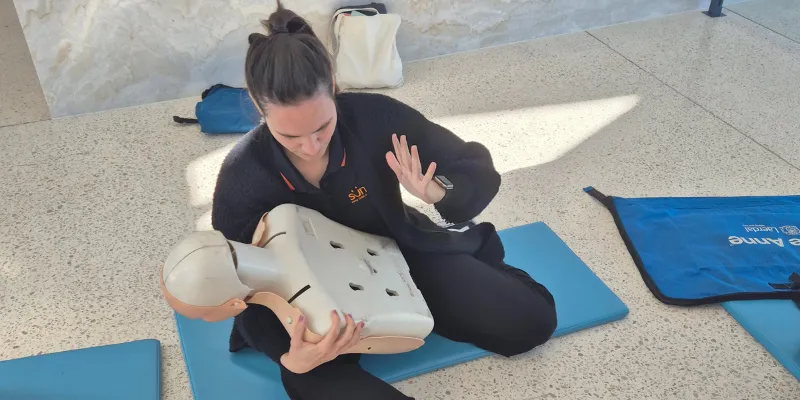
A practical asthma demonstration, giving a reliever puffer through a spacer on a trainer device, following asthma first aid steps.
A practical anaphylaxis demonstration, using adrenaline autoinjector trainers and following an ASCIA Action Plan.
A scenario response, recognizing the emergency, acting on the plan and calling triple zero (000).
The trainer marks each person as competent or not yet competent. People who are competent receive a statement of attainment.
Why Asthma and Anaphylaxis Are Assessed Together
Here's something that confuses a lot of coordinators. It's actually two accredited courses, not one, so there's two statements of attainment at the end.
But they're delivered in one combined session, and the asthma and anaphylaxis assessment runs the same way. The skills overlap heaps (spotting the signs, following a plan, calling for help) so your team learns them side by side and gets assessed in one go.
It starts before anyone walks into the room, with the theory.
The Online Theory: What the Questions Cover
Accelerate runs this as a blended asthma and anaphylaxis course. The theory gets done online first, then the hands-on bit happens in person.
Topics in the Theory Component
The questions stick closely to what the course covers. Nothing out of left field. Expect questions on:
Signs and symptoms of asthma and anaphylaxis
Common triggers
Medications and devices
Action plans
Risk minimization
Doing It on a Phone in a Lunch Break
It's an online asthma and anaphylaxis course component that works on a phone, so casuals can chip away at it on a break, on the bus to uni, or on the couch after a late pickup. No printer needed.
Heads up for coordinators: The theory has to be finished before the practical. If someone turns up with it half done, they can't be assessed on the day. Worth a friendly reminder text the night before.
What If Reading or English Is a Barrier?
Not every great educator is a confident reader, and some are working in their second or third language. Reasonable adjustment is available, like verbal questioning, where the trainer asks the questions out loud, or extra time. It's about checking what someone knows, not how fast they read. So mention it when you book.
With the theory done, the practical is where educators show what they'd actually do.

The Practical Asthma Assessment
The asthma practical assessment is basically your educators showing the trainer what they'd do if a child in front of them started struggling to breathe. No trick questions, no clipboard ambush.
Giving a Reliever Through a Spacer
Everything's done on trainer devices, so nobody's handling real medication. Educators practice putting the reliever puffer together with the spacer, then giving it the right way. The trainer covers the technique for children and for adults, because they're not quite the same. Honestly, the fiddliest part for first-timers is just fitting the puffer into the spacer without fumbling.
Following the Asthma First Aid Steps
The trainer wants to see each educator follow the asthma first aid steps in order, without skipping ahead or panicking. They're the same steps on the National Asthma Council asthma first aid chart, so if that chart's up on your wall, your team's been looking at the answers for months. Get them to have a proper read of it before the session.
Recognizing a Severe Attack and When to Call Triple Zero (000)
This part isn't a clinical lesson. The trainer's looking at one thing: does the educator recognize when an attack has become severe, and do they call triple zero (000) without hesitating? Plus, do they keep going with first aid while help is on the way. That decision matters more than reciting anything word for word.
For Brisbane services it's a very real context. Those summer storm afternoons, when the air goes heavy and the sky turns green-grey, are often when a few kids reach for their puffers around the same time. Not something to be scared of. Just something your team handles better if they've practiced it calmly first.
The anaphylaxis practically follows the same pattern, with a different device in hand.
The Practical Anaphylaxis Assessment
The anaphylaxis practical assessment is the bit most educators quietly dread. An autoinjector looks a lot more serious than a puffer. But by the end of the session, it's usually the skill they feel proudest of.
Using an Adrenaline Autoinjector Trainer
Same as the asthma side, it's all trainer devices. No needles, no real adrenaline. Educators practice with more than one device type, because families don't all bring in the same one, and you don't want someone staring at an unfamiliar device in a real emergency. The autoinjector assessment checks they can use it correctly and confidently, without second-guessing themselves halfway through.
Following the ASCIA Action Plan
The trainer wants to see each educator follow the ASCIA Action Plan from start to finish. That covers positioning the person, giving adrenaline, calling triple zero (000), and giving further adrenaline if there's no response, all in line with how ASCIA sets it out on the plan itself.
"What If I'm Scared of Hurting the Child?"
This one comes up a lot, and it's a really human worry. Here's how the session handles it. Educators practice until they're confident, and the trainer coaches them through it before any assessment happens. They get a feel for how the device works and how quick the whole thing actually is. By the time they're assessed, the hesitation's usually replaced by something closer to "oh, that's it?"
Hesitating is the real risk in an emergency. Practice is what takes it away.
Once each skill is shown on its own, the trainer puts them together in a scenario.
Scenarios and the Risk Management Task
The scenario is where educators put it all together, a bit like a rehearsal before opening night.
What a Scenario Looks Like
Scenarios are built around things that actually happen in services like yours. A few examples:
Example: A child has a reaction at afternoon tea after a mix-up with a shared snack.
Example: A child starts wheezing halfway through an excursion to the park.
Example: Two incidents happen at once, so the educator has to work out who needs help first.
The trainer sets the scene, and the educator talks and acts their way through it. Here's the thing though. Scenarios test decisions, not memorized scripts. Nobody's marked down for saying "puffer" instead of "reliever." The trainer's watching whether they make good calls under a bit of pressure.
Tip for coordinators: Bring a de-identified action plan from your service so the scenario feels familiar.
The Risk Management Task
This part's different. Educators look at their own setting, spot the asthma and allergy hazards, then suggest ways to reduce them. For OSHC, that might be cooking activities, shared food at afternoon tea, or how medications get carried on excursions.
So how does the trainer decide someone has got it?

Competent or Not Yet Competent: How the Trainer Decides
Every asthma and anaphylaxis assessment ends the same way. Each person is marked either competent or not yet competent. No score, no ranking.
What "Competent" Means
Competent means the educator has shown every skill and every bit of knowledge the course requires. It's not graded. The flip side is every criterion has to be met. Not most of them. All of them. Which is exactly what you'd want, because a child having a reaction doesn't need an educator who got most of the steps right.
Competent | Not yet competent |
Every required skill and criterion shown | One or more skills not shown yet |
Statement of attainment issued | Extra coaching, then reassessment |
How Assessment Is Kept Fair
Accredited training follows the rules of evidence, set out by ASQA, the national regulator. In plain English:
Valid: the evidence matches what the course requires
Sufficient: there's enough of it to be confident
Authentic: it's genuinely the learner's own work
Current: it shows what they can do now
So nobody gets marked down for nerves, or waved through for being nice.
Can You Fail an Asthma and Anaphylaxis Course?
Accredited assessment is not graded. If someone cannot yet show a required skill, they are marked not yet competent and can be reassessed once they are ready.
In real terms, that's usually the trainer showing them again, a bit more practice, and another go. It's not a red mark on their record. It's just "not yet."
Already Confident?
Some educators have been doing this for years. For them, it's worth asking whether assessment-only or recognition of prior learning is an option.
Once someone is marked competent, the paperwork moves quickly.
After the Assessment: Certificates, Currency and Compliance
This is the part coordinators care about most. Everyone's competent, and now you need proof in your files before the next assessment and rating visit.
Your Statement of Attainment
Once an educator is marked competent, they get their statement of attainment the same day. That's Accelerates same-day certificate guarantee. No casual saying "I'll forward it when it comes through."
How Long It Lasts
The certificates are valid for 3 years. To check whether a course counts for education and care services, go straight to ACECQA's approved first aid, anaphylaxis and emergency asthma training list. It's the source of truth, and worth bookmarking.
How This Sits Alongside HLTAID012
Accelerates Childcare First Aid course (HLTAID012) includes asthma and anaphylaxis content. Whether that covers everything your service needs, or standalone training makes more sense for some of your team, comes down to ACECQA's approved list.
Need CPR for your team as well? Book it on the same day.
If you're booking for a team rather than one person, there's an easier way to do all of this.
Getting Your Whole Team Assessed on One Pupil-Free Day
Chasing casuals into public sessions one at a time is exhausting. There's always someone whose uni timetable changed, or who "thought it was next week." Getting everyone done together on one day is just easier.
Onsite Assessment at Your Service
Onsite asthma and anaphylaxis training in Brisbane means the trainer comes to you. Your OSHC hall, your staff room, your school library on a pupil-free day. Sessions run in rotations, so everyone gets proper hands-on time with the trainer devices.
Group Bookings and Invoicing
Larger teams get a group discount, and your organisation gets invoiced directly. No putting it on your own card and chasing reimbursement. That's the kind of clear quote your Area Manager will actually approve.
How to Prepare Your Educators
Get the online theory finished before the day.
Bring a phone or ID.
Review an action plan and note down any questions.
While you're organizing the day, it's worth adding CPR or Childcare First Aid for anyone who's due.
The asthma and anaphylaxis course assessment really isn't the scary test most first-timers imagine. It's a calm, practical check that your educators can spot the signs, follow the plan and act without freezing.
Think back to that new casual, the one who asked twice if there was a test. By the end of the session she's put a puffer into a spacer, pressed an autoinjector trainer, and talked her way through a scenario. Not perfectly the first time maybe. But confidently by the time it counted.
That's the bit worth holding onto. Everyone practices before they're assessed, the trainer marks against set criteria, and anyone who isn't quite there yet gets another go.
So where do you start? Pick your format first. Onsite at your service on a pupil-free day suits a team, while a public session works well for one or two people.
Next, get everyone through the online theory, ideally a few days out so nobody's cramming in the car park.
Then book the practical. Your educators walk out with same-day certificates, valid for 3 years. One less thing to chase before your next rating visit.
It also means every shift has someone on the floor who knows what to do. Early mornings, late pickups, the pool during vacation care, those heavy storm afternoons.
One morning of training, and the families who trust you with their kids can rest a little easier. So can you.