Asthma & Anaphylaxis Training for Outside School Hours Care
The reaction started at afternoon tea. Hives first, then a hoarse little voice, then that quiet moment where every kid in the room looks at the nearest adult. And the educator closest to the child had only just started on the roster.
That's OSHC. Your team changes every term, your enrolments change every week, and asthma and anaphylaxis training for outside hours school care has to keep up with both. Around one in eight school-aged kids has asthma and up to 8% of children have a food allergy, so on any given afternoon you're probably caring for several children with an action plan.
This guide is written for Brisbane OSHC coordinators and nominated supervisors. It covers which courses your educators need (22300VIC and 22556VIC), how they sit alongside HLTAID012, how to train casuals without chasing them on their days off, and what to plan for before vacation care excursions.
If you've ever stood at sign-in doing the mental math's on who's trained and who isn't, you know the feeling. By the end of this, you'll know exactly how to close the gaps in your roster and keep every shift covered.
Let's start with the short answer to what your team actually needs.
Do OSHC Educators Need Asthma and Anaphylaxis Training?
Yes. Outside school hours care services are regulated under the Education and Care Services National Regulations. Regulation 136 requires at least one educator with current approved anaphylaxis management training and approved emergency asthma management training to be in attendance and immediately available at all times children are in care. Most OSHC providers go further and require every educator to be trained.
What this means for your service:
At least one trained educator on every shift, including early mornings and late pickups
A trained educator on every excursion and vacation care outing
Casual and relief educators count only if their training is current
Training must be ACECQA-approved, such as 22300VIC (anaphylaxis) and 22556VIC (asthma)
Evidence of current certificates kept on file for assessment and rating visits
Why OSHC Carries Different Risks Than the School Day
After the bell you're taking in children from a dozen classrooms, with a team that might look different to last term.
The AIHW puts asthma at around 13% of 5 to 9 year old's and 12% of 10 to 14 year old's, and ASCIA estimates 4 to 8% of children have a food allergy.
Your team changes faster than your enrolments
Most OSHC teams run on casuals, plenty of them uni students fitting shifts around lectures. New starters turn up every term, and a lot of them arrive without asthma or anaphylaxis training. Every untrained casual is a gap in shift cover, and your permanent staff's certificates don't help much on the afternoon the casuals are running the room.
Afternoon tea and cooking activities
You're handling food every day across a big, mixed group. Vacation care cooking adds cross-contact risk on top, think shared bowls, benches and sticky hands. ASCIA and the Queensland Department of Education note signs can show up within minutes and up to two hours after exposure, so the child who looked fine at afternoon tea might not be fine by pickup.
Brisbane storm afternoons
Storms and high pollen can push several kids toward their relievers at once, and late spring and summer storm season is when you'll feel it most. Thunderstorm asthma is a recognized risk, and it doesn't take a headline event to leave a team stretched.
Vacation care leaves the building
Pools, cinemas, parks and bus trips mean the medication has to travel with the group, every time. You'll also have children from other schools whose action plans your educators see far less often.
With those risks in mind, here's which training actually covers them.

22300VIC, 22556VIC and HLTAID012: Which Course Does Your OSHC Team Need?
Three course codes, one regulation, and everyone in the Facebook group has a slightly different answer. For approval status, always go to the ACECQA approved training lists directly, not someone's summary of them.
22300VIC Course in First Aid Management of Anaphylaxis
This is the anaphylaxis one. Your educators learn to:
Recognize mild, moderate and severe allergic reactions
Use adrenaline autoinjectors, including the devices families supply
Follow an ASCIA Action Plan
22556VIC Course in the Management of Asthma Risks and Emergencies in the Workplace
And this is the asthma one. It covers:
Recognizing mild, moderate and severe asthma
Asthma first aid with a puffer and spacer
Managing reliever stock and emergency kits
Both codes are listed on training.gov.au if your Area Manager wants to check them.
Where HLTAID012 fits
HLTAID012 is the approved first aid qualification for education and care. But approved asthma and anaphylaxis training is a separate requirement under Regulation 136, and HLTAID012 on its own doesn't satisfy it.
Standalone training still earns its place, though. It refreshes skills between first aid renewals and covers staff who don't hold HLTAID012 at all.
What about ASCIA's free e-training?
ASCIA e-training is a solid way to build knowledge. What accredited 22300VIC and 22556VIC add is hands-on practice with trainer devices and spacers, assessment by a trainer, and a Statement of Attainment. Check which training your provider accepts before you book anything.
Course | What it covers | Delivery | Hands-on practice | Use in OSHC |
22300VIC | Anaphylaxis recognition, autoinjectors, ASCIA Action Plans | Accredited, face-to-face or blended | Yes, trainer autoinjectors | Approved anaphylaxis training |
22556VIC | Asthma recognition, puffer and spacer, reliever stock | Accredited, face-to-face or blended | Yes, puffer and spacer | Approved asthma training |
HLTAID012 | First aid in an education and care setting | Accredited, face-to-face or blended | Yes, first aid and CPR | Approved first aid qualification |
ASCIA e-training | Anaphylaxis knowledge | Free, online only | No | Check with your provider |
Knowing the course codes is the easy part. Here's what your educators will actually be able to do afterwards.
What Asthma and Anaphylaxis Training for Outside Hours School Care Covers
Here's a quick look at what your educators will learn, based on ASCIA guidance for anaphylaxis and the National Asthma Council for asthma. It's a summary, not a replacement for training.
Recognizing an allergic reaction early
Early signs are easy to brush off as a kid being a kid.
Mild to moderate signs:
Hives or welts
Swelling of the lips, face or eyes
Tingling mouth
Abdominal pain or vomiting (ASCIA treats these as signs of anaphylaxis for insect allergy)
Severe signs (anaphylaxis):
Difficult or noisy breathing
Swollen tongue
Hoarse voice
Wheeze or persistent cough
Dizziness or collapse
Pale and floppy in young children
Using an adrenaline autoinjector with confidence
Here's the ASCIA sequence your educators will practice:
Lay the child flat, or let them sit with legs outstretched if breathing is difficult
Give the adrenaline autoinjector
Call triple zero (000)
Give further adrenaline after 5 minutes if there's no response
Practice happens on trainer devices for the brands families actually bring in, so nobody meets an unfamiliar device for the first time mid-emergency. And honestly, the biggest thing training fixes is fear. Lots of educators worry they'll hurt the child, but once they've held the trainer and done it a few times, that hesitation mostly melts away.
Asthma first aid with a puffer and spacer
The National Asthma Council steps:
Sit the child upright
Give 4 separate puffs of reliever through a spacer
Wait 4 minutes
If there's no improvement, give 4 more puffs
If they're still not improving, call triple zero and keep giving 4 puffs every 4 minutes
And if you're not sure whether it's asthma or anaphylaxis? ASCIA's advice is adrenaline first, then the reliever.
Following an action plan on a busy afternoon
Knowing the steps is one thing. Finding the right plan and medication in a full hall is another. Your team should know exactly where every action plan and every child's medication is kept, and sign-in is the natural moment to check it's all there.
The training itself is straightforward. Getting casual to it is usually the harder job.
How to Train Casual Educators Without Chasing Them
You can't make a uni student give up their Saturday for unpaid training. You can make it easy to fit in, though.
Blended learning that works on a phone
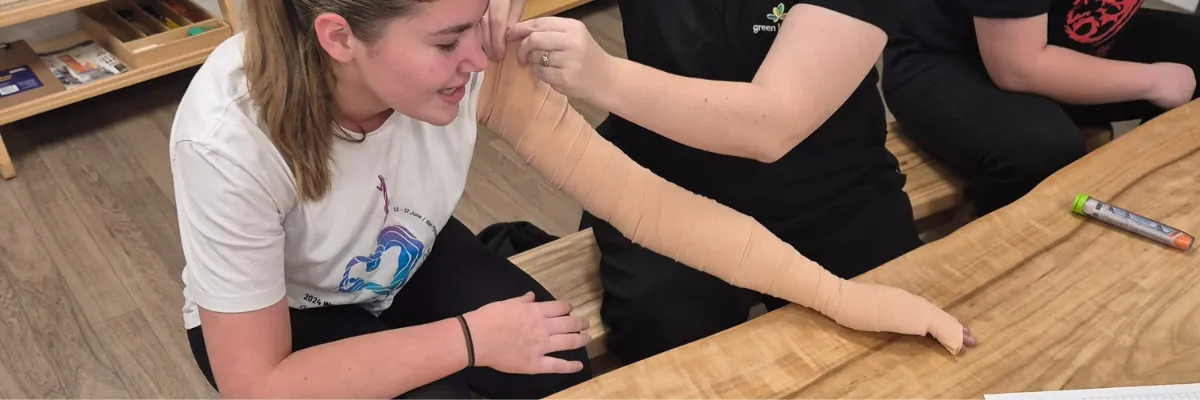
Blended learning splits the course in two. Your educators do the online theory at home, in their own time, then come in for a short face-to-face practical. The online part needs to work properly on a phone, with no laptop and no printer. If a casual can knock over a module on the bus to uni, it actually gets done.
Book practical's inside paid hours
When the practical sits inside paid hours, attendance stops being a battle.
Weekday sessions between morning and afternoon care, when the hall is empty anyway
Pupil-free days for whole-team sessions, so everyone's trained together
Plan around the school calendar
OSHC runs on terms, so your training plan should too. The natural windows are late January before term 1, plus the April, June/July and September holidays. New casuals don't always wait for the holidays though, so a monthly public session catches anyone who joins mid-term.
Certificate turnaround
The sooner certificates come through, the sooner you can add them to the register and put that educator on the floor.
Book a Public Session.
Once your team is trained, the next test is taking that confidence off site.

Managing Asthma and Anaphylaxis on Vacation Care Excursions
Vacation care is the best bit of the year for most kids. It's also when your usual systems get stretched the furthest, because the hall, the first aid cupboard and the sign-in desk all stay behind.
A trained educator goes where the children go
Regulation 136 doesn't switch off when you leave the service. A trained educator needs to be with the children on excursions too. And watch for split groups. If half the kids head to the waterslide while the rest stay at the picnic tables, each group needs its own trained educator.
The excursion medication kit
Before anyone gets on the bus, the kit should hold:
Each child's autoinjector, reliever and action plan
A spacer for every reliever, plus spares
Storage away from heat, following the manufacturer's guidance
That last one matters more in Brisbane than most places. A medication pouch left in a hot bus or on a sunny pool deck isn't doing anyone any favors.
Risk assessments and medical conditions policy
The paperwork side backs all of this up. Under the National Regulations:
Excursion risk assessments (Regulations 100 to 102) should account for children with asthma and anaphylaxis
Your medical conditions policy and risk minimization plans (Regulation 90) set out how each child's condition is managed
Emergency administration (Regulation 94) allows medication to be given in an asthma or anaphylaxis emergency without prior authorization
ACECQA's guidance on medical conditions and excursions is worth a read before your next holiday program. Our free Excursion Medication Checklist for OSHC and Vacation Care helps too.
All of this only helps at an assessment and rating visit if you can prove it.
Keeping Your Training Register Ready for Assessment and Rating
If you can't find the certificates when the assessor asks, a trained team doesn't count for much. A tidy register turns that moment from a scramble into a quick job.
How long certificates last
Asthma and anaphylaxis certificates need renewing regularly, and in OSHC every educator starts at a different time, so their renewals land all over the calendar. CPR is the other one to watch. HLTAID009 is renewed annually, so it'll come round faster than the rest.
What to keep on file
Your register should hold:
Each educator's Statement of Attainment
Expiry dates for every certificate
Which trained educators cover which shifts
It's that last point assessors care about. Showing that your team is trained is one thing. Showing that a trained educator was rostered on every single session, including early mornings and vacation care days, is what actually proves you're compliant.
Let reminders do the chasing
Renewal reminders that go straight to each educator mean the chasing happens without you. Our free Asthma and Anaphylaxis Training Register Template comes with expiry and shift cover columns already set up.
If you'd rather train the whole team in one go, onsite sessions make it simple.
Onsite Asthma and Anaphylaxis Training for Brisbane OSHC Services
Onsite asthma and anaphylaxis training in Brisbane means your educators practice in the same hall where they'll actually use it, on a weekday between morning and afternoon care or on a pupil-free day.
We run OSHC asthma and anaphylaxis training for services right across Brisbane.
Ready to Cover Every Shift?
Every afternoon, families hand you the people they love most and trust that someone on the floor knows what to do. Most days nothing happens. But on the day something does, all that matters is whether the educator closest to that child has been trained.
Closing the gaps doesn't have to be a big project. Start with your register. Grab the free template, fill in each educator's expiry dates and look for any shift where nobody trained is rostered on.
Next, choose your format. Onsite training at your service suits whole-team sessions, while public sessions are a handy catch-all for casuals who start mid-term.
Then get a quote or book. Line it up around the next pupil-free day or school holidays, so your team trains inside paid hours and nobody's being chased on their day off.
Once it's done, keep it ticking over. Renewals come round faster than you'd think, and a register that's kept current is the difference between a calm assessment and rating visit and a stressful one.
Do it once, do it properly, and the next storm afternoon or pool day feels a whole lot more manageable. Confident educators, safer children and families who keep trusting you with their kids. That's really what asthma and anaphylaxis training for outside school hours care is all about.