Asthma & Anaphylaxis Signs and Symptoms Course Brisbane
You know there's a child in your room with a peanut allergy. You know exactly where the EpiPen is. But if it happened right now, in the next sixty seconds, are you certain you'd recognise the signs in time to use it?
For Brisbane childcare educators, that question isn't hypothetical. Asthma and anaphylaxis are two of the most common medical emergencies in early childhood settings, and the window between first symptom and full reaction can be very short. The challenge isn't just knowing what to do. It's knowing what you're actually looking at. Skin changes, breathing patterns, a child who goes suddenly quiet in a way that doesn't quite fit. The early signs of both conditions can be subtle, easy to second-guess, and easy to confuse with something far less urgent.
That hesitation is the gap. And training that doesn't specifically address recognition, that rushes past symptoms to get to EpiPen technique, leaves that gap wide open.
This article covers exactly what the 22300VIC and 22556VIC courses include, why recognition is the foundation every effective emergency response is built on, and what separates a provider whose training will hold up in an ACECQA audit and in a real emergency from one that just ticks a compliance box.
What Are the Signs and Symptoms of Anaphylaxis in Children?
Anaphylaxis in children is a severe, potentially life-threatening allergic reaction that can develop within minutes of exposure to a trigger. Peanuts, tree nuts, insect stings, certain medications, or other known allergens. Early recognition is what makes an effective response possible.
Signs and symptoms of anaphylaxis in children include:
Skin reactions hives, redness, swelling, or a pale and floppy appearance
Facial swelling particularly around the lips, eyes, or tongue
Breathing difficulty wheeze, stridor, hoarse voice, or persistent cough
Gastrointestinal symptoms vomiting, stomach cramps, or diarrhea
Cardiovascular signs rapid or weak pulse, dizziness, or collapse
Behavioral changes sudden distress, limpness, or loss of consciousness in infants and toddlers
Symptoms may appear across one or more body systems at the same time. In a childcare setting, any combination of the above following known allergen exposure should be treated as anaphylaxis until confirmed otherwise.
Why Recognizing Symptoms Early Is the Most Important Skill in an Emergency
For most childcare educators, the question isn't whether they know anaphylaxis is dangerous. It's whether they would recognize it in time to act. That distinction matters more than almost anything else in an emergency, because the response protocol is only useful once you've correctly identified what you're dealing with.
Recognition is the first link in the chain. Every step that follows, retrieving the EpiPen, administering it to the correct leg, calling 000, positioning the child, notifying the parent, depends entirely on that first correct read of what is happening in front of you. Get that first step wrong, or lose thirty seconds second-guessing it, and everything else is already behind.
The Recognition Gap Why Training Alone Isn't Enough
Completing a course and being genuinely prepared are not always the same thing. Many educators in Brisbane have sat through asthma and anaphylaxis training that covered the compliance requirements, course codes ticked, certificate issued, but delivered minimal time on the messy, real-world presentation of symptoms in young children.
The recognition gap is the space between what an educator has been shown in training and what they actually see in front of them during an emergency. A child who is pale and quiet rather than visibly distressed. A toddler who is rubbing their face rather than clutching their throat. An asthma attack that begins as what looks like a nervous cough during group time.
Trainer has seen this play out in real emergency response contexts. The educators who perform under pressure aren't necessarily the ones who completed the most training. They're the ones whose training specifically built recognition skills that are fast, accurate, and automatic.
How Fast Can Anaphylaxis Progress in a Child?
Anaphylaxis can progress from first symptom to life-threatening reaction in under fifteen minutes. In some cases, particularly with highly sensitive individuals, that timeline is shorter still.
For childcare educators, this means the margin for hesitation is extremely narrow. A sixty-second pause to second-guess whether the hives appearing on a child's arm are serious enough to act on can meaningfully change the outcome. The ASCIA Action Plan for Anaphylaxis is designed to be followed without hesitation, but only by an educator who has already correctly identified that anaphylaxis is occurring. The plan doesn't help you decide what you're looking at. That decision has to come first, and it has to come fast.
Why Asthma and Anaphylaxis Are Frequently Confused in Early Childhood Settings
Asthma and anaphylaxis share several overlapping respiratory symptoms. Wheeze, persistent cough, and breathing difficulty appear in both conditions. In a childcare setting where a child may have a history of asthma and a known allergy, the risk of misidentification is real and well-documented.
The difference lies in the broader symptom picture. Anaphylaxis typically involves multi-system involvement, respiratory symptoms appearing alongside skin reactions, gastrointestinal symptoms, or cardiovascular signs. Asthma, by contrast, is primarily a respiratory condition without that systemic spread. This is one of the core reasons the 22300VIC and 22556VIC courses exist as distinct training requirements rather than content folded into a broader first aid unit.

Asthma Signs and Symptoms What Brisbane Childcare Educators Need to Know
Asthma is the most common chronic condition in Australian children. Spring in Brisbane, September through November, brings elevated pollen counts, humid conditions, and a predictable spike in asthma presentations that most experienced room leaders have already seen play out across multiple years.
For educators, familiarity with asthma is both an advantage and a risk. The advantage is experience. Most room leaders have seen an asthma episode before. The risk is complacency, assuming a wheezy child is having a mild episode when the symptoms in front of you are telling a different story.
Early Warning Signs of an Asthma Attack in Children
Early warning signs can be subtle, particularly in children under five. Signs to watch for:
Persistent or repetitive coughing particularly during physical activity or after coming inside from the playground
A slightly faster breathing rate than normal for that particular child
Mild wheeze a soft, high-pitched sound on exhaling that can be easy to miss in a noisy room
The child becoming quieter or withdrawing from group activity without an obvious reason
Visible effort in breathing nostrils flaring, or slight movement at the base of the throat
Complaints of chest tightness or stomach ache in older preschoolers who can verbalize what they're feeling
Some children, particularly toddlers, may simply appear unsettled, clingy, or unusually tired. That behavioral shift, in a child with a known asthma history, is worth taking seriously.
Mild, Moderate, and Severe Asthma Knowing the Difference
The call between moderate and severe is the most consequential decision an educator makes during an asthma episode. The ASCIA grading framework:
If a child on a reliever puffer isn't responding after the first round of doses as directed by their asthma action plan, that's not a reason to wait and watch. It's a reason to call 000.
Anaphylaxis Signs and Symptoms A Practical Guide for Educators
Understanding anaphylaxis signs and symptoms in a childcare context means going beyond the textbook presentation, knowing how reactions look in a two-year-old versus a four-year-old, and knowing precisely where the line sits between a mild allergic reaction and a full anaphylactic episode that requires an EpiPen immediately.
Mild Allergic Reaction vs Anaphylaxis Where the Line Is
Signs of a mild to moderate allergic reaction:
Hives, welts, or redness on the skin
Swelling of the lips, face, or eyes
Tingling or itching in or around the mouth
Abdominal pain, nausea, or vomiting
Runny nose and watery eyes
Signs that indicate anaphylaxis act immediately:
Any breathing difficulty, wheeze, or stridor
Hoarse voice or difficulty swallowing
Persistent dizziness or collapse
Pale, floppy, or unresponsive appearance, particularly in infants and toddlers
Any of the above occurring shortly after known allergen exposure in a child with a diagnosed allergy
ASCIA guidance is clear: if in doubt, treat as anaphylaxis. Doubt is not a reason to wait. It's a reason to act.
What Anaphylaxis Can Look Like in Infants vs Toddlers vs Preschoolers
Infants (under 12 months): Recognition relies entirely on behavioral and physical observation. Watch for sudden pallor, limpness, unusual crying or distress, difficulty feeding, or visible swelling around the face and mouth. An infant who was feeding normally and suddenly becomes floppy and pale needs to be assessed immediately against their allergy action plan.
Toddlers (1–3 years): May pull at their face, mouth, or ears. A sudden behavioral change from active to quiet, or from settled to extremely distressed, is a key early indicator. Vomiting following a known food exposure should not be dismissed as ordinary gastric upset.
Preschoolers (3–5 years): More likely to verbalize discomfort using non-clinical language. "My throat feels bumpy." "My tummy hurts really bad." "It's hard to breathe." These descriptions, in the context of a recent meal or snack, should be assessed immediately against the child's allergy action plan.
What the 22300VIC and 22556VIC Courses Actually Cover
22300VIC Course in First Aid Management of Anaphylaxis covers:
Recognition of mild to moderate allergic reactions versus anaphylaxis, including how presentations differ across age groups
The ASCIA Action Plan, how to read it correctly and follow it under pressure
Hands-on practice with EpiPen trainer devices, correct site, technique, and hold time
Post-administration care, positioning, monitoring, and communicating with 000
Legal and duty of care obligations under the Education and Care Services National Regulations 2011
22556VIC Course in First Aid Management of Asthma covers:
Recognition of asthma signs and symptoms across mild, moderate, severe, and life-threatening classifications
The ASCIA Asthma Action Plan, the four-step response framework and how to apply it
Correct use of reliever puffer and spacer, technique, timing, and dose intervals
When to call 000, and why waiting too long is the most common error educators make
Why These Two Courses Are Required Separately from HLTAID012
HLTAID012, Provide First Aid in an Education and Care Setting, is a broad first aid qualification. It does not satisfy the requirement for 22300VIC or 22556VIC. These are not interchangeable. They are not subsets of each other.
The Education and Care Services National Regulations 2011, Regulations 136 and 137, specifically require both course codes as separate, named requirements. An ACECQA auditor reviewing staff training records will look for those specific codes on the certificates in front of them. HLTAID012 alone will not satisfy that requirement. Full stop.
When an ACECQA assessor reviews training records, they check three things: the correct course code displayed on the certificate, the issuing RTO's current scope for these specific codes, and currency. Qualifications must be renewed at a minimum of every three years. A certificate that expired six months ago is a compliance gap, not a compliance record.

How Often Do Brisbane Childcare Educators Need to Renew?
ASCIA's recommendation isn't bureaucratic caution. An educator whose last training was two and a half years ago may be working from superseded technique without knowing it. The ASCIA guidelines on EpiPen administration have been updated in recent years. For educators working directly with children who have known allergies or diagnosed asthma, annual renewal is the standard that reflects what the skill actually requires to stay sharp.
A lapsed certificate is a compliance gap. Under the Education and Care Services National Regulations 2011, a service must ensure at least one educator present at all times holds a current approved first aid qualification, including current 22300VIC and 22556VIC certifications. A lapsed certificate identified following an actual emergency creates significant liability exposure for both the educator and the approved provider.
Ready to Book Your Brisbane Session?
There's a particular kind of confidence that comes from training that actually prepares you, not just certifies you. The kind where you walk back into your room the next morning and you know, without having to think about it, that you'd recognize the signs. That you wouldn't hesitate. That the thirty seconds you might have lost second-guessing yourself last time are gone, because you've built the recognition skills that make hesitation unnecessary.
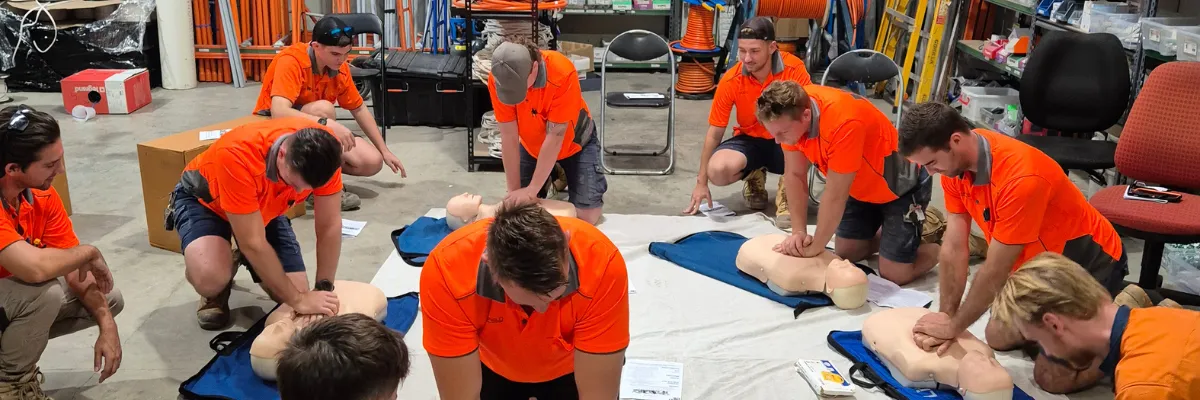
That's what the 22300VIC and 22556VIC courses at Accelerate First Aid are built to deliver. Not a rushed session where you hold an EpiPen trainer once and tick a box. A proper face-to-face training experience with a trainer who has real clinical and childcare experience, hands-on device practice, and enough time spent on symptom recognition that you leave with something more useful than a certificate. You leave with a skill set that holds up when a child in your room actually needs it.
The compliance piece is handled correctly here too. Both course codes are displayed on your certificate. It's issued digitally on the day and in your inbox before you drive home. The audit trail is clean. Saturday sessions exist specifically so the logistics stop being the reason training gets delayed.
If your employer is funding your enrollment, download the employer funding letter template below. It's ready to send. One conversation with your director and the only thing left to do is book.