Asthma and Anaphylaxis Short Course RTO Australia Explained
It's September in Brisbane. The jacarandas are out, and so is every child's inhaler. A new educator pulls you aside before the morning session and asks: "If I've done my childcare first aid, am I covered for asthma and anaphylaxis too?"
The honest answer might surprise her.
Thousands of childcare educators across Australia are sitting with that exact gap in their compliance records right now, not because they skipped training, but because they completed the wrong course. HLTAID012 is not the same as the asthma and anaphylaxis short course RTO Australia requires for childcare settings. They are separate qualifications. They serve different regulatory functions. And an ACECQA auditor will tell the difference in about thirty seconds.
In this guide, we cover what 22300VIC and 22556VIC require, why they exist separately from HLTAID012, what to look for in an RTO provider, and how childcare educators can complete both courses and receive a same-day certificate without disrupting the roster.
What Is a 22300VIC and 22556VIC Short Course?
The 22300VIC and 22556VIC are two nationally recognized short courses delivered by registered training organisations (RTOs) across Australia. They are mandatory for educators working in education and care settings under the Education and Care Services National Regulations 2011.
22300VIC Course in Management of Asthma Risks and Emergencies in the Workplace
22556VIC Course in First Aid Management of Anaphylaxis
Both courses require a practical component and must be completed with an approved RTO. An online-only certificate does not satisfy ACECQA requirements. Each certificate is valid for three years from the date of issue and must display the correct Victorian course code to be accepted at audit.
Why These Two Short Courses Exist and Why HLTAID012 Isn't Enough
If your director has ever told you "we've done HLTAID012, we're covered," she was half right. HLTAID012 is a genuine, nationally recognized qualification. It covers CPR, AED use, managing unconscious casualties, and yes, some awareness-level content on asthma and anaphylaxis. But awareness-level is not the same as compliant. And in an ACECQA audit, the difference matters enormously.
What Regulation 136 and 137 Actually Require
Under the Education and Care Services National Regulations 2011, Regulation 136 requires at least one educator with a current first aid qualification on the floor at all times. Regulation 137 requires that at least one educator also holds both a current anaphylaxis management qualification and a current emergency asthma management qualification, specifically 22556VIC and 22300VIC. Not HLTAID012. The course codes must appear on the certificate.
What Happens If Your Centre Only Holds HLTAID012
When an auditor reviews your training records, they're checking codes, not reading through course content. If a certificate shows HLTAID012 and nothing else, it does not satisfy Regulations 136 and 137, regardless of what the trainer delivered on the day.
Centers that have discovered this mid-audit don't get a grace period. The non-compliance is recorded, and directors have had to scramble to get educators certified within days of receiving audit findings.
The One Question to Ask Any Training Provider Before You Book
Before you book anything, ask this: "Will my certificate show the course codes 22300VIC and 22556VIC explicitly?" If the answer is anything other than a clear yes, keep looking.

What the 22300VIC Short Course Covers (Asthma)
Around 1 in 9 Australians live with asthma. In a childcare room, that statistic stops being abstract pretty quickly. You probably already know which children have a reliever puffer in their bag. What the 22300VIC short course is designed to do is make sure you know exactly what to do when one of them needs it.
What You'll Learn in the Asthma Short Course
The 22300VIC covers the full picture of asthma management in a childcare and workplace context. Specifically, the course covers:
Identifying common asthma triggers in childcare environments, including dust, pet dander, mold, grass pollen, cold air, and the seasonal spring spike
Recognizing the difference between a mild/moderate episode and a severe one, because the response is different and timing matters
Correct spacer and puffer technique, how to hold it, how many puffs, how long to wait between doses, and how to adapt for a young child who won't cooperate
When to administer the reliever and when to call 000
How to read and follow an asthma action plan
Hands-On Practice: Why the Practical Component Matters
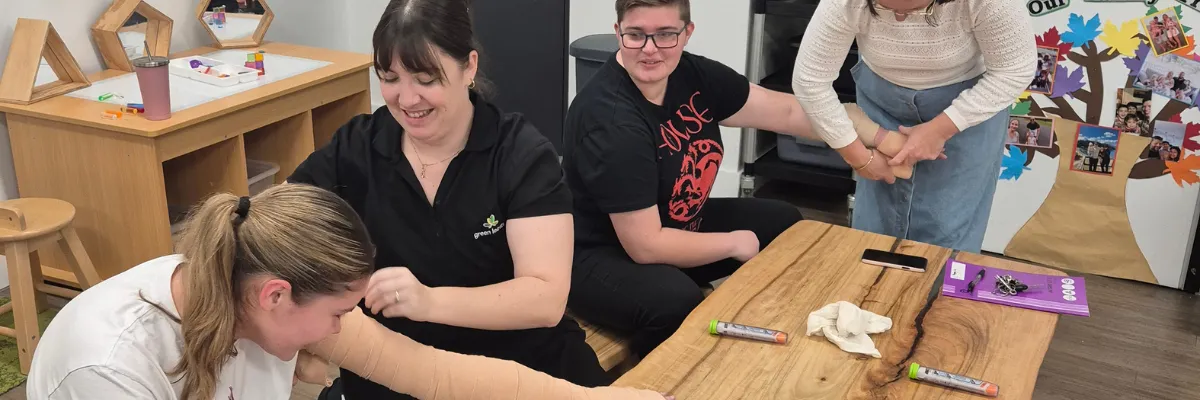
A lot of educators have sat through an asthma awareness session where someone held up a spacer device and explained how it works. That's not the same as actually using one on a child-sized mannequin under time pressure, with a trainer correcting your technique in real time.
In the 22300VIC practical component, participants work with actual spacer devices and practice the correct technique, not watch someone else do it. Asthma Australia reports that incorrect spacer technique is one of the most common reasons a reliever puffer fails to work effectively in an emergency. The 22300VIC is specifically designed to fix that.
How Long Is the 22300VIC Certificate Valid?
The 22300VIC certificate is valid for three years, the ACECQA minimum. ASCIA recommends annual renewal to keep technique current. Most childcare compliance officers treat annual renewal as the working standard, not the exception.
What the 22556VIC Short Course Covers (Anaphylaxis)
Here's the fear most childcare educators won't say out loud: "I know the child has an EpiPen. I know where it's kept. But if it actually happened right now, I'm not completely sure I'd do it right."
That's not a confidence problem. That's a training gap. And it's exactly what the 22556VIC is designed to close.
Around 1 in 10 Australian children has a diagnosed food allergy, and anaphylaxis hospitalizations in children aged 0-4 have been increasing according to the Australian Institute of Health and Welfare.
Recognizing Anaphylaxis: What to Look For in a Child
The 22556VIC teaches the difference between an allergic reaction and anaphylaxis. A mild reaction might show up as hives or a runny nose. Anaphylaxis is a severe, systemic response affecting breathing, circulation, and consciousness simultaneously. In children, signs can include:
Swelling of the lips, tongue, or face
Difficulty swallowing or a hoarse voice
Wheeze or difficulty breathing
Pale, floppy, or suddenly lethargic, particularly in very young children
Vomiting, stomach pain, or collapse
Young children often can't tell you what they're feeling. The 22556VIC trains you to read the physical signs fast.
EpiPen Technique: What the Course Actually Teaches You
The course covers the correct EpiPen auto-injector technique in full: which leg to use (outer mid-thigh, through clothing if necessary), how long to hold the device in place, what to do immediately after administration, and the correct sequence of actions. You call 000 first. Then you administer the EpiPen. Not the other way around.
Trainer devices are used during the practical component, not live EpiPens, but the technique is identical. You'll practice the full sequence until it's automatic, trained by someone who has managed real anaphylaxis emergencies, not someone reading from a slide deck.
Reading and Following an Anaphylaxis Action Plan
Every child with a known allergy should have an ASCIA anaphylaxis action plan on file at your center, completed by their GP or specialist, with a photo of the child and specific instructions for their known allergens. The 22556VIC teaches you how to read that plan under pressure, locate the prescribed medication, and follow the documented steps without hesitation.
Here's what that looks like in practice. It's lunch. A child starts rubbing her face and her lip looks swollen. Within seconds she's pulling at her collar and her breathing sounds different. You call 000 immediately, retrieve the EpiPen, confirm the action plan, administer to the outer thigh, hold for ten seconds, and position her correctly before the ambulance arrives. You've done everything right, because you've practiced it until it was automatic.
What to Look for in an RTO Delivering These Courses in Australia
Not all RTOs are the same. When it comes to an asthma and anaphylaxis short course RTO Australia-wide, the variation in quality and compliance outcomes is bigger than most educators realize. The wrong provider leaves you with a certificate that won't survive an ACECQA audit, or worse, with a technique that doesn't hold up when it counts.
5 Things to Check Before Booking an Asthma and Anaphylaxis Short Course
Run every provider you're considering through this list before you hand over your details:
RTO number is visible on the certificate Every nationally accredited training provider has a registered RTO number. It should appear explicitly on your certificate.
Course codes 22300VIC and 22556VIC are stated explicitly Not "asthma and anaphylaxis training." The actual Victorian course codes, on the certificate, in print.
A practical component is included in Online theory followed by an in-person practical assessment that satisfies ACECQA. Online theory alone does not.
Same-day certificate issuance Your certificate should be in your email inbox by end of day, not after a manual review process.
Trainer with childcare or clinical experience A trainer who has worked in early learning centers or has a clinical background teaches this content differently.
Why Online-Only Courses Won't Satisfy ACECQA
ACECQA requires a practical component for both 22300VIC and 22556VIC. That means hands-on practice with actual spacer devices and EpiPen trainer devices. A certificate issued purely on the basis of an online module does not satisfy the requirement and will not be accepted at audit. An educator who has only completed online theory has never actually held a spacer device or practiced the EpiPen sequence under real conditions. That gap shows up when it matters most.
What Your Certificate Must Show to Pass an Audit
When an ACECQA auditor reviews your training records, they're looking for four things on every certificate:
The RTO name and number
The course code, 22300VIC or 22556VIC, stated explicitly
The participant's full legal name
The date of issue and expiry
If any element is missing or incorrect, the certificate won't be accepted.

How Often Do You Need to Renew and When Should You Book?
There are two different answers depending on who you ask.
ACECQA Minimum vs ASCIA Recommendation: What's the Difference?
ACECQA requires renewal at a minimum of every three years. ASCIA recommends annual renewal, noting that guidelines update regularly and practical confidence degrades without reinforcement. Most childcare compliance officers recommend the annual window because it keeps technique sharp and removes the scramble when an audit notice arrives and someone's certificate lapsed eight months ago.
4 Signals It's Time to Renew Your Asthma and Anaphylaxis Training
A new child has enrolled with an anaphylaxis or asthma action plan New allergen profiles, new medications, new action plan formats. Renewal keeps your response calibrated.
Your certificate is approaching twelve months. This is your booking window if you're following the ASCIA recommendation.
An ACECQA audit has been scheduled for a notice received Book as soon as the notice arrives, not the week before.
A new staff member has joined without current certification One uncertified educator in a room with a child who has an action plan on file is a compliance gap.
How to Keep Your Whole Centre Renewal-Ready
The centers that never have a gap usually have one person tracking certificate expiry dates across the whole team. A shared spreadsheet with each educator's 22300VIC and 22556VIC issue dates, a calculated expiry column, and an eleven-month reminder is all it takes.
Conclusion
The gap between having done first aid training and being genuinely compliant for asthma and anaphylaxis emergencies is one that catches good educators out every year. Not because they didn't try, but because HLTAID012 and the 22300VIC and 22556VIC short courses serve different purposes, sit under different regulations, and are checked separately at every ACECQA audit. Knowing that distinction is the first step toward getting it right.
What the 22300VIC and 22556VIC actually give a childcare educator is something that goes beyond a certificate on file. It's the specific, practiced knowledge of what to do in the minutes before an ambulance arrives, when a child in your care is struggling to breathe and every second of clear, calm action matters. That kind of preparation doesn't come from an online module. It comes from hands-on practice with real devices, delivered by a trainer who understands what a childcare emergency actually looks like.
Choosing the right RTO is where that preparation either holds up or falls apart. A provider that issues correctly coded, same-day certificates through an accredited RTO, with a practical component built into every session, is the baseline. Anything less than that is a compliance risk and a gap in genuine readiness that won't show up until it matters most.
The renewal question is just as important. Waiting until a certificate has nearly lapsed, or scrambling after an audit notice arrives, is avoidable. The centers that stay continuously compliant treat renewal as a calendar event, not a crisis response. Whether you're tracking your own certificate or managing expiry dates across a whole team, the system doesn't need to be complicated, it just needs to exist.
If you're a childcare educator who wants to be the most prepared person in the room, not just the most recently certified, the 22300VIC and 22556VIC are where that starts. Book a session, complete the theory at your own pace, attend the practical, and walk away with a same-day certificate that says exactly what an ACECQA auditor needs to see.