Asthma & Anaphylaxis Risk Identification Training Guide
You know which child in your room carries an EpiPen. You know which one gets wheezy every September. But do you know with absolute certainty what the early warning signs look like before a reaction becomes life-threatening?
For Brisbane childcare educators, asthma and anaphylaxis risk identification isn't a box to tick on a compliance checklist. It's the difference between a calm, controlled response and a moment of frozen uncertainty when a child needs you most.
There's a version of this training that leaves educators feeling exactly the same as when they walked in. You show up, a trainer rushes through some slides, you're handed a puffer you never properly learn to use, and you walk away with a certificate but not much else.
This guide covers everything you need to know about asthma & anaphylaxis risk identification training in a childcare setting including what the training actually involves, why 22300VIC and 22556VIC are the course codes your ACECQA auditor is looking for, and how to choose a provider that gives you genuine emergency confidence, not just a certificate.
Whether you're completing this training for the first time, renewing a lapsed qualification, or trying to work out why your HLTAID012 doesn't cover this requirement, you're in the right place.
Does HLTAID012 Cover Asthma and Anaphylaxis Risk Identification Training?
No. HLTAID012 (Provide First Aid in an Education and Care Setting) does not cover asthma and anaphylaxis risk identification training. They are separate requirements under the Education and Care Services National Regulations 2011.
Queensland childcare services must meet two additional requirements under Regulations 136 and 137:
22300VIC - Course in First Aid Management of Anaphylaxis
22556VIC - Course in the Management of Asthma Risks and Emergencies in the Workplace
These VCAA accredited courses must be completed in addition to HLTAID012, not instead of it. Both require a face-to-face practical component to satisfy ACECQA audit requirements. Online-only certificates will not be accepted by an ACECQA auditor regardless of what the course provider claims.
If your center has only booked staff through HLTAID012, your training records may currently be non-compliant.
What Is Asthma & Anaphylaxis Risk Identification Training?
What Does "Risk Identification" Actually Mean in a Childcare Setting?
Risk identification is the trained ability to recognize the environmental, behavioral, and physical indicators that a child may be entering an allergic or respiratory emergency before the situation becomes life-threatening. In a room full of two and three years old, it means knowing what to look for before a child can even tell you something is wrong.
In a childcare context, that includes:
Knowing which children have documented allergies or asthma action plans
Recognizing early physical signs before a full reaction develops
Identifying environmental triggers present in the room or outdoor space
Understanding the difference between a mild allergic response and the onset of anaphylaxis
A child who's a bit red around the mouth after lunch looks very different from a child in full anaphylaxis, but the window between those two states can be shorter than you'd expect, and your training is what closes that gap.
What the Training Covers: 22300VIC vs 22556VIC
Both are required. Neither replaces the other. And neither replaces HLTAID012. They're three separate boxes your training records need to tick, and an ACECQA auditor will check for each one by its exact course code.
Who Needs This Training in Queensland?
Under the Education and Care Services National Regulations 2011, the following staff must hold current 22300VIC and 22556VIC certificates:
Nominated Supervisors
Room Leaders and Lead Educators
Any educator who may be alone with children, including casual and relief staff
Family Day Care educators and coordinators
Casual and relief staff are often overlooked when training records are reviewed, and they're exactly the kind of gap an auditor will find.

Understanding the ACECQA Requirements for Brisbane Childcare Services
Regulations 136 and 137 Explained
Regulation 136 requires that at least one educator present at all times holds a current anaphylaxis management certificate, specifically 22300VIC
Regulation 137 requires the same for asthma management, specifically 22556VIC
Both regulations apply to all approved childcare services operating under the National Law in Queensland
The certificate must show the exact course code - a general first aid, CPR, or HLTAID012 certificate does not satisfy either regulation
If the codes aren't on the certificate, the training doesn't count, regardless of what was actually taught in the room, regardless of how experienced the educator is, and regardless of what the provider told you when you booked.
How Often Do You Need to Renew?
The EpiPen technique has been updated. Asthma management guidelines change. An educator who trained three years ago and hasn't renewed since may be working from guidance that's no longer current, and that's a real clinical risk, not just a compliance one.
What to Look For Early Warning Signs Educators Must Recognize
Early Signs of Anaphylaxis in Children
Anaphylaxis in a childcare room rarely announces itself. It starts quietly. A bit of redness around the mouth. Some unusual fussiness after morning tea. A toddler who was running around five minutes ago now just wants to be held. That's the window. That's where your training either kicks in or it doesn't.
Early warning signs act now:
Tingling or itching in the mouth
Hives, redness, or swelling, particularly around the face and lips
Runny nose, watery eyes
Abdominal pain, nausea
Unusual quietness or distress in a non-verbal child
Escalating signs administer EpiPen, call 000:
Swelling of the tongue or throat
Difficulty swallowing or speaking
Wheeze or difficulty breathing
Pale, floppy, or unresponsive
Rapid deterioration from mild symptoms
A child can go from hives to respiratory distress faster than it takes to find the anaphylaxis action plan on the wall. You need the response to be automatic.
Early Signs of Asthma Deterioration in Children
Asthma in a childcare setting has a seasonality that Brisbane educators know well. August arrives, the jacarandas start blooming, and suddenly half your room is coughing after outdoor play. Most of the time it settles. But sometimes it doesn't, and knowing which situation you're in is the skill this training is designed to give you.
Early warning signs:
Persistent cough, particularly after outdoor play
Mild wheeze, audible on breathing out
Child reports chest feels "tight" or "funny"
Increased breathing rate
Reluctance to participate in physical activity
Signs of moderate-to-severe deterioration:
Wheeze clearly audible without a stethoscope
Visible use of neck or chest muscles to breathe
Child unable to speak in full sentences
Blue tinge around lips (cyanosis) call 000 immediately
Reliever puffer not providing relief after 4 puffs
The Risk Window Why Recognition Speed Matters
Anaphylaxis can progress from mild symptoms to life-threatening within minutes
The single most important intervention is early EpiPen administration, delay significantly worsens outcomes
Asthma deterioration in children can accelerate rapidly during high-pollen periods, and Brisbane spring runs August through October
Risk identification training closes the gap between noticing something is wrong and knowing what to do next
There's a meaningful difference between an educator who has sat through a slideshow about anaphylaxis and an educator who has physically held an EpiPen trainer device, practiced the technique until it felt natural, and walked through a scenario where they had to make the call. The certificate looks the same. The confidence in the room does not.

What Good Risk Identification Training Actually Looks Like
Face-to-Face vs Online: What ACECQA Will and Won't Accept
Online-only courses are cheaper and convenient, and some providers market them confidently as ACECQA-compliant. They're not. ACECQA requires a practical component because the whole point of this training is that you can actually perform the skill under pressure. An online certificate might look identical to a blended one. An auditor will know the difference.
What to Expect on the Day
A well-run session should include:
Pre-course theory component completed online prior to the session
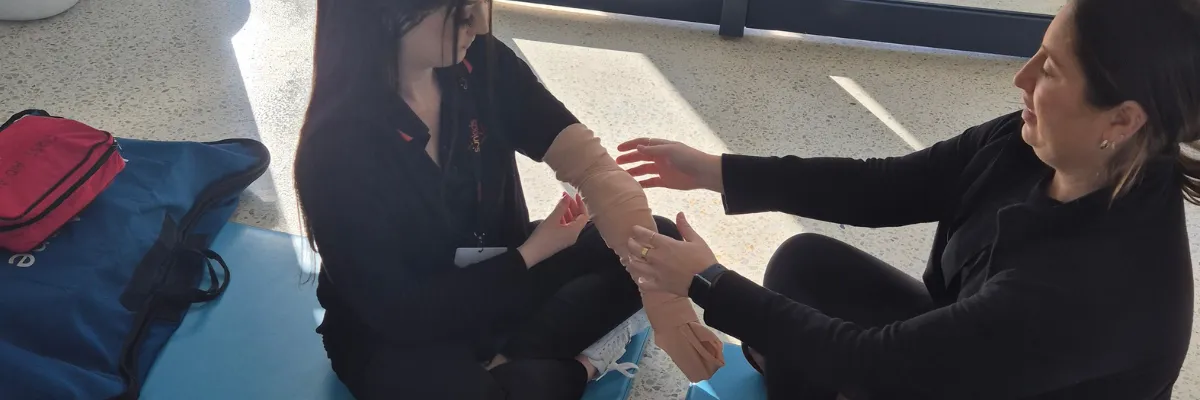
Face-to-face practical training with EpiPen trainer devices
Hands-on spacer and puffer technique practice
Review of individual anaphylaxis and asthma action plans
Scenario-based practice, not just demonstration
Certificate issued on the day, digitally delivered, correctly coded
Your certificate should be in your inbox before you've left the car park.
How to Check Your Certificate Is Coded Correctly
22300VIC Course in First Aid Management of Anaphylaxis
22556VIC Course in the Management of Asthma Risks and Emergencies in the Workplace
Issuing RTO name and RTO Number
Date of completion
Participant's full legal name, matching your employment records exactly
Expiry date or date of issue
A name discrepancy between your certificate and your employment records is the kind of thing that gets flagged at audit. It's an easy fix when you catch it early. It's a stressful fix when an auditor finds it first.
How to Choose the Right Training Provider in Brisbane
Choosing the right training provider for 22300VIC and 22556VIC comes down to one question: will this training actually prepare me for a real emergency, or will it just produce a certificate? Those two outcomes are not the same thing, and the gap between them is wider than most educators realize until they're standing in a room with a child who needs them to act.
The practical component is non-negotiable. A provider who delivers genuine hands-on training, where every educator physically handles an EpiPen trainer device, practices spacer technique until it feels automatic, and works through realistic scenarios, is delivering something categorically different from a provider who ticks the face-to-face box and moves on. Ask directly whether the practical component is participatory or observational. The answer will tell you a lot.
Saturday availability isn't a convenience feature. For most Brisbane childcare educators, it's the difference between completing the training and not completing it. Early starts, late finishes, and rotating rosters make weekday sessions genuinely inaccessible for a significant portion of the ECE workforce. Confirm Saturday dates exist before you book anything.
Certificate delivery is the part of the process that causes the most stress when it goes wrong. A certificate with the wrong name, a missing course code, or a delayed delivery becomes your problem to chase while your director is asking for training records. The standard you should expect is simple: correct codes, correct name, issued digitally on the day of training. If a provider can't commit to that, keep looking.
RTO registration is a basic check that takes less than a minute. Any provider delivering 22300VIC or 22556VIC must be registered with ASQA, and that registration is publicly verifiable at training.gov.au. If the registration isn't there, the certificate won't hold up.