Asthma and Anaphylaxis Course for Youth Workers: 2026 Guide
Friday arvo at a youth program. Basketball's going, someone's cracked open a bag of chips, and one of the young people has a little pouch clipped to their belt that nobody's really looked at since intake day. Youth workers are trained for conflict, disclosures and crisis conversations, the stuff most people would freeze on. But an asthma and anaphylaxis course for youth workers is often the missing piece.
These emergencies feel unlikely. And they move too fast to look anything up.
They're also not as rare as they feel. Around 1 in 9 Australians live with asthma (National Asthma Council Australia), and food allergy is common in school-aged kids (ASCIA). So across a youth centre, a residential house, a holiday program or a camp, someone in your care is likely carrying a puffer or an adrenaline autoinjector.
The course closes that gap. It's short, it's nationally recognised, and it teaches you to spot the early signs, use reliever and autoinjector devices properly, and stay calm and keep acting until the ambulance gets there.
This guide walks through what the course includes, which youth work roles get the most out of it, how it sits alongside HLTAID011, and how Brisbane youth services can get a whole team trained, casuals included, without losing a program day.
Do youth workers need asthma and anaphylaxis training?
In Queensland, no single law requires every youth worker to hold asthma and anaphylaxis training. But employers have a duty of care to the young people they support, and many youth services require it through their own policies. Training is strongly recommended for youth workers who:
Work with young people who have an asthma or anaphylaxis action plan
Supervise camps, excursions or overnight programs
Run activities involving food, cooking or shared snacks
Work in residential or out-of-home care settings
Coach or supervise junior sport and physical activity
Work alone or as the only staff member on shift
A nationally recognised asthma and anaphylaxis course teaches you to recognise symptoms, use relievers and adrenaline autoinjectors, and respond until an ambulance arrives.
Honestly, if you ticked even one of those, it's worth doing. Most youth workers tick three or four.
Duty of care in youth work
When a young person walks through your door, your service takes on a duty of care, including for medical emergencies you can reasonably see coming.
Once a young person discloses asthma or a severe allergy on an intake form, it's no longer a "what if." It's a foreseeable risk. The form's in the filing cabinet. The question is whether the person on shift knows what to do.
What WHS law expects
Queensland's First Aid in the Workplace Code of Practice talks about first aid training matched to the hazards and the people in your workplace. It doesn't name this course specifically. But if your workplace includes young people with puffers and autoinjector, training matched to your risks points pretty clearly this way.
How this differs from OSHC and childcare
Education and care services fall under Regulations 136 and 137, and youth services generally don't. If you're on the childcare side, our guide to asthma and anaphylaxis training for OSHC covers those rules.
So it mostly comes down to your risks and your policies. Here's what the training involves.
What an Asthma and Anaphylaxis Course for Youth Workers Covers
No medical background needed. The asthma and anaphylaxis course for youth workers is built for regular people, and most of it is hands-on.
The two units you'll receive
You finish with two nationally recognised units:
22556VIC Course in the Management of Asthma Risks and Emergencies in the Workplace
Course in First Aid Management of Anaphylaxis
From here on they're just "the asthma unit" and "the anaphylaxis unit."
Anaphylaxis skills
The anaphylaxis unit teaches you to tell a mild to moderate allergic reaction apart from anaphylaxis, and to follow the ASCIA Action Plan for Anaphylaxis the young person's doctor filled out. You'll practise with EpiPen and Anapen trainer devices, so the first time you hold one isn't the real thing.
The response follows ASCIA's first aid for anaphylaxis:
Lay the person flat, or let them sit if breathing is hard. Don't let them stand or walk.
Give the adrenaline autoinjector.
Call an ambulance.
If there's no response after 5 minutes and another device is available, give more adrenaline.
That bit about not standing up gets people. It feels natural to help someone to their feet, and in anaphylaxis it's the wrong move.
Asthma skills
The asthma unit covers recognising mild, moderate and severe or life-threatening asthma, plus the National Asthma Council's asthma first aid:
Sit the person upright and stay with them.
Give 4 separate puffs of reliever through a spacer, with 4 breaths after each puff.
Wait 4 minutes.
If there's no improvement, repeat the puffs and call an ambulance.
You'll learn to use a puffer with a spacer, and how to manage without one when there isn't one around.
Risk management for programs
This is what makes it more than a first aid lesson. You'll cover:
Collecting and checking action plans at intake
Storing medication, checking expiry dates and carrying devices off-site
Allergy awareness in food activities and camp menus
How you're assessed
You do the online theory first, then show your skills in a practical session using trainer devices and realistic scenarios. Once you're signed off, you get a statement of attainment.
Those skills are the same no matter who you're helping. Young people, though, bring a few extra challenges.
Why Teenagers and Young Adults Need a Different Response
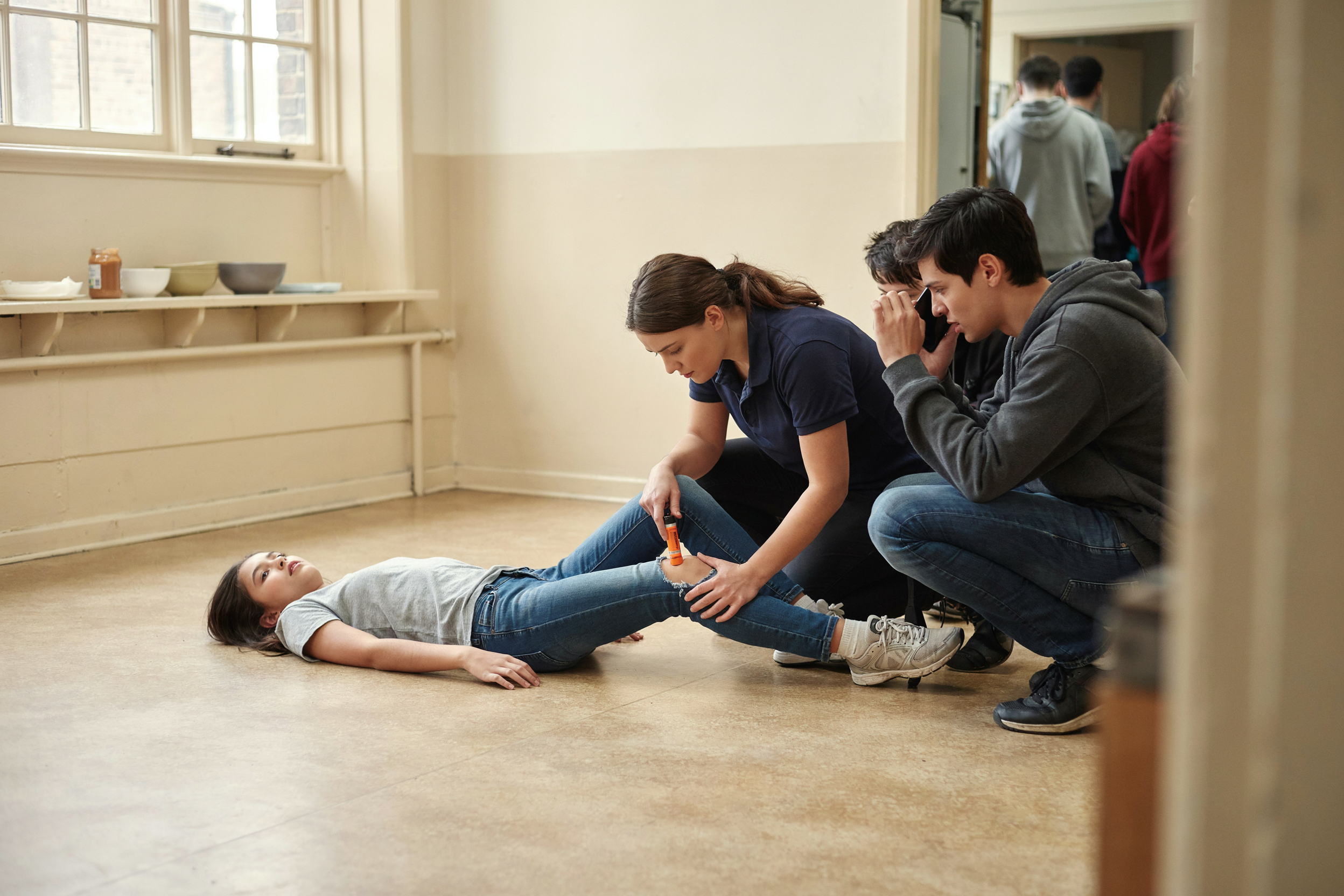
Working with a 15-year-old isn't the same as working with a 6-year-old, and allergies and asthma are no exception.
Teens and young adults are a higher-risk group for severe reactions
ASCIA identifies adolescents and young adults as a higher-risk group for fatal food anaphylaxis. That's not because their allergies are worse. It's mostly down to how teenagers live, and what they do (or don't do) when nobody's watching.
Why the risk rises in the teenage years
🃏 Five reasons teens are at higher risk
They don't carry their autoinjector, because it's a hassle or it's embarrassing.
They eat without checking ingredients, especially with mates or away from home.
They'd rather not speak up in front of their peers.
Exercise and alcohol can act as cofactors that make a reaction worse.
They're growing more independent from the parents who used to manage it all.
Anaphylaxis in teenagers often comes down to that mix of independence and not wanting to stand out. Little kids have adults hovering over every snack. Teens don't.
What this means for youth workers
Check devices before every activity. Don't assume a young person has their autoinjector just because they said so.
Make carrying medication normal. When it's part of your program culture, nobody's the odd one out.
Take early symptoms seriously. Even when the young person shrugs it off. Teens are very good at "I'm fine."
Asthma in adolescents
Plenty of young people skip their preventer and lean on their reliever instead, so their asthma is less controlled than it looks. Brisbane adds to it. Storm season and high pollen periods trigger flare-ups, and thunderstorm asthma (Asthma Australia) can hit people who barely know they have asthma at all.
Next, here's where these risks actually turn up in a youth service.
Where Asthma and Anaphylaxis Risks Show Up in Youth Work
Youth centres and drop-in programs
Drop-in work runs on shared food and casual attendance. A young person can show up several times before anyone sees their action plan, if staff ever see it at all. Ask about asthma and allergies at the first visit, not at a formal intake that might come much later. Trained staff catch the early signs.
Camps, excursions and overnight trips
Camps put distance between you and help. There's unfamiliar food, lots of exercise and devices left back in someone's bag at the cabin. Do a device check before every bus leaves and every hike. Good youth camp first aid means your team acts straight away instead of waiting.
Residential and out-of-home care
In residential care, workers are often alone overnight, and medication management falls to staff rather than parents. Keep action plans and devices in one known spot every worker can find. Residential care first aid training gives the person on shift the confidence to act alone.
Cooking, nutrition and life-skills programs
Cooking programs mean direct allergen exposure, and cross-contamination is easy to miss. A shared chopping board or a spoon that went in the peanut butter jar is enough. Check labels with the group and make it part of the life skill.
Junior sport, recreation and outdoor programs
Exercise brings on asthma for a lot of young people, and it can make an allergic reaction worse too. Keep relievers and spacers at the sideline, not in the change room. Staff who know first aid for youth workers can tell puffed-out from struggling to breathe.
School holiday and vacation programs
Big groups plus casual staff is a tricky combo. Brief every staff member on which young people have action plans, every single day. A trained team means no gap on any shift.
Plenty of teams already hold first aid certificates, so here's what the standalone course adds.
HLTAID011 vs an Asthma and Anaphylaxis Course: Do You Need Both?
They do different jobs, and plenty of youth workers end up with both.
What HLTAID011 already covers
HLTAID011 is general first aid. It includes asthma and anaphylaxis response alongside everything from bleeding to burns. It also contains HLTAID009 (CPR) and HLTAID010 (basic emergency life support), so if you've done HLTAID011, you've got those too.
What the standalone course adds
In HLTAID011, asthma and anaphylaxis is one topic among many. The standalone course goes further:
More hands-on practice with autoinjectors and spacers
Risk minimisation and action plan management, which general first aid barely touches
A shorter course, so it works as a refresher between first aid renewals, or for staff without HLTAID011
It's a bit like a general driving lesson versus a session on towing a trailer. If your program tows the trailer every week, you want the extra practice.
Which combination suits which role
These are suggestions only. Your service sets its own training policy.
Role | Suggested training |
Program coordinator or team leader | HLTAID011 + asthma and anaphylaxis |
Youth worker on regular shifts | HLTAID011 + asthma and anaphylaxis |
Casual or relief worker | Asthma and anaphylaxis at minimum, then HLTAID011 |
Volunteer, camp leader or kitchen helper | Asthma and anaphylaxis |
All staff | Regular HLTAID009 CPR refresher |
Here's what the course looks like on the day.

Course Format and Renewal
Blended delivery
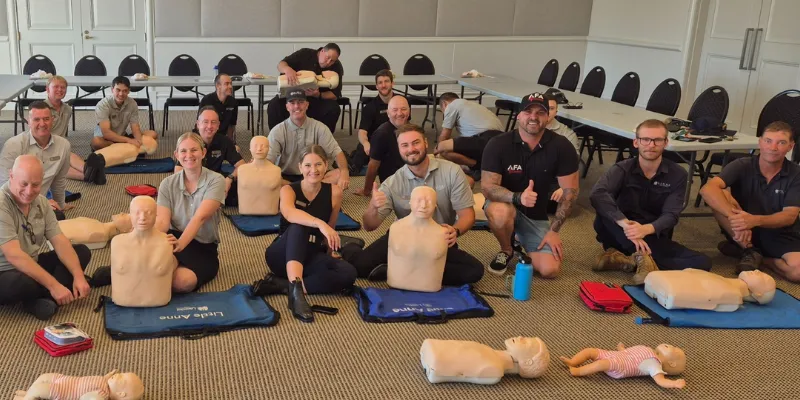
It's a blended asthma and anaphylaxis course. You do the online theory first, on your phone if you like, whenever you get a spare moment. Then you come to a short face-to-face practical, either at our venue or onsite at your service. That's where you get hands-on with the trainer devices.
Booking your spot
Our asthma and anaphylaxis course in Brisbane runs regularly, so check the booking page for the next date that suits.
How long the certificate lasts
Renew on a regular cycle, and keep practising with trainer devices in between so the steps stay fresh. Your youth service may set its own renewal policy, so check that first.
Booking yourself in is easy. A whole team takes more planning.
Training Your Youth Service Team in Brisbane
Training one person is simple. Training a whole roster, casuals included, takes more planning.
Onsite group sessions
With onsite asthma and anaphylaxis training in Brisbane, the trainer comes to your youth centre, camp base or office. Sessions can run on a weekday or before an evening program starts, so nobody gives up a day off and you're not cancelling a program.
Training casual and relief staff
Casuals are the tricky bit, because they don't all start at once. Recurring public sessions sort that out. A new starter can finish the online theory before their first shift, then join a practical soon after.
Keeping track of who's trained
Keep a training register with everyone's expiry dates, and set reminders ahead of time. The free checklist includes a register table you can start with today.
Invoicing and approvals
We quote and invoice to your organisation, not individual staff. That makes it easy to take to your board or area manager, because the numbers are all in one place.
Your Next Steps
Think back to that Friday arvo program, with the basketball going, the chips on the table and that little pouch on someone's belt. Getting ready for the moment it matters doesn't take much, and you can start this week.
If you're training yourself, book your course and knock the theory over online, on the bus or after a shift. Then come along to the hands-on practical.
If you're organising training for a whole team, request a group quote for an onsite session. The trainer comes to you, so you don't lose a program day, and the invoice goes to your organisation, which makes approval a lot easier.
Don't forget your casuals and relief staff. Point new starters to a public session early, so the theory's done before their first shift.
Not quite ready to book? That's fine. Download the free checklist and start with what you've got. Pull out the action plans, check the expiry dates on every device, and list who's trained and who isn't.
Whichever step you take first, an asthma and anaphylaxis course for youth workers comes down to one simple thing. When a young person in your care needs help, the person standing closest knows what to do and does it calmly.