

Asthma and Anaphylaxis Certificate Validity Explained (QLD)
Asthma and anaphylaxis certificate validity is one of those things that feels sorted, right up until you open your training spreadsheet on a quiet morning after before school care. Somewhere in there is a casual person whose certificate ran out last month. Nobody noticed. And honestly, it happens in almost every OSHC and childcare service with a rotating team, because each educator trained on a different date and every certificate is ticking along on its own cycle.
It sounds simple. Until you're the one signing off the roster. ACECQA sets the industry standard at three years, but the regulations only say the training has to be "current". Not every provider prints an expiry date on the certificate either. Then you've got course codes that look almost identical, plus HLTAID012 renewals running on a whole separate clock. It's a bit like keeping a dozen kitchen timers going at once, each one started on a different day. No wonder gaps open up.
So this guide clears it up for Brisbane services. You'll learn how long asthma and anaphylaxis training stays current, how it sits alongside HLTAID012 and annual CPR, what to do when a certificate has already lapsed, and a simple way to track every educator's renewal date so no shift is ever left uncovered.
How Long Is an Asthma and Anaphylaxis Certificate Valid?
An asthma and anaphylaxis certificate is valid for three years from the date you complete the course. This is the industry standard set by ACECQA for education and care services, and the regulations require educators to hold training that is current.
Anaphylaxis management training: renew every 3 years
Emergency asthma management training: renew every 3 years
HLTAID012 first aid: renew every 3 years
CPR (HLTAID009): refresh every 12 months
Some employers and services ask for more frequent refreshers, so check your service's policy. If your certificate has passed three years, book a renewal before your next shift with children who have an action plan.
Why "current" matters more than a printed date
Here's the bit that trips people up. The regulations don't say "three years". They say the training has to be current. ACECQA's three-year industry standard is what fills in that gap, and it's the yardstick services work to.
Your statement of attainment doesn't really "expire" the way a driver's licence does. In the VET world, once you've completed the course, that completion is yours. It's your service that applies the three-year standard to decide if you still count as current.
So the easy rule is this. Find the completion date on the certificate and count three years forward from there.
Is there a grace period?
No. There's no official grace period in ACECQA's guidance.
Once that three-year date passes, the educator no longer counts toward the trained-person requirement for your service. They haven't forgotten how to use a spacer overnight, of course. But on paper, and on your roster, they can't be the one you're relying on until they've renewed.
When a shorter cycle makes sense
Three years is the minimum, not the target. The committee that reaccredited the current anaphylaxis course actually recommends a refresher every two years as best practice.
That makes sense when you think about it. An autoinjector is something most educators might go years without touching, and skills you don't use tend to go a bit rusty. It's why some services write annual or two-year cycles into their own policy. If yours does, that policy is the date that counts for your team.
Three years is the easy part. The harder question is whether the code on your certificate is still the one ACECQA lists.
Which Course Codes Count, and Do Older Certificates Still Count?
Pull out any asthma and anaphylaxis certificate in Brisbane and you'll see a short code near the course name. That little string of numbers and letters is what tells you, and your assessor, which course the educator actually did. And lately it's been getting a bit messy.
Anaphylaxis: 22300VIC and its replacement
For years, 22300VIC was the anaphylaxis course most educators sat. You might have noticed some providers now issue 22578VIC instead. That's normal. Accredited courses get reviewed and replaced every few years, a bit like a new edition of a textbook.
Here's the good news. If an educator completed the course under a code that was current at the time, that's still a valid completion. Their three years still apply from the completion date. When they renew, the new certificate just comes out under whatever code is current then.
So is 22300VIC approved for childcare? If it was on the approved list when they did it, their completion counts for its three years.
Asthma: 22556VIC
Same story for asthma. 22556VIC is the code you'll see on most certificates, and some providers now issue 22702VIC. Same rule applies: check the completion date and count three years.
How to check a certificate against the ACECQA approved list
It's quick, honestly.
Find the code. It's printed on the statement of attainment, usually near the course title.
Confirm the RTO. Look up the RTO number on training.gov.au and check they were allowed to deliver that course.
Confirm the course. Check the code against the ACECQA approved anaphylaxis and asthma training lists.
Code changed? A new code doesn't cancel an old certificate. If the course was approved when your educator completed it, it counts for three years from that date. Their renewal will simply carry the current code.
Once the code checks out, there's one more source of confusion: how this training sits next to HLTAID012.

How Asthma and Anaphylaxis Training Fits With HLTAID012 and CPR
This is the question that comes up in nearly every staff room. "I've done my HLTAID012, so I'm covered for asthma and anaphylaxis too, right?" Not quite. And it's worth getting straight, because the difference between HLTAID012 and an asthma and anaphylaxis course is exactly where a lot of training registers go wrong.
Does HLTAID012 cover asthma and anaphylaxis?
HLTAID012 on its own does not tick off the separate anaphylaxis and asthma requirements. The Education and Care Services National Regulations treat first aid, anaphylaxis management and emergency asthma management as three separate pieces of approved training (Regulations 136 and 137).
You'll see some providers say their first aid course "includes" asthma and anaphylaxis. Sure, HLTAID012 touches on both topics. But touching on a topic and being on the approved list for it aren't the same thing. The test isn't what a course page says, it's how the course appears on the ACECQA approved lists. That's what asthma and anaphylaxis requirements for childcare in Queensland actually hang on.
Four certificates, two clocks
Think of it like this. Your educators are carrying four certificates, but only two clocks are running.
Training | Renew every | Clock |
Anaphylaxis management (22300VIC) | 3 years | Three-year clock |
Emergency asthma management (22556VIC) | 3 years | Three-year clock |
HLTAID012 first aid | 3 years | Three-year clock |
CPR (HLTAID009) | 12 months | Annual clock |
The catch is that an educator can be current on one clock and out of date on the other. Plenty of people keep their CPR up every year without a thought, then find their anaphylaxis ran out eight months ago. It happens more than you'd think.
Lining up renewals so they fall on one day
The neatest fix is to stop running three separate three-year clocks. Renew asthma and anaphylaxis in the same session as HLTAID012, and all three reset on the same day. One date to remember instead of three. CPR still gets its own annual refresh, but that's one simple reminder a year.
Reset all three clocks in one visit.
With four certificates on two different clocks, it's only a matter of time before one slips. Here's what that actually means for your service.
What Happens When an Educator's Certificate Lapses
So an asthma and anaphylaxis renewal slipped past and someone's certificate has run out. Deep breath. It's fixable, and usually pretty quickly. But it helps to know exactly what an expired anaphylaxis certificate does and doesn't change for your service.
What the regulations actually require
Under Regulation 136 of the National Regulations, a centre-based service (and that includes OSHC) needs at least one staff member or nominated supervisor with current approved anaphylaxis management training, and at least one with current approved emergency asthma management training. They have to be in attendance and immediately available in an emergency, at all times children are being educated and cared for.
What a lapsed certificate means is pretty specific. The educator can still work. They can still run afternoon tea, take the kids out to the oval, all of it. They just can't be the person you're relying on to meet that requirement until they've renewed.
The real risk for OSHC and vacation care
Where it bites is the edges of the day. Early morning care with two educators. Late pickups when it's down to one. A vacation care excursion to the pool where the group's split across two buses. That's when coverage thins out, and when you'll want to know, without checking, that whoever's there is current and knows the child's ASCIA action plans.
Getting someone current again quickly
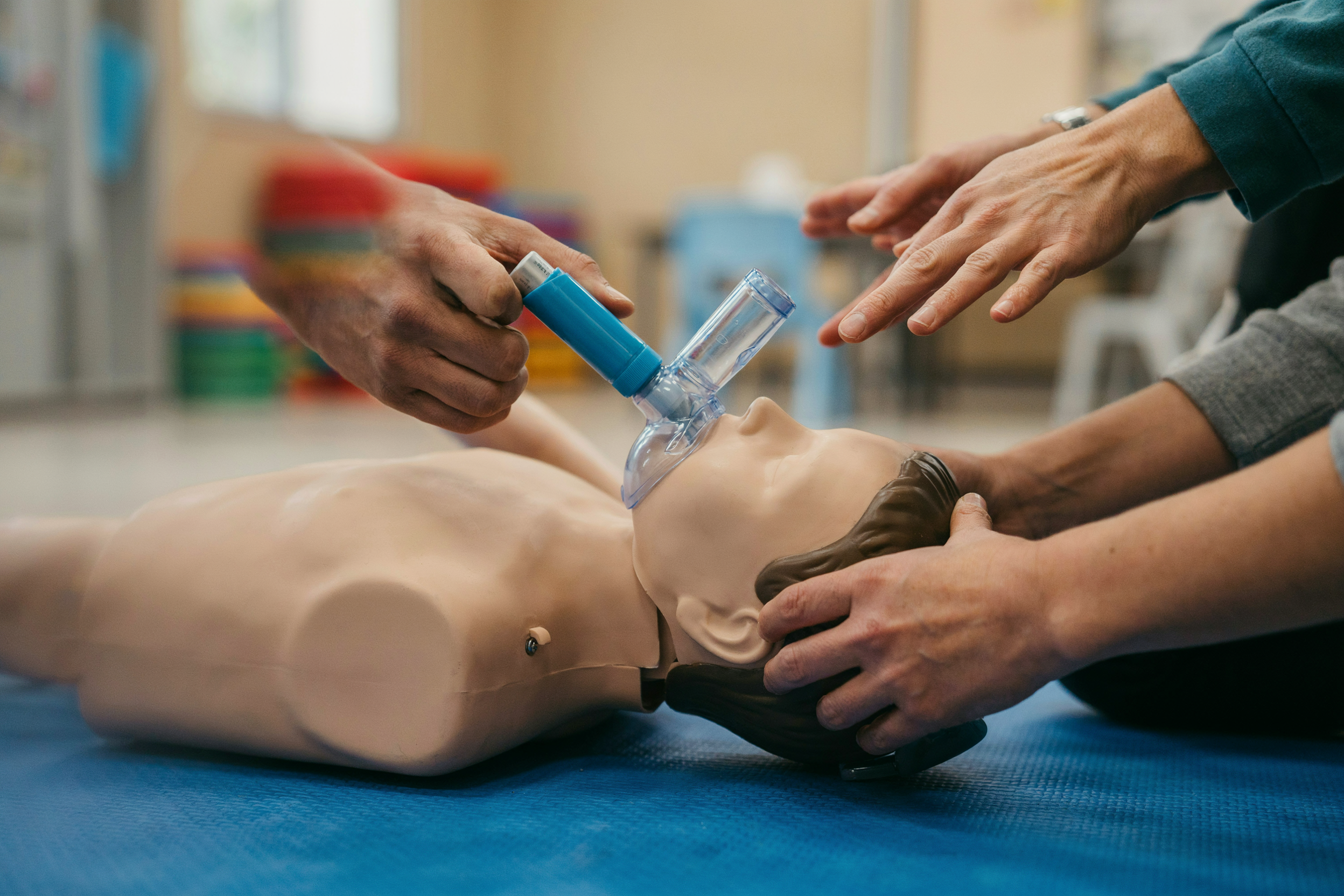
The good news is it doesn't take long. With blended asthma and anaphylaxis training, the theory gets done online at home, on a phone if that's easier. Then it's a face-to-face practical, hands on with the autoinjector trainer and the spacer, and they walk out with a same-day certificate.
For a casual who's lapsed, that means getting back on the roster as a trained person without a long wait.
The fix isn't remembering harder. It's a register that does the remembering for you.
How to Track Every Educator's Renewal Date
Here's where most services quietly come unstuck. Asthma and anaphylaxis certificate validity is easy to understand for one person. It's a lot harder across a whole team who all trained on different days, some of them before they even joined your service. That's not a memory problem. It's a system problem.
Build a simple training register
A good training register for childcare doesn't need fancy software. A spreadsheet does the job, as long as it has the right columns:
Name and role: permanent, casual or nominated supervisor
Course and code: anaphylaxis, asthma, HLTAID012, CPR
Completion date: straight off the statement of attainment
Three-year due date: completion date plus three years
CPR due date: completion date plus 12 months
Certificate link: a link to the saved copy, so you're never hunting for it
Then add some colour. Turn the row amber at 90 days out and red at 30 days. You open the sheet and the problems are just sitting there waving at you.
Use a renewal window, not a deadline
Treat the due date as the last possible day, not the day to start organising. A simple routine:
Check new casuals at onboarding. Get a copy of every certificate on day one and add it to the register straight away.
Watch for amber. When a row hits 90 days, that's your cue.
Book in the window. Aim to book renewals in the 60 to 90 days before the due date.
Update the register. New completion date in, new due date out.
Batch renewals around the school calendar
When a few educators are due in the same term, group them. Queensland pupil-free days and the April and June/July school holidays are perfect for this, because the service is quieter and you're not pulling people off the floor.
What to have ready for an assessment and rating visit
Keep it simple. Current certificates on file, your training register up to date, and rosters that show a trained person was on shift. If those three line up, you're in good shape.
When your register shows several renewals landing in the same term, that's the moment to book them together.
Renewing as a Team: Onsite Asthma and Anaphylaxis Training in Brisbane
Booking educators one at a time into public sessions works fine for the odd new casual. But when your register shows several people due in the same term, chasing individual bookings gets old fast. That's where onsite asthma and anaphylaxis training in Brisbane makes life a lot easier. Everyone renews together, everyone resets onto the same three-year cycle, and you've got one date in the register instead of a handful.
Train the whole team on a pupil-free day
For OSHC asthma anaphylaxis training, the sweet spot is a weekday at your service while the hall's empty. Pupil-free days work beautifully too. Nobody's travelling, nobody's giving up a day off, and the casuals are on paid time.
What the session covers
It's practical, hands-on stuff. Educators practise with autoinjector trainers and with a puffer and spacer, following the National Asthma Council Australia asthma first aid steps. They learn to spot the early signs of a reaction and what to do while waiting for the ambulance.
Conclusion
Imagine your next assessment and rating visit. Every educator's certificate is current, filed and sitting on one register. The amber rows got booked weeks ago, the casuals who started last term were checked on day one, and your team knows exactly what to do when a child's action plan comes into play.
Getting there is simpler than it sounds. Start by checking each educator's completion date and counting forward three years, so you know where everyone stands today. Then download the free training register and let it do the remembering for you. And when a few renewals land in the same term, book them together on a pupil-free day so the whole team resets onto one cycle.
Asthma and anaphylaxis certificate validity doesn't have to be the thing that keeps you up at night. Once it's on a register, it's just another date in the calendar.