Asthma and Anaphylaxis Certificate in Brisbane: 2026 Guide
An asthma and anaphylaxis certificate is one of the most requested bits of paper in Brisbane education and care, and most coordinators can tell you exactly when they last went hunting for one.
It's usually late January. New casuals start Monday, and you're at the sign-in desk with a stack of certificates that all look a bit different. One has one code, another has a different code, one was printed back in 2021 and nobody's sure it still counts. You check the dates twice and still end up messaging another coordinator to ask what she reckons.
Directors ask for this certificate at interviews, OSHC coordinators chase it from every new starter, and assessors want to see it at rating visits. There's a good reason for the fuss. Around 1 in 12 Australian children under 15 has asthma (ABS National Health Survey 2022) and about 1 in 10 infants has a food allergy (HealthNuts study), so most services care for kids with an action plan every single day. Not some days. Every day.
The confusing part is the certificate itself. Course codes have changed, providers list them differently, and it isn't always clear how long a certificate lasts or where it sits alongside HLTAID012.
This guide clears that up: what the certificate covers, which current codes to look for, how long it stays valid, what happens on the training day and how to get a whole team certified, including onsite sessions on a pupil-free day. Whether your booking for yourself or a whole team, you'll finish knowing exactly what to book and what to keep on file.
How Long Does an Asthma and Anaphylaxis Certificate Last?
An asthma and anaphylaxis certificate is considered current for 3 years from the date you complete the course. ACECQA, the national education and care regulator, treats approved asthma and anaphylaxis training as current if it was completed within the previous three years.
Asthma and anaphylaxis certificate: 3 years
CPR (HLTAID009): refresh every 12 months
First aid (HLTAID011 or HLTAID012): 3 years
Best practice for anaphylaxis skills: refresher every 2 years
Some services set a shorter cycle in their own policies, especially for educators who rarely handle an adrenaline autoinjector or spacer. Check the completion date on your statement of attainment and book your renewal a few weeks before it falls due.
Three years sounds like ages, but it's gone before you know it, and with casuals starting at different times you end up with certificates expiring all through the year. Our free expiry tracker does the counting for you.
What Is an Asthma and Anaphylaxis Certificate?
An asthma and anaphylaxis certificate is a nationally recognized statement of attainment showing you've completed accredited training in two of the most common medical emergencies around kids. If you've searched for an asthma anaphylaxis certificate in Brisbane, you've probably noticed it gets talked about like one course. It's actually two.
Two accredited courses, usually one session
One course covers anaphylaxis management, the other covers asthma risks and emergencies. They're almost always delivered together in one session, and you get one statement of attainment listing both. For a coordinator juggling a dozen folders, that's a small win but it's a win.
Current course codes (and why older certificates show different ones)
This is where most of the confusion comes from. The courses have been updated and given new codes, so an older certificate won't match one issued today.
Area | Older code | Current code | What it covers |
Anaphylaxis | 22300VIC | 22578VIC (VU23090, VU23091) | First aid and risk minimization for anaphylaxis |
Asthma | 22556VIC | 22702VIC | Asthma risks, emergencies and first aid |
So if a new casual person hands you a certificate with 22300VIC or 22556VIC on it, don't panic. It doesn't automatically make them non-compliant. Check the completion date, then check the code against ACECQA's approved list.
What's printed on the certificate
A proper certificate shows the learner's name, the course codes and titles, the completion date, and the RTO name and number (for us, RTO 31106). "Statement of attainment" just means the official record that you've completed accredited units or courses, rather than a full qualification. It's what assessors and employers actually want to see.
Knowing what the certificate is matters less than knowing whether your role needs it.
Who Needs an Asthma and Anaphylaxis Certificate in Queensland?
The short answer is anyone looking after kids where an asthma attack or allergic reaction could happen. Some settings have it written into the rules, others just do it cause it's the right thing to do.
Education and care services (long day care, kindy, family day care, OSHC)
This is where the requirement is clearest. Under Regulation 136 of the Education and Care Services National Regulations, a center-based service needs trained people in attendance and immediately available in an emergency, at all times children are being cared for, including:
"at least one educator who holds a current approved first aid qualification"
"at least one educator who has undertaken current approved anaphylaxis management training"
"at least one educator who has undertaken current approved emergency asthma management training"
Most services go well past the minimum, because one trained person doesn't help much if they're across the playground or out on an excursion. For OSHC services on school grounds, check how your own service approval applies. Our requirements guide and OSHC training guide go into it properly.
Schools, tuckshops and camps
Teacher aides, tuckshop convenors, camp staff and sports coordinators are all around kids with action plans, often where help is further away.
Junior sport, swim schools and community groups
Volunteer coordinators, coaches and team managers. These groups are often run by parents giving up their weekends, and the certificate gives them confidence to act instead of freezing.
Educators and job seekers booking for themselves
Uni students starting casual OSHC work are a classic example, and lots of job ads now list the certificate as a must-have. Having it on your resume can be the difference between getting the shift and not.
Asthma and Anaphylaxis Certificate vs HLTAID012: Do You Need Both?
This is probably the question coordinators ask most, cause the answer isn't obvious from the course names.
HLTAID012 is the first aid course built for education and care. It's on ACECQA's approved list and generally recognized as covering the first aid, anaphylaxis management and emergency asthma management approvals in one go. So if an educator holds a current HLTAID012 from an ACECQA approved course, they usually don't need a separate asthma and anaphylaxis certificate. Always check the specific course against ACECQA's list though.
The standalone asthma and anaphylaxis certificate is the right booking for:
staff without HLTAID012, like newer casuals who haven't done full first aid yet
keeping skills sharp between first aid renewals, especially for anaphylaxis
non-educator staff, like cooks, admin and bus drivers around at-risk kids every day
sport and community groups who want the specific skills without a full first aid course
HLTAID012 | Asthma and Anaphylaxis | HLTAID009 CPR | |
Covers | First aid in education and care | Anaphylaxis and asthma management | CPR only |
Typical buyer | Educators needing full first aid | All staff around at-risk children | Annual refresh for everyone |
Currency | 3 years | 3 years | 12 months |
Compliance gets you through the door. The skills are what matter on a stormy Tuesday afternoon.
What You'll Learn: The Skills Behind the Certificate
The certificate is the paperwork. What matters is what's in your hands and your head when a kid starts struggling to breathe.
Recognizing and responding to anaphylaxis
Anaphylaxis can move fast, so the first skill is spotting it early. Signs in children, as listed by ASCIA, include:
hives or welts on the skin
swelling of the lips, face or eyes
vomiting in a child with a known allergy
a change in voice, like hoarseness or difficulty talking
difficult or noisy breathing
Then you learn the ASCIA response. Lay the person flat. Don't let them stand or walk, and if breathing is difficult let them sit with legs outstretched. Give the adrenaline autoinjector, then call triple zero.
That first step catches people out. Every instinct says walk them to the office, but standing can make things much worse. You'll also practice with trainer devices for the brands families actually bring in, cause the moment you hesitate is usually when you're holding a device that looks different to the one you practiced on.
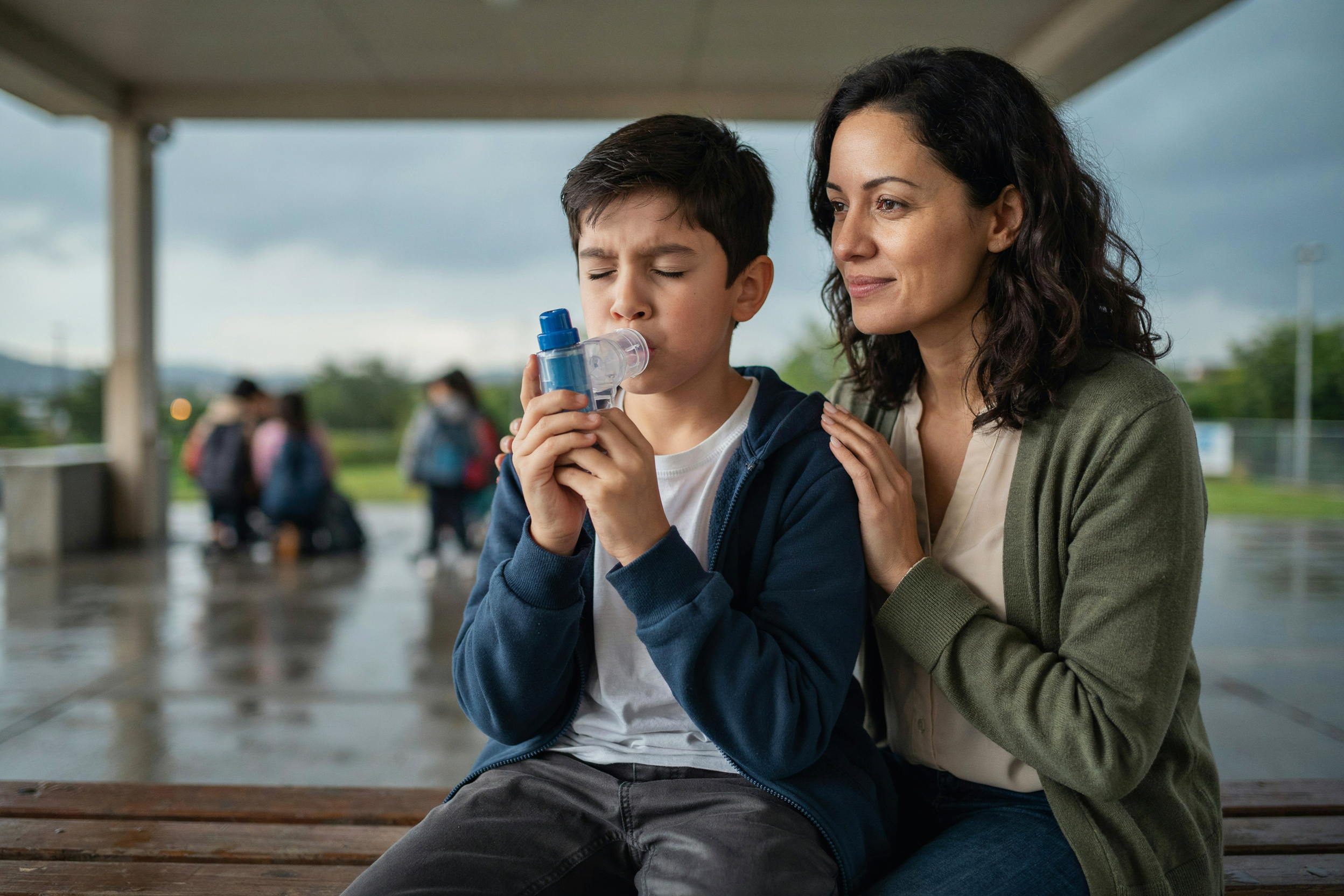
Asthma first aid with a puffer and spacer
Asthma is the one you'll see most, and the National Asthma Council's 4x4x4 steps are the backbone of it:
Sit the person upright, stay with them and be calm and reassuring.
Give 4 separate puffs of a blue or grey reliever puffer through a spacer. Shake the puffer, put 1 puff into the spacer, take 4 breaths, and repeat until 4 puffs are taken.
Wait 4 minutes. If they still can't breathe normally, give 4 more puffs.
If they still can't breathe normally, call triple zero and keep giving 4 puffs every 4 minutes until help arrives.
You'll also learn when to skip straight to triple zero, like when the person isn't breathing, is getting worse quickly, or there's no reliever on hand.
Risk minimization and planning
A good chunk of the course is about stopping emergencies before they happen. Reading action plans, storing medication properly, checking expiry dates, and managing allergens at afternoon tea and cooking activities. It's the boring stuff, and its the stuff that keeps the bad days rare.
Brisbane-specific scenarios
Summer storms, high pollen periods and smoke days can all push up the number of kids reaching for puffers on the same afternoon. Thunderstorm asthma is linked to storms during grass pollen season, so it's worth having a plan even though the big documented events have mostly been down south. Vacation care adds pools, parks, cinemas and bus trips, where medication has to travel with the group and help can be further away.

How to Get Your Asthma and Anaphylaxis Certificate in Brisbane
Getting your asthma and anaphylaxis certificate in Brisbane is simpler than most people expect. Our asthma and anaphylaxis course Brisbane sessions are blended, so the theory happens on your own time and the face-to-face part is all hands-on.
Choose your session. Book a public session, or request an onsite group session for your team.
Complete the online theory on your phone. No printer needed.
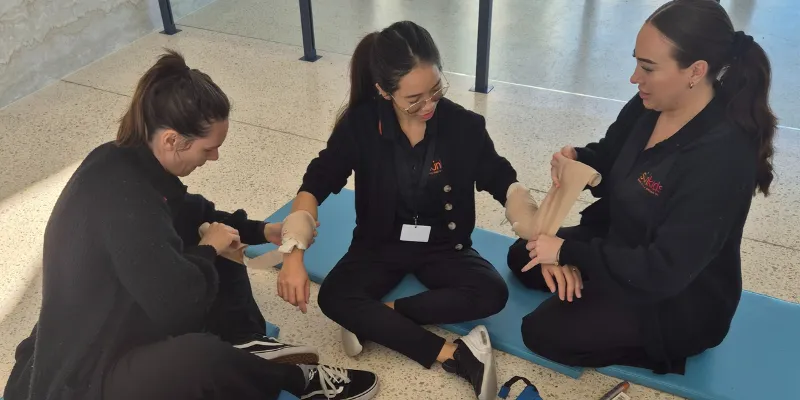
Attend the face-to-face practical. This is where you get hands-on with the trainer devices.
Complete the practical assessment with autoinjector and spacer trainers.
Receive your statement of attainment, ready to file.
A tip from experience: do the online part the week you book, not the night before. You'll walk into the practical already knowing the steps.
What to bring
photo ID
your USI (Unique Student Identifier)
your completed online module
Booking one person is simple. Training a whole team without losing a day of care takes a little more planning.
Getting a Whole Team Certified
Booking a big team into public sessions one by one gets messy fast. Different dates, people forgetting, certificates landing at different times.
Onsite sessions at your service
With onsite asthma and anaphylaxis training in Brisbane, the trainer comes to you. Your team practices in the room they actually work in, which makes the scenarios feel a lot more real. The best times are weekday daytime between care sessions, when the room is empty, or pupil-free days, when the whole team is on paid hours anyway. Pupil-free days are honestly the sweet spot. Nobody's giving up a day off and everyone walks out on the same certification cycle.
Small teams and new starters
For smaller teams, public sessions are usually easier. They also suit new casuals, because you can slot each new starter into the next recurring session.
Quotes and invoicing for providers
Fill in the quick quote form and the invoice can go straight to your provider. If your organisation runs several services, ask about a network arrangement.
Once everyone's trained, the next job is making sure nobody quietly drops off the list.
Keeping Certificates Current and Ready for Assessment Visits
Keeping track of everyone for the next three years is the bit that usually falls through the cracks. It doesn't need a fancy system though.
Build a simple training register
Educator | Course | Code | Completion date | Expiry date | Certificate on file |
Sam | Asthma and Anaphylaxis | 22578VIC, 22702VIC | 03/02/2026 | 03/02/2029 | Yes |
Priya | First aid | HLTAID012 | 14/07/2025 | 14/07/2028 | Yes |
Tom | CPR | HLTAID009 | 20/01/2026 | 20/01/2027 | No, chasing |
That last column is the one that saves you. When an assessor asks for evidence, you want the actual certificate filed, not just a note saying someone did the course.
Verifying a new casual's certificate
Check the codes against ACECQA's approved list, check the completion date is inside the three years, and confirm with the issuing RTO if anything looks off.
Renewal reminders
Asthma and anaphylaxis certificate renewal works best when you plan ahead. Book a few weeks before expiry, because sessions fill up fast before each term, and group renewals by term so everyone's back on the same cycle.
Wrapping Up
An asthma and anaphylaxis certificate isn't nearly as confusing as it first looks. It's two accredited courses, usually done together, with one statement of attainment listing both.
It stays current for three years. CPR needs doing every year, and a two-yearly refresher is good practice if your team rarely handles autoinjectors.
Older certificates with 22300VIC or 22556VIC on them aren't a reason to stress. Check the date and the ACECQA list.
Getting certified is straightforward: online theory, then a hands-on practical. For a team, a pupil-free day onsite session keeps everyone together.
Keeping it current is where most services slip, because certificates expire at different times. A simple register fixes that.
Think about your next assessment visit with every certificate current, tracked and filed in one place.
Whether it's your own asthma and anaphylaxis certificate in Brisbane or a whole team, pick the next step below.