Asthma and Anaphylaxis Accredited Training in Brisbane
A storm rolls over Mount Gravatt at 4pm. Two kids reach for their relievers at the same time, and the educator standing closest to them only started on Monday.
Every OSHC coordinator in Brisbane has heard some version of it from a new casual on their first shift: "Yeah, I've already done an asthma and anaphylaxis course." The harder part is knowing if it was actually asthma and anaphylaxis accredited training, delivered by a registered training organisation, under a course code your service can record and show an assessor.
And that question matters every afternoon. Around one in ten Australian children has asthma, and the rate is highest among primary school-aged kids (AIHW), which is the same kids filling OSHC halls and vacation care buses. Add in the children with an ASCIA Action Plan for anaphylaxis, and every educator on the floor needs to know what to do, not just the ones who've been there the longest.
This guide walks through what makes asthma and anaphylaxis training accredited (and ACECQA-approved), which course codes are current in 2026, how it fits alongside HLTAID012, and what a blended or onsite session at your own service actually looks like. You'll also find a quick way to check whether an educator's existing statement of attainment is still good, and how to get your whole team trained without chasing casuals for weeks.
What Is Accredited Asthma and Anaphylaxis Training?
Accredited asthma and anaphylaxis training is nationally recognized training delivered by a registered training organisation (RTO). It leads to a Statement of Attainment in two accredited courses: one covering anaphylaxis first aid and one covering asthma risks and emergencies. For education and care services, the course also needs to appear on ACECQA's approved list.
Accredited training includes:
A current national course code for each condition
Hands-on practice with adrenaline autoinjector trainers and a puffer and spacer
A practical assessment by a qualified trainer
A Statement of Attainment that show the RTO number and course codes
Recognition by employers right across Australia
Why Accredited Training Matters for Brisbane Education and Care Services
When you're the one keeping the training register, "close enough" doesn't really cut it.
The tricky bit is that three different labels get thrown around for OSHC asthma anaphylaxis training as if they all mean the same thing. They don't.
Accredited, nationally recognised and ACECQA-approved are not the same thing
Accredited: the course has a national course code and is listed on training.gov.au
Nationally recognised: it's delivered and assessed by an RTO that has that course on its scope
ACECQA-approved: the course appears on the NQF approved list, and accredited courses are generally approved for five years
Your service needs all three. A course can tick one or two boxes and still leave you short. That's why accredited asthma and anaphylaxis training is only the starting point, not the whole answer.
What the regulations ask of your service
The asthma and anaphylaxis requirements for childcare in Queensland come from the national framework, not a separate state rule. Regulation 136 of the Education and Care Services National Regulations says educators holding approved anaphylaxis management training and approved emergency asthma management training have to be on the premises, and on excursions, whenever children are being cared for.
The approved courses themselves change over time, so go straight to ACECQA's first aid and asthma and anaphylaxis training page rather than relying on anyone's summary, ours included.
Where ASCIA's free e-training fits
ASCIA offers free anaphylaxis e-training for education and care. It's good, and plenty of educators do it first.
What accredited training adds is the bit you can't get from a screen: hands-on practice with trainer devices, a practical assessment by a qualified trainer, and a Statement of Attainment that goes on your register. Check what your own provider accepts, because policies differ between organisations.
Knowing what counts is the first step. The second is knowing which course codes you should see on a certificate in 2026.
Current Asthma and Anaphylaxis Course Codes in 2026
If you've been searching for 22300VIC or 22556VIC in Brisbane, you're not alone. Those codes are still printed on plenty of certificates sitting in staff files, and some providers still advertise them. Both have been replaced, though.
The anaphylaxis course
22300VIC was replaced by 22578VIC Course in First Aid Management of Anaphylaxis. Its published accreditation period ran from 1 July 2021 to 30 June 2026, so check training.gov.au for its current status.
The asthma course
22556VIC was replaced by 22702VIC Course in the Management of Asthma Risks and Emergencies, accredited from 1 January 2026 to 31 December 2030. The new course isn't marked as equivalent to the old one, so it's a fresh course, not just a new number on the same thing.
Old code | Current code | Accredited period | Equivalent | Covers |
22300VIC | 22578VIC | 1 July 2021 to 30 June 2026 | Check training.gov.au | Anaphylaxis first aid |
22556VIC | 22702VIC | 1 January 2026 to 31 December 2030 | No | Asthma risks and emergencies |
What this means for certificates already on file
An asthma anaphylaxis certificate issued in Brisbane under an older code isn't automatically worthless. Whether it still counts depends on when it was issued and what your provider and ACECQA accept. Check each educator's Statement of Attainment against the table above, so you're not guessing your way down the spreadsheet.
Course codes tell you a course is accredited. What your educators actually practise on the day is what matters at 4pm on a stormy afternoon.
What You Learn in Accredited Asthma and Anaphylaxis Training
Reading an action plan on the noticeboard is one thing. Doing it with a frightened child in front of you, while the other kids are watching and someone's calling triple zero, is something else entirely. Accredited training is built to close that gap, so your educators have already done it with their hands before they ever need to do it for real.
All clinical content in the course follows ASCIA for anaphylaxis and the National Asthma Council Australia for asthma. For exact steps and doses, the official charts are always the source to go to.
Anaphylaxis skills
Recognising allergic reactions and the signs of anaphylaxis in children
Following a child's ASCIA Action Plan step by step
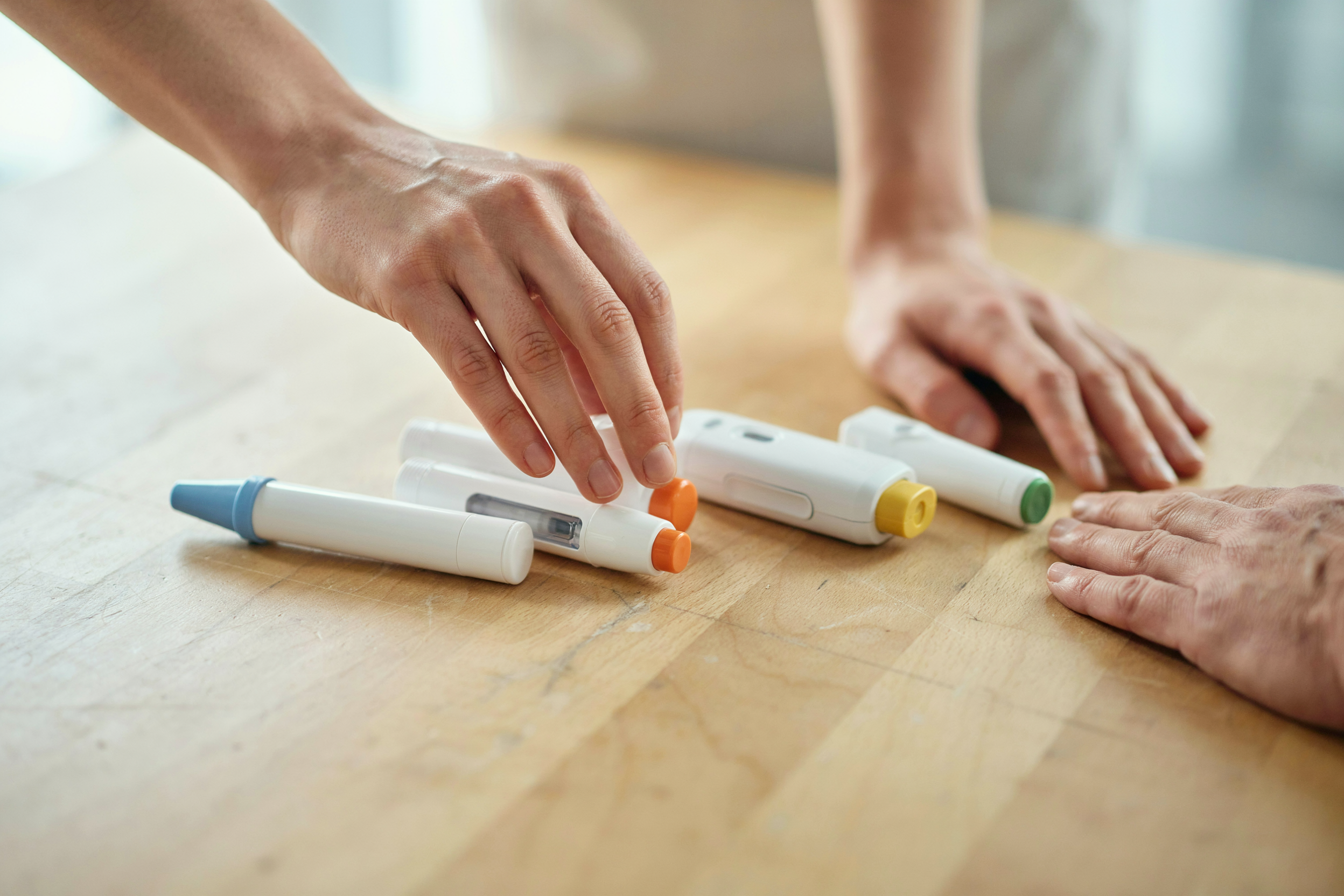
How to use an adrenaline autoinjector with trainer devices, including the different devices families supply
Risk minimisation around food activities, afternoon tea and excursions
The device part matters more than people expect. Families don't all bring in the same autoinjector, and an educator who's only ever practised on one type can hesitate when a different one turns up in a child's medication bag.
Asthma skills
Recognising mild, moderate and severe asthma
The asthma first aid steps, using a puffer with a spacer
Managing reliever and spacer stock, and keeping emergency kits up to date
Knowing how to use a puffer with a spacer sounds simple until you're doing it with a child who's struggling to breathe and can't sit still.
Brisbane conditions your team should be ready for
Summer storms and thunderstorm asthma, when several kids can need their relievers at once
Pollen season, which pushes up the number of children reaching for puffers
Smoke days, when air quality drops and asthma flares
Vacation care excursions to pools, parks, cinemas and on bus trips, where medications has to travel with the group
Excursions are where the plan gets tested. A reaction at the pool or an asthma attack on the bus means your educator is working without the hall, the first aid cupboard or a second set of hands nearby.
Most coordinators then ask the same question: our educators already hold HLTAID012, so do we need this as well?
How HLTAID012 Fits Alongside Asthma and Anaphylaxis Training
It's a fair question, and it comes up in nearly every booking call. If your educators already hold HLTAID012 Provide First Aid in an Education and Care Setting, you don't want to book training they don't need.
What HLTAID012 covers
The ACECQA approved list has the final say here, not a provider's website. If HLTAID012 is listed as approved for asthma and anaphylaxis, educators who hold it are covered, and standalone training still suits non-educator staff, staff between renewals and teams wanting a dedicated hands-on session. If it isn't, your educators need the two accredited asthma and anaphylaxis courses alongside it.
When standalone training makes sense
Casual new starters who need to be trained before their first solo shift
Tuckshop, admin and bus staff
Sports and swim coordinators
Educators refreshing their skills between first aid renewals
Once you know which courses your team needs, the real puzzle is fitting the training around rosters, casuals and school terms.
Blended, Public Session or Onsite: Choosing a Training Format
There's no single right way to get a team trained. It depends on how many people need it, when they're rostered, and whether you can get everyone in one room at the same time.
Blended learning
A blended asthma and anaphylaxis course splits the training in two. Educators do the online theory at home, on their phone, whenever it suits them, then come in for a short hands-on practical. It suits casuals, because most of it fits around uni.
Public sessions for new starters
When you've only got one or two new casuals, a public session is usually the simplest answer. They book a spot, turn up for the practical, and they're done.
Onsite sessions at your service
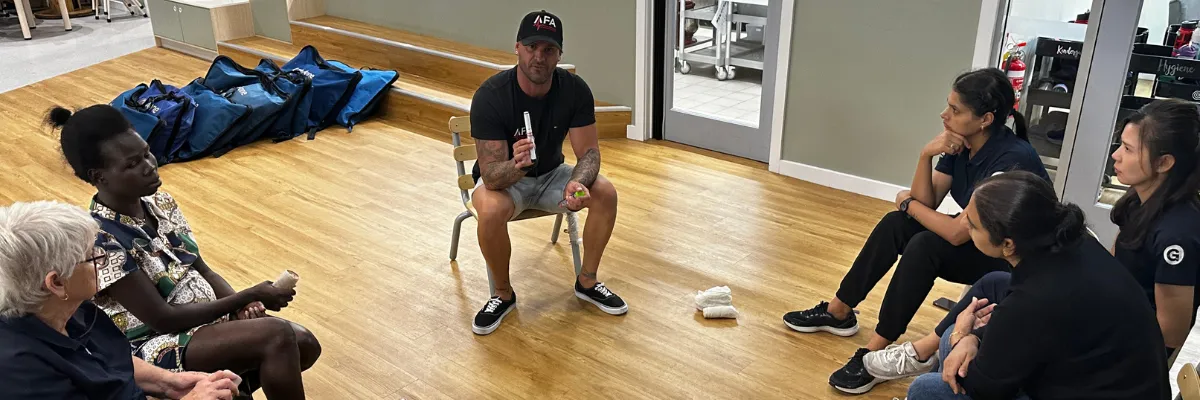
Onsite asthma and anaphylaxis training in Brisbane suits a bigger group. The trainer comes to you, and your team practises in the same hall where they'll actually be working.
When: weekdays between 9am and 2pm while the service is empty, or on a pupil-free day
Billing: invoiced to your provider
Best months: late January before term 1, the April and June/July school holidays, and pupil-free days through the year
Why online-only isn't enough
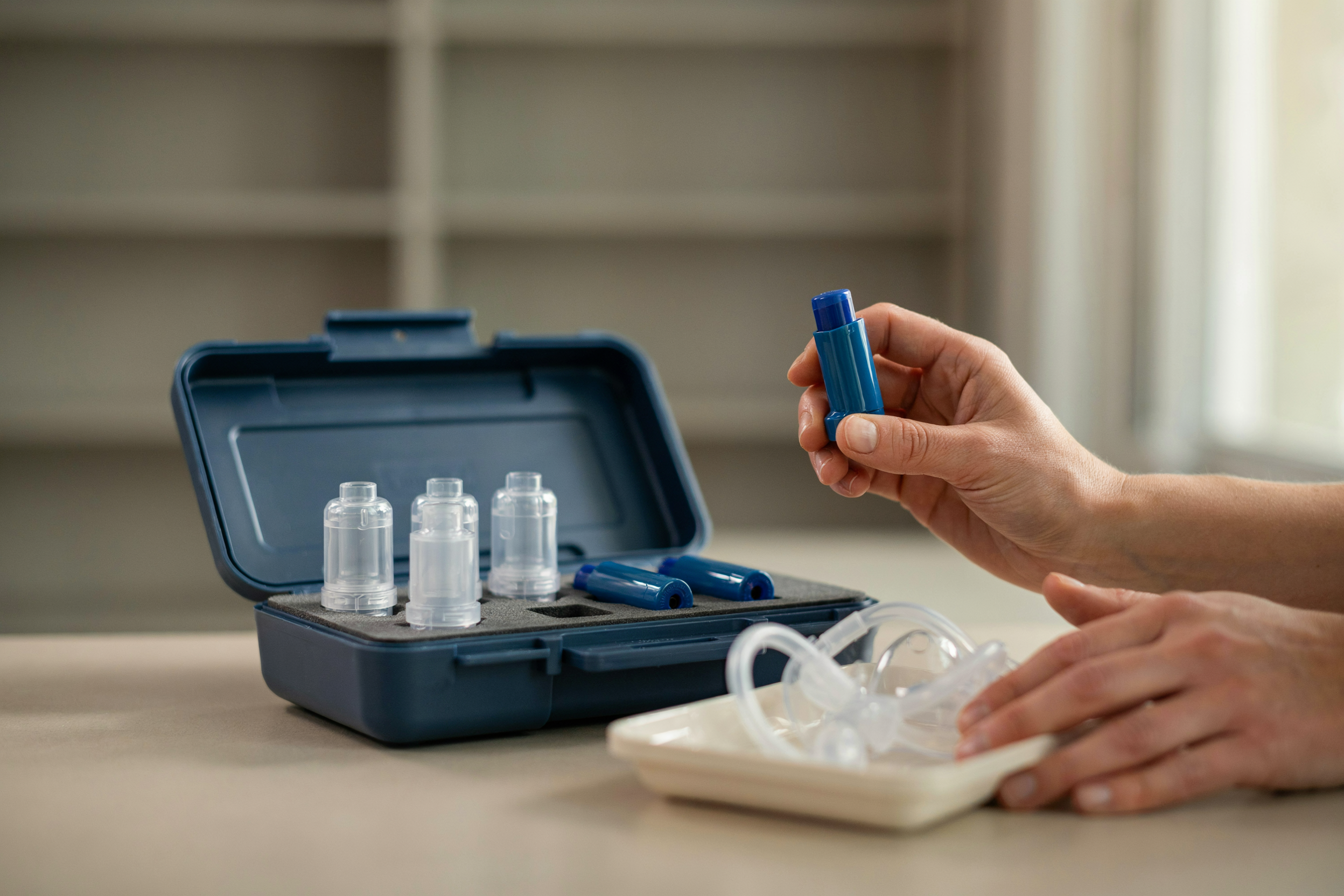
Accredited courses include a practical assessment with trainer devices, so a fully online course can't give you the same result. Your educators still won't have held an autoinjector trainer or used a spacer before the day they really need too.
Format | Best for | How it works |
Blended | Casuals juggling uni and work | Online theory on a phone, then a short practical |
Public session | One or two new starters | Book individually and attend a scheduled practical |
Onsite | Whole teams | Trainer comes to your service on a weekday or pupil-free day |
Whichever format suits your team, it's only worth booking if the provider is properly accredited. Here's how to check before you book.
How to Check an Asthma and Anaphylaxis Provider Is Accredited
The best asthma and anaphylaxis course in Brisbane isn't automatically the one with the slickest website. It's the one that gives your service a certificate that holds up when an assessor asks to see it.
To check whether a first aid provider is accredited, look up their RTO number on training.gov.au, confirm the current course codes are on their scope, and make sure the course is on ACECQA's approved list.
Five checks before you book
RTO number. It should be shown clearly and listed as active on training.gov.au.
Current course codes. Both current codes should be on the RTO's scope of registration, not just one.
ACECQA approval. The course should be listed on the NQF approved list.
Practical component. There should be hands-on practice with real trainer devices.
Statement of Attainment. The certificate should show the RTO number, the course codes and the issue date.
Get the free Asthma and Anaphylaxis Team Readiness Kit. It includes this provider checklist, an expiry tracker, an excursion medication checklist and a pupil-free day term planner.
Red flags
No RTO number anywhere on the website or booking page
Only old codes advertised, such as 22300VIC or 22556VIC, with no mention of the replacements
"100% online" with no practical component at all
Vague certificate timing
That last one catches people out. If you're comparing providers for an asthma and anaphylaxis course with a same day certificate, ask exactly when and how the certificate gets issued.
Once you've got your checklist sorted, here's how Accelerate First Aid stacks up against it, and what training your Brisbane team with us actually looks like.
Getting Your Brisbane Team Trained with Accelerate First Aid
Those five checks are the same ones we'd want you to run on us. Accelerate First Aid is RTO 31106, listed on training.gov.au, and the current course codes are shown on our course page. Every session includes hands-on practice with autoinjector trainers and a puffer and spacer.
Asthma and anaphylaxis training in Brisbane with us is easy to book. You can book individuals online, or get a group quote for your whole team.
We deliver onsite sessions at services, so your team can train in the same hall they work in every afternoon. Here's how an onsite session runs. Your educators do the online theory on their phones beforehand, the trainer comes to you on a weekday or pupil-free day, and the team practises and completes the assessment together, with the invoice going to your provider.
If your organisation runs several services around Brisbane, we can set up training across all of them.