Anaphylaxis Risk Minimization Training: Full Guide
A new enrolment form lands on your desk with an EpiPen action plan clipped to it, and you already know two of your educators' certificates lapsed months back. That's not some hypothetical scenario you read about in a compliance newsletter. That's a Tuesday afternoon, and it comes with real legal exposure attached to it.
Anaphylaxis risk minimization training is the specific, ACECQA-recognized qualification (22300VIC) that closes that gap. Not generic first aid, and not a "she'll be right" refresher course either, this is nationally accredited training, built specifically around identifying, managing, and documenting anaphylaxis risk under Australia's Education and Care Services National Regulations.
This guide walks you through what the training actually involves, which unit codes genuinely satisfy your regulatory obligation, how renewal works, and how you get your whole team compliant without pulling your center out of proportion. If you're staring down an assessment visit, or a new enrollment with an allergy plan sitting in your inbox right now, you'll come away knowing exactly what's required.
What Does Anaphylaxis Risk Minimization Training Actually Cover?
Here's the thing about 22300VIC, it's not a watered-down version of first aid with a different name slapped on it. It's built around one specific job: making sure your team can recognize, plan for, and respond to a child's individual anaphylaxis risk, and prove they've done it properly.
Recognizing Triggers, Signs & Symptoms
This is the foundation. Educators learn what actually triggers a reaction (food is the big one in a childcare setting, but insect stings and other allergens come into it too), and just as important, what the early warning signs look like before things escalate. A rash and some sniffles can look pretty ordinary until you know what you're watching for.
Reading and Applying an ASCIA Action Plan
Every child with a diagnosed allergy or anaphylaxis risk should come to your center with an ASCIA Action Plan from their doctor. Staff need to be able to read one of these under pressure, not just file it away in a folder. The training walks through matching the plan to the child, to the symptoms in front of you, and to the right response.
EpiPen / Adrenaline Auto-Injector Technique (Practical Component)
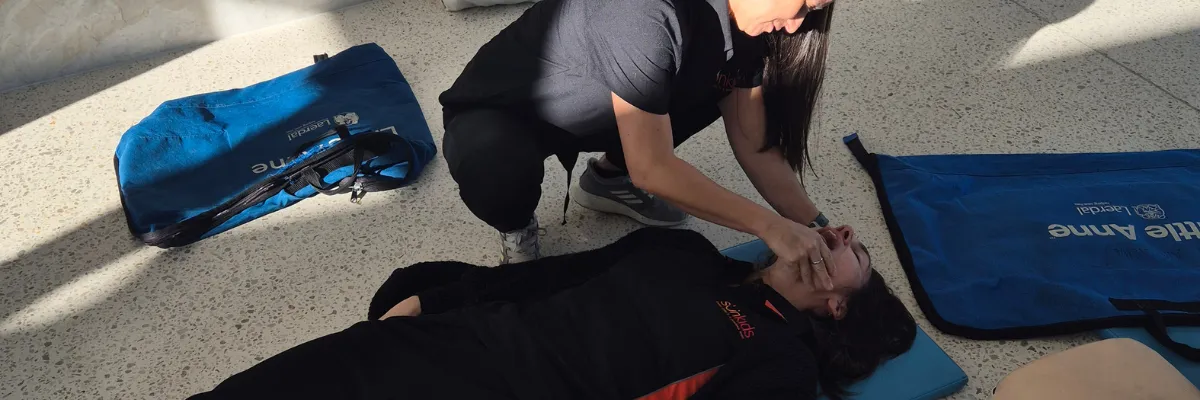
This bit isn't theory. It's hands-on, face-to-face practice with an adrenaline auto-injector trainer device, because knowing the steps on paper and actually being able to do it under pressure, with a real child in front of you, are two very different skills.
Building a Child-Specific Risk Minimization Plan
The regulatory fact that drives all of this: every child diagnosed with an allergy or anaphylaxis risk must have an individualized risk minimization plan, and it has to be understood by every staff member who might be caring for that child, not just their primary educator. The training gives your team the skills to actually build and apply one of these plans, not just read about them in a manual.
It's worth being upfront about one thing: this training and HLTAID012 (Childcare First Aid) aren't the same course covering the same ground twice. They're complementary, not interchangeable, and a lot of center's end up needing both. For the full breakdown of how they differ, see our HLTAID012 childcare first aid course page.
For more detail on prevention strategies, the ASCIA Guidelines for Prevention of Anaphylaxis in Schools are a solid external reference your team can lean on.
Knowing what the training covers is one thing. Understanding why it's a legal requirement, not optional best practice, is what actually protects your center.

Why Risk Minimization Plans Are a Legal Requirement, Not a Best-Practice Suggestion
This is the part that keeps directors up at night, and honestly, it should be treated with that level of seriousness. This isn't a "nice to have" or something a center does because it looks good on an assessment. It's the law.
The Education and Care Services National Regulations 2011
Under the Education and Care Services National Regulations 2011, centers are required to have a documented risk minimization plan for every child with a diagnosed allergy or anaphylaxis risk, and that plan needs to be developed in consultation with the child's parents.
There's another piece that catches a lot of centers out: at least one staff member with current, approved anaphylaxis management training needs to be present at all times when a child at risk is in attendance. Not just rostered somewhere in the building. Present. This is exactly why casual and relief staff can't be an afterthought in your training plan. If the only certified educator calls in sick, you've got a genuine compliance gap on your hands, not just an inconvenience.
What ACECQA Assessors Actually Check For
📋 What an ACECQA assessor will ask to see:
A current, individualized risk minimization plan for each child at risk
Evidence that the plan was developed in consultation with parents
Staff training records showing current 22300VIC certification
Confirmation that a trained staff member is rostered whenever an at-risk child is present
Evidence the plan has been reviewed within the required timeframe
What Happens If a Centre Isn't Compliant
We won't dress this up with scare tactics, because the facts speak for themselves. A center found non-compliant with anaphylaxis risk minimization requirements can face a range of consequences from the regulatory authority, from compliance directions through to more serious ratings and enforcement action, depending on the severity and whether it's a repeat finding. For the full detail on what assessors look for, the ACECQA national regulations guidance page is the authoritative source.
The practical reality for you as a director is simpler than the legal language makes it sound: keep your plans current, keep your training current, and keep the documentation ready to produce on short notice. That's genuinely most of the battle.
Once the regulatory obligation is clear, the next question is practical: what do you actually do when a new enrollment lands on your desk?
How to Build a Risk Minimization Plan for a Specific Child
This is probably the section you'll come back to. Because when a new enrolment form lands with an EpiPen action plan attached, "know the regulation" doesn't help you as much as "know exactly what to do this week."
Step 1: Get the ASCIA Action Plan from Parents
Before anything else happens, you need the ASCIA Action Plan from the child's doctor. This is the document everything else in the process hangs off, it names the specific allergens, the specific symptoms to watch for in that child, and the specific response required. No plan should be built from memory or from what a parent mentioned in passing at drop-off.
Step 2: Meet with Parents to Discuss Service-Specific Risks
The ASCIA plan covers the medical side. What it doesn't cover is your center: your kitchen, your excursion routine, your birthday cake policy. That's why the regulations require the risk minimization plan to be developed in consultation with parents, so you can talk through the specific risks that exist in your service and agree on how they'll be managed.
Step 3: Document Strategies Across the Whole Centre
Once you've talked it through, the strategies need to be written down and shared, not sitting in one educator's head. Some real examples pulled from ASCIA/AAA risk minimization guidance:
Food sharing: no swapping of lunches, snacks, or treats between children, enforced as a whole-center rule, not just for the at-risk child
Food-handling in activities: checking ingredients before cooking, craft, or sensory activities that involve food products (think play dough, empty egg cartons, that sort of thing)
Labelled lunch storage: at-risk children's food kept separately and clearly labelled, so there's no mix-up during meal service
One thing worth being upfront about: the training certifies your staff to build and apply these plans properly. It doesn't replace the parent consultation step. That conversation still has to happen, every time.
Step 4: Review Regularly, and Immediately After Any Reaction
Plans aren't a set-and-forget document. They need to be reviewed with parents, and immediately after any reaction, even a minor one. Circumstances change, a child's diagnosis can shift, a center's routine can change, and the plan needs to keep up.
If you're dealing with a new enrollment right now and want the fuller picture, we've put together a guide specifically for this moment: "A Child with Anaphylaxis Is Starting at Your Centre, Here's What Your Team Needs."
A risk minimization plan isn't a set-and-forget document, and neither is the training behind it.

Keeping Anaphylaxis Risk Minimization Training Current
Certification isn't something you complete once and file away. Regulations and best-practice guidance both expect this training to stay current, and that means having a system for tracking it, not just hoping everyone remembers on their own.
Full-time staff are one thing to track. Casuals and relief educators who pick up the odd shift here and there are a different story entirely, and they're exactly the staff most likely to slip through the cracks on renewal, right up until the day they're the only certified person on shift.
Think of certification a bit like a smoke alarm. Nobody waits for it to fail before checking it. Anaphylaxis response is the same kind of skill, it needs to stay sharp, not just stay valid on paper. If chasing this manually across a roster with turnover sounds exhausting, that's because it is, and it's exactly the kind of thing a renewal reminder system is built to take off your plate.
Understanding renewal is only useful if booking your team is actually simple, here's how that works for Gold Coast centers.
Getting Your Whole Team Compliant
Why One-by-One Booking Doesn't Work for Centers
If you've ever tried to book six or eight staff into individual training slots one at a time, chasing dates, chasing payment, chasing certificates afterward, you already know why this doesn't scale. Every extra step is another chance for someone to fall through the cracks, and for a director already juggling rosters and ratios, that's an admin you don't have spare hours for.
What a Group Booking Session Looks Like
A group booking session is built the opposite way, designed around getting a whole team compliant in one hit, not staff member by staff member. You add your educators to one booking, pay once, and everyone walks out certified together, with individual certificates issued for your compliance file.
Certificates for Your Compliance File
This matters more than it might sound like on paper. When you've got an ACECQA assessment coming, or a new enrolment with an allergy plan attached, you want your compliance file up to date and ready to hand over, not sitting somewhere half-finished.
Conclusion
Every child with a diagnosed allergy deserves a team that knows exactly what to do when it matters, not a team that's hoping it never comes to that. Anaphylaxis risk minimization training gives your educators the actual skills to recognize a reaction early, read an ASCIA plan under pressure, and use an adrenaline auto-injector correctly when there's no time to second-guess themselves.
The skills side is only half of it, though. As a director, you're also carrying the compliance side of this on your shoulders, and that part doesn't ease up just because your staff are confident. A current risk minimization plan for every at-risk child, training records that are actually up to date, and evidence ready to hand over the moment an assessor asks for it, that's the difference between a stressful morning and a genuine problem.
The good news is none of this has to be a last-minute scramble. Once you know the regulatory requirement, the process for building a plan with parents, and how to keep renewal on track across a roster with casuals and relief staff, it becomes a system you manage rather than a fire you're constantly putting out.
If there's one thing worth taking away from all of this, it's that a new enrollment with an allergy plan attached shouldn't feel like a crisis. It should feel like a checklist you already know how to work through, because your team's already been trained for exactly this moment.
Getting your whole center certified doesn't need to mean pulling staff out one at a time or losing time waiting on paperwork. A group booking session gets everyone compliant together, with certificates ready for your file.
If your team's certificates have lapsed, or a new enrollment is sitting on your desk right now, the fastest way through it is to get booked in. Group bookings for Gold Coast centers are built to take the admin off your plate, not add to it.