Complete Allergy Emergency Preparedness Course Guide for Gold Coast Childcare Professionals
It's 2:30 PM at your Gold Coast childcare center when 4-year-old Emma suddenly starts wheezing after snack time. Her lips are beginning to swell, and panic sets in. Do you feel confident in your ability to respond quickly and correctly, or does your stomach drop with uncertainty?
Sarah, a director at a Robina center, told me: "I've got my certificate on the wall, but when I'm actually faced with a child having an allergic reaction, I second-guess everything. What if I mess up the EpiPen?"
With over 250,000 Australians living with severe food allergies and childhood allergy rates continuing to climb, proper emergency preparedness training isn't just recommended - it's essential for every childcare professional.
Having the right allergy emergency preparedness course training can mean the difference between feeling helpless and feeling genuinely prepared to save a child's life. Here on the Gold Coast, where we're dealing with unique environmental factors like beach allergens and visiting families, that preparation becomes even more important.
This guide covers everything you need to know about allergy emergency preparedness courses, focusing on the mandatory 22300VIC and advanced 22556VIC certifications required for Gold Coast childcare professionals.
Understanding Allergy Emergency Preparedness Courses
What is Allergy Emergency Preparedness Training?
When most people hear "allergy emergency preparedness course," they think it's just another compliance box to tick. But it's actually the training that transforms you from someone who panics during an emergency to someone who acts decisively when a child's life depends on it.
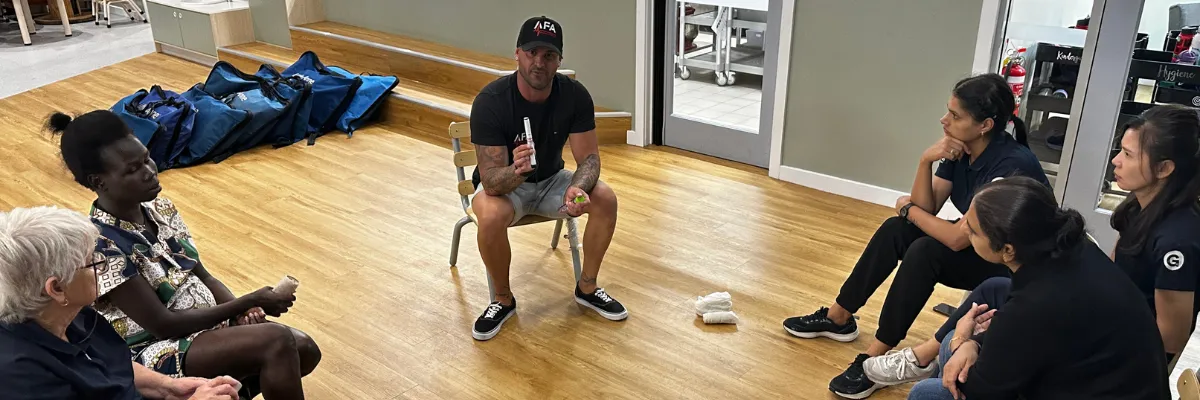
These courses build muscle memory for the moments when your heart's racing, other children are watching, and you need to make split-second decisions that could save a life. The best allergy emergency preparedness course programs combine medical knowledge with practical, hands-on experience that mirrors real emergencies.
Quality training focuses on recognition and response. You'll learn to spot the difference between a mild allergic reaction that needs monitoring and a severe anaphylactic episode that requires immediate intervention.
Why Gold Coast Childcare Centers Need Specialized Training
Working in childcare on the Gold Coast comes with unique challenges. Maria, who runs a family day care near Burleigh Beach, had a child visit for vacation care who'd never encountered sea lice before. The reaction was immediate and severe, but because Maria had completed proper training, she recognized the signs and responded correctly.
Our subtropical climate means year-round exposure to allergens that other regions only deal with seasonally. We've got grass pollen from February through November, dust mites that thrive in our humidity, and marine stingers that can trigger reactions. Add to that our massive tourism industry - you're regularly caring for children whose allergy histories you might not know completely.
Legal Requirements vs. Best Practice Standards
ACECQA requires that educators working with children who have diagnosed medical conditions receive appropriate training. For most childcare settings, that means at least one staff member must hold current anaphylaxis management training.
Best practice goes beyond compliance. It means having multiple trained staff members on duty, regular refresher training, and protocols that account for your specific environment. It's the difference between meeting requirements and genuinely protecting everyone in your care.

22300VIC vs 22556VIC - Which Course Do You Need?
22300VIC Course Overview and Requirements
The 22300VIC course is your foundation-level anaphylaxis management training. You'll spend about 5.5 hours learning to recognize anaphylaxis symptoms, understand how and when to use an adrenaline auto-injector (EpiPen), and follow basic emergency response procedures.
The training includes hands-on practice with trainer devices, so you're actually practicing EpiPen administration until it feels natural. Most educators find this course gives them enough confidence to handle straightforward allergic reactions.
The 22300VIC certification lasts for three years and combines online learning with face-to-face practical sessions.
22556VIC Advanced Training Components
The 22556VIC course takes almost 6 hours and dives much deeper into allergy management. You're learning to prevent emergencies, manage complex situations, and coordinate care for multiple children with different needs.
The advanced training covers risk assessment, developing individual allergy action plans, staff training coordination, and communication strategies with families and emergency services. You'll practice scenarios like managing an allergic reaction while supervising 15 other children and coordinating with parents who might not speak English as their first language.
For directors, room leaders, and anyone responsible for training other staff, this advanced allergy emergency preparedness course gives you the depth of knowledge to handle complex situations.
ACECQA Compliance Requirements by Role
Essential Skills Covered in Emergency Preparedness Courses
Recognizing Severe Allergic Reactions vs. Mild Symptoms
This is where many educators struggle. Allergic reactions don't always follow the textbook progression you learned about in basic first aid.
Take Jake, a 3-year-old who seemed fine after accidentally eating a peanut cookie. Five minutes later, his teacher noticed he was unusually quiet and clingy. No visible swelling, but something felt off. Because she'd been trained to recognize subtle early signs, she checked his breathing and noticed it was slightly labored. That "gut feeling" combined with proper training led to early intervention that prevented a full anaphylactic episode.
The training teaches you to look for combinations of symptoms. Skin changes might be subtle flushing rather than obvious hives. Breathing difficulties might start as a slight wheeze. Digestive symptoms like stomach pain can be early warning signs, especially in younger children.
Proper EpiPen Administration Techniques
Using an EpiPen correctly isn't as straightforward as it looks. There are multiple types of auto-injectors, each with slightly different mechanisms.
During training, you'll practice with actual training devices. You'll learn the proper grip, the correct injection site (outer thigh), and the right amount of pressure and hold time. The "orange to orange, blue to sky" rule for EpiPen Jr. versus adult versions becomes second nature.
The hands-on practice includes realistic scenarios: administering medication while other children are present, calling emergency services while monitoring the child, and what to do if the auto-injector malfunctions.
Managing Asthma Attacks in Children
Asthma and allergies often go hand in hand. Quality allergy emergency preparedness course training covers both conditions because you need to understand how they interact.
You'll learn to distinguish between different types of breathing difficulties. An asthma attack has different characteristics than anaphylaxis-related breathing problems, and the initial treatments are different too.
The training covers proper inhaler techniques for different age groups and positioning children to ease breathing.
Emergency Response Protocols and Documentation
The medical response is only part of your job during an emergency. You also need to manage other children, communicate with parents and emergency services, and document everything properly.
Training covers practical logistics: How do you call 000 while staying with the affected child? What information do emergency operators need immediately? How do you safely manage 15 other children who might be scared?
You'll practice communication scripts that work under pressure and learn frameworks for clear, concise communication with emergency services, parents, and your supervisor.
Choosing the Right Training Provider
Accreditation and Certification Requirements
Make sure your training provider is authorized to deliver 22300VIC or 22556VIC courses. Look for registered training organizations (RTOs) with the Australian Skills Quality Authority (ASQA).
The best providers have trainers with both educational qualifications and real-world emergency medical experience - paramedics, emergency nurses, or extensive childcare experience.
Hands-On vs. Online Training Components
While some theory can be delivered online, practical skills absolutely must be taught face-to-face with hands-on practice.
Be wary of providers offering "100% online" courses. Using an EpiPen correctly requires physical practice with training devices. Learning to position a child having breathing difficulties needs hands-on demonstration.
Ongoing Support and Refresher Programs
The best training providers offer ongoing support that helps you maintain skills and confidence over the three-year certification period.
Jenny, an educator from Pacific Pines, told me about her training provider's WhatsApp support group: "When I had questions about a child's new medication, I could get advice from both the instructor and other educators who'd dealt with similar situations."

Building Confidence in Real Emergency Situations
Scenario-Based Practice Techniques
The difference between theoretical knowledge and practical confidence comes down to realistic practice. Quality training programs put you in scenarios that mirror the messy reality of actual emergencies.
Picture this: You're supervising outdoor play when 5-year-old Alex starts showing signs of an allergic reaction. There are 12 other children around, two are crying because they saw Alex looking scared, one child needs the bathroom urgently, and your phone battery is at 5%.
This scenario-based training builds real confidence. You're learning to manage emergencies while juggling all the other responsibilities that don't disappear.
Managing Multiple Children During Emergencies
Quality allergy emergency preparedness course training teaches practical strategies for managing the whole group. You'll learn how to quickly designate responsible children as helpers and create a calm zone away from the emergency.
Communication with Parents and Emergency Services
When dealing with an emergency, clear communication can be the difference between a good outcome and a disaster. The best training programs give you scripts and frameworks that work even when your adrenaline is pumping.
For emergency services, you'll learn the specific information they need immediately: exact location, age of child, symptoms observed, medications given, and current status.
Parent communication is often more challenging. Parents are terrified and need information immediately. The training teaches you how to give clear, factual updates without speculation or blame.
Post-Incident Procedures and Documentation
What happens after the ambulance leaves is just as important as your emergency response. Quality training covers immediate post-incident procedures: securing the scene, checking on other children, and beginning documentation while details are fresh.
Most importantly, quality training helps you understand that even if you follow all procedures correctly, medical emergencies can still have serious outcomes. Your job is to respond appropriately and quickly, not to guarantee perfect results.
When you complete an allergy emergency preparedness course that covers all these elements, you walk away with genuine confidence that you can protect the children in your care.
Take Action: Your Next Steps to Emergency Preparedness
Remember Emma from our opening scenario? Her teacher's confidence came from comprehensive training that went beyond just ticking compliance boxes. That confidence meant Emma got the right help quickly, other children stayed calm, and parents trusted their child was in capable hands.
That could be you in the next emergency situation. The difference between feeling prepared and feeling terrified when a child's life depends on your response comes down to the quality of your training.
Ready to build genuine confidence in your emergency response skills?
If you're looking for allergy emergency preparedness course training that truly prepares you for real-world situations, we're here to help. Our Gold Coast-based programs are designed for the unique challenges you face in our subtropical, tourist-heavy environment.
Call us today at 0434778243 | 04FIRSTAID or email us [email protected] to secure your place in the next course.
Your peace of mind - and the safety of every child in your care - is worth the investment.