Allergy Awareness Training for Schools: 2026 Guide | QLD
Most Queensland school staff have done some kind of allergy awareness training for schools, usually a free online ASCIA module squeezed in somewhere between playground duty and marking. Far fewer have actually held a trainer adrenaline autoinjector. Or practiced with a spacer. Or run through what they'd do at the tuckshop window when a Year 2 student's lips start to swell and the line behind them keeps on moving.
And that's the gap. Allergy action plans are routine in Queensland schools now, they're part of the furniture. State schools follow the Queensland Department of Education guidelines, while Catholic and independent schools, P&Cs and camp providers set their own policies. So what "trained" actually looks like depends a lot on where you work.
This guide covers what school staff allergy training teaches, how it's different from accredited, hands-on courses, and how to choose the right level for each role, from teacher aides through to tuckshop volunteers.
First up though, the short answer to what this training actually is.
What Is Allergy Awareness Training for Schools?
Allergy awareness training for schools teaches staff to prevent, recognize and respond to allergic reactions in students. In Queensland, it ranges from free online awareness modules to accredited, hands-on anaphylaxis and asthma courses that include practice with trainer autoinjectors and spacers.
Allergy awareness training for schools typically covers:
Common allergens and how students are exposed at school
Signs of mild, moderate and severe allergic reactions
Recognizing anaphylaxis and acting on an allergy action plan
Giving an adrenaline autoinjector correctly
Calling triple zero and caring for the student until help arrives
Reducing risk at the tuckshop, in class, on excursions and at camp
Which of those skills each person needs depends on their role, and some roles are easy to miss.
Who Needs Allergy Training in a Queensland School?
Every adult supervising students should be able to recognize an allergic reaction and follow an allergy action plan. That's the baseline. How much training each person needs beyond that comes down to their role, and whether they work in a state school or a Catholic or independent one.
State Schools
In state schools, the Queensland Department of Education anaphylaxis guidelines set the expectations, and staff commonly complete the free ASCIA e-training as part of that.
Read the guidelines yourself rather than going off a staffroom summary, because the detail is what counts. Accredited training is an option some state schools add on top for the practical skills, not something they're required to buy from a private provider.
Catholic and Independent Schools
Catholic and independent schools follow their employer's policy along with their general duty of care. A lot of them choose accredited anaphylaxis training for schools for some or all of their staff, so people get to practice with a real trainer device instead of only clicking through a module.
Roles That Are Easy to Overlook
Classroom teachers usually get trained. It's the people around the edges who slip through, and they're often the ones standing closest when something goes wrong. When you're planning school staff allergy training, don't forget:
Teacher aides and learning support staff
Relief and casual teachers
Tuckshop convenors and P&C volunteers
Sports coordinators, coaches, camp and excursion staff
Office staff who store medication and take the first call
OSHC educators on school grounds
If you run the before and after school program on site, our guide to outside school hours care training covers what your educators need.
Once you know who needs training, the next question is what kind of training will do the job.
Allergy Awareness vs Accredited Anaphylaxis Training
There are really three options on the table for Queensland school staff. The free ASCIA e-training, an accredited anaphylaxis and asthma course, and HLTAID012, the broader first aid course. They're not competing with each other so much as doing different jobs.
ASCIA e-training | Accredited anaphylaxis and asthma course | HLTAID012 | |
Delivery | Online | Blended or face-to-face | Blended or face-to-face |
Hands-on device practice | No | Yes, trainer autoinjectors and spacers | Limited |
Nationally recognized | No | Yes, statement of attainment | Yes |
When an Awareness Module Is Enough
For plenty of staff, the free module does the job. If someone's role is to recognize a reaction and get a trained colleague there quickly, awareness training gives them what they need. It's widely used in state schools, and it's a solid starting point.
When Hands-On Training Adds Value
It's a different story for the people who might have to give the autoinjector themselves. Camp leaders, sports staff, tuckshop convenors, and aides supporting students with action plans.
Watching a video and pressing a trainer device against your own thigh are two very different things. That practice takes the hesitation out of the real moment, and hesitation is the last thing you want when a student's struggling to breathe.
Where HLTAID012 Fits
HLTAID012 is a broader first aid course built for education and care. The specialized anaphylaxis and asthma courses sit alongside it, not inside it. So a staff member can hold HLTAID012 and still benefit from the focused allergy and asthma training.
If you're holding older anaphylaxis or asthma certificates and aren't sure where they stand, our statement of attainment guide explains it.
Whichever option you choose, the content should cover the same core skills.
What Good Allergy Training for School Staff Covers
Free or accredited, online or face-to-face, good training should leave staff able to do four things without second-guessing themselves. Spot a reaction, read the plan, give the autoinjector, and handle asthma and allergy when they turn up together.
Recognizing Mild, Moderate and Severe Reactions
Knowing the signs of anaphylaxis in children is where it all starts. Per the current ASCIA action plan, mild to moderate signs include:
Swelling of the lips, face or eyes
Hives or welts
Tingling mouth
Abdominal pain or vomiting (these are signs of anaphylaxis for insect allergy)
Anaphylaxis, the severe end, looks like:
Difficult or noisy breathing
Swelling of the tongue
Swelling or tightness in the throat
Wheeze or persistent cough
Difficulty talking or a hoarse voice
Persistent dizziness or collapse
Pale and floppy (in young children)
A student who goes quiet and pale in the corner is easier to miss than one who's coughing, and that's exactly why staff need to practice spotting it.
Reading an ASCIA Action Plan
There are two main plans. The ASCIA Action Plan for Anaphylaxis is for students prescribed an adrenaline autoinjector. The ASCIA Action Plan for Allergic Reactions is for students with a diagnosed allergy who haven't been prescribed one. Staff should know which is which at a glance. Our guide to reading an ASCIA action plan walks through both.
Giving an Adrenaline Autoinjector
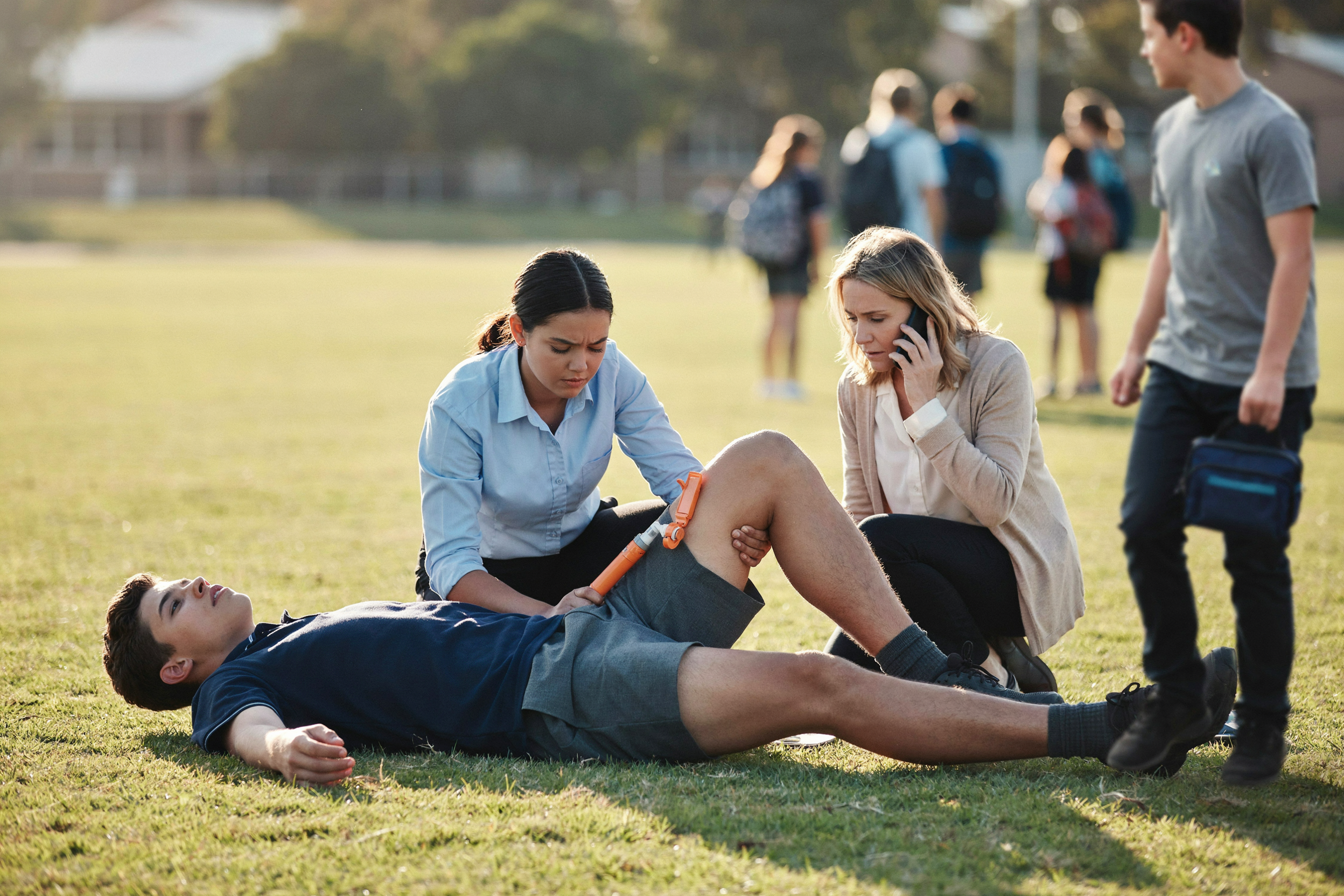
Good training shows staff how to use an adrenaline autoinjector on the devices families actually bring in, usually an EpiPen or Anapen. The response steps, per ASCIA:
1. Lay the student flat. Don't let them stand or walk. If breathing is difficult, let them sit with legs outstretched.
2. Give the adrenaline autoinjector.
3. Call triple zero.
4. Phone the family or emergency contact.
5. If there's no response after 5 minutes and another device is available, further adrenaline can be given.
Asthma and Allergy Together
This is the bit that trips people up. ASCIA's guidance is that if a student with a known allergy suddenly has trouble breathing, you give the autoinjector first, then the reliever.
For asthma on its own, staff follow the National Asthma Council Australia first aid steps: sit the student upright, give 4 separate puffs of reliever through a spacer, wait 4 minutes, and call triple zero if there's no improvement.
Queensland summers add their own twist. Storms can bring on thunderstorm asthma, and a hot afternoon can turn into three kids needing their puffers at once. Our guide to common asthma triggers covers what to watch for.
Responding well matters most, but most of a school's allergy plan is about reducing the chance of a reaction in the first place.
Reducing Allergy Risk Across the School Day
Good allergy management in schools happens long before anyone reaches for an autoinjector. It's in the tuckshop queue, the craft box and the camp bag.
Tuckshop and Food Handling
The tuckshop is where a lot of the risk sits. Volunteers need to know how to read ingredient labels, avoid cross-contact between foods, and follow the serving procedures. They also need a reliable way of identifying students at risk when they step up to the window.
The catch is that tuckshop volunteers rotate often. The parent who did the training in Term 1 might not be on the roster in Term 3. Short refreshers keep everyone on the same page.
Classrooms, Celebrations and Rewards
Classrooms bring their own surprises. Cooking lessons, science experiments and craft materials can all carry allergens. Egg cartons and nut-based products are common culprits that don't always get a second look.
Rewards and class celebrations are another one. Swapping lollies for non-food rewards, like stickers or extra free time, takes a whole category of risk off the table.
Bans aren't a safety net. Banning a food can feel like the safe option, but it can make people think the risk is gone. ASCIA's school guidance favors risk minimization and trained staff over blanket bans.
Sport, Excursions and Camps
Off-site days double the planning. Before anyone gets on the bus, decide who carries the autoinjector and the action plan, and check the expiry date on the device before departure. A device that's out of date is no help at the bottom of a bush trail.
Insect stings are a real risk too, on the oval and at camp. Our free excursion and camp allergy checklist puts all of this on one page.
Why Blanket Bans Aren't the Answer
It's tempting to ban nuts and call it done. But ASCIA's school guidance favors risk minimization and staff training over blanket bans. Bans are hard to enforce and can breed false confidence. Anaphylaxis prevention in schools works best when staff know the risks, can spot a reaction, and know what to do next.
For schools that want staff practicing with real trainer devices, accredited training is the next step.
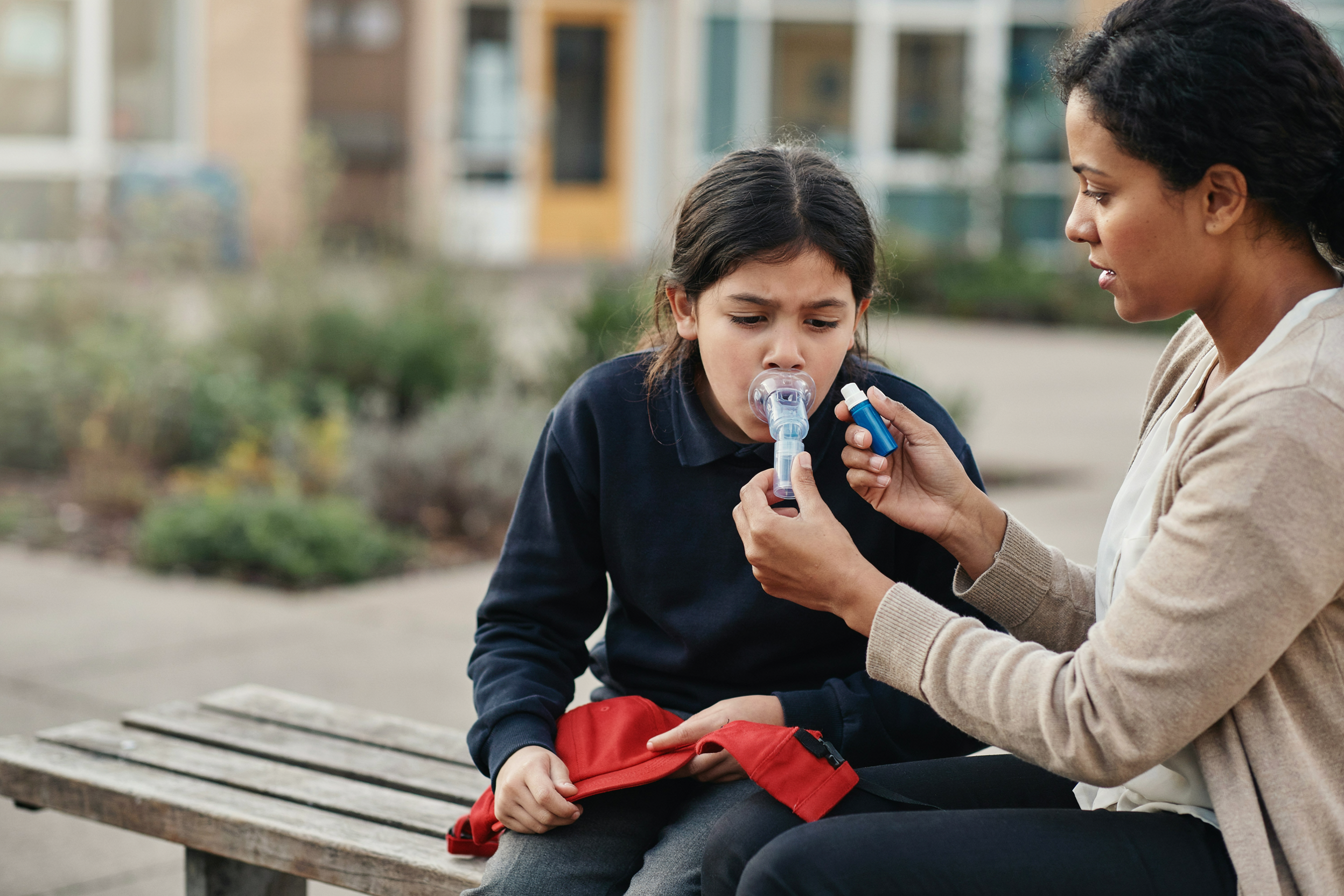
Accredited Asthma and Anaphylaxis Training for Schools
Accelerate First Aid delivers accredited asthma and anaphylaxis training under RTO 31106. If your school wants to go beyond the free module, our allergy awareness training for schools gives staff time with the actual devices, not just the theory. Sessions are run by Jarryd Hunter, who comes from a paramedic background and keeps things calm and practical, which matters when half the room is nervous about holding an autoinjector for the first time.
Onsite Training on a Pupil-Free Day
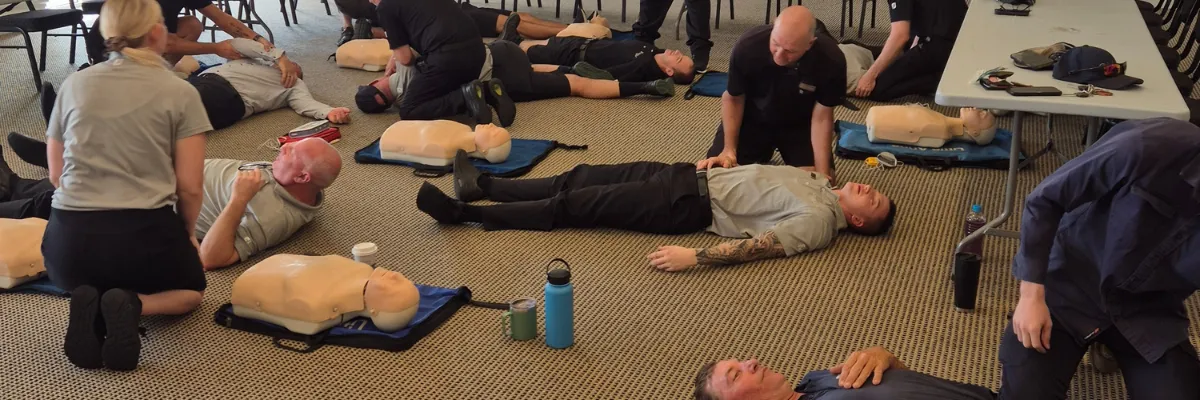
Getting a whole staff group to a training venue is a headache. So we come to you. Our onsite group training uses a blended format. Staff do the theory online first, then a short practical at the school.
A pupil-free day is ideal, though a weekday works too. We invoice the school or P&C directly.
Public Sessions for Individuals
Not everyone needs a group booking. Relief teachers, new aides and volunteers can join a public session instead, and dates are listed on our booking page.
What Your Staff Walk Away With
Every participant gets real practice with trainer autoinjectors and spacers, the hands-on part that the online modules can't give you. They also receive a nationally recognized statement of attainment.
Training is only useful while it's current, so the last piece is keeping track.
Records and Talking to Parents
Training's the easy part. Keeping it current is where it quietly falls over, because staff start at different times and before long nobody's sure who's still covered.
Keeping a Training Register
A simple register saves a lot of chasing. For each staff member, record:
Staff name
Training type
Completion date
Renewal date
That's it. Four columns, and you can see at a glance who's due next term. Sort it by renewal date and the gaps show up straight away. Our free School Allergy Training Register and Expiry Tracker gives you a ready-made version.
Renewal Cycles
ASCIA e-training, the accredited anaphylaxis and asthma course and HLTAID012 each run on their own renewal cycle, so don't assume one date covers the lot. Check the cycle for each course and pop the renewal date into your register the day someone finishes training, not the day it runs out.
Showing Parents Their Child Is Safe
Families of students with action plans want to know who's trained, and they're well within their rights to ask. When a parent hands over an autoinjector at the start of the year, they're handing over a lot of trust along with it.
A short letter home telling families your staff are trained, and in what, goes a long way. Our free parent letter template gives you a starting point you can adapt for your school.
Making Allergy Awareness Training for Schools Work
Every Queensland school already has students with allergy action plans, and most staff have clicked through a free online module. The question is whether every adult on your grounds today would know what to do if a student's lips started to swell at the tuckshop window.
Start by working out who needs what. Aides, relief teachers, tuckshop volunteers, coaches and office staff are easy to miss, and they're often closest to the action. For some, the free ASCIA e-training does the job. For anyone who might give the autoinjector, hands-on practice takes the hesitation out of the real moment.
Whichever path you choose, the training should cover spotting a reaction, reading an ASCIA action plan, giving the autoinjector correctly, and knowing it goes first when allergy and asthma turn up together. And most of the work happens before anything goes wrong.
Then comes the boring bit that matters just as much. Keep a training register so nobody's certificate quietly lapses, and tell your families who's trained. A short letter home goes a long way.
If your school wants staff practicing with real devices, Accelerate First Aid runs accredited asthma and anaphylaxis training onsite on a pupil-free day or a weekday. Book the whole staff, or send individuals to a public date, and walk into next term with every adult ready to act.
Get Your Staff Trained Before Next Term
Hands-on practice with trainer autoinjectors and spacers, plus a nationally recognized statement of attainment, at your school on a pupil-free day or weekday. Get a quote for your school or call 0434 778 243.