AED Training for Childcare Workers: 2026 Guide
Picture the scene, ninety kids running around your centre, an AED bolted to the wall in the staff corridor, and a toddler who suddenly collapses during nap time. Does the educator standing closest actually know how to use that machine on a two year old, or are they trained on an adult manual they saw once in a workplace induction video?
Pediatric cardiac events don't happen often in a childcare setting. But when one does happen, the sixty seconds right after it happens matter more than anything else that day. A team that hesitates, even for a moment, is a very different team from one that's actually rehearsed this.
For Centre Directors across the Gold Coast growth corridor, AED training for childcare workers isn't something you tick off a compliance list and forget about. It's genuinely the gap between a team that freezes and a team that acts without thinking twice. Childcare specific AED training covers pediatric pad placement, the right energy settings for kids under 8, and how to keep an AED running alongside CPR without breaking rhythm, the exact situation your educators could one day be standing in.
This guide walks through what AED training for childcare workers actually covers, which of your staff need it, how it lines up with your HLTAID012 requirements, and how to book it in a way that works with your ratios instead of against them.
What Is AED Training for Childcare Workers?
AED training for childcare workers teaches educators how to recognize sudden cardiac arrest in infants and children, and how to use an Automated External Defibrillator safely on a pediatric patient. It's not the same course as standard adult AED training, and the differences matter more than most people expect.
Here's what sets it apart:
Pediatric pad placement, smaller pads, positioned differently on a child's chest, so the shock actually delivers where it needs to
Energy and dose adjustment, pediatric attenuator settings built in for children under 8 years old, because a full adult dose isn't appropriate for a small chest
CPR integration, using the AED without interrupting compression rhythm, which is a real skill, not something you can just wing on the day
That's the short version. Now let's get into why this actually matters for your center, beyond just having a certificate filed away somewhere.
So what does AED training actually involve, and why does it matter more than a certificate on the wall?
Why AED Training Matters for Childcare Workers (Beyond the Certificate)
You're not just an educator, you're a risk manager for ninety kids, whether that's in your job title or not. The certificate itself isn't really the point, what matters is what happens in the room when something goes wrong.
The Ratio Reality: Why "Someone Knows CPR" Isn't Enough
Under the NQF, you've got to keep a minimum number of currently certified first aiders on site at all times. But knowing CPR and knowing how to run an AED on a toddler while doing CPR are two different skill sets. If the one educator in the room who's confident with the AED is on her lunch break when it counts, "someone on staff knows CPR" doesn't help you at all. Ratio-safe coverage means AED-ready coverage too, not just a headcount of certified bodies.
Pediatric Cardiac Events: Rare, But Every Second Counts
Let's be honest, a child going into cardiac arrest at your center is rare. Genuinely rare. But rare doesn't mean it can't happen, and when it does happen, there's no ramp-up time. There's no moment to Google "how do I use this thing." Every second an educator spends hesitating or fumbling with pads is a second that matters. This is the kind of event where training either did its job in the months before, or it didn't, there's no in-between.
How AED Training Fits Alongside HLTAID012
The good news is you're probably not adding a whole new course to your training calendar. AED training for childcare workers typically sits inside your existing HLTAID012 requirement, so your staff aren't pulled off the floor separately just to cover this. It's less "one more thing to schedule" and more "one more thing your existing course actually needs to cover properly."
Think of it this way, a fire drill isn't useful because you'll definitely have a fire. It's useful because if you ever do, nobody's standing around working out what to do first. AED training works the same way.
Understanding why it matters is one thing, but pediatric AED use itself works differently than most educators expect.
What Makes Pediatric AED Use Different From Adult AED Use
A lot of educators walk into this training thinking "I've done an AED course before, this'll be a refresher." And look, some of it will be familiar. But pediatric AED use has real differences, and they're the kind of differences that matter in the room, not just on paper.
Pediatric Pad Placement and Sizing
Adult pads are too big for a toddler's chest, plain and simple. Pediatric pads are smaller, and they go in different spots, sometimes front and back instead of the standard front-left, front-right adult placement. Get this wrong and the shock doesn't deliver properly, it's not just a technicality.
Energy/Dose Attenuation for Children Under 8
Most modern AEDs come with a pediatric attenuator, a cable or key that dials the energy down to a level that's safe for a small child's heart. Educators need to know this exists, know where it is on your specific machine, and know how to use it without stopping to read the manual mid-emergency.
Integrating AED Use Into Continuous CPR Without Losing Rhythm
This is the part that trips people up in training. It's not "do CPR, then stop and use the AED." It's compressions, brief pause for the AED to analyses and shock if needed, straight back into compressions. Losing that rhythm, even for a few extra seconds, reduces the chances of a good outcome. This only becomes second nature with actual hands-on practice, not a video.
Recognizing When a Shock Is (and Isn't) Advised
The AED itself will tell you whether a shock is advised, it analyses the heart rhythm and won't deliver a shock if one isn't needed. But educators still need to understand what the machine is doing and why, so they trust it and act on its prompts without freezing up or second-guessing it.
This is actually one of the more reassuring parts of AED training once educators go through it properly. A lot of staff walk in nervous about "getting it wrong." Once they understand the machine won't shock a heart that doesn't need shocking, that fear tends to melt away, and what's left is confidence.
Knowing how pediatric AED use differs is only half the picture, the next question is whether your center is even required to have one.
Does Your Centre Need an AED On-Site? (ACECQA & NQF Considerations)
This is the question that keeps a lot of Directors up at night, and it's worth being straight with you: the answer isn't a simple yes or no.
What ACECQA Currently Recommends
ACECQA and NQF requirements around first aid staffing are clear on qualifications and ratios, but the specific position on mandatory AED hardware on-site is something every center should check directly against current guidance for their state and service type, rather than assume. Requirements can vary and can change, so this is one area where it pays to confirm with ACECQA directly or with your training provider rather than relying on a blog post, even this one.
Where to Locate Your AED for Fastest Access
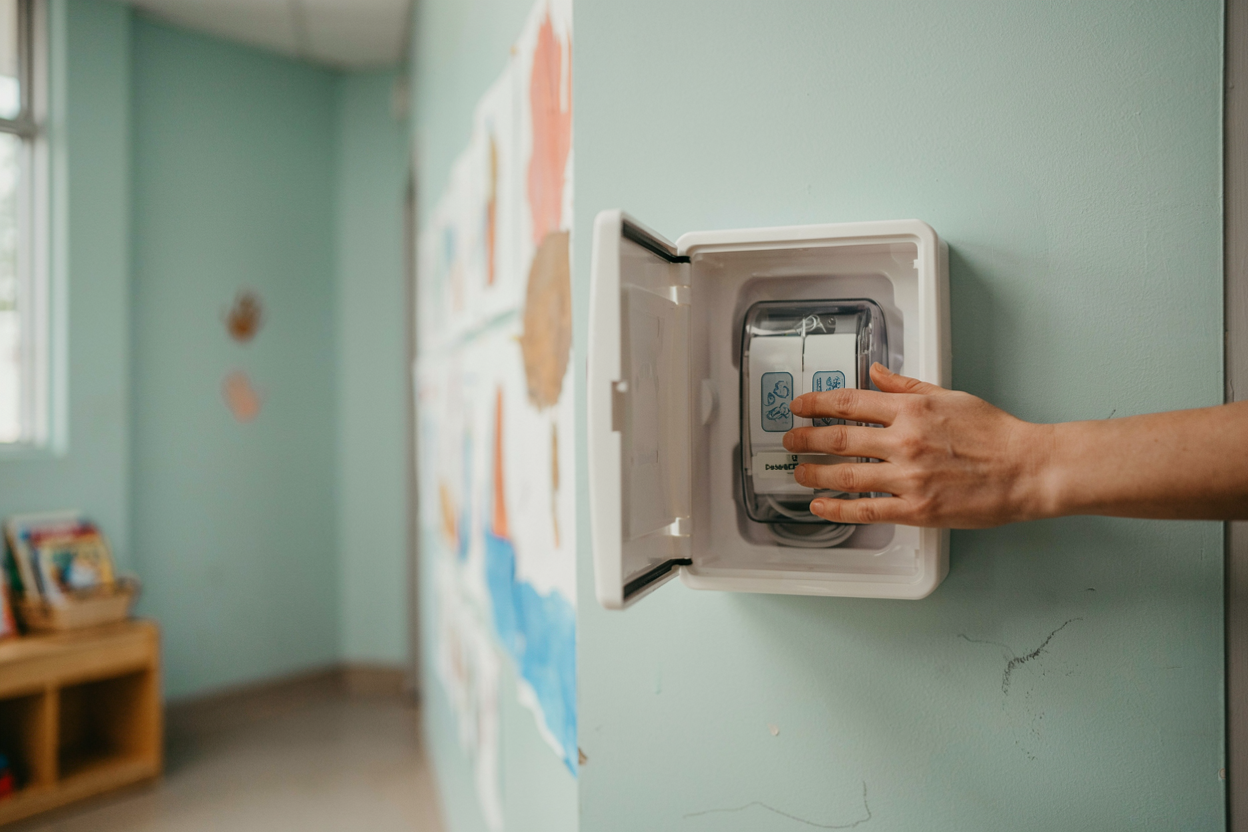
Whether an AED is mandated for your specific center or not, most Directors who've thought this through choose to have one anyway, because those first sixty seconds matter so much. If you do have one, or you're considering one, location matters almost as much as the machine itself. It needs to be somewhere central, unlocked, unmissable, not tucked away in an office that's closed on weekends or behind a door someone needs a key for. Think about the room your kids spend the most time in, and work outward from there.
Building AED Checks Into Your Emergency Drill Routine
An AED that's never checked is a liability waiting to happen, batteries go flat, pads expire, and nobody notices until the day it actually matters. Build a quick AED check into whatever drill routine you already run for fire or lockdown, so it becomes a habit rather than a task someone remembers to do "eventually."
Once you know whether an AED belongs in your center, the next question is who on your team actually needs to be trained to use it.
Who on Your Team Needs AED Training (and How Often)
This is usually the practical question right after the compliance one. You know you need coverage, but how many people, and how often does it need topping up?
Minimum Ratio-Safe Coverage: How Many Educators Need AED Training
The safest approach is to think about it the same way you think about first aid ratios generally, you need enough AED-trained educators on the floor at any given moment, across every shift, every day, including the days when someone's on leave or a casual is filling in. One trained person isn't coverage, it's a single point of failure. Aim for enough trained staff that a normal roster gap, a lunch break, a sick day, doesn't leave you exposed.
How AED Training Slots Into Your Annual CPR Refresher Cycle
You're probably already running HLTAID009 CPR refreshers annually to keep the team's skills sharp between full HLTAID012 renewals. AED training folds into that same rhythm. It's not a separate calendar item to manage, it's part of the same refresher your team's already doing, which keeps the whole thing simple instead of adding another course you have to schedule around.
Booking AED Training That Works Around Your Ratios
This is usually where it all falls apart for Directors, not because they don't want the training, but because finding a provider who can actually deliver it without shutting the center down feels impossible.
On-Site Training vs. Sending Staff Off-Site
Sending staff off-site means travel, coordinating who covers the floor while they're gone, and usually losing more of the roster than the training itself requires. On-site training removes a lot of that friction, your team trains where they actually work.
Staggered Small-Group Sessions So You Never Breach Ratios
Instead of pulling your whole team off the floor at once, staggered small-group sessions mean a handful of educators train while the rest keep the center running, then the next group rotates through. Nobody's breaching ratios, nobody's closing a room, and you're not turning away children just to get everyone certified.
What to Expect on Training Day
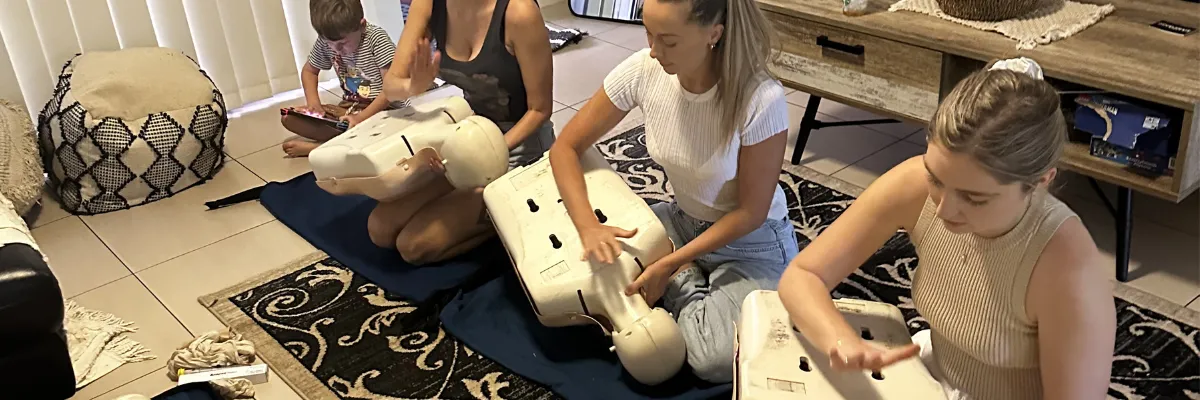
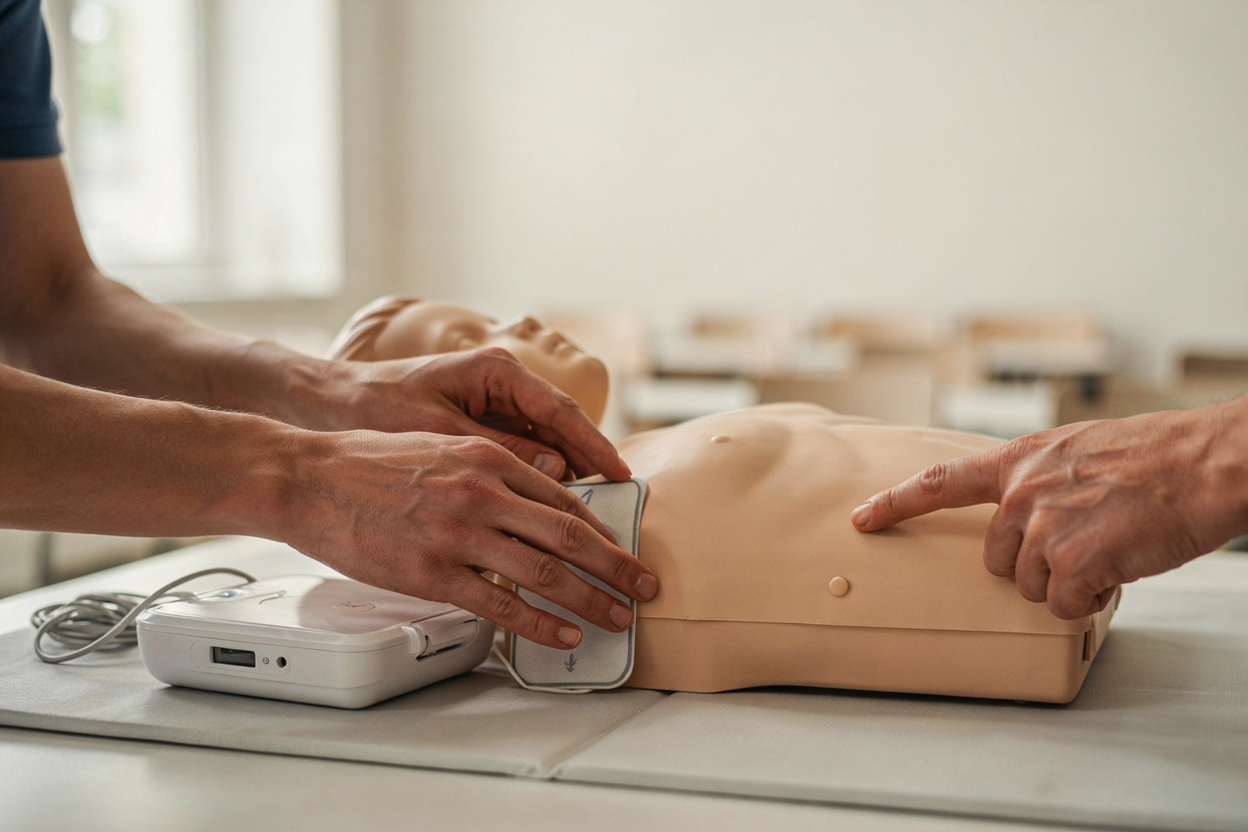
Expect hands-on practice, not just a slideshow. Your educators should be physically working through pediatric pad placement, running through the CPR-to-AED sequence on training manikins, and asking questions specific to your center's layout. If a provider's course feels generic, like it could be delivered to any workplace anywhere, that's usually a sign it's not childcare-specific enough.
If you're ready to get your team AED-ready without breaching ratios or disrupting care, book AED training for your team and we'll build a session around your roster, not the other way around. Tell us your ratio schedule and we'll design a training plan that fits around it.
Every center has its version of the 3am worry. For some Directors it's ratios, for others it's a lapsed certificate nobody caught in time. For a lot of you it's this exact scenario, a child in real trouble and a team that doesn't know, in the moment, what to do with the machine on the wall. That worry doesn't go away with a policy document. It goes away when your team has actually practiced the thing enough times that their hands know what to do before their brain has to think it through.
The gap between a workplace AED course and childcare-specific AED training is bigger than it looks from the outside. Pediatric pads, attenuated energy settings, keeping compressions going without losing rhythm, these aren't small technical footnotes. They're the difference between training that looks good on a certificate and training that holds up on the worst day your center could have. Rare doesn't mean irrelevant, it means the stakes are higher precisely because nobody gets a practice run when it's real.
None of this has to mean upending your roster or closing rooms. Staggered, on-site, small-group sessions exist because Directors like you have ratios to protect and a center to keep running, not because training providers are being generous. The right provider builds around your schedule instead of asking you to build around theirs, and that's really the whole test of whether a provider understands childcare, not just first aid.
At the end of it, this isn't really about a machine or a certificate. It's about walking into work every day knowing that if the worst sixty seconds ever happen, your team won't freeze. That's the outcome worth booking training for, and it's the outcome your educators deserve to have, long before they ever need it.