AED Course Gold Coast: Is CPR Training Included?
The defibrillator was on the wall. Everyone in the room could see it. But when the bloke in the lunchroom went down, nobody moved toward it because nobody knew how to use it, and nobody was sure whether you needed to do CPR first.
If that scenario makes you uncomfortable, you're in the right place.
AED courses on the Gold Coast vary a lot in what they actually cover. Some focus purely on defibrillator operation. Others bundle AED awareness into a full CPR course, which is the combination that genuinely prepares you for a real cardiac emergency. Those two things are not the same.
In this article, you'll learn exactly what a quality AED course on the Gold Coast includes, why CPR training isn't optional if you want to be genuinely prepared, which nationally recognized unit covers both, and what to look for before you book.
What Is an AED Course and What Should It Actually Cover?
Before you book anything, it helps to understand what you're actually looking at when you search "AED course Gold Coast" because not everything that comes up is the same thing.
What AED Stands For and How a Defibrillator Works
AED stands for Automated External Defibrillator. It's the device you've probably seen mounted on the wall at a gym, a shopping center, or a worksite. It's designed to be used by bystanders, not just paramedics, which is why it talks you through every step with voice prompts. The machine analyses the heart rhythm and delivers a shock if it detects a shockable rhythm. What it can't do is perform CPR. That's a human job.
The Difference Between AED Awareness and AED Training
There are two very different things being sold under the "AED course" label. AED awareness sessions are short, often delivered as part of a workplace induction. They cover the basics of what a defibrillator is and where it's kept. They don't result in a Statement of Attainment and they don't teach you CPR. Nationally recognized AED training, delivered by a registered RTO, is a proper hands-on course covering CPR and defibrillator use together, aligned with ANZCOR guidelines, and resulting in a qualification your employer will actually accept.
If you need a certificate for a site induction or workplace compliance check, an awareness session won't cut it. Full stop.
Why Standalone AED-Only Courses Fall Short
An AED shock only works if the heart still has something to work with. In the minutes before the device is ready, while someone's locating it, switching it on, and placing the pads, the brain is being starved of oxygen. CPR is what keeps oxygenated blood moving in the meantime. Without it, even a perfectly delivered shock may not be enough. The two skills aren't alternatives. They're a sequence. Defibrillator training on the Gold Coast that doesn't include CPR isn't preparing you for a real cardiac emergency.
So now you know what a quality AED course should cover but do Gold Coast providers actually include CPR training? Here's the honest answer.
Does an AED Course on the Gold Coast Include CPR Training?
This is the question most people are actually asking when they go looking for an AED course on the Gold Coast and the honest answer is: it depends entirely on the course and the provider.
The Short Answer: It Depends on Who You Book With
Some providers offer awareness-only sessions that cover defibrillator basics but don't result in any formal qualification. These are common in corporate safety programs and workplace inductions. They're better than nothing, but they won't get you through a site induction gate, and they won't give you the hands-on repetitions you need to actually perform under pressure.
A quality AED course delivered by a registered RTO includes CPR training as a core component of the qualification, delivered to a nationally consistent standard set by ASQA and aligned with current ANZCOR guidelines. That consistency is what makes the certificate accepted everywhere, at every site induction and every workplace compliance check across Australia.
HLTAID009 The Unit That Covers Both CPR and AED Use
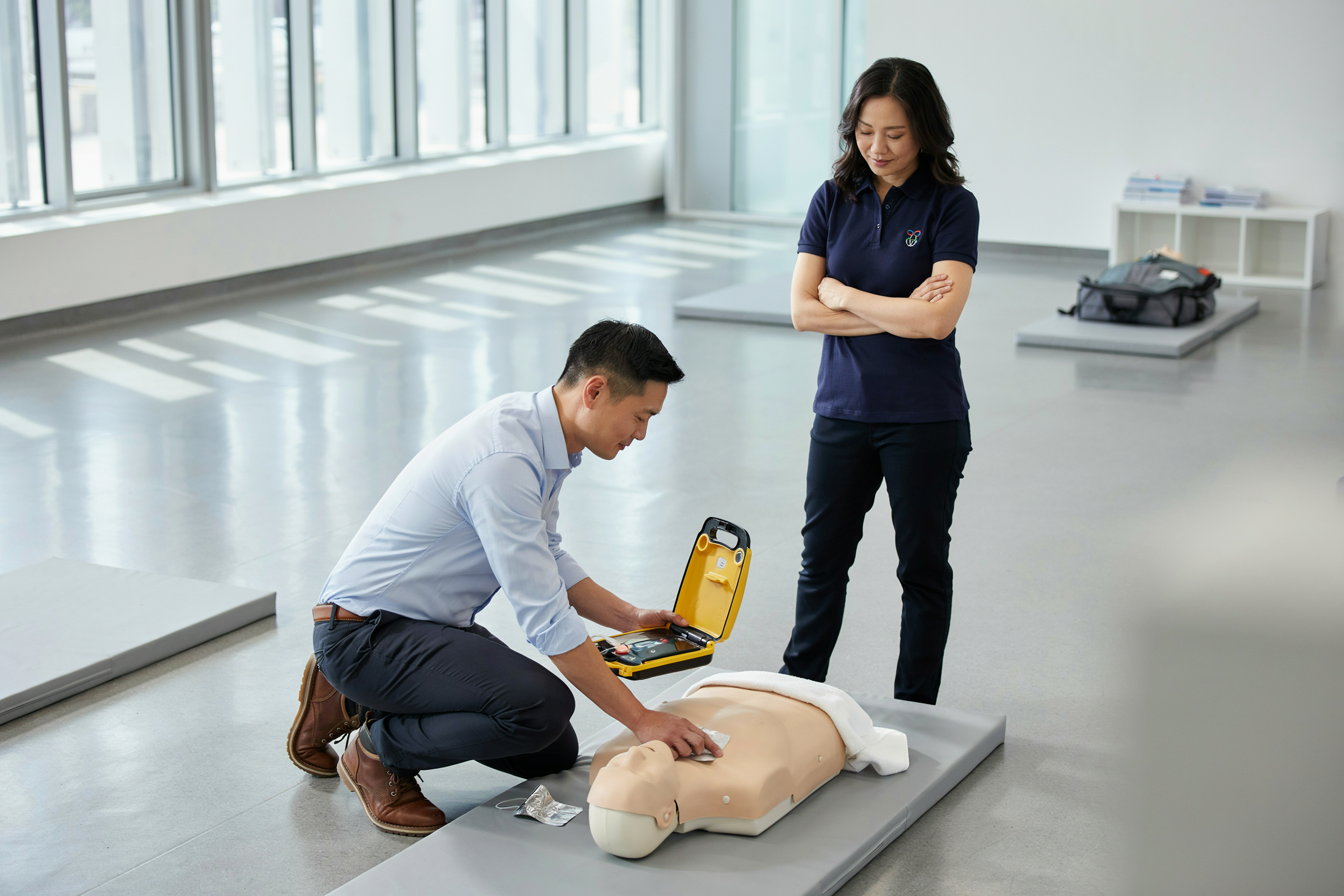
The unit you're looking for is HLTAID009 Provide CPR. This is the nationally recognized unit of competency that covers both skills together, and it's what a quality CPR and AED course on the Gold Coast should be delivering.
What HLTAID009 Covers
Adult, child, and infant CPR
AED operation and pad placement
DRSABCD action plan
Unconscious casualty management
Nationally recognized Statement of Attainment (ASQA)
HLTAID009 is the unit your workplace is looking for when they ask for a current CPR certificate. It gets accepted at site inductions without question and it gives you the hands-on repetitions, on a mannequin with a trainer who's seen real resuscitation situations, that make the difference between freezing and acting. [PROVIDER_NAME] (RTO [RTO_NUMBER]) is on the national register at training.gov.au.
CPR and AED Why You Can't Separate Them
Most people assume the AED does the heavy lifting. You stick the pads on, press the button, and the machine sorts it out. That's not wrong exactly but it's missing about half the picture.
What Happens in the First Four Minutes of Cardiac Arrest
When someone's heart stops, the clock starts immediately. Brain cells begin dying within four to six minutes without oxygenated blood. By the time most ambulances arrive, several minutes have already passed.
According to the Australian Resuscitation Council, survival rates from cardiac arrest drop by approximately 10% for every minute that passes without CPR or defibrillation. The people who survive out-of-hospital cardiac arrest almost always had someone nearby who started CPR before the ambulance arrived.
The Role of CPR Before the AED Is Ready
Here's the sequence that actually saves lives. Someone collapses. You call 000. Someone else goes for the AED. While that's happening, CPR is what keeps blood moving to the brain. The AED will tell you when to stop compressions so it can analyze the rhythm and when to stand clear for the shock. But in the minute or two before any of that happens, the only thing keeping that person's brain alive is the person on their knees doing chest compressions. An AED cannot perform compressions. That's a human job.
What the Research Says
Bystander CPR before ambulance arrival can double or triple survival rates from out-of-hospital cardiac arrest. When bystander CPR is combined with early defibrillation, survival rates improve further again. The two interventions work together in a way that neither does alone. This is why quality defibrillator training on the Gold Coast always includes CPR. It's not a regulatory box-tick. It's how physiology actually works.
The evidence is clear. The next question is: does this apply to you and does Queensland law require it?
Who Needs an AED Course on the Gold Coast?
Workplace Compliance Requirements in Queensland
The Queensland WHS Act 2011 requires employers to ensure adequate first aid provisions are in place for their workers. That includes having enough trained first aiders on site and appropriate first aid equipment. An AED awareness session doesn't satisfy this requirement for designated first aiders. The standard is a nationally recognized unit of competency delivered by a registered RTO. In most cases, that means HLTAID009 at minimum.
Safe Work Australia sets out the national framework and Queensland follows it. If you're a team leader, a site supervisor, or anyone designated as a first aider in your workplace, a current HLTAID009 certificate is a legal baseline, not a suggestion.
High-Risk Industries on the Gold Coast
Some industries carry a higher baseline risk of cardiac events, and the Gold Coast has a heavy concentration of all of them.
Construction physical exertion in Queensland heat is a genuine cardiac risk factor
Hospitality and tourism large crowds and the physical demands on staff create real risk
Aged care a growing sector on the Gold Coast where CPR certification is a baseline employment condition in most facilities
Gyms and fitness centers physical exertion triggers cardiac events more often than most people expect
If you work in any of these industries without a current HLTAID009 certificate, you're not covered personally or professionally.
What to Look for in an AED Course Provider on the Gold Coast
A lot of providers look identical online. Knowing what to actually look for cuts through that fast.
ASQA Registration: The Non-Negotiable Starting Point
If a provider isn't a registered RTO, the certificate they issue isn't worth the paper it's printed on. An ASQA RTO number is the only thing that guarantees the course meets national standards and the Statement of Attainment will be accepted at site inductions and compliance checks across Australia. Look for the RTO number displayed clearly on the website, not buried in a footer. If you can't find it, keep looking.
Hands-On Mannequin Time vs Theory-Heavy Delivery
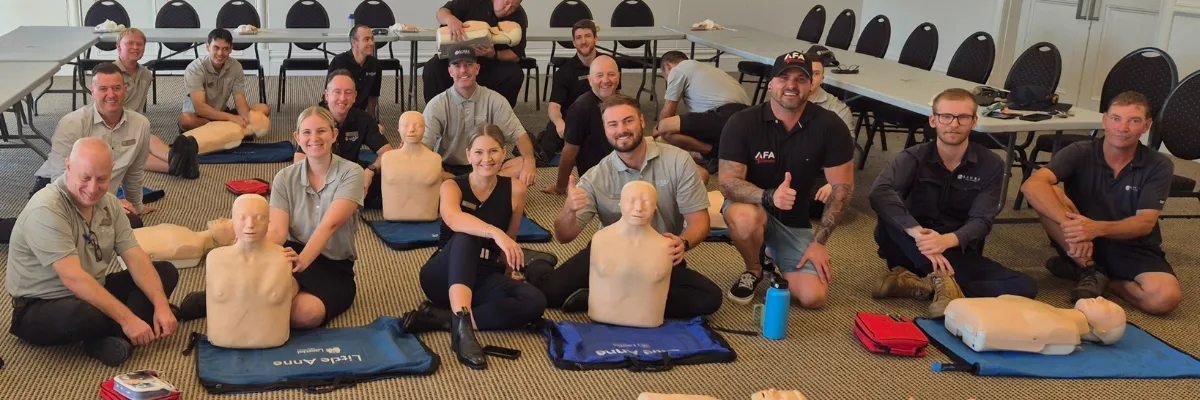
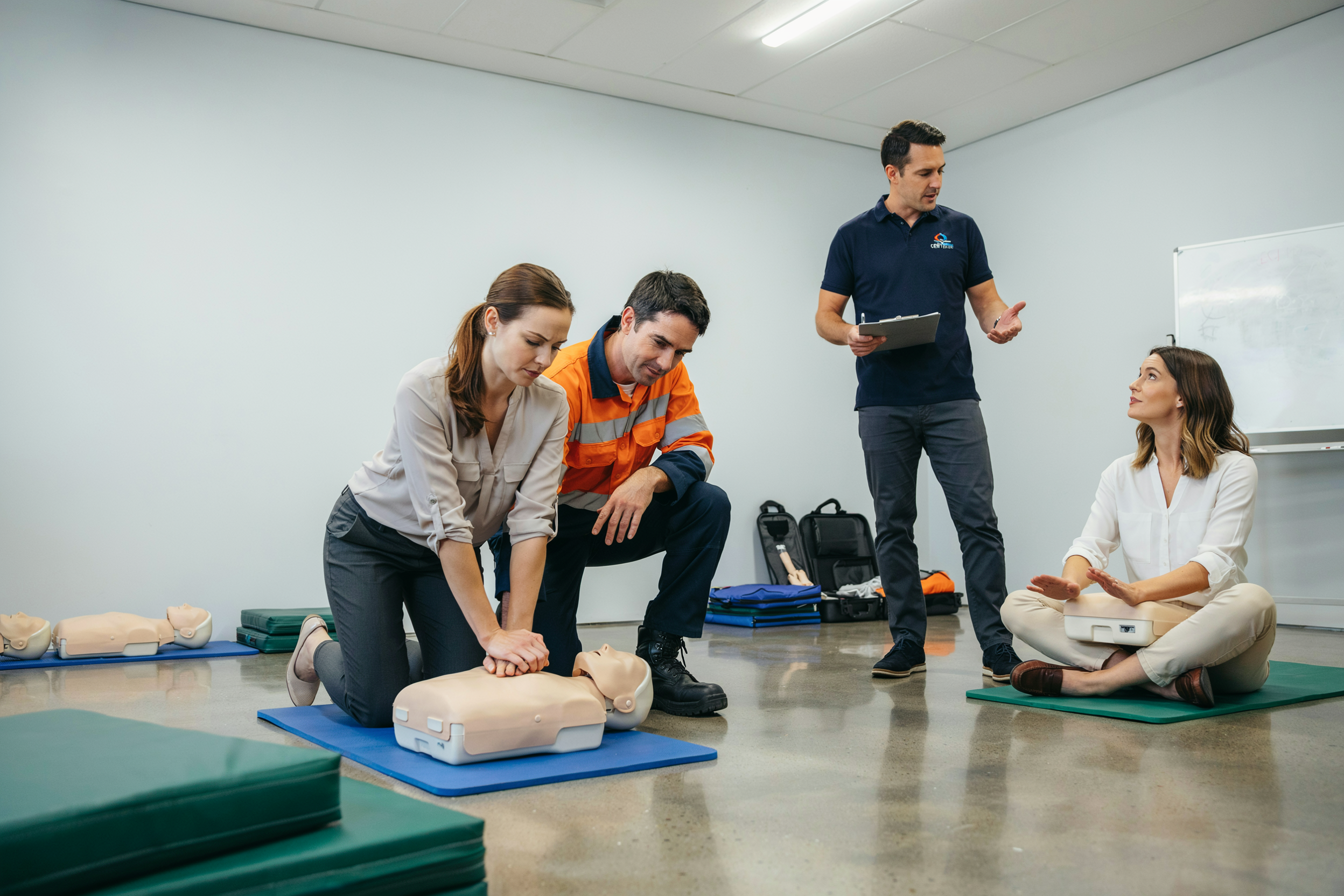
CPR is a physical skill. You can understand the concept completely and still freeze when you're kneeling over a real person, because your hands have never actually done it. The only thing that closes that gap is repetition on a mannequin. A quality AED training course on the Gold Coast puts you on the floor doing compressions at the right depth and rate until it feels automatic. Look for specific language on the website about individual mannequin access and hands-on practice time. Vague course descriptions are telling you something.
Certificate Turnaround and National Recognition
If you've got a site induction coming up, you need your certificate beforehand. Look for same-day digital certificate issuance as a stated commitment. And confirm the certificate is a nationally recognized Statement of Attainment under HLTAID009, not a provider-issued attendance certificate that won't be accepted anywhere else.
Before You Book Checklist
Provider displays an ASQA RTO number on their website
Course results in a nationally recognized Statement of Attainment
Hands-on mannequin practice is explicitly included
Digital certificate issued same day
Weekend or Saturday sessions available with dates visible
Red flags to watch for:
No RTO number on the website
Online-only AED training with no practical component
No reviews mentioning practical training quality or trainer experience
HLTAID009 vs HLTAID011 Which Course Do You Need?
The unit codes look similar, the course names overlap, and a lot of providers don't make the distinction clear. Here's the simplest version.
HLTAID009 CPR and AED: Who It's For
HLTAID009 Provide CPR covers adult, child, and infant CPR, AED operation and pad placement, the DRSABCD action plan, and unconscious casualty management. It doesn't cover wound management, fractures, burns, or broader first aid scenarios.
It's the right course if your employer or site induction requires a current CPR certificate, you're doing an annual renewal, or you're a site supervisor or tradesperson whose compliance requirement is CPR-specific. ANZCOR recommends annual renewal and most Queensland workplaces require a certificate no older than 12 months.
HLTAID011 Full First Aid: Who It's For
HLTAID011 Provide First Aid includes everything in HLTAID009 plus a much broader range of scenarios: bleeding, burns, fractures, choking, stroke, asthma, anaphylaxis, and diabetes emergencies. It's the right course if you're a designated first aid officer, your facility requires full first aid coverage, or your employer has specifically asked for HLTAID011. The broader qualification is valid for three years, with the CPR component renewed annually.
Quick Comparison
If the requirement listed is "CPR certificate" or "HLTAID009," the shorter course is exactly what you need. Need the full first aid course instead? See our [HLTAID011 First Aid Course Gold Coast] page.
What You Now Know
Most people searching for an AED course on the Gold Coast are asking a simple question: does it include CPR training? The answer is yes, but only if you book the right course with a registered RTO delivering HLTAID009. Awareness sessions exist, they're common, and they don't prepare you for a real cardiac emergency.
The gap between knowing an AED is on the wall and knowing what to do when someone collapses in front of you is wider than most people realize. That gap is what proper training closes. Not theory. Hands-on repetition on a mannequin, until your hands know what to do without your brain having to catch up.
Queensland workplaces have legal obligations under the WHS Act, and the Gold Coast's construction, hospitality, aged care, and fitness industries carry real cardiac risk every single day. If your certificate is expired or nonexistent, that's not a paperwork problem. It's a practical gap that shows up in the worst possible moment.
Choosing a provider comes down to a short list of non-negotiables: a visible ASQA RTO number, hands-on mannequin time, same-day certificate issuance, and weekend availability. Any provider who can't clearly confirm all of those things isn't worth your time.
The best time to do this course was before you needed it. The second best time is now.