Why Firefighters Need Advanced Resuscitation Training
You did your HLTAID011. You can run compressions, you know your way around a defib, you can manage a basic airway. Good start. But structure fires don't hand you basic patients.
Smoke inhalation. Thermal burns. Crush injuries. A cardiac event triggered by pure physical exertion in full turnout gear and SCBA. Firefighters get handed a category of medical emergency that standard first aid training was never really built for. And when it's your own crew member down, "call 000 and wait" doesn't cut it. You're already on scene. You need to know what happens next.
This is where advanced resuscitation for firefighters comes in, specifically HLTAID015 Advanced Resuscitation and Oxygen Therapy. It's the qualification that takes you from "I can start CPR" to "I can manage an airway, administer oxygen, and stabilize a patient through those tense first minutes before paramedics take over." That's the exact scenario firefighters walk into on shift, not a hypothetical one, and it's a scenario basic first aid was simply never designed to prepare you for.
Most first aid courses are written for an office, a warehouse, or a retail floor. Somewhere flat, well lit, and reasonably safe once you've got the patient stable. A fireground is none of those things. The air's bad, the ground's unstable, the patient might be one of your own crew, and you might be managing them while still wearing gear that's making your own job harder. That gap between "trained for a workplace" and "trained for a fireground" is exactly what HLTAID015 exists to close.
In this guide, we'll break down what HLTAID015 actually covers, why it matters specifically for fireground medical response, and how Accelerate First Aid structures this training for emergency services crews.
Do Firefighters Need Advanced Resuscitation Training?
Yes. Firefighters get real value out of advanced resuscitation for firefighters training that goes beyond basic CPR (HLTAID011). Structure fires and rescue incidents throw up medical emergencies that basic first aid just doesn't cover, including:
Smoke inhalation and respiratory distress, which needs proper oxygen therapy administration, not just awareness of it
Cardiac events brought on by extreme physical exertion in full PPE
Traumatic injuries: burns, crush injuries, fractures from collapsed structures
Managing a patient for longer stretches before paramedics can even get to the scene
HLTAID015 Advanced Resuscitation and Oxygen Therapy trains firefighters in advanced airway management, oxygen administration, and stabilizing a patient through the worst minutes of a medical emergency. That's well beyond standard workplace CPR requirements, and increasingly recognized as valuable best practice for emergency services personnel who are frequently first on scene, often well before any other medical response arrives.
It's worth being honest about what "basic" actually means for a firefighter. HLTAID011 is a genuinely solid foundation, nobody's knocking it. But it's built around the assumption that a patient is in a relatively controlled environment and that help is close behind. On a fireground, neither of those assumptions reliably holds. That's not a criticism of HLTAID011, it's just not the tool for this particular job.

What Makes Fireground Medical Emergencies Different
Basic CPR training assumes a fairly straightforward patient. Someone collapses, you start compressions, help arrives. Fireground medicine doesn't work like that. Here's what's actually going on out there.
Physical exertion under extreme conditions
Running compressions in full turnout gear and SCBA, in heat that most workplaces would evacuate for, is a different physical event to CPR in a quiet office. Your own cardiac load goes up fast, and so does the risk of a second casualty being one of your own crew.
A 2026 peer-reviewed study on simulated rescue and compression tasks found lactate levels jumping from 2.2 to 14.8 mmol/L, with heart rate peaking around 170bpm during the tasks. That's not a mild workout, that's your body under real physiological stress while you're trying to keep someone else alive. Anyone who's pulled a set of compressions after a hard stretch of firefighting already knows this in their arms and their lungs, the numbers just put a figure on what you've already felt.
This is exactly why HLTAID015 drills team rotation and fatigue management as its own scenario, not a footnote. Knowing when to swap out on compressions, and how to manage that handover cleanly without losing rhythm or dropping quality, matters just as much as the compressions themselves. A tired rescuer delivering weak compressions isn't actually helping the patient, even if it looks like effort from the outside.
Smoke inhalation and respiratory compromise
Basic first aid gives you an awareness of oxygen. HLTAID015's oxygen therapy component goes a lot further, covering flow rates, delivery devices, and ongoing monitoring of a patient whose condition can change in front of you, sometimes within a minute or two.
A few things it trains you to pick up on:
The difference between a conscious smoke-affected patient and one who's starting to deteriorate
Selecting the right delivery method and flow rate for what you're actually seeing
Monitoring that keeps pace with a patient who might tip from stable to serious fast
That last point is the one that trips people up who've only done basic training. A smoke-affected patient can look reasonably okay for a stretch and then drop away quickly. Knowing what to watch for, and having the actual equipment skill to respond the moment it happens, is the difference between catching that shift early and being caught out by it.
Trauma in confined or unstable environments
Crush injuries, burns, fractures. Often all compounded by the fact that getting the patient out is its own problem before you've even started treating them. You're not just applying first aid, you're applying it in a space that's actively working against you.
And there's the part that basic training rarely touches on at all: managing a patient while the scene itself still isn't fully safe. That's a very different skill set to managing a patient in a controlled first aid room where the biggest risk is someone tripping over a chair. On the fireground, the environment itself is part of the emergency, and HLTAID015 treats it that way rather than pretending it doesn't exist.
A quick snapshot of the difference:
What HLTAID015 Covers That HLTAID011 Doesn't
So what does HLTAID015 actually add on top of what you already know?
Advanced airway management
This goes past basic positioning. You're learning airway adjuncts and techniques for patients where the airway itself is the problem, like someone with smoke inhalation or facial burns, where a standard approach might not be enough. It's the difference between "tilt the head back and hope" and having an actual toolkit for an airway that's compromised in a specific, recognizable way.
Oxygen therapy administration
Real equipment familiarity, not a quick overview. Flow rate selection, and choosing the right delivery method based on what the patient in front of you actually needs. This is a skill that only really sticks with hands-on repetition, which is exactly how it's taught, not just talked through once and left there.
Extended patient stabilization
Paramedic access isn't always fast. A structure that's genuinely hard to get in and out of can mean you're managing that patient for a lot longer than a straightforward job would ever require. HLTAID015 trains for that reality, not the best-case timeline. It's built around the idea that you might be the only medical care that a patient gets for a while, and that you need to be genuinely ready to fill that gap, not just hold the fort until someone more qualified shows up.

Why This Matters for Your Crew, Not Just Compliance
The scenario every firefighter has thought about
You know the one. A colleague down, mid-shift. Not a training scenario, not a drill. You're already there, you're already the closest set of hands, and there's no one else coming in the next ninety seconds.
That's the scenario the intro to this article is built around, and it's worth sitting with for a second. HLTAID015 isn't about ticking a box for an audit. It's about being the person your crew can actually count on when it's your own team member on the ground, not a stranger you've never met before.
There's a difference between training that's designed to satisfy a requirement and training that's designed to genuinely prepare you for the worst version of your job. HLTAID015 is built as the second kind. The scenarios aren't abstract, they're the actual situations firefighters describe when they talk about the moments that stuck with them, the near-misses, the calls where things nearly went sideways, the times a colleague was closer to serious trouble than anyone would like to admit. Training that speaks to those moments directly, rather than dancing around them with generic workplace content, is training that earns its place on the roster.
What to Expect From HLTAID015 Training
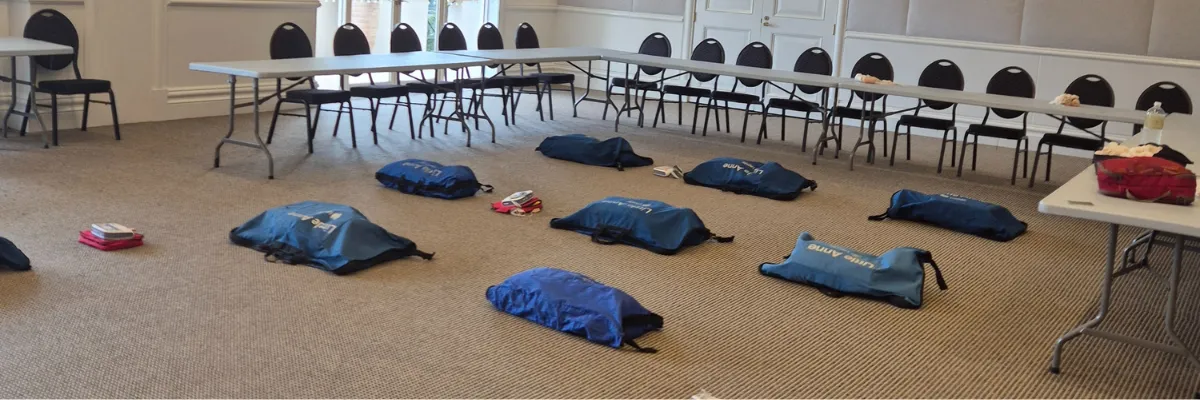
HLTAID015 is built around scenario-based practice, not sitting through slides. You're working through realistic patient presentations, practicing airway management and oxygen administration on equipment you'll actually recognize, and drilling the team-based skills that matter when a crew member is exhausted or the scene itself isn't fully safe.
The training runs as hands-on, applied learning throughout, with an emphasis on repetition until the skills feel automatic under pressure, not just understood in theory. That's a deliberate choice. On the fireground, you don't get time to think through a procedure step by step, you need it to be second nature, the kind of thing your hands do before your brain has finished catching up.
Trainers bring genuine paramedic and clinical background to the course, which shapes how the scenarios are built and how questions get answered. It's the difference between a course that teaches technique in isolation and one that teaches technique the way it actually gets used, under stress, in bad light, with a patient who isn't cooperating and a scene that's still unfolding around you.
Scenario work also tends to surface the small habits that separate confident, competent responders from people who technically know the steps but freeze slightly when it counts. Things like communicating clearly with a second rescuer mid-task, recognizing the moment a patient's condition has shifted, or knowing when to escalate rather than push on regardless. These aren't skills you can pick up from a manual, they come from being put through the scenario enough times that your instincts start doing the heavy lifting.
Closing
HLTAID015 isn't about ticking a compliance box. It's about being the person your crew can count on when it's not a routine call.
You already know CPR. You already know how to work a defib and manage a basic airway. What HLTAID015 adds is everything that sits between "call 000" and paramedics actually arriving, the airway management, the oxygen therapy, the extended stabilization when access to the scene is slow. That's not a nice-to-have on the fireground, that's the gap this qualification was built to close. It's the difference between watching and waiting, and actually doing something meaningful in those minutes that matter most.
It's also not just about compliance for your own peace of mind. It's about the moment when it's your own crew member down, mid-shift, and there's no one else coming for the next ninety seconds. That's the scenario this whole article started with, and it's the reason this training exists in the first place. No firefighter wants to be standing next to a colleague in that moment wishing they knew more than they do.
Accelerate First Aid runs this training specifically for emergency services personnel, not as a generic workplace first aid course with an oxygen unit bolted on. Scheduling works around shift rosters, so getting a crew or a whole station through it doesn't mean pulling people off rotation. The scenarios are built by people who understand what a fireground actually demands, not adapted from an office CPR course and relabeled for a different audience.
We're a Nationally Recognized Training provider under RTO 31106, and you're welcome to verify that directly on training.gov.au before you book. Whether you're booking as an individual or organizing a group booking for your station, the process is built to work around the way emergency services actually operate, not the other way around.