Advanced Resuscitation Course Prerequisites: 2026 Guide
It's 5:45pm on a Thursday. The last patient's gone home, the oxygen cylinder, suction unit and AED are sitting out on the bench in surgery two, and your clinical team is ready to train. Then the trainer asks your newest dental assistant for her HLTAID011 certificate. And she doesn't have one. So that's one staff member who can't be assessed, a second session you've now got to book, and another evening gone. Most advanced resuscitation course prerequisites are pretty simple, honestly. But they're easy to miss when you're booking a whole team with different start dates, casuals and locums all in the mix.
Here's the short version. HLTAID015 Provide Advanced Resuscitation and Oxygen Therapy has one formal pre-requisite unit, and that's HLTAID011 Provide First Aid. RTOs also apply a few practical requirements before anyone can be assessed: a USI, photo ID, a minimum age, and the physical ability to complete CPR on the floor.
This guide walks you through each one for Brisbane practices and clinics. It explains what to do when someone's first aid has lapsed, and it finishes with a pre-booking checklist you can hand straight to your team.
What Are the Prerequisites for an Advanced Resuscitation Course?
The main prerequisite for an advanced resuscitation course in Australia is HLTAID011 Provide First Aid, the pre-requisite unit listed for HLTAID015 on training.gov.au. Before assessment day, RTOs usually also ask each learner to have:
HLTAID011 Provide First Aid, completed beforehand or in the same booking
A Unique Student Identifier (USI)
Photo ID that matches the name on the booking
The provider's minimum age
The physical ability to perform uninterrupted CPR on a manikin on the floor
Any online pre-learning the RTO sets before the practical session
No clinical registration is needed. Dental assistants, receptionists and other non-registered staff can complete HLTAID015 once these requirements are met.
The first item on that list is the one that catches most practices out, so it's worth a closer look.
HLTAID011: The Formal Prerequisite
What training.gov.au actually says
Let's start with the official source, cause that's what your trainer works from. The unit lists HLTAID011 Provide First Aid as its pre-requisite, and you can check that yourself in the HLTAID015 unit details on training.gov.au. Accelerate First Aid delivers it as nationally recognised training under RTO 31106, so those rules are the ones we follow.
The assessment conditions add one more layer. Evidence of current first aid training has to be confirmed before assessment starts. That means "I'm pretty sure I did it last year" won't get anyone over the line on the night. The certificate needs to be sighted.
Why a CPR certificate on its own is not enough
This is where a lot of teams get tripped up. Plenty of staff hold HLTAID009 Provide Cardiopulmonary Resuscitation and figure that's close enough. It isn't.
HLTAID015 assesses a lot more than CPR, including managing life-threatening bleeding with tourniquets and haemostatic dressings. Our HLTAID015 vs HLTAID011 comparison breaks it down side by side if you want the full picture.
How to check "current" across your team
Grab everyone's Statement of Attainment and look at the issue date on each one. That's your starting point.
Staff whose first aid has lapsed
No drama, there's a fix. Book them into HLTAID011 first, or into a combined session if one's on offer.
Certificate held | Meets the HLTAID015 prerequisite? |
Current HLTAID011 | Yes |
HLTAID009 only | No |
HLTAID007 (old advanced resus unit) | No, superseded and not equivalent |
Lapsed HLTAID011 | Not until refreshed |
Once everyone's first aid is current, the rest of enrolment is paperwork you can sort without much fuss.

Enrollment Requirements Every Learner Needs
Whether you're booking an onsite group or searching "HLTAID015 course near me" for one new starter, every advanced resuscitation course in Brisbane runs through the same enrolment checks. None of them are hard. They just need doing before the day, not on it.
Unique Student Identifier (USI)
Every learner needs a USI. It's free, and staff can create a USI pretty quickly. Here's the catch: no USI, no Statement of Attainment. So even if someone nails the assessment, their certificate can't be issued until that number's sorted.
Photo ID and matching names
The name on the booking has to match the name on the ID. Sounds obvious, right. But it catches people out more than you'd think.
Watch for these:
Married names that haven't been updated everywhere
Preferred names used around the practice
Nicknames that ended up on the roster
A quick check when you send the booking through saves an awkward conversation at the door.
Minimum age
The minimum age is set by the training provider, not by the unit itself. Check it with the RTO when you book.
Reading and writing for the assessment
HLTAID015 isn't all hands-on. Learners have to complete an incident report and convey details to emergency services, so a bit of reading and writing is part of it. If someone on your team needs support with that, talk to the RTO before booking.
Paperwork done, the next thing to check is whether each person can physically complete the assessment.
Physical Requirements for Assessment Day
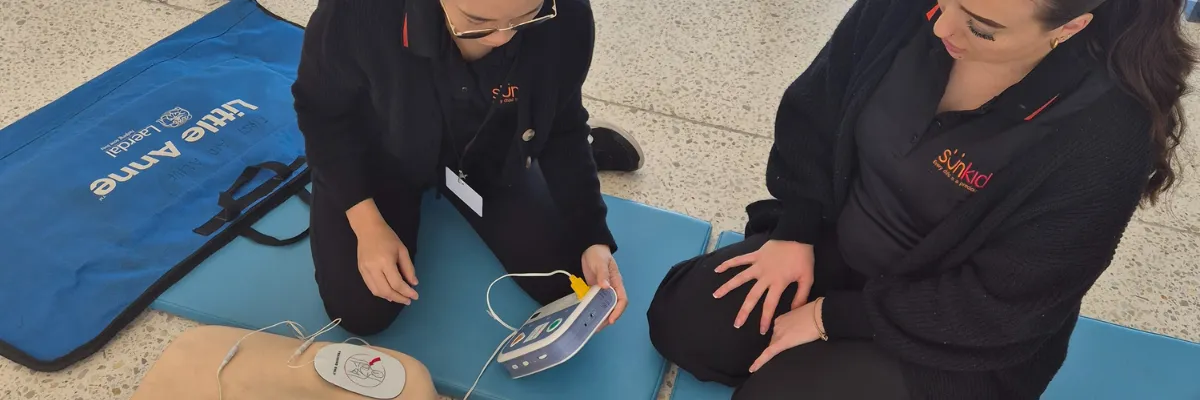
This is the bit people don't always think about when they're asking who can do advanced resuscitation training. It's not just knowing what to do. Each learner has to physically show it, on the floor, without stopping.
What learners must physically demonstrate
According to the unit's assessment requirements, every learner needs to complete:
Skill | What it looks like on the day |
Adult CPR | Uninterrupted single-rescuer CPR on an adult manikin on the floor |
Infant CPR | Infant CPR on a firm surface |
Bag-valve-mask ventilation | BVM ventilation with oxygen, in a multi-rescuer scenario |
Uninterrupted CPR doesn't sound like much. Then you're kneeling on a hard floor doing compressions and it feels a lot longer, trust me. That's exactly why the assessment asks for it, because a real emergency in the chair won't stop halfway.
Injuries, pregnancy and back or knee problems
If anyone on your team has an injury, is pregnant, or has a dodgy back or knees, have them talk to the trainer before you book. Not on the night. Before.
Reasonable adjustment can change how a skill gets assessed. But floor CPR can't be waived, so it's better to know early whether someone can complete it.
What to wear
Clothes they can kneel in comfortably. Scrubs are fine, so if your team's coming straight off the clinic floor after the last patient, they don't need to get changed.
One requirement that isn't on the list surprises a lot of managers.
Do Your Staff Need Clinical Registration?
Short answer, no. And this one surprises people, because a few pages out there make it sound like you need to be a registered clinician to get in the door.
Who can enroll
You don't need AHPRA registration, or any other registration, to complete HLTAID015. If you're booking an advanced resuscitation course for dental practices in Brisbane, that means your whole clinical floor can come along.
Honestly, that's good news for you as the manager. The person most likely to grab the oxygen kit first in an emergency is often an assistant, not the dentist. Our guide on who needs advanced resuscitation training takes a broader look at which roles it suits.
HLTAID015 is not hospital ALS
People mix these up all the time. Hospital Advanced Life Support is a different level, aimed at clinicians, with its own entry requirements. HLTAID015 isn't that course, and it doesn't need to be for what your team does day to day.
Where your practice's rules still apply
Finishing HLTAID015 doesn't override your own setup. Your practice's sedation and oxygen protocols still decide who does what on the day.
Not sure which level your team actually needs? Compare HLTAID009, HLTAID011 and HLTAID015 on our comparison page.
With the right people booked, a little preparation makes the session itself run faster.

What to Prepare Before Training Day
Booking onsite advanced resuscitation training in Brisbane is one thing. Walking into the session with a team that's ready to go is another, and it makes a real difference to how long everyone's there after the last patient.
Online pre-learning
If Accelerate First Aid sets online pre-learning for your booking, get your team to finish it before the day. That's what keeps the after-hours practical session shorter, so nobody's stuck at the practice till late.
Knowledge worth brushing up on
You don't need to study for this. But if staff want a head start, these are the areas the unit expects them to know:
The current ARC guidelines
Normal vital signs and oxygen saturation
The five rights of oxygen administration
Oxygen cylinder safety
When oxygen should not be used
Even a quick read the night before helps. It means the trainer spends less time on theory and more time on hands-on practice, which is what your team actually needs.
Getting your own equipment ready
For HLTAID015 group training in Brisbane run at your practice, do a quick check of your emergency kit before the trainer arrives:
Oxygen cylinder levels
Suction tubing
AED pads and their expiry date
AED batteries
Better to find an empty cylinder or out of date pads on a quiet afternoon than in the middle of a real emergency. Training day's just a good excuse to look.
Whether the trainer uses your practice's own kit depends on the session. Assessment still uses the RTO's ARC-compliant manikins and training devices either way.
Here's how it all comes together on a timeline you can work through for your own team.
A Practice Manager's Pre-Booking Checklist
This is the part you can print and stick on the wall. Whether it's your first time booking advanced resus training in Brisbane or your fifth renewal, working back from the training date keeps everything on track.
Well before training
This is where most of the work happens. Get these sorted early and the rest is easy.
Collect USIs from everyone booked
Check every HLTAID011 date on file
Flag new starters, casuals and locums
Confirm your headcount so the quote's accurate
Casuals and locums are the ones that slip through. They're not always in practice when you're chasing paperwork, so start with them.
Closer to training day
Confirm pre-learning is done
Remind staff to bring photo ID
Clear the training room and set it up
Run your equipment pre-check
After training
File every certificate in one batch
Log renewal dates in your compliance spreadsheet
Keep a record of the drill for accreditation
Doing it in one batch sounds small. But it's the difference between pulling up evidence straight away and digging through a dozen inboxes when a surveyor asks. When renewal comes round, our HLTAID015 renewal guide covers what happens next.
Sorting Your Advanced Resuscitation Course Prerequisites Early
Think back to that Thursday evening in surgery two. The kit's out, the team's ready, and one missing certificate is all it takes to lose a staff member and book a whole second session. The good news is that it's completely avoidable, and it doesn't take much.
Most of it comes down to one unit. Current HLTAID011 Provide First Aid is the formal pre-requisite, and a CPR-only HLTAID009 or an old HLTAID007 won't count. Check the issue date on every Statement of Attainment, and get anyone who's lapsed booked in first.
The paperwork is the easy bit, honestly. Every learner needs a USI, photo ID that matches the name on the booking, and to meet the minimum age. If anyone needs support with the reading and writing side of the assessment, have that conversation with the RTO before the day.
Then there's the physical side. Each person has to complete uninterrupted CPR on a manikin on the floor, so anyone with an injury, a pregnancy or a dodgy back or knees should talk to the trainer early. Scrubs are fine, as long as they can kneel in them.
And remember, nobody needs clinical registration to get in. Your dental assistants, oral health therapists, front desk and managers can all do it. Your practice's own sedation and oxygen protocols still decide who does what on the day, though.
From there it's just timing. Collect USIs and check HLTAID011 dates well ahead, run your equipment pre-check closer to the day, then file certificates in one batch and log the renewal dates after. Do that and your advanced resuscitation course prerequisites are sorted well before anyone walks in the door.
When you're ready, send through your staff numbers and we'll put together a quote for onsite training at your practice, after hours or on a Saturday. Your team trains together, gets assessed for the first time, and you get the evening back.