Advanced Resuscitation Course Gold Coast: HLTAID015 Expert Training for Healthcare Professionals
Picture this - it's 2:47 AM on a Tuesday night at Gold Coast University Hospital. Sarah, an ICU nurse manager with twelve years of experience, hears the dreaded Code Blue alarm echo through the corridors. As she rushes to room 314, her mind races through the advanced algorithms she learned months ago. Will her team remember the correct dosage timing for amiodarone? Can they manage the advanced airway while maintaining effective compressions?
This scenario plays out across the Gold Coast every single day. And here's what keeps healthcare professionals like Sarah awake at night - the gap between basic CPR training and the complex reality of managing cardiac arrests in clinical settings.
Most healthcare workers complete their basic life support certification and think they're prepared. But when you're dealing with a 78-year-old patient in VF with multiple comorbidities, or managing a pediatric code in the ED while family members watch through the glass doors, basic CPR just doesn't cut it anymore.
Our HLTAID015 Advanced Resuscitation Course bridges that gap for Gold Coast healthcare professionals who understand that every second counts - and every skill matters. This isn't your standard first aid training where you practice on a mannequin for an hour and walk away with a certificate. We're talking about hospital-grade scenarios using the same defibrillators, medications, and monitoring equipment you use daily in your clinical environment.
What you'll discover in this guide goes way beyond the basics. We'll walk you through exactly what separates advanced resuscitation training from standard CPR, break down the specific HLTAID015 requirements that AHPRA expects from healthcare professionals, and show you how to choose training that actually prepares your team for those 3 AM Code Blues.
Because when that alarm sounds and adrenaline kicks in, you want your team thinking "we've got this" - not "I hope we remember what we're supposed to do."
Understanding HLTAID015: Beyond Basic Life Support
Here's something most healthcare professionals don't realize until they're knee-deep in a complex resuscitation - basic CPR certification barely scratches the surface of what you need in a clinical environment.
HLTAID015 Advanced Resuscitation is a comprehensive training course that equips healthcare professionals with advanced life support skills beyond basic CPR. This nationally recognized certification covers:
Advanced cardiac life support algorithms - VF/VT, PEA, and asystole management
Multi-drug therapy protocols - Adrenaline, amiodarone, and atropine administration
Advanced airway management - Supraglottic airways and ventilation strategies
Team coordination during codes - Clear communication and role delegation
Post-resuscitation care - Therapeutic hypothermia and ongoing monitoring
Unlike basic first aid training, HLTAID015 is designed for clinical environments where healthcare workers must manage complex cardiac arrests and respiratory emergencies. The certification is valid for 12 months and meets AHPRA continuing professional development requirements.
What Makes Advanced Resuscitation Different
Think about the last Code Blue you attended. Was it a textbook scenario where the patient responded perfectly to basic CPR? Probably not. Real cardiac arrests in hospital settings involve multiple variables - pre-existing conditions, medication interactions, equipment failures, and family dynamics that basic training simply doesn't address.
Advanced resuscitation training acknowledges this complexity. Instead of practicing compressions on a mannequin in a quiet room, you're working through scenarios where the defibrillator battery dies mid-shock, the patient has a difficult airway, and you've got three family members asking questions while you're trying to push drugs.
Dr. Michael Chen, Emergency Medicine Consultant at Robina Hospital, explains: "Basic CPR teaches you the mechanics. Advanced resuscitation teaches you to think critically under pressure. When we see healthcare professionals who've completed HLTAID015, there's a noticeable difference in their confidence and clinical decision-making during actual emergencies."
AHPRA Requirements for Healthcare Professionals
AHPRA doesn't just suggest advanced training for healthcare professionals working in critical care - they expect it. And here's what many people miss: your standard workplace CPR update doesn't count toward these requirements.
For nurses working in ICU, ED, or high-acuity areas, AHPRA expects current advanced life support certification. The same applies to paramedics, and increasingly, aged care facilities are requiring advanced training for their clinical staff as resident acuity increases.
Patricia Williams, Director of Nursing at a premium Gold Coast aged care facility, learned this during an unannounced audit: "The assessor specifically asked about our staff's advanced resuscitation training. Basic CPR wasn't enough - we needed to show that our nurses could manage complex cardiac events with the level of care you'd expect in a hospital setting."

Core Components of Advanced Resuscitation Training
Let's break down what you're actually learning in HLTAID015 training. This isn't about memorizing flowcharts - it's about developing the clinical thinking that lets you adapt when things don't go according to plan.
Advanced Cardiac Life Support Algorithms
The reality of cardiac arrests in clinical settings is messy. Patients don't always present with neat, textbook rhythms. You might start with VF that degrades to asystole, or deal with PEA where the underlying cause isn't immediately obvious.
In advanced training, you're working through these complex scenarios:
Refractory VF/VT management - What happens when standard defibrillation isn't working? You'll practice double sequential defibrillation, alternative pad positions, and the decision tree for when to consider extracorporeal support.
PEA with reversible causes - Rather than just pushing drugs and hoping, you're systematically working through the H's and T's while managing the airway and continuing high-quality compressions.
Asystole protocols - Learning when to continue resuscitation efforts and when to consider cessation, including family communication during these difficult decisions.
Pharmacology in Emergency Situations
Drug calculations under pressure are where many healthcare professionals struggle. When you're managing a cardiac arrest, you don't have time to double-check dosing charts or ask a colleague to verify your math.
Advanced training covers precise dosing calculations for emergency medications based on patient weight and clinical presentation, drug interaction considerations when patients are on multiple medications, alternative routes of administration when IV access is challenging, and timing protocols for medication delivery.
Here's a scenario that happens more often than you'd think: You're managing a 45-year-old male in cardiac arrest. He's been down for 12 minutes, you've given two rounds of adrenaline, and he's still in VF. His wife mentions he takes amiodarone for atrial fibrillation. Do you give additional amiodarone? What's your loading dose calculation?
Basic CPR training doesn't prepare you for these decisions. Advanced training does.
Team Dynamics and Communication Protocols
This might be the most important component, and it's often overlooked in basic training. Cardiac arrests aren't solo events - they require coordinated team effort where everyone knows their role and communication is clear and direct.
Advanced training includes role assignment and rotation, closed-loop communication for confirming orders and verbalizing actions, family communication during active resuscitation, and debriefing protocols for post-event analysis.
During a recent code at a Gold Coast aged care facility, the difference was obvious. Sarah Kim, the facility's clinical manager, noted: "Before our team completed HLTAID015, our codes were chaotic. People talked over each other, we duplicated efforts, and made basic errors. Now there's clear leadership, defined roles, and calm communication even during the most stressful situations."
Real-World Applications for Gold Coast Healthcare Facilities
Every healthcare facility on the Gold Coast faces unique challenges when it comes to cardiac emergencies. What works in a tertiary hospital ICU doesn't necessarily translate to an aged care facility or a busy emergency department.
ICU and Critical Care Scenarios
ICU patients aren't your typical cardiac arrest cases. They're often on multiple drips, have complex medical histories, and may already be intubated when they arrest. ICU teams deal with ventilator management during compressions, multiple IV access considerations, hemodynamic monitoring interpretation, and post-arrest therapeutic hypothermia protocols.
Jennifer Walsh, ICU Nurse Manager at Gold Coast University Hospital, explains the complexity: "We had a 68-year-old post-surgical patient arrest at 4 AM. He was on three vasoactive drips, had an intra-aortic balloon pump, and was already intubated. Standard ACLS protocols don't cover how to manage balloon pump timing during chest compressions."
Emergency Department Protocols
Emergency departments are chaos by design. You're managing multiple patients simultaneously, dealing with incomplete medical histories, and working with family members who are scared and demanding answers. ED-specific challenges include unknown patient histories, multiple simultaneous emergencies, family presence during resuscitation, and disposition decisions.
Tom Rodriguez, Emergency Medicine Consultant at Robina Hospital, shares: "Last week we had a 34-year-old female arrest in triage. No medical history, no ID, pregnant but we didn't know how far along. Meanwhile, we had a multi-vehicle accident coming in with three critical patients. Our team needed to make complex decisions about left uterine displacement and medication dosing for pregnancy."
Paramedic Service Standards
Queensland Ambulance Service teams work in the most unpredictable environments - someone's living room, a shopping center, or the side of the Pacific Highway. They don't have the controlled environment of a hospital, and they're often the first advanced care providers on scene.
Mark Stevens, a senior paramedic with QAS Gold Coast, reflects: "We responded to a cardiac arrest at Currumbin Beach. Patient was in the surf when he collapsed, so we're dealing with hypothermia, salt water aspiration, and sand in our equipment. Plus we had 50 people watching and asking questions. You need training that prepares you for these real-world variables."

Choosing the Right Advanced Resuscitation Course
Not all HLTAID015 courses are created equal. You can walk into any training provider and get a certificate, but that doesn't mean you'll walk out prepared for the complex scenarios you face in your clinical environment.
Trainer Qualifications and Clinical Experience
Your instructor's background matters more than you might think. You want someone teaching you who's actually been in your shoes - who's managed codes at 3 AM, dealt with difficult airways under pressure, and made split-second medication decisions when protocols don't give clear answers.
Look for trainers with current clinical practice, advanced certifications, local experience with Gold Coast healthcare systems, and ongoing education with regular guideline updates.
Dr. Amanda Chen, who teaches HLTAID015 courses when she's not working ED shifts at Gold Coast University Hospital, explains: "I had a student ask me last week about managing a cardiac arrest in a patient with an LVAD. That's not in any textbook scenario, but it's something I dealt with two months ago in the ED. When your instructor has real clinical experience, you get answers to the questions that actually matter."
Equipment and Simulation Technology
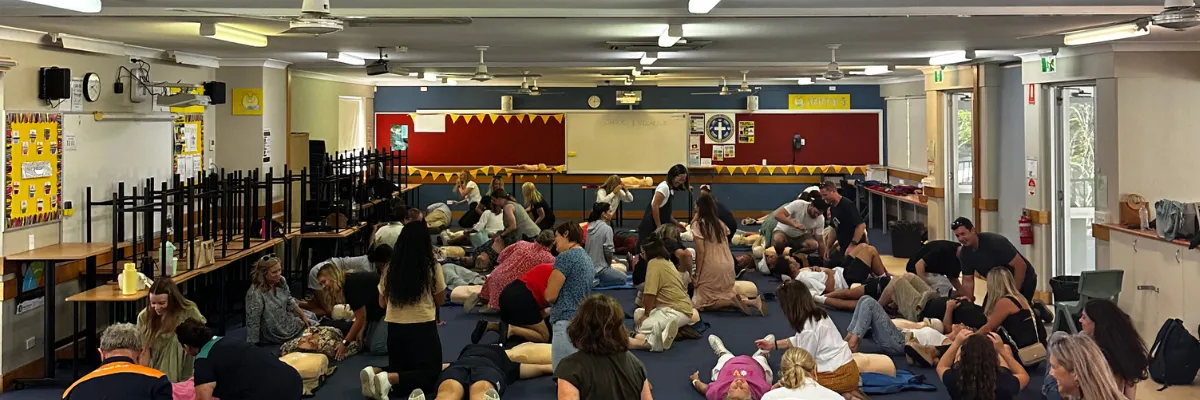
Quality training should include current defibrillator models commonly used in Gold Coast hospitals, realistic simulation mannequins with actual heart rhythms and pulse generation, authentic medications for practice with actual drug vials, and real monitoring equipment for ECG interpretation.
Scheduling Options for Healthcare Teams
Healthcare operates 24/7, which makes training scheduling a nightmare. Quality training providers understand this and offer weekend and evening sessions, on-site delivery to minimize staff travel time, small group sessions for hands-on practice, and split scheduling options.
Implementation and Team Training Strategies
Getting your entire team certified is one thing. Making sure those skills stick and translate to better patient outcomes is another challenge entirely.
Overcoming Scheduling Challenges
The biggest headache for nurse managers is figuring out how to train everyone without compromising patient safety. Strategies that work include staggered training cohorts, cross-coverage agreements with other units, and integration with continuing education days.
Jennifer Walsh, ICU Manager at Gold Coast University Hospital, solved this creatively: "We partnered with our sister hospital to provide cross-coverage. When our ICU team trains, their staff cover our patients, and we return the favor."
Maintaining Skills Between Certifications
Studies show that without practice, healthcare professionals lose 50% of their resuscitation skills within 6 months of training. Smart facilities implement monthly code simulations, equipment familiarization sessions, case review meetings, and peer mentoring programs.
Building Confidence in High-Pressure Situations
The technical skills are only half the battle. You also need to build the psychological resilience that lets staff perform under pressure. Confidence-building strategies include graduated complexity training, stress inoculation practice, leadership rotation, and post-scenario debriefing.
Tom Rodriguez, Emergency Medicine Consultant at Robina Hospital, explains: "We've found that staff who've practiced managing chaos in training stay calmer during real emergencies. It's not about memorizing protocols - it's about building the mental muscle memory that kicks in when your brain goes into crisis mode."

Your Next Steps: Getting Your Team HLTAID015 Certified
The question isn't whether you need HLTAID015 training - it's how quickly you can get your team certified with quality training that actually prepares them for real clinical situations.
Your action plan:
Step 1: Assess Your Current Team Status - Review certification dates and identify who needs initial versus renewal training.
Step 2: Choose a Training Provider - Verify ASQA registration, instructor qualifications, and equipment quality.
Step 3: Plan Your Implementation - Start with critical care staff and build in scheduling flexibility.
Step 4: Integrate Ongoing Maintenance - Schedule regular practice sessions and skill reinforcement.
Ready to Take Action?
Don't wait for the next Code Blue to realize your team needs better preparation. Every day you delay is another shift where your staff might face a complex cardiac arrest without the advanced skills they need.
Book Your HLTAID015 Advanced Resuscitation Course Today
Call 0434778243 | 04FIRSTAID to secure your team's training dates
Because when that 3 AM Code Blue alarm sounds, you want your team thinking "we've got this" - not "I hope we remember what we're supposed to do."