Advanced Resuscitation Course: Blended Learning 2026
Closing the surgeries for a full day of training means lost appointments, and for a sedation practice that hurts. An advanced resuscitation course blended learning format takes most of that pain off the table. Each team member knocks over the theory online, in their own time. Then everyone sits one shorter practical together, after the last patient walks out or on a Saturday morning before the week catches up with you. No empty chairs. No rebooked sedation list.
For Brisbane dental, medical and day surgery practices, the course you're after is HLTAID015 Provide Advanced Resuscitation and Oxygen Therapy. It covers oxygen therapy, suction, airway adjuncts, bag-valve-mask ventilation and AED use. And here's the bit that trips a lot of people up. It isn't the same thing as the hospital Advanced Life Support (ALS) courses that pop up when you search for advanced resuscitation training.
This guide walks you through what gets done online and what has to happen in person, how to keep pre-learning on track across a team full of casuals and locums, and how to book the practical in your own practice, on your own equipment. Because honestly, the best place for your team to learn the oxygen kit is standing right next to the one they'd actually grab.
What Is a Blended Learning Advanced Resuscitation Course?
A blended learning advanced resuscitation course splits HLTAID015 Provide Advanced Resuscitation and Oxygen Therapy into two parts. You complete the theory online at your own pace, then attend a face-to-face practical where a trainer assesses your resuscitation, oxygen therapy and airway skills in person.
Enroll: provide your USI and confirm you hold the HLTAID011 Provide First Aid prerequisite.
Complete the online theory: self-paced modules and knowledge questions, finished before the practical.
Attend the practical: demonstrate CPR, oxygen therapy, suction, bag-valve-mask ventilation and AED use on manikins under direct observation.
Receive your statement of attainment once you're assessed as competent.
Before booking though, it's worth checking you're looking at the right course, because "advanced resuscitation" means different things to different providers.
HLTAID015 vs Advanced Life Support: Make Sure You Book the Right Course
Search "advanced resus training Brisbane" and you'll get a mix of results that look similar but aren't. Some are HLTAID015, some are hospital ALS courses for doctors and nurses. Booking the wrong one is an easy mistake at the end of a long day.
What HLTAID015 covers
HLTAID015 is a nationally recognized unit. Only a registered training organisation (RTO) can deliver it, under ASQA oversight, and you walk away with a statement of attainment that lists the unit code.
It's built for first responders and clinical support staff, the people reaching for the oxygen, suction, airway adjuncts, bag-valve-mask and AED when something goes wrong. In a dental practice that's usually your assistants and oral health therapists.
If you've got older records showing HLTAID007, HLTAID015 replaced it, but the two aren't equivalent. You can check the unit details on training.gov.au.
What hospital ALS courses cover
Advanced Life Support courses are CPD courses for doctors and nurses. They're not VET units, so there's no nationally recognized unit code attached.
They go further clinically, into skills HLTAID015 doesn't touch, like rhythm interpretation. That makes ALS sound like the "better" choice. It's not, not for this. If your employer or accreditation process asks for HLTAID015 by unit code, an ALS certificate isn't a substitute. Different tool, different job.
Who in a Brisbane practice needs which
Clinical team (dental assistants, OHTs, nurses): HLTAID015
Front desk and admin: HLTAID011 or HLTAID009
Seditionists and doctors: usually hold ALS through their own college
HLTAID015 | Hospital ALS | HLTAID011 | |
Issued by | RTO, as a statement of attainment | Hospital, college or CPD provider | RTO, as a statement of attainment |
Who it's for | First responders and clinical support staff | Doctors and nurses | General workplace first aiders |
Equipment | Oxygen, suction, airway adjuncts, BVM, AED | Hospital setting, includes rhythm interpretation | CPR, AED and general first aid |
Blended option | Yes, online theory plus practical | Offered by some providers | Yes, online theory plus practical |
Renewal | Commonly yearly | Set by the college or employer | CPR yearly |
Once you know HLTAID015 is the right unit, the next question is what your team will actually do in each part.

What You Do Online and What Happens in the Practical
The split is pretty simple. The reading and the knowledge questions move online. Everything that needs your hands moves into the practical.
The online theory
This is the HLTAID015 online part, and it's self-paced. Your team works through modules covering:
Recognizing when a patient is deteriorating
Airway management
When oxygen therapy is indicated
The ANZCOR basic life support sequence
Legal and duty-of-care points
There's an online knowledge assessment to finish before the practical. The nice thing about online pre-learning is your experienced assistant moves through it quickly, while your newest starter can go back over the bits that didn't stick at first go.
The practical session
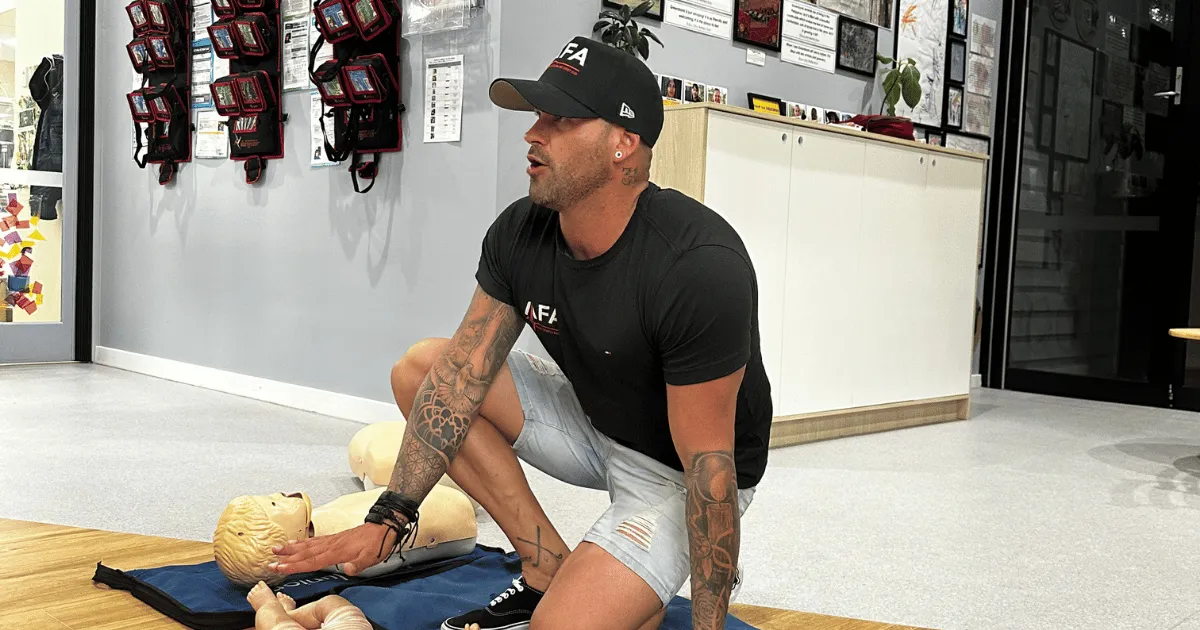
This is where the real work happens. Each person demonstrates their skills on manikins under direct observation from the trainer:
Adult and infant CPR on the floor
Oxygen delivery
Suction
Inserting an oropharyngeal airway
Bag-valve-mask ventilation
AED use
Practices can also ask for an optional sedation or dental-chair scenario. Getting a proper seal with a BVM is one of those things that sounds easy on paper and feels completely different the first time you try it.
Why the practical can't be skipped
HLTAID015 can't be done fully online, because the skills have to be assessed in person. Our HLTAID015 face to face requirements guide covers the full reasoning.
Done online | Done in your practice |
Self-paced theory modules | Adult and infant CPR on the floor |
Recognizing deterioration | Oxygen delivery |
Airway and oxygen therapy principles | Suction |
ANZCOR basic life support sequence | Oropharyngeal airway |
Legal and duty-of-care points | Bag-valve-mask ventilation |
Online knowledge assessment | AED use, assessed by a trainer |
Splitting a course in two raises a fair question from any practice owner: does it work as well?
Does Blended Learning Work as Well as a Full Classroom Day?
What the research says
There's no HLTAID015-specific research on this yet. But there is good evidence on blended resuscitation training from the UK, where e-learning versions of hospital ALS courses have been studied for years.
Lockey (2020), University of Huddersfield: the blended e-ALS course delivered equivalent outcomes to the conventional ALS course, with half the face-to-face time. Read the research.
Resuscitation journal (2015), 2,848 participants: learners rated the face-to-face content higher, but most still found the e-learning useful. Read the study.
People value hands-on time more. Which is exactly why a blended course doesn't cut the practical, it cuts the reading.
Where blended works best
Staff renewing skills they already use
Teams working mixed shifts, where getting everyone free for a full day is near impossible
The research also linked prior life support experience or a clinical background to better e-ALS outcomes. That fits a clinical team pretty well. Your people already know a patient in trouble, they just need the skills kept sharp.
Where a longer practical helps
New assistants who've never touched oxygen or suction kits are a different story. Reading about a regulator isn't the same as turning one on with your hands shaking a bit. For those staff, extra hands-on time or a drill add-on is the smarter move. Cheap insurance against freezing on the day it counts.
The real advantage for a practice isn't the research. It's the calendar.
How Blended Learning Fits a Brisbane Practice Schedule
After-hours and Saturday practical's in your own practice
Because the online theory takes care of the classroom hours, the practical is short enough to fit after the last patient goes home, or on a Saturday morning. That's what makes onsite advanced resuscitation training in Brisbane actually workable for a sedation practice. No surgeries closed. No sedation list pushed to next week.
And because it happens in your practice, nobody's driving into the city and hunting for parking.
Training on your own oxygen, suction and AED
Your staff practice on the kit they'd actually reach for in an emergency. Same regulator. Same suction unit. Same AED.
If a past trainer brought different equipment from what's in your emergency kit, you'll know why this matters. Learning on someone else's gear means figuring out your own when it's for real, the worst possible moment.
Public practical's for new starters
Not every booking is the whole team. If you've just hired a new assistant, they can do the online theory, then join a public practice rather than waiting for your next group session. For more on finding a nationally recognized advanced resuscitation course in Brisbane, see our guide to accredited courses in Brisbane.
From logins to certificates
Step | What happens |
1. Booking | Logins go out to each staff member |
2. Online theory | Each person works through the modules at their own pace |
3. Theory deadline | Everyone's online work is done before the practical |
4. Practical | The team is assessed together in your practice, after hours or Saturday |
5. Certificates | Statements of attainment issued |
Blended learning only saves time if everyone arrives with the theory done.

Getting a Whole Team Through Pre-Learning on Time
Here's the part nobody talks about. HLTAID015 group training in Brisbane runs smoothly when the online work is finished before anyone walks into the practical. Otherwise you've got one person doing modules on their phone in the staff room while everyone else waits.
Set a theory deadline before the practical
Pick a due date a few days before the session and tell everyone up front. Not the night before. That gap gives you room to chase the stragglers without panic.
Checking prerequisites as you go
Collect two things from each staff member at enrolment: their USI and a current HLTAID011 certificate. Our HLTAID015 prerequisites guide has the full detail.
Tracking casuals, locums and staggered start dates
This is where it gets messy. Your permanent team might all renew in the same month, but casuals, locums and new hires come in at different times. A simple tracker keeps it from living in your head.
Name | Role | Theory complete | Practical date | Certificate date | Renewal due |
Staff member A | Dental assistant | Yes | Practical night | Issued | Same month next year |
Staff member B | Oral health therapist | In progress | Practical night | Pending | Pending |
Staff member C | Casual dental assistant | Not started | Public practical | Pending | Pending |
Before your practical:
Every staff member has logged in.
Theory finished by the deadline.
USIs and HLTAID011 certificates collected.
Oxygen cylinder, suction and AED pads checked.
A clear surgery or staff room booked.
After the first session, the same structure makes each year's renewal easier.
Using Blended Learning for Annual Refreshers
If you're wondering how often to renew advanced resuscitation skills, the usual answer is once a year.
That comes from the CPR side. The Safe Work Australia Model Code of Practice: First aid in the workplace recommends CPR training be refreshed annually. Employers and indemnity insurers commonly expect HLTAID015 to follow the same yearly cycle. That's an expectation, not a law.
This is where a blended HLTAID015 refresher in Brisbane pays off. Experienced staff move through the theory quickly, so the practical goes to the skills that quietly fade when you use them once a year. Getting a good BVM seal. Setting up the suction without fumbling the tubing.
Keeping it to the same month every year makes life a lot easier too. One date to remember, one batch of certificates, no one slipping through the gaps.
Getting Your Whole Team Trained Without Losing a Day
Blended learning takes the biggest headache out of resuscitation training for a busy practice. Each person does the theory online, in their own time, and then everyone comes together for one shorter practice. That practice can run after the last patient leaves or on a Saturday morning, so the surgeries stay open and the sedation lists stay exactly where they are.
Before you book, check it's the right course. For your clinical team, that's HLTAID015, not a hospital ALS course, even though the two turn up side by side in search results. Front desk staff are usually covered by HLTAID011 or HLTAID009.
The format holds up too. The UK research isn't about HLTAID015, but it points the same way: blended delivery gets people to the same place with less time in the room. And for brand new assistants, a bit of extra practical time is money well spent.
The practices that get the most out of it keep the admin simple. A theory deadline, prerequisites collected at enrolment, a basic tracker for casuals and locums, and the same month every year so renewals just happen.
So check who needs HLTAID015 and who needs HLTAID011, gather those USIs and certificates, pick an after-hours or Saturday date, and ask for a group quote. An advanced resuscitation course with a blended learning setup won't make an emergency in the chair any less frightening, but it means that when someone goes down, your team will know the kit, know their roles and move like they've done it before. Because they will have.