Advanced Cardiac Life Support: Essential Steps Every Healthcare Professional Needs to Know
When a patient goes into cardiac arrest, would you know exactly what to do in those critical first minutes? For healthcare professionals, lifeguards, and emergency responders, this isn't hypothetical—it's a reality that demands confidence, precision, and advanced training.
Advanced cardiac life support (ACLS) represents the gold standard in emergency cardiovascular care, equipping professionals with the systematic approach needed to manage life-threatening situations. Whether you're maintaining your certification, advancing your career in emergency response, or ensuring your team is prepared for high-pressure scenarios, understanding ACLS protocols separates hesitation from decisive action when someone's life is on the line.
In this guide, you'll discover the essential steps of advanced cardiac life support, from recognizing cardiac emergencies to executing treatment algorithms. We'll break down ACLS certification requirements, explore evidence-based protocols, and provide practical insights for real-world application.
What is Advanced Cardiac Life Support?
Advanced Cardiac Life Support (ACLS) is a systematic, evidence-based approach to managing cardiovascular emergencies, including cardiac arrest, stroke, and acute coronary syndromes. This advanced training builds upon basic life support (BLS) skills by incorporating:
Advanced airway management techniques - including intubation and supraglottic devices
ECG rhythm recognition and interpretation - for identifying life-threatening arrhythmias
Pharmacological interventions - using emergency cardiac medications
Defibrillation and cardioversion protocols - for restoring normal heart rhythms
Effective team communication - using closed-loop communication methods
Post-cardiac arrest care - to optimize patient outcomes
ACLS certification is required for healthcare providers, paramedics, emergency responders, and medical professionals who may encounter cardiac emergencies. The training emphasizes rapid assessment, evidence-based decision-making, and coordinated team response to maximize survival rates.

Understanding the ACLS Algorithm Framework
The Primary ACLS Survey Approach
The primary survey in advanced cardiac life support follows the Airway, Breathing, Circulation, Defibrillation (ABCD) framework. This systematic approach gives you a clear priority-based sequence during critical moments.
Airway - comes first—check for obstruction, position the head properly, and prepare for advanced airway interventions if basic maneuvers don't work.
Breathing - follows immediately. Verify chest rise, bilateral breath sounds, and if you've placed an advanced airway, use capnography to confirm you're actually ventilating the patient.
Circulation - means high-quality CPR and vascular access. Maintain 5-6 centimeters compression depth, 100-120 compressions per minute, and complete chest recoil. Establish IV or IO access for medications, but don't stop compressions for more than 10 seconds.
Defibrillation - happens as soon as you identify a shockable rhythm. Every minute you delay defibrillation in ventricular fibrillation or pulseless ventricular tachycardia drops survival rates by about 10%.
The Secondary ACLS Survey Protocol
The secondary survey uses the H's and T's mnemonic to identify reversible causes:
The H's: Hypovolemia, Hypoxia, Hydrogen ion (acidosis), Hypo/hyperkalemia, Hypothermia
The T's: Tension pneumothorax, Tamponade (cardiac), Toxins, Thrombosis (pulmonary/coronary)
Your brain should run through these possibilities from the moment you arrive. Young person at the gym? Think hypokalemia. Trauma patient? Tension pneumothorax and hypovolemia. Drug paraphernalia nearby? Toxins.
Essential ACLS Skills and Techniques
Advanced Airway Management
Advanced airway management separates ACLS from basic life support. Endotracheal intubation provides a protected airway, but shouldn't delay other interventions. If you can't get the tube in within 30 seconds, return to bagging and try again after compressions.
Supraglottic airway devices - like the LMA or King airway sit above the vocal cords. They're faster to insert and work well when intubation isn't possible.
Capnography monitoring - confirms your airway interventions are working. The waveform tells you: you're in the trachea (you see CO2), you're ventilating adequately (35-40 mmHg), and your CPR quality is good.
ECG Rhythm Recognition and Interpretation
You need to identify four lethal rhythms instantly: ventricular fibrillation (VF), ventricular tachycardia (VT), pulseless electrical activity (PEA), and asystole.
Ventricular Fibrillation - looks chaotic—no organized complexes. The heart is quivering, not pumping. Shock immediately.
Pulseless Ventricular Tachycardia - shows wide QRS complexes firing rapidly. No filling means no output. Shock immediately.
Pulseless Electrical Activity - shows organized complexes but no pulse. Don't shock—find and fix the underlying cause using H's and T's.
Asystole - is flatline. Don't shock—do high-quality CPR, give epinephrine, and look for reversible causes.
Pharmacological Interventions in ACLS
Epinephrine - is your primary medication: 1mg IV/IO every 3-5 minutes. In shockable rhythms, give after the second shock. In non-shockable rhythms, give as soon as you have vascular access.
Amiodarone - treats refractory VF/VT: 300mg IV/IO after the third shock. Second dose of 150mg if needed.
ACLS Certification Requirements and Process
Who Needs ACLS Certification?
Healthcare professionals in acute care settings—emergency departments, ICUs, cardiac care units—require ACLS certification. Paramedics, advanced EMTs, and emergency responders need it to manage cardiac emergencies from first contact through hospital handoff.
Lifeguards at large facilities and theme parks increasingly need ACLS. If you're managing safety at a water park with thousands of visitors, basic life support might not be enough.
ACLS certification signals qualification for higher-level positions. Safety operations manager roles, team leader positions, and training coordinator jobs almost always list ACLS as a requirement. It demonstrates you can handle critical situations and lead teams during emergencies.
ACLS in Action: Real-World Application
Effective Team Dynamics During Resuscitation
Clear role assignment transforms chaos into coordinated action. Each team member needs a specific role:
Closed-loop communication prevents errors:
Leader: "Give 1mg epinephrine IV"
Nurse: "Giving 1mg epinephrine IV"
Nurse: "1mg epinephrine given at 14:23"
This three-part exchange catches mistakes before they happen.
Common ACLS Scenarios and Response Protocols
Shockable Rhythm (VF/Pulseless VT): Immediate defibrillation. CPR for two minutes between shocks. Epinephrine after second shock. Amiodarone 300mg after third shock if still in VF.
Non-Shockable Rhythm (PEA/Asystole): High-quality CPR immediately. Epinephrine as soon as vascular access is established, then every 3-5 minutes. Work through H's and T's to find reversible causes.
Acute Coronary Syndrome: Oxygen if SpO2 below 90%, aspirin immediately, 12-lead ECG within 10 minutes. ST elevation means catheterization lab activation.
Post-Cardiac Arrest Care
Return of spontaneous circulation starts the next critical phase. Target SpO2 of 92-98%—not 100%. Maintain mean arterial pressure ≥65 mmHg. Treat underlying causes. Avoid hyperthermia aggressively.
Targeted temperature management involves maintaining core temperature 32-36°C for 24 hours post-arrest. Transfer to facilities with catheterization lab and ICU capabilities if needed.

Advancing Your ACLS Skills and Career
Beyond Basic ACLS: Advanced Training Options
ACLS-EP (Experienced Provider) - courses tackle complex scenarios where standard algorithms don't provide clear answers. These courses require current ACLS certification and documented code experience.
PALS certification - expands capabilities to pediatric patients. If you work where children are present—theme parks, community pools—PALS makes you significantly more valuable.
ACLS instructor certification - transitions you from practitioner to educator. Requirements include current ACLS certification, completion of instructor materials, co-teaching multiple courses, and passing instructor evaluation.
Career progression: Basic ACLS → ACLS-EP → ACLS Instructor → Master Instructor → Program Coordinator
Cross-training in multiple specialties increases marketability. ACLS + PALS + instructor certifications position you for leadership in emergency preparedness and multi-facility safety coordination.
Staying Current with ACLS Guidelines
The Australian Resuscitation Council reviews guidelines regularly. The American Heart Association publishes major revisions every five years with interim updates.
Subscribe to the ARC newsletter for digestible updates. Join professional associations for clinical updates. Attend conferences annually. Participate in journal clubs monthly. Use apps for rhythm recognition practice and algorithm review.
Taking the Next Step
Advanced cardiac life support represents more than certification—it's your foundation for confident emergency response when lives hang in the balance. From mastering systematic algorithms to leading coordinated teams, ACLS training equips you with expertise that defines exceptional healthcare professionals.
The difference between good and tragic outcomes often comes down to those first few minutes—and whether responders have the training, skills, and confidence to execute under pressure. You can be that responder. You can be the team leader who turns chaos into coordinated action.
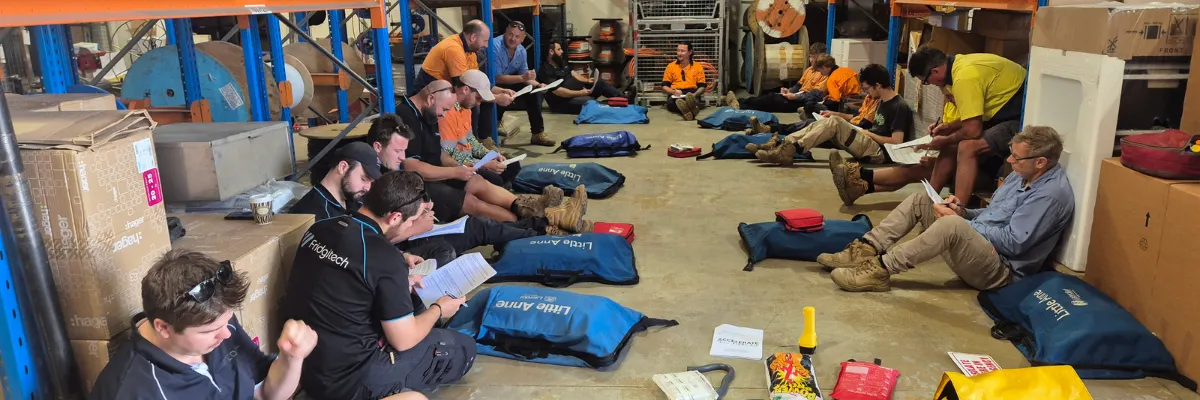
Our Gold Coast ACLS certification courses provide hands-on training with experienced instructors who've spent years in emergency medicine. Flexible scheduling works around your shift patterns, and state-of-the-art equipment gives realistic practice that translates to real-world performance.
The patients who need you won't care whether you were nervous about certification. They'll just need you to know exactly what to do in those critical moments. Make sure you're ready.