Contact Us
Mon-Sat: 8am-5pm
Follow Us:
Low Voltage Rescue Courses Tugun
Tugun is a southern Gold Coast suburb so laid-back that locals fondly call it Tugz — a place where ancient Indigenous people described the land as a place of "breaking waves." Situated at the junction of the Pacific and Gold Coast highways, just 7 kilometres north-west of Coolangatta and 97 kilometres south of Brisbane, Tugun has a character all of its own — unhurried, community-minded, and deeply connected to the coast.
The South Coast railway brought tourists and visitors to Tugun's beaches as far back as 1903, and the Surf Life Saving Club has been proudly patrolling this beach for over 80 years. Today Tugun is known for its laid-back surf beaches still fronted by some of the original beach shacks and retro holiday flats a suburb that has quietly grown into one of the southern Gold Coast's most active residential and trades communities.
Sitting right alongside John Flynn Private Hospital and a busy corridor of construction, electrical, and infrastructure work, Tugun is a suburb where skilled tradespeople show up every single day. For those workers, a CPR & Low Voltage Rescue Course in Tugun is the qualification that stands between a controlled emergency response and one that gets out of hand before help arrives.
Accelerate First Aid delivers that training here — and delivers it properly.
For electricians, apprentices, and tradespeople working across Tugun and the broader southern Gold Coast, completing a CPR & Low Voltage Rescue Course isn't something you do once and file away — it's an annual requirement that reflects the very real hazard low voltage electrical systems present on any active job site.
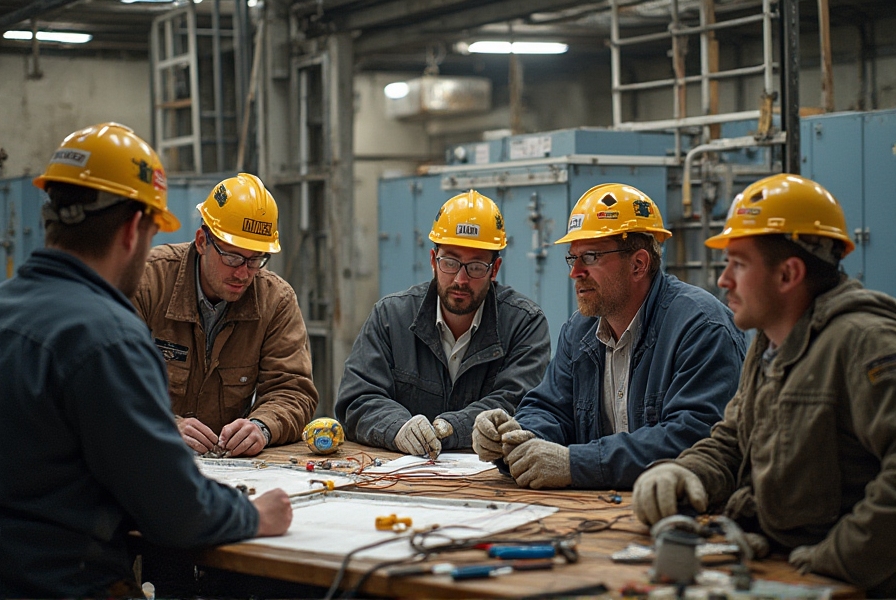
Accelerate First Aid's expert CPR & Low Voltage Rescue Course covers the complete UETDRRF004 competency in the correct order: conducting risk assessments, ensuring the LVR rescue kit is in order, identifying an appropriate point of isolation, applying the one-man drag method, and completing a full demonstration of a low voltage rescue followed by management of appropriate injuries.
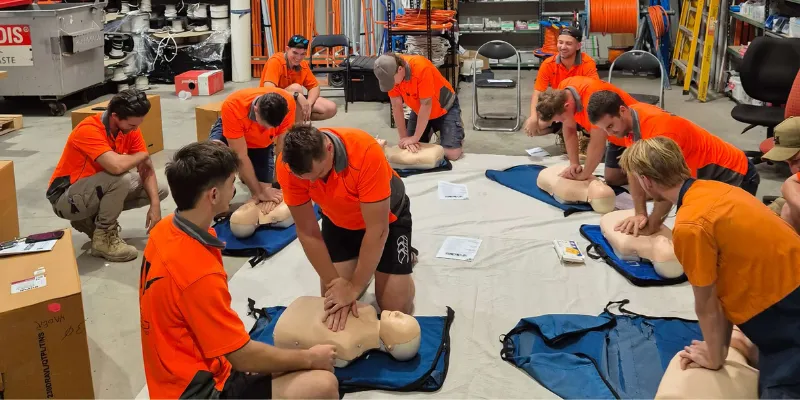
From there the course moves straight into CPR — DRSABCD of resuscitation, Chain of Survival principles, hands-on demonstrations and practice on manikins, use of an AED (defibrillator), first aid hygiene, and choking methods — all wrapped up with both practical and theoretical assessment.
The best CPR & Low Voltage Rescue Course in Tugun also addresses the legal issues around duty of care under Queensland's Work Health and Safety legislation, so participants leave knowing exactly what's expected of them on site and under the law.

Popular Courses From Accelerate First Aid
First Aid Course
CPR Course
Childcare First Aid Course
Low Voltage Rescue Course
Work Health & Safety Course
The Importance Of Doing Low Voltage Rescue Courses in Tugun, QLD
Tugun sits right on the Queensland-New South Wales border, and that geographic position means something for the trades — it puts local electrical workers within reach of job sites stretching from the southern Gold Coast all the way down into the Northern Rivers, across some of the region's most active residential and commercial development corridors. Every one of those sites carries the same baseline risk: low voltage electrical systems that can drop a worker in under a second, in environments where the nearest trauma centre might be John Flynn down the road or a considerably longer drive depending on where the job is. A CPR & Low Voltage Rescue Course in Tugun doesn't change that risk — it changes what happens in the minutes after something goes wrong. It gives the people on site the Chain of Survival knowledge, the DRSABCD action plan, the manikin practice, the AED confidence, and the low voltage rescue sequence to keep a colleague alive until paramedics take over. That's not a nice-to-have. For anyone working with electrical systems in this part of the Gold Coast, it's the baseline standard the job demands.
Trained vs Untrained — What Actually Happens on Site
CPR & Low Voltage Rescue Course in Tugun — Accelerate First Aid — UETDRRF004
| Scenario | ✓ Trained LVR worker | ✗ Untrained worker |
|---|---|---|
| Colleague contacts live conductor | ✓Identifies point of isolation immediately and de-energises before approaching | ✗May attempt physical contact — risks becoming a second casualty |
| LVR rescue kit on site | ✓Confirms kit is complete and in order before rescue begins | ✗Unaware of kit requirements — may improvise with incorrect equipment |
| Moving the casualty | ✓Applies one-man drag method safely and correctly | ✗May move casualty incorrectly, worsening injuries or re-exposing to hazard |
| Casualty unresponsive — no breathing | ✓Begins DRSABCD immediately, starts CPR and deploys AED | ✗Freezes or delays — every minute without CPR drops survival by ~10% |
| AED available on site | ✓Deploys correctly and maintains CPR between shocks | ✗May not know how to use it or hesitate due to lack of confidence |
| Electrical burn injuries present | ✓Manages injuries correctly and maintains Chain of Survival until paramedics arrive | ✗May apply incorrect treatment, aggravating burns or delaying proper care |
| Legal obligations after incident | ✓Documented duty of care met — current UETDRRF004 certificate on record | ✗Potential WHS Act breach — personal and employer legal liability exposure |
The part of LVR training that catches most people off guard — even experienced tradies — is how different the electrical rescue component feels compared to standard first aid. The instinct to rush in and help is hardwired into most people, and in almost every other emergency that instinct is correct. In a live low voltage incident it can be fatal. UETDRRF004 training works specifically on replacing that instinct with a practiced, automatic sequence: assess the risk first, identify the point of isolation, confirm the LVR rescue kit is in order, move the casualty clear using the one-man drag method, and only then begin the resuscitation response. Miss any one of those steps and the outcome can be worse than doing nothing at all. That layered complexity is exactly why the course requires both practical and theoretical assessment rather than a multiple choice quiz — and it's why hands-on demonstration of a low voltage rescue, management of appropriate injuries, first aid hygiene, and choking methods all sit alongside the CPR and AED components rather than being treated as extras.
The CPR Survival Clock — Every Minute Counts
Why immediate response matters — CPR & Low Voltage Rescue Course in Tugun
In a cardiac arrest caused by electrical shock, survival drops by approximately 10% for every minute without CPR. Here's what the clock looks like on a Tugun job site.
Cardiac arrest occurs
Electrical contact causes ventricular fibrillation. The casualty collapses. Every second from this point determines the outcome — a trained LVR worker begins DRSABCD immediately.
Best window for AED defibrillation
Survival rates are highest when defibrillation occurs within the first 2 minutes. A trained worker who knows how to use an AED and is already performing CPR gives the casualty the best possible chance.
Brain damage begins
Without oxygen, irreversible brain damage starts around the 4-minute mark. CPR buys critical time by keeping oxygenated blood circulating until a defibrillator or paramedics take over.
Survival rate drops significantly
Without bystander CPR, survival rates fall dramatically by this point. The Gold Coast average ambulance response time means this window will have passed on most Tugun job sites before paramedics arrive.
Survival without CPR is unlikely
Without intervention, survival chances are very low by 10 minutes. Bystander CPR from a trained co-worker is the single most important factor in determining whether this point is ever reached.
The legal dimension matters here too, and it's worth being direct about it. Under Queensland's Work Health and Safety Act, electrical workers in Tugun who operate without a current UETDRRF004 certificate aren't just taking a personal risk — they're creating liability for their employer and potentially undermining their own legal standing if an incident occurs on site. The duty of care obligations that apply to electrical work in Queensland are specific and enforceable, and an expired certificate won't be treated sympathetically by WorkSafe inspectors or in a courtroom. Beyond the compliance piece, the best CPR & Low Voltage Rescue Course in Tugun gives workers something compliance alone can't provide — the genuine confidence to act without hesitating, the muscle memory that comes from real manikin practice, and a clear understanding of exactly where their responsibilities begin and end when someone on their site needs help.
Thing To Do In Tugun


Why Choose Accelerate First Aid Training in Tugun
Walk onto most Gold Coast job sites and you'll find workers who have done an LVR course — but ask them to talk through the rescue sequence from memory and the gaps show up fast. That's not a knock on those workers. It's a reflection of training that prioritised getting people certificated over getting them genuinely prepared. Accelerate First Aid runs the CPR & Low Voltage Rescue Course in Tugun with a different priority: by the time you leave, the sequence should be automatic — risk assessment, point of isolation, LVR rescue kit check, one-man drag, DRSABCD, CPR on manikins, AED deployment, management of appropriate injuries — in that order, without prompting. The practical and theoretical assessment components aren't a formality at the end of the day. They're the mechanism that confirms the training has actually landed, and they're treated that way throughout the course.
The other thing worth saying is that Accelerate First Aid doesn't dress the course up as something it's not. The CPR & Low Voltage Rescue Course is a focused, tightly structured qualification — UETDRRF004, one year validity, specific to the hazards electrical workers and tradespeople in Tugun face every day on site. What makes it worth choosing over other providers isn't a long list of extras — it's the fact that the core content is done properly. Chain of Survival principles are explained in context, not rattled off as a checklist. Legal issues around duty of care and QLD WHS obligations are covered clearly, so workers understand what their certificate actually means and what it doesn't protect them from. First aid hygiene, choking response, and AED use get the same floor time as the electrical rescue components. For anyone in Tugun looking for the best CPR & Low Voltage Rescue Course on the southern Gold Coast, that consistency is exactly what makes the difference.
Give us a call on 0434778243 or book in a time to do one of our courses here.
Hear From Others Who Have Taken Accelerate First Aid Courses

CONTACT US
If you have questions about the opportunities available to you in our programs, send us a message.
We will get back to you as soon as possible.
Co Provider of Registered Training Organisation First Aid Alive RTO 31106
Follow Us
Follow Us
ACN 664 641 623 | ABN 8766 4641 623
Courses & Training
More
Contact Us
Brisbane & Gold Coast
PO Box 3763 Robina Town Centre, 4230
Monday - Saturday: 8am - 5pm