Contact Us
Mon-Sat: 8am-5pm
Follow Us:
CPR Courses Cabarita Beach
Cabarita Beach is one of the most breathtaking coastal communities along the far northeast stretch of New South Wales, sitting just minutes south of the Queensland border — and for residents and workers in the area, access to a quality Cardiopulmonary Resuscitation Course in Cabarita Beach has never been more important.
Locally known as "Caba," this vibrant beach town draws surfers, families, and visitors year-round to its pristine shores, celebrated surf breaks, and the sweeping ocean views from Norries Headland. The area is also home to the iconic Cudgen Nature Reserve, covering more than 400 hectares of protected coastal heathland and wetlands surrounding the picturesque Cudgen Lake — a favourite spot for birdwatchers, picnickers, and paddlers alike.
The town carries a fascinating history beneath its laid-back surface. Its original Aboriginal name, Bogangar, means "place of many pippies" — a reference to the ancient ceremonial shell middens found throughout the area, reflecting thousands of years of Indigenous connection to this stretch of coastline.
Modern development only began in earnest in December 1960 when the original Cabarita Country Club Hotel opened its doors, followed shortly by the founding of the Cabarita Beach Surf Lifesaving Club. Just two years later, in 1962, local pioneers Ken and Marie Hansen established Australia's first jet boat water ski school at Cudgen Lake — a remarkable piece of water sports history right on the community's doorstep.
Today, Cabarita Beach punches well above its size when it comes to community events and coastal culture. The annual Greenback Tailor Fishing Competition draws devoted anglers from across New South Wales and Queensland every June, while regional surf carnivals and the Seas the Day Women's Surf Festival celebrate a surfing tradition that has defined the town for generations.
In 2020, Cabarita Beach was officially recognised as one of Australia's best beaches — a title that residents and regular visitors would say is well and truly deserved. Sitting within 1.5 hours of Brisbane and less than an hour from the Gold Coast, it remains one of the most accessible yet genuinely unspoiled coastal escapes in the region.
It is in active, connected communities like Cabarita Beach where knowing how to perform Cardiopulmonary Resuscitation can be the difference between life and death. Whether you are a local resident, a surf club volunteer, a café owner, a tradesperson, or a visitor spending time on the Tweed Coast, having the skills to act confidently in a cardiac emergency is one of the most important things you can do for the people around you.
Cardiac arrest can happen anywhere — on the beach, at a sporting event, in a workplace, or at home — and the minutes before professional help arrives are critical. A bystander who knows CPR and can operate an AED dramatically increases the survival chances of someone in cardiac arrest.
Accelerate First Aid offers a professional Cardiopulmonary Resuscitation Course available to residents and workers throughout the Cabarita Beach area and the broader Tweed Coast region. Our expert CPR Course is aligned to the nationally recognised HLTAID009 unit of competency and is built around real-world application — so that when an emergency happens, you are ready to respond without hesitation.
Whether you are completing your certification for the first time or renewing a qualification that has lapsed, our structured training programme delivers the practical skills and personal confidence you need to act effectively under pressure.

Popular Courses From Accelerate First Aid
First Aid Course
CPR Course
Childcare First Aid Course
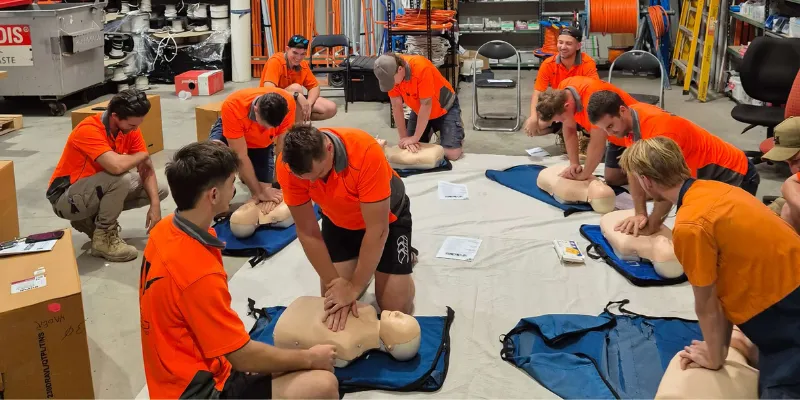
Low Voltage Rescue Course
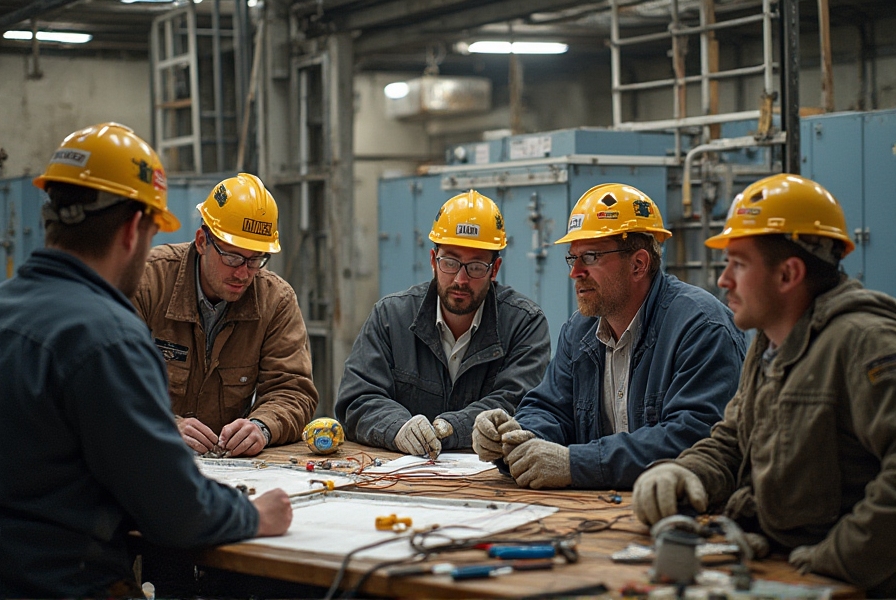
Work Health & Safety Course
The Importance Of Doing CPR Courses in Cabarita Beach, QLD
Cabarita Beach is the kind of place where life happens outdoors. Surfers paddle out before sunrise, families gather at Norries Headland, anglers line the shore during the Greenback Tailor Fishing Competition, and visitors fill the beachfront every weekend throughout summer. It is a community built around physical activity, coastal living, and shared public spaces — and that is precisely why CPR training matters so much here. Cardiac arrest does not discriminate by location, age, or fitness level. Across Australia, around 26,000 out-of-hospital cardiac arrests occur every year, and the national survival rate sits at just 12 to 13 percent. What the data consistently shows is that bystander CPR — performed by an ordinary person who happened to be nearby — can double or even triple a person's chance of survival. In a coastal community where the nearest major hospital can be a significant drive away, those few minutes before an ambulance arrives are not a buffer. They are everything. Completing a professional Cardiopulmonary Resuscitation Course in Cabarita Beach means that when those minutes count, you are not standing there hoping someone else knows what to do.
📊 CPR & Cardiac Arrest Survival Statistics
Sources: Australasian Resuscitation Outcomes Consortium (Aus-ROC) & CPR.com.au
| Statistic | Figure | What It Means |
|---|---|---|
| Out-of-hospital cardiac arrests in Australia per year | ~26,000 | One of Australia's leading causes of sudden death |
| National survival rate (to hospital discharge) | 12–13% | Without early intervention, survival chances are critically low |
| Cardiac arrests that happen at home | ~70–76% | A family member or neighbour is most likely the first responder |
| Cardiac arrests receiving bystander CPR in Australia | ~38% | Over 60% of victims receive no CPR before paramedics arrive |
| Survival increase with immediate bystander CPR | 2–3× higher | Immediate CPR can double or triple survival chances |
| Non-EMS arrests receiving public AED defibrillation | ~2% | Public AED use remains critically rare despite proven impact on survival |
The statistics behind CPR training tell a story that is hard to ignore. Research shows that bystanders witness nearly half of all out-of-hospital cardiac arrests, yet in Australia, fewer than 40 percent of those victims receive CPR before emergency services arrive. When an AED is used by a bystander in combination with CPR before paramedics reach the scene, survival rates climb dramatically — with some studies reporting figures as high as 53 percent when defibrillation is delivered early by someone on the scene. Despite this, public defibrillation in Australia remains rare, with only around 2 percent of non-EMS-witnessed arrests receiving a shock from a public AED. The gap between what is possible and what is actually happening comes down to one thing: training. People who have completed a CPR course know how to recognise cardiac arrest, how to activate the Chain of Survival, how to perform the DRSABCD assessment, how to deliver effective chest compressions, and how to operate an AED without hesitation. That knowledge does not just exist in theory — it is a physical skill that, when practised on manikins under the guidance of expert trainers, becomes a reflex. A CPR course is not a day you spend ticking a compliance box. It is the day you become the person who can genuinely save a life.
Out-of-Hospital Cardiac Arrest — Survival to Hospital Discharge
⚡ AED Use vs No AED — How Much Does It Change Survival?
Lowest outcome — no intervention before paramedics arrive
CPR buys vital time — but AED is still needed to restore rhythm
Combined CPR + AED triples survival vs CPR alone
Best possible outcome — trained bystander delivers shock immediately
Beyond the statistics, there is a deeply human reason why CPR training matters in a community like Cabarita Beach. Around 70 percent of cardiac arrests in Australia happen at home — meaning the first person on scene is most likely a family member, a housemate, or a neighbour. It could be a parent at a weekend surf carnival, a colleague on a fishing trip, or a friend at a backyard gathering. The legal landscape in Australia also supports confident action: Good Samaritan protections exist precisely to encourage bystanders to act without fear of liability when they step in to help in good faith. An expert Cardiopulmonary Resuscitation Course will walk you through those legal considerations clearly, alongside choking response methods, hygiene protocols for resuscitation, and how to debrief and manage your own emotional response after a first aid event. At Accelerate First Aid, the best CPR Course in Cabarita Beach is built around exactly this kind of whole-person preparation — because being ready to save someone's life means being prepared mentally and practically, not just technically certified.
Cardiopulmonary Resuscitation Course — Cabarita Beach
🔗 The Chain of Survival — Every Link Counts
Identify cardiac arrest immediately — the patient is unresponsive and not breathing normally. Every second of delay before the next step reduces survival chances.
Call Triple Zero (000) immediately and direct a second bystander to locate the nearest AED. The dispatcher can guide you through CPR steps if needed.
Begin 30 chest compressions followed by 2 rescue breaths. CPR keeps oxygenated blood circulating to the brain and vital organs — buying precious time until defibrillation is available.
Attach and use the AED as soon as it arrives. The device analyses the heart rhythm and delivers a shock if needed. Every minute without defibrillation reduces survival by approximately 10%.
Paramedics and hospital teams take over with advanced life support, medications, and in-hospital care. The quality of what happened before they arrived determines how much they can do.
Thing To Do In Cabarita Beach


Why Choose Accelerate First Aid Training on the Cabarita Beach
There is no shortage of CPR course providers out there, but there is a significant difference between sitting through a tick-and-flick session and actually leaving feeling like you could handle a real emergency. Accelerate First Aid was built around that difference. Jarryd Hunter, the Managing Director and lead trainer, has been teaching CPR and first aid for over 20 years — and what makes that experience count is that it is backed by real paramedic experience, not just time spent in a classroom. That background changes the way the course feels. The scenarios are grounded in what actually happens when someone collapses, the explanations make sense rather than just following a script, and the practical components are run with the kind of attention to detail that only comes from someone who has seen these situations play out in the real world. For people in Cabarita Beach and across the Tweed Coast, that level of instruction is worth seeking out.
The way Accelerate First Aid delivers its CPR Course also makes it genuinely practical for busy people and workplaces. The theory is completed online at your own pace using an accelerated learning format — so by the time you show up for the hands-on component, you are not sitting through hours of slides. The practical assessment itself typically wraps up in around 30 to 45 minutes, and your certificate is issued the same day, guaranteed. For groups, Accelerate First Aid will come directly to your workplace, surf club, community space, or any venue around the Cabarita Beach area — no need to organise transport to a training centre. If you find the same nationally accredited course cheaper anywhere else, they will beat that price by 10%. It is a straightforward offer from a provider that is confident in what they deliver.
Every CPR course completed through Accelerate First Aid is nationally recognised and accredited under Registered Training Organisation First Aid Alive (RTO 31106), delivered in full accordance with Australian Resuscitation Council (ARC) guidelines and the Health Training Package. The HLTAID009 certificate you walk away with is accepted by employers across every industry and every state in Australia — childcare, construction, healthcare, hospitality, sport, you name it. For the Cabarita Beach community, having a provider of this calibre available locally, willing to come to you, and backed by two decades of hands-on experience is the kind of thing worth taking advantage of. Getting your CPR certification sorted should not be something you keep putting off — and with Accelerate First Aid, there is really no reason to.
Give us a call on 0434778243 or book in a time to do one of our courses here.
Hear From Others Who Have Taken Accelerate First Aid Courses

CONTACT US
If you have questions about the opportunities available to you in our programs, send us a message.
We will get back to you as soon as possible.
Co Provider of Registered Training Organisation First Aid Alive RTO 31106
Follow Us
Follow Us
ACN 664 641 623 | ABN 8766 4641 623
Courses & Training
More
Contact Us
Brisbane & Gold Coast
PO Box 3763 Robina Town Centre, 4230
Monday - Saturday: 8am - 5pm