Contact Us
Mon-Sat: 8am-5pm
Follow Us:
Advanced Resuscitation Courses Banora Point
Banora Point doesn't get talked about as much as its Gold Coast neighbours, but anyone who lives there knows it punches well above its weight.
It's a suburb built around real community — riverside walks along the Tweed, the Club Banora precinct where multiple generations gather, quiet streets lined with families who've been there for decades, and a growing number of healthcare and education workers who've relocated from the Gold Coast specifically for the lifestyle.
What makes Banora Point genuinely interesting from a demographic standpoint is its position right on the New South Wales and Queensland border. Thousands of its residents hold jobs on the Gold Coast side — in hospitals, aged care facilities, airports, schools, and construction sites — then come home to Banora Point each evening. That daily cross-border movement means the suburb is full of people who carry a professional duty of care, often in both jurisdictions simultaneously.
Add to that a median age of 50, six local childcare centres, a large retirement community, and proximity to the volcanic headland at Fingal Head — one of the most geologically significant formations on the New South Wales coast — and you have a suburb where the population profile alone makes access to proper emergency response training genuinely important.
That's where Accelerate First Aid comes in. The Advanced Resuscitation Course in Banora Point gives locals and cross-border workers the nationally recognised HLTAID015 Provide Advanced Resuscitation and Oxygen Therapy qualification they need — not just to satisfy a compliance requirement, but to genuinely respond when something goes wrong.
Most people who've done a basic first aid course will tell you honestly that they're not entirely sure what they'd do in a real cardiac emergency. That gap between having done a course and actually feeling ready is exactly what HLTAID015 closes.
The professional Advanced Resuscitation Course covers CPR (Cardiopulmonary Resuscitation) at a genuinely advanced level — two-rescuer coordination, high-performance compression sequences, managing fatigue across prolonged events. It covers AED use (Automated External Defibrillator) beyond just following voice prompts, including recognising shockable rhythms and integrating defibrillation into a live resuscitation without breaking the sequence.
It covers assessing vital signs including respiration, pulse, and oxygen saturation continuously throughout an emergency — not just at the start. It covers the use of airway management and suctioning devices that basic first aid never touches.
And it covers the oxygen therapy component in full — the correct method of administration of oxygen, the "five rights" framework, safe administration of oxygen including all legal obligations, correct use, cleaning, sterilisation, and storage, alongside clinical infection control procedures that hold up under real scrutiny.
For the aged care workers, early childhood educators, healthcare assistants, security professionals, and WHS officers across Banora Point and the Tweed-Gold Coast corridor — this is the best Advanced Resuscitation Course available in the region, and it shows in every participant who walks out the door.

Popular Courses From Accelerate First Aid
First Aid Course
CPR Course
Childcare First Aid Course
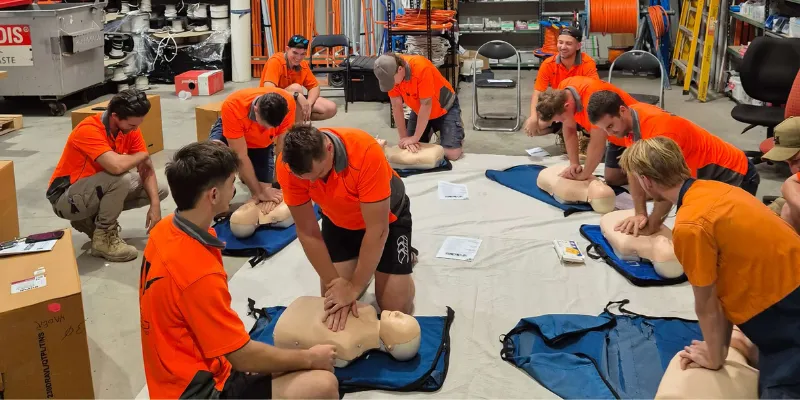
Low Voltage Rescue Course
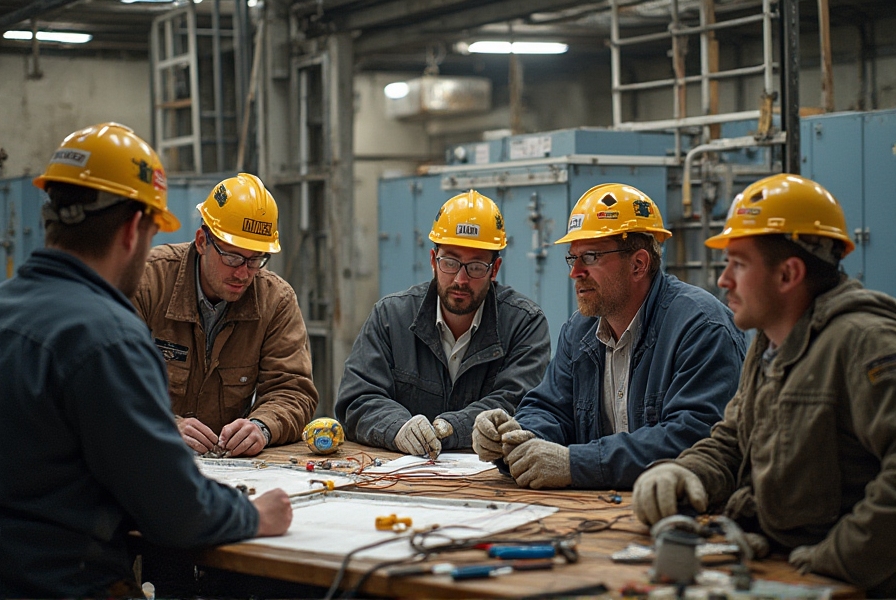
Work Health & Safety Course
The Importance Of Doing Advanced Resuscitation Courses in Banora Point, QLD
Banora Point sits in a part of the world where the gap between a medical emergency happening and an ambulance arriving can be significant. Cross-border ambulance response across the New South Wales and Queensland border involves coordination between two separate state emergency services, and in peak traffic periods along the Pacific Motorway corridor, that response time can stretch well beyond what most people assume. In a suburb where the median age sits at 50, where aged care facilities serve a substantial older population, and where six childcare centres mean that emergencies involving children are a genuine possibility at any point during the working week, the presence of trained advanced resuscitation responders in the community isn't a nice-to-have — it's a practical necessity. The Advanced Resuscitation Course in Banora Point equips people to fill that gap. Not with false confidence built on a half-day classroom session, but with the genuine clinical competency that comes from properly structured HLTAID015 training — CPR that holds up across several minutes, AED integration that doesn't require a voice prompt to work through, airway management that keeps a casualty oxygenated while emergency services are still in transit.
Step by step
From cardiac arrest to paramedic handover
Cross-border ambulance delays in Banora Point make every step below more critical
What's worth understanding about HLTAID015 is that it was specifically designed for people whose roles place them closer to medical emergencies than the average bystander. Aged care workers in Banora Point who support residents with complex cardiac histories. Early childhood educators responsible for dozens of children at once. Healthcare assistants who work in clinical environments but don't always have a senior clinician within arm's reach. Security professionals managing large public venues across the Tweed-Gold Coast border. For all of these people, a standard first aid certificate creates a false floor of competency — it covers the DRSABCD framework and basic CPR, but leaves enormous gaps around advanced airway management, correct method of administration of oxygen, the five rights framework, safe oxygen delivery including legal obligations and sterilisation and storage requirements, vital signs assessment including continuous monitoring of respiration, pulse and oxygen saturation, and the infection control protocols that govern clinical emergency response. The professional Advanced Resuscitation Course fills every one of those gaps, and does it in a way that actually sticks — because the practical component is built around doing the work, not watching someone else do it.
Course content
HLTAID015 — how training time is allocated
Across six core advanced resuscitation skill areas
There's also a workforce argument that Banora Point employers across both states should be paying attention to. As regulatory requirements around emergency response in aged care, early childhood, and healthcare settings continue to tighten — both in New South Wales and Queensland — HLTAID015 is increasingly the qualification that separates organisations that genuinely meet their duty of care from those that technically comply but aren't actually prepared. Accelerate First Aid's expert Advanced Resuscitation Course is built to put Banora Point participants on the right side of that line. The Advanced Resuscitation Course benefits go beyond individual competency — they flow into the workplace, into the community, and into the quality of response that happens when a real emergency occurs. Every additional HLTAID015-trained person in Banora Point, Tweed Heads, Coolangatta, Kirra, or anywhere across the Tweed-Gold Coast corridor is a genuine asset to the people around them. That's not marketing language. That's just what good training does.
Why HLTAID015 wins
Six reasons HLTAID015 outperforms basic first aid for Banora Point workers
Thing To Do In Banora Point


Top Sites In Banora Point


Why Choose Accelerate First Aid Training on the Banora Point
Banora Point sits in a genuinely unique position when it comes to first aid training — a suburb in New South Wales where a significant portion of the workforce crosses into Queensland every day for work. That means the people who live here often need to satisfy compliance obligations in two different states simultaneously, and the last thing they need is a training provider who doesn't understand the cross-border context or rushes them through a generic one-size-fits-all course to get their certificate and leave. Accelerate First Aid was built around something more specific than that. The HLTAID015 Advanced Resuscitation Course is delivered with small class sizes that actually allow every participant to get proper hands-on time — not a quick demonstration followed by paperwork. You're doing two-rescuer CPR, you're inserting oropharyngeal airways, you're working through AED integration in a simulated sequence, and you're practising oxygen therapy administration until the correct method feels natural rather than something you half-remember from a slide presentation. For anyone in Banora Point, Tweed Heads, Terranora, Coolangatta, or across the border into Kirra and Bilinga looking for the best Advanced Resuscitation Course available in the region, the difference in how Accelerate First Aid runs the practical component is something that becomes obvious very quickly.
What also sets Accelerate First Aid apart is a genuine commitment to the parts of HLTAID015 that less thorough providers tend to skim. Oxygen therapy is a prime example — and it's particularly relevant for Banora Point workers in aged care, healthcare, and early childhood settings who may actually need to administer supplemental oxygen in the field. A course that covers the five rights framework superficially, skips the legal obligations around oxygen therapy in NSW and QLD, and moves on without genuinely addressing correct use, cleaning, sterilisation, and storage of oxygen equipment is not giving participants what they paid for. At Accelerate First Aid, that content gets the same rigorous practical treatment as CPR and airway management — because the clinical and legal consequences of getting it wrong are just as serious. The same goes for infection control protocols, vital signs assessment including continuous monitoring of respiration, pulse, and oxygen saturation, and the duty of care obligations that govern how an advanced responder operates. These aren't afterthoughts. They're the difference between a qualification that holds up in a real emergency and one that just looks good on paper.
The third thing worth saying is something that Banora Point residents who've done previous first aid courses often mention when they reflect on the experience — the feeling of leaving a course not entirely sure they'd actually respond well if something happened. That gap between completing a training day and feeling genuinely ready is one of the most common complaints about how basic first aid and even some HLTAID015 courses are delivered. Accelerate First Aid's expert Advanced Resuscitation Course is deliberately structured to close that gap rather than paper over it. The blended learning format means theory is handled before you arrive — covering everything from the correct method of administration of oxygen to DRSABCD protocols and legal obligations — so that your face-to-face session is spent entirely on building the muscle memory and decision-making reflexes that you'd actually rely on in an emergency. Every Banora Point participant who completes HLTAID015 with Accelerate First Aid leaves with something more valuable than a Statement of Attainment — they leave knowing, from having actually done the work under pressure, that they can act correctly when it counts.
Give us a call on 0434778243 or book in a time to do one of our courses here.
Hear From Others Who Have Taken Accelerate First Aid Courses

CONTACT US
If you have questions about the opportunities available to you in our programs, send us a message.
We will get back to you as soon as possible.
Co Provider of Registered Training Organisation First Aid Alive RTO 31106

Follow Us
Follow Us
ACN 664 641 623 | ABN 8766 4641 623
Courses & Training
More
Contact Us
Brisbane & Gold Coast
PO Box 3763 Robina Town Centre, 4230
Monday - Saturday: 8am - 5pm